The best CSR projects in India are those that combine scale, continuity and community ownership. Smile Foundation’s long-running programmes across education, healthcare, women empowerment and livelihoods show how CSR can move beyond compliance and create measurable, lasting change.
India’s CSR ecosystem has grown rapidly since the Companies Act made CSR spending mandatory. According to the Ministry of Corporate Affairs, annual CSR expenditure now exceeds ₹25,000 crore, with education and healthcare receiving the largest share. Yet, outcomes remain uneven across regions. Many projects struggle to move beyond short-term delivery. This is why understanding what truly works on the ground has become critical.
What Makes a CSR Project Truly Impactful?
A meaningful CSR project goes far beyond funding activities or meeting compliance requirements. It is built on a clear understanding of local needs and sustained engagement over time. Projects that operate for three to five years or more tend to show stronger outcomes, especially in sectors like education and health. Continuity allows trust to develop within communities, which is essential for behaviour change.
Another critical factor is integration. Challenges like malnutrition, school dropouts or low workforce participation are interconnected. According to NFHS-5 data, 35.5% of children under five in India are stunted, which directly affects education outcomes later in life. CSR projects that address multiple dimensions together tend to be more effective. This is where integrated models stand out.
Partnership also plays a defining role. NGOs bring local knowledge and execution capability, while corporates bring resources and scale. Government alignment ensures sustainability beyond the project lifecycle. Smile Foundation’s programmes are built on this partnership model, which strengthens both reach and impact.
10 Best CSR Projects in India Making Real Change
These are structured, long-running programmes that reflect impactful CSR India models grounded in real needs and measurable outcomes.
1. Education — Mission Education
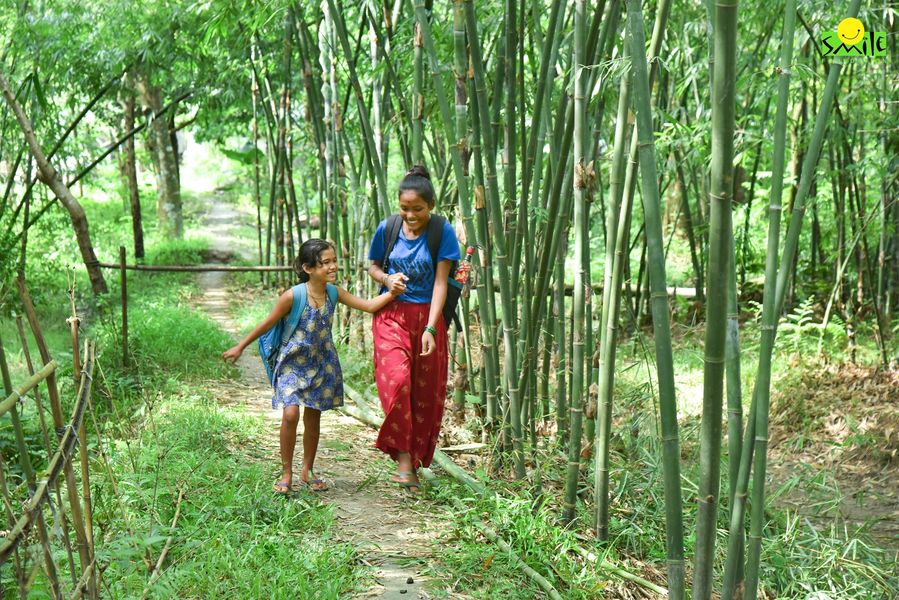
Smile Foundation’s Mission Education programme focuses on children from underserved communities who are at risk of dropping out or never enrolling in school. It works through community-based learning centres that provide academic support, bridge learning gaps and prepare children for formal schooling. The programme also engages parents and communities to ensure children stay in school.
India has made progress in enrolment, but learning outcomes remain a concern. ASER reports consistently show that many children in Grade 5 struggle with basic reading and arithmetic. Mission Education addresses this gap through remedial learning and teacher support. It also integrates digital tools where possible, ensuring children are not left behind in an increasingly digital world. The focus is not just access, but meaningful learning.
2. Healthcare — Smile on Wheels
Healthcare access remains uneven, especially in rural and peri-urban India. According to government data, nearly 65% of India’s population lives in rural areas, where access to quality healthcare facilities is limited. Smile on Wheels addresses this gap by bringing primary healthcare services directly to communities through mobile medical units.
These units provide consultations, diagnostics and medicines, along with preventive health awareness. They often serve urban slums and remote villages where healthcare infrastructure is weak. By reducing the need for travel and lowering out-of-pocket expenses, the programme improves early diagnosis and treatment. It also strengthens trust between communities and healthcare systems.
3. Child Nutrition — Integrated Health Approach
Malnutrition remains one of India’s most persistent challenges. NFHS-5 data shows that 32% of children are underweight and over 67% of children aged 6–59 months are anaemic. Smile Foundation integrates nutrition within its health and education programmes rather than addressing it in isolation.
The approach includes growth monitoring, nutrition awareness for caregivers, and linkages with government services like ICDS. This ensures that interventions are not temporary but sustained through existing systems. By working with mothers and communities, the programme addresses the root causes of malnutrition. This integrated model improves both health and education outcomes over time.
4. Women Empowerment — Swabhiman Programme
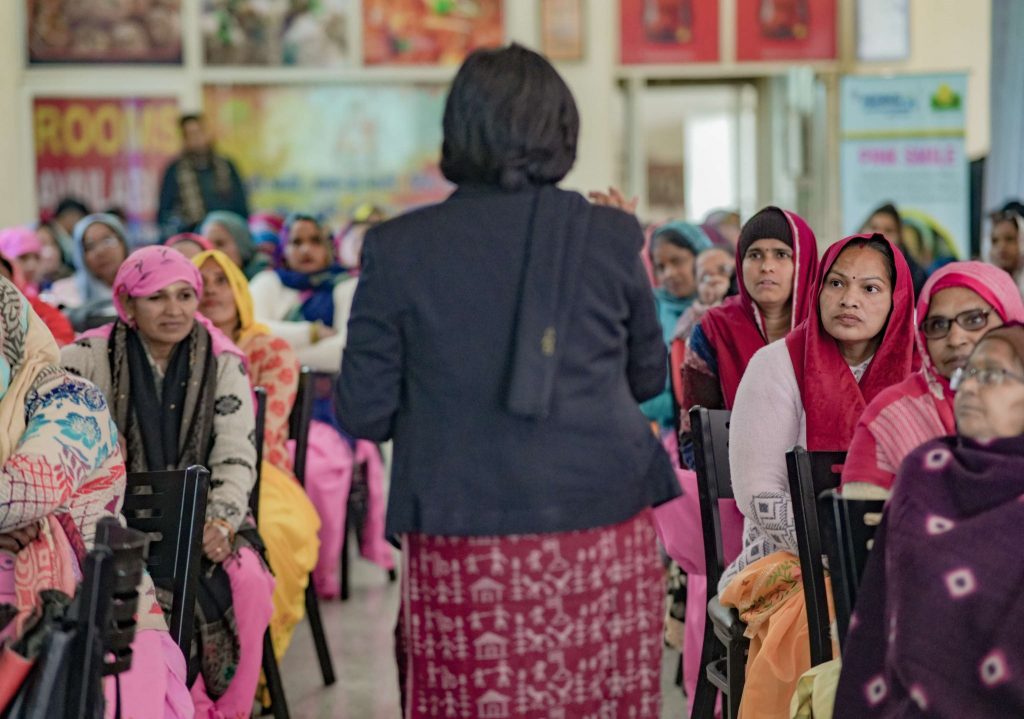
The Swabhiman programme focuses on adolescent girls and women in vulnerable communities. It addresses health, hygiene and life skills, creating a foundation for long-term empowerment. Menstrual health awareness and access to sanitation facilities are key components.
India continues to face gender gaps in multiple areas. Female labour force participation remains around 30–37%, depending on estimates and social norms still limit opportunities. Programmes like Swabhiman work at the grassroots to shift awareness and confidence. When women gain knowledge and agency, the impact extends to families and communities. This makes women empowerment a critical CSR focus area.
5. Skill Development — Livelihood Programmes
India’s young population presents both an opportunity and a challenge. Without employable skills, many young people struggle to find stable work. Smile Foundation’s livelihood programmes focus on vocational training that aligns with market demand.
These programmes include technical training, soft skills and placement support. They target youth from underserved communities who may not have access to formal education pathways. According to industry estimates, India needs to skill millions of youth annually to meet workforce demands. CSR-led skill development plays a crucial role in bridging this gap. The outcome is not just employment, but economic mobility.
6. Digital Inclusion — Integrated Learning Models
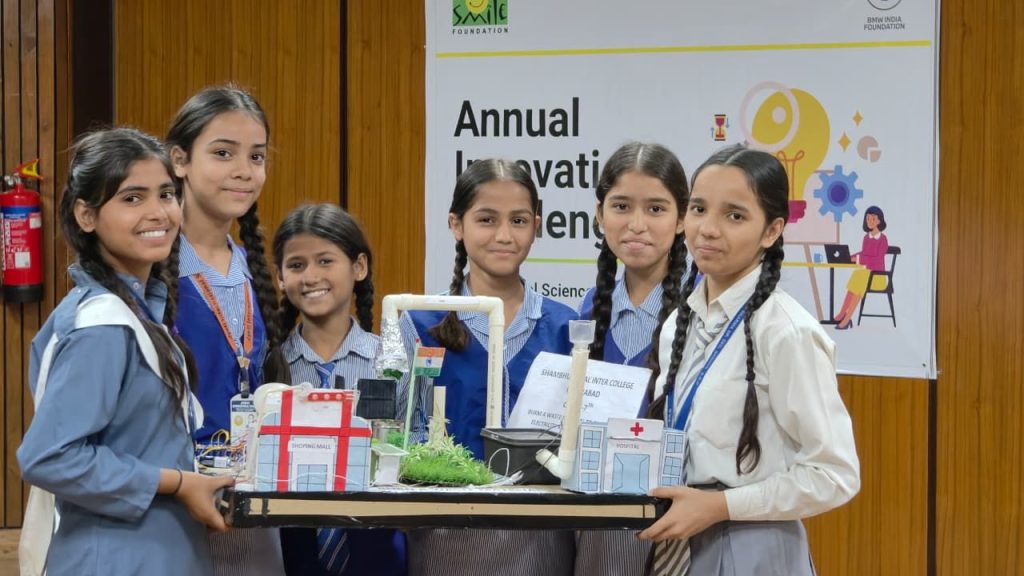
Digital access has become essential for education and livelihoods. Yet, a significant digital divide still exists, particularly in rural areas. Smile Foundation integrates digital tools into its education and skill programmes rather than treating them as standalone interventions.
This includes digital classrooms, basic computer training and exposure to online resources. The goal is to enhance learning outcomes and improve employability. By embedding digital literacy within broader programmes, the impact becomes more sustainable. It ensures that technology supports real development outcomes.
7. Water, Sanitation and Hygiene (WASH)
Access to clean water and sanitation is closely linked to health and education outcomes. According to UNICEF, inadequate sanitation contributes to disease and school absenteeism, especially among girls. Smile Foundation integrates WASH initiatives within its programmes to address this.
These include hygiene awareness campaigns, sanitation infrastructure in schools and community engagement. The focus is on behaviour change, not just infrastructure. When communities adopt safe hygiene practices, the benefits extend beyond individual households. This leads to healthier communities and better learning environments.
8. Rural Development — Integrated Community Model
Rural development requires a multi-sector approach. Isolated interventions often fail to address the complexity of rural challenges. Smile Foundation’s model combines education, health and livelihoods within the same communities.
This integrated approach helps build resilience at the village level. It reduces migration pressures by strengthening local opportunities. It also improves access to services and awareness of government schemes. By working across sectors, the programme creates a more holistic impact.
9. Child for Child — Building Social Awareness
The Child for Child programme is unique in its approach. It connects children from privileged backgrounds with those from underserved communities. The aim is to build empathy, awareness and social responsibility from a young age.
While it may not deliver direct services, it plays an important role in shaping future citizens. Awareness and mindset shifts are critical for long-term social change. By engaging schools and young people, the programme builds a broader culture of giving and responsibility. This complements direct development interventions.
10. Disability Inclusion — Expanding Access
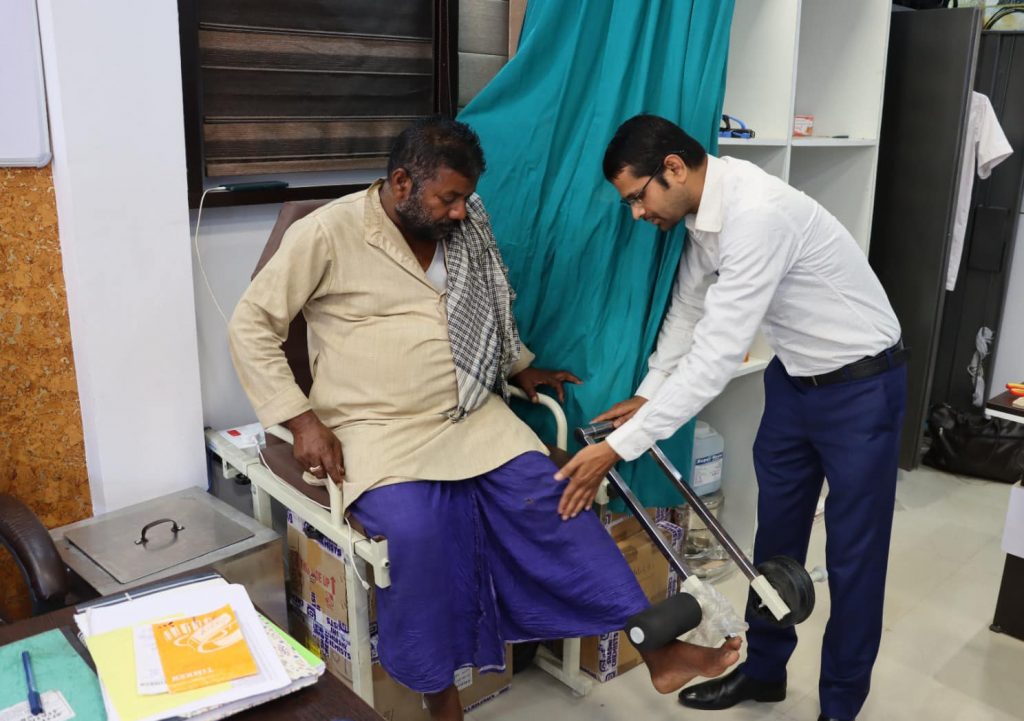
Inclusive development is an important but often overlooked area. People with disabilities face barriers in education, employment and social participation. Smile Foundation’s programmes increasingly include components that address these challenges.
This includes inclusive education support and community sensitisation. The goal is to ensure that development initiatives do not exclude vulnerable groups. According to global estimates, around 15% of the population lives with some form of disability. Inclusive CSR ensures that no one is left behind.
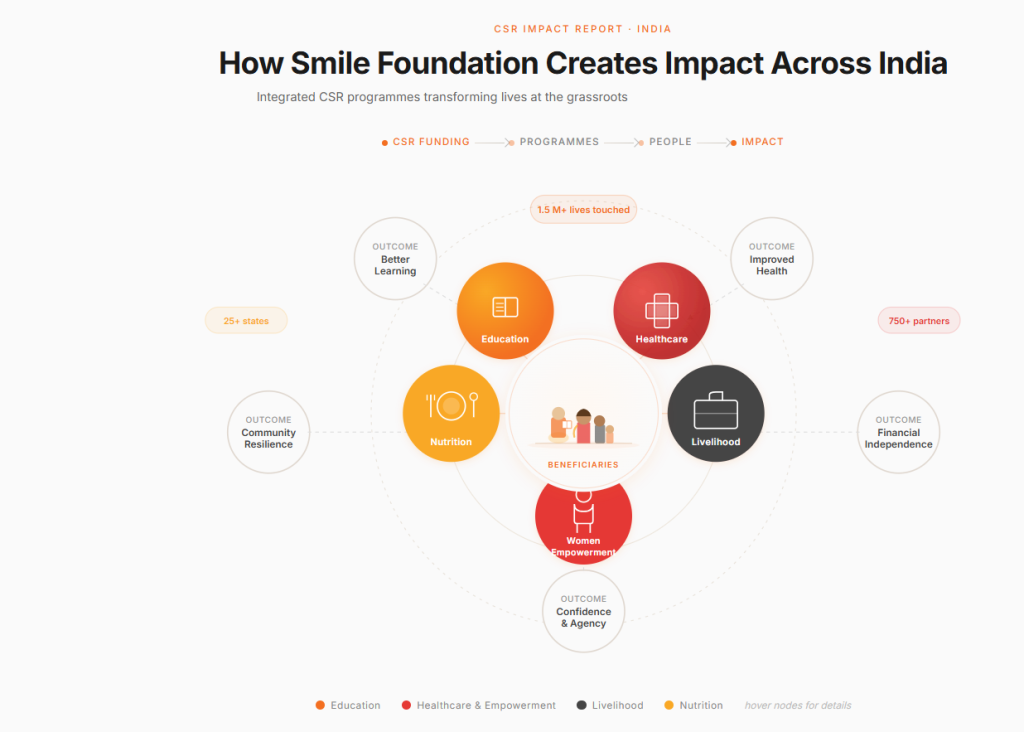
How to Design a CSR Project That Creates Lasting Change
Designing an effective CSR project requires clarity and commitment. It starts with understanding the local context and identifying real needs. Data should guide decisions, but community insights are equally important.
Long-term planning is essential. Projects that run for multiple years are more likely to deliver sustainable outcomes. Partnerships with experienced NGOs improve execution and accountability. Continuous monitoring helps refine strategies and improve impact.
Integration is another key factor. Addressing education, health, and livelihoods together creates stronger outcomes. CSR projects that adopt a systems approach tend to be more resilient. This is where the most meaningful impact is created.
How Smile Foundation Builds High-Impact CSR Projects
Smile Foundation’s approach is rooted in decentralised implementation and strong partnerships. Programmes are adapted to district-level realities, ensuring relevance and effectiveness. Community engagement is central to every initiative.
The organisation works closely with corporates, government systems, and local stakeholders. This ensures that programmes are aligned with broader development priorities. Monitoring and evaluation systems track progress and enable course correction. This combination of scale and local focus makes its programmes among the top CSR projects India has seen.
If you are looking to invest in CSR that delivers measurable outcomes, partnering with Smile Foundation can help translate strategy into real impact at the grassroots.
Why These Are Among the Best CSR Projects in India
The defining feature of these programmes is not just scale, but sustainability. They stay embedded in communities and address root causes rather than symptoms. They also build local capacity, ensuring that benefits continue beyond the project period.
This is what sets the best CSR projects in India apart. They create systems that last, not just activities that end. As CSR continues to evolve, this approach will become increasingly important.
Conclusion
CSR in India is moving toward deeper engagement and accountability. The focus is shifting from spending to impact. Programmes that combine scale with community ownership are leading this change.
Smile Foundation’s work demonstrates how CSR can create lasting social change when designed thoughtfully. By staying close to communities and working across sectors, these programmes deliver real outcomes. This is the direction CSR must continue to move in.
FAQs — Best CSR Projects in India
What makes a CSR project impactful in India?
Impact comes from long-term engagement, community participation and measurable outcomes.
Which are the best CSR projects in India in 2026?
Projects in education, healthcare and livelihoods with sustained outcomes are among the most impactful.
How do NGOs support CSR implementation?
NGOs provide local knowledge, execution capability and community engagement.
What sectors show the highest CSR impact?
Education, health and livelihood generation remain the most impactful sectors.
Can CSR projects create long-term change?
Yes, when designed for continuity and system strengthening.
How does Smile Foundation implement CSR projects?
Through partnerships, community engagement and multi-sector programmes.
What is Smile on Wheels?
It is a mobile healthcare programme delivering primary care to underserved communities.
What is Mission Education?
A programme focused on education access and learning outcomes for children.
What is the Swabhiman programme?
A women and adolescent girl empowerment initiative focusing on health, hygiene and life skills.
How can companies partner with Smile Foundation?
Through CSR collaborations aligned with programme goals and community needs.