
Well-functioning Anganwadi Centres are the backbone of India’s early childhood development and maternal-child health programmes. Nearly 14 lakh Anganwadis across India serve as the first point of contact for nutrition, health monitoring, and preschool education for rural and urban poor children. In 2025, these centres provide hot meals, immunisations and growth tracking for 0–6 year-olds, and critical prenatal/postnatal care to pregnant and lactating women.
ASER 2024 data show that Anganwadis are the biggest provider of pre-primary school services, with over half of all 3–4 year olds enrolled there. These figures highlight that Anganwadis not only fight malnutrition (child undernutrition fell from ~30% in 1975 to 7.7% by 2019–21) but also prime millions of children for school.
Across India, Anganwadis are often simple village centres providing early education and nutrition. Upgrading these facilities as advocated by NEP 2020 is essential for quality learning and health.
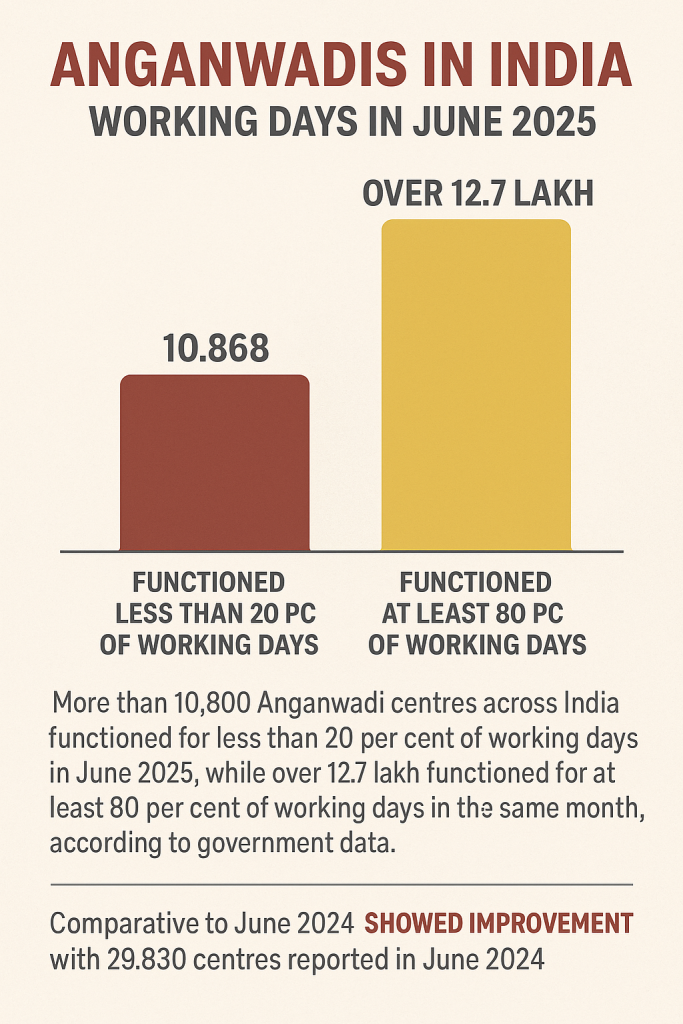
Glaring Anganwadi infrastructure gaps undermine outcomes
On-the-ground surveys reveal alarming deficits in Anganwadi infrastructure. Recent data from Telangana expose how thousands of centres lack basic amenities. Out of 35,700 Anganwadis surveyed, 41% (14,866 centres) had no electricity, crippling lighting, ventilation, and cold-storage of vaccines and supplements. Similarly, 32.5% (11,595 centres) had no toilet facilities, jeopardising sanitation and dignity, especially for girls and women. And 16.8% (5,981 centres) lacked drinking water access. These gaps directly violate Swachh Bharat and Poshan Abhiyaan goals, and mirror a wider pattern.
A 2020 NITI Aayog review found that a majority of Anganwadis still operate in rented or makeshift spaces, not permanent government-built rooms. The consequences are crumbling walls, overcrowding, and AWWs unable to teach or even cook mid-day meals. For example, in one Odisha Anganwadi shown below, children sit under a leaking roof, illustrating the urgent need for upgrades.
Many Anganwadis today lack safe, child-friendly buildings. In rural India, a worn-down Anganwadi centres struggle to serve mothers and children in inadequate space, underscoring why state action is needed.
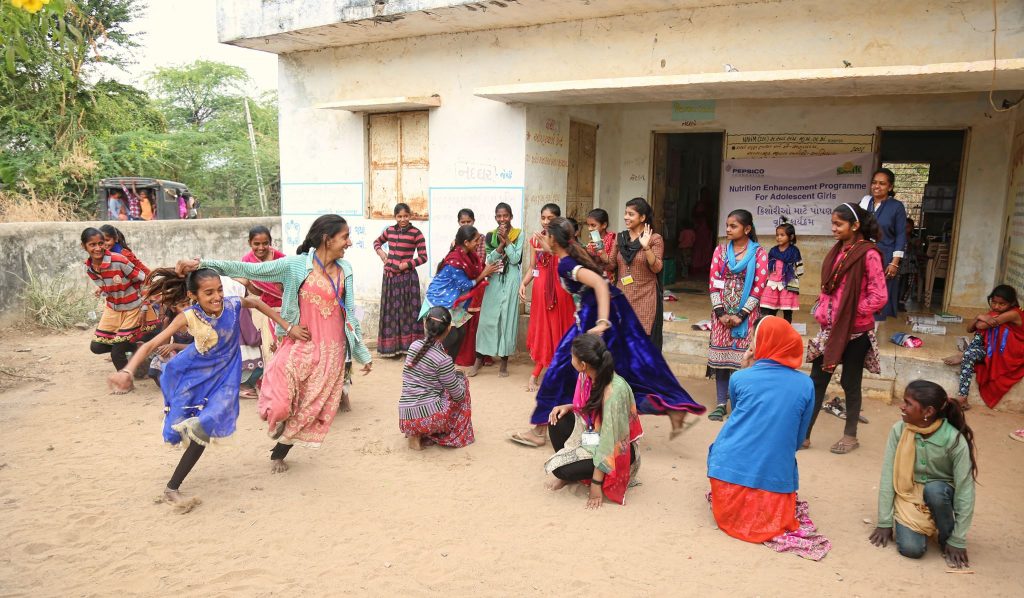
The case for renewed investment
As NEP 2020 notes, the early years are crucial not just for physical development but also cognitive and emotional growth. High-quality, child-friendly infrastructure (safe classrooms, play areas, sanitation, and power) is now explicitly mandated by policy. Indeed, states like UP and Maharashtra are hiring dedicated pre-school teachers and rolling out new curricula in Anganwadis. But to meet these goals, existing centres must be upgraded in tandem.
In practical terms, infrastructure translates to a well-lit, ventilated Anganwadi with clean water and toilets. It boosts attendance, learning and health. In Telangana, Anganwadi Workers report they cannot adopt digital or creative teaching methods without electricity. When toilets and water are absent, young children, and caregivers face illness and indignity. Conversely, interventions that improve the centre environment (e.g. furniture, cooking facilities, kitchen gardens) lead to higher community trust and programme uptake.
Smile Foundation’s own experience confirms this. With PepsiCo Foundation, Smile implemented the Nutrition Enhancement Programme (NEP) in rural Punjab. Over three years, NEP improved maternal-child nutrition in 23 villages of Sangrur, reaching 60,000 people. This CSR-backed initiative directly benefited 16,000 pregnant/lactating women and children and indirectly another 45,000, through 260 health camps, kitchen gardens and AWW training.
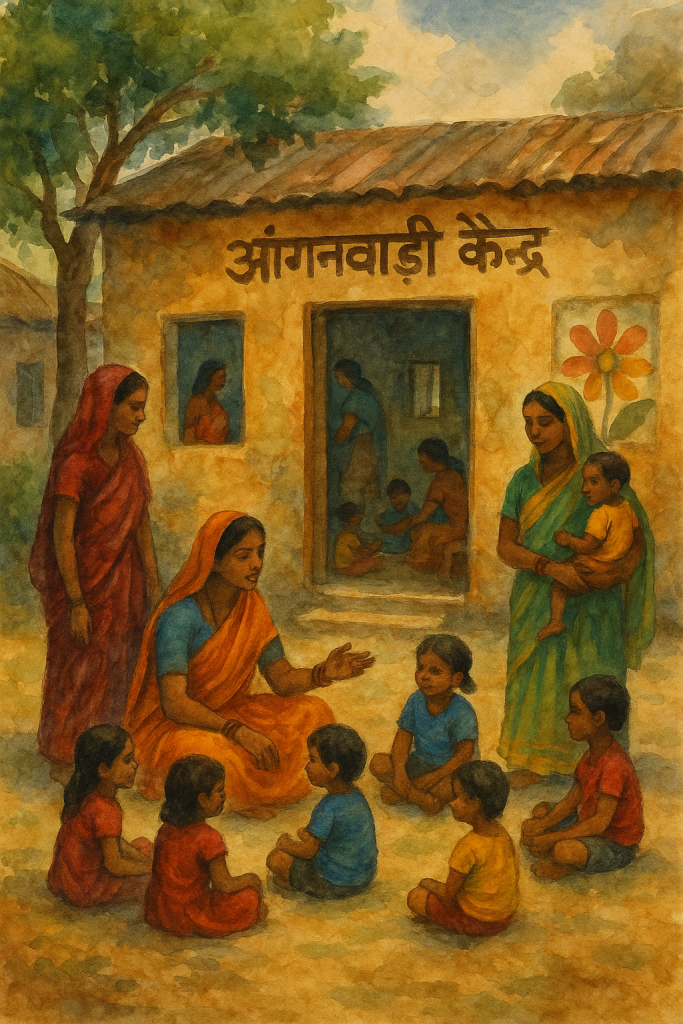
Likewise, in Kosi (Mathura, UP), the recent Pink Smile project (PepsiCo–Smile) deployed mobile medical units and community camps to screen and treat anemia for 4,200 vulnerable women and children. These projects underscore how supporting Anganwadi-based care yields immediate health gains.
Smile Foundation’s Anganwadi infrastructure initiatives
Building on this evidence, Smile Foundation has launched dedicated Anganwadi infrastructure programmes through CSR partnerships. In Maharashtra, the Mars Wrigley Foundation’s Community Connection grant empowered us to revamp 10 Anganwadi Centres (AWCs) across Pune. Over 2024–25 we revitalised 10 AWCs, impacting 13 centres overall, reaching 1,562 direct beneficiaries (children, mothers, adolescent girls) and 4,660 community members.
Key upgrades included 202 kitchen gardens to improve food security, 30 health/haemoglobin screening camps, and training for Anganwadi workers. We provided furniture, learning materials and safe sanitation creating cleaner, child-friendly learning spaces.
Similarly, under our Women Empowerment (Swabhiman) programme in Tamil Nadu, Odisha and other states, Smile has supported Anganwadi upgrades by building toilets, installing solar lights, and water filters, and training AWWs in hygiene and nutrition. Our anaemia and nutrition mobile units also regularly link families to their Anganwadi Centres. All these efforts from Assam to Andhra Pradesh illustrate Smile’s conviction that investing in Anganwadis today builds healthier, more educated communities tomorrow.
Practical CSR partnerships for lasting impact
For CSR leaders seeking high-impact opportunities, Anganwadi upgradation should be a strategic priority. We recommend:
- Adopt & Upgrade: Corporates can ‘adopt’ clusters of Anganwadis (or a mini-Anganwadi cluster) in partnership with NGOs like us. Funding can go to core infrastructure like permanent classrooms, clean toilets, borewells or piped water, electricity/smart lighting, boundary walls, and kitchen equipment.
- Nutrition & Nurture: Enhance the centre’s nutrition role by sponsoring kitchen gardens, community nutrition workshops, and improved kitchen-cum-store facilities. These immediately improve the meal program’s reach.
- Capacity Building: Invest in training Anganwadi workers (AWWs/AWHs) on early childhood pedagogy, health screening, digital tools and gender sensitivity so that physical upgrades yield programme quality gains.
- Monitoring & Community: Collaborate with local panchayats and beneficiaries in planning; involve employees as volunteers (e.g. helping refurbish centres). Set measurable outcomes (enrollment, health indicators, attendance) and share progress publicly.
The government’s own task force advises that public-private partnerships (PPPs) are vital to bridge the gap in ICDS service delivery. By partnering with NGOs like Smile Foundation who bring field expertise, CSR units can ensure sustainable models. For example, Mars Wrigley’s multi-year support combined fresh infrastructure inputs with IEC campaigns and AWW training. Such integrated projects create lasting change far beyond a one-time donation.
Building child-friendly futures
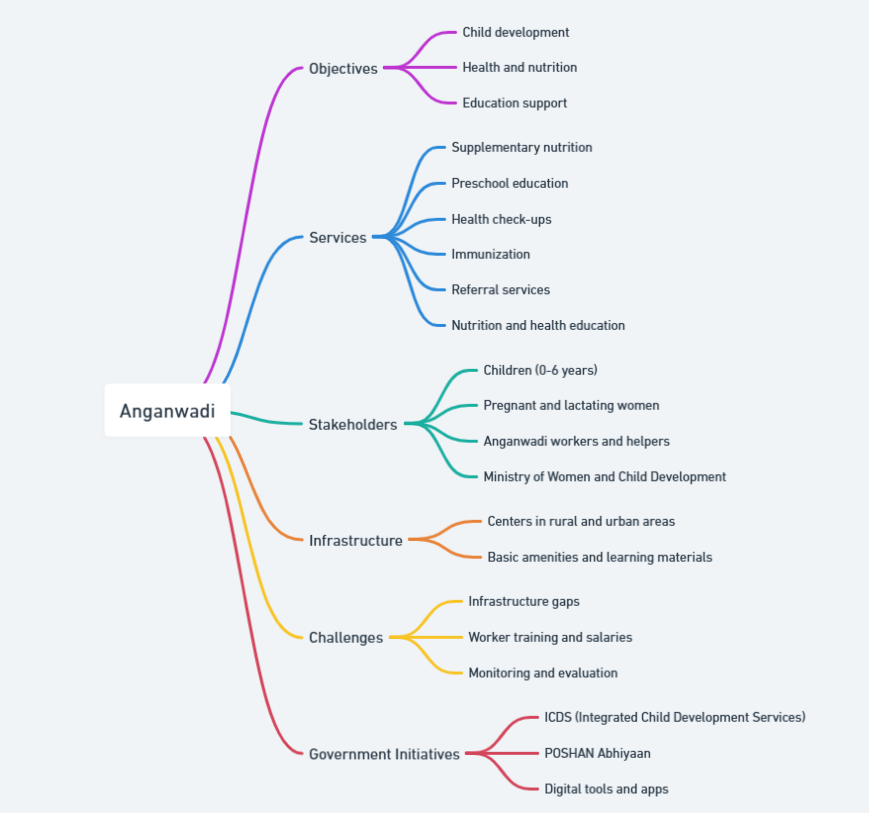
Well-equipped Anganwadi centres are an enabler of national development. They lay the foundation for healthier, smarter generations.
Smile Foundation calls on policymakers and CSR leaders to make Anganwadi upgradation a national mission. By collectively funding and maintaining model Anganwadis, India can accelerate the goals of POSHAN Abhiyaan, Beti Bachao-Beti Padhao, and universal preschool education. Every rupee invested yields returns in reduced malnutrition, better schooling outcomes and empowered mothers. We urge CSR heads to engage now. Your strategic CSR priorities can transform Anganwadis into vibrant community hubs, ensuring no child misses out on a strong start in life.
Sources: Government and media reports highlight the infrastructural shortfalls in Anganwadis, and policy analyses recommend urgent upgrades. The outcomes of Smile Foundation’s CSR partnerships (with PepsiCo, Mars Wrigley, etc.) document the impact of targeted Anganwadi improvements. All facts and figures above are drawn from these reports and our project data.