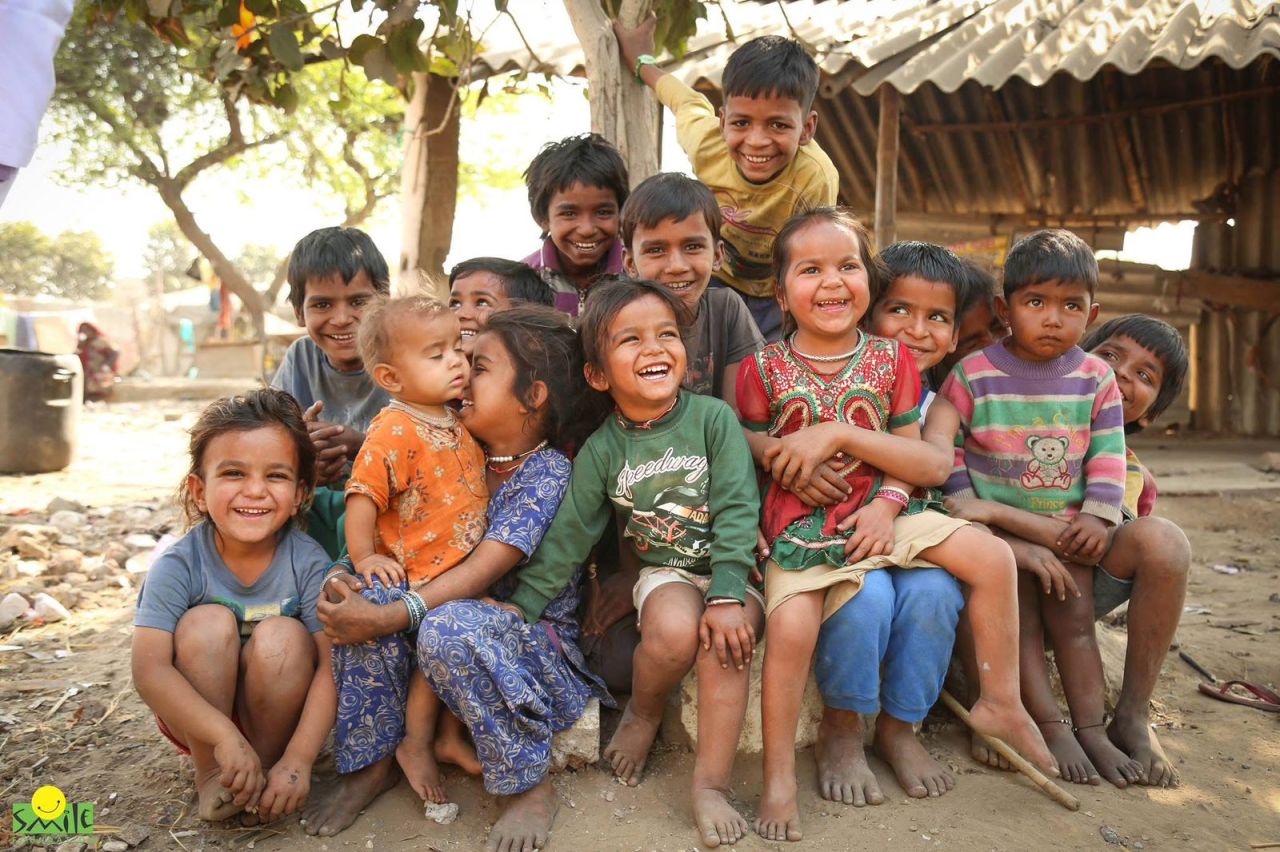

For a country that prides itself on being the world’s youngest nation, India remains startlingly casual about the health of its children. We celebrate exam toppers and teenage athletes, applaud our demographic dividend and talk endlessly about reaping the benefits of a young workforce. But, the foundational promise of childhood — to grow, to learn, to breathe, to simply be well — is eroding. And in far too many regions, that promise has already broken.
The symptoms are everywhere, yet treated as background noise. A five-year-old in Delhi begins his morning coughing, not because she/he/they is ill, but because the air has turned toxic again. In rural Uttar Pradesh, a mother watches her child struggle with recurring infections that never fully resolve. In Mumbai’s informal settlements, doctors say the same thing every winter: small bodies cannot carry the burden of pollution, malnutrition and overcrowding all at once.
India’s children are not just falling sick more frequently — they are being shaped by an environment that treats illness as inevitable. And parents, doctors, teachers, even governments have begun to behave as if this is the natural order of things. It is not.
A childhood built on fragile lungs
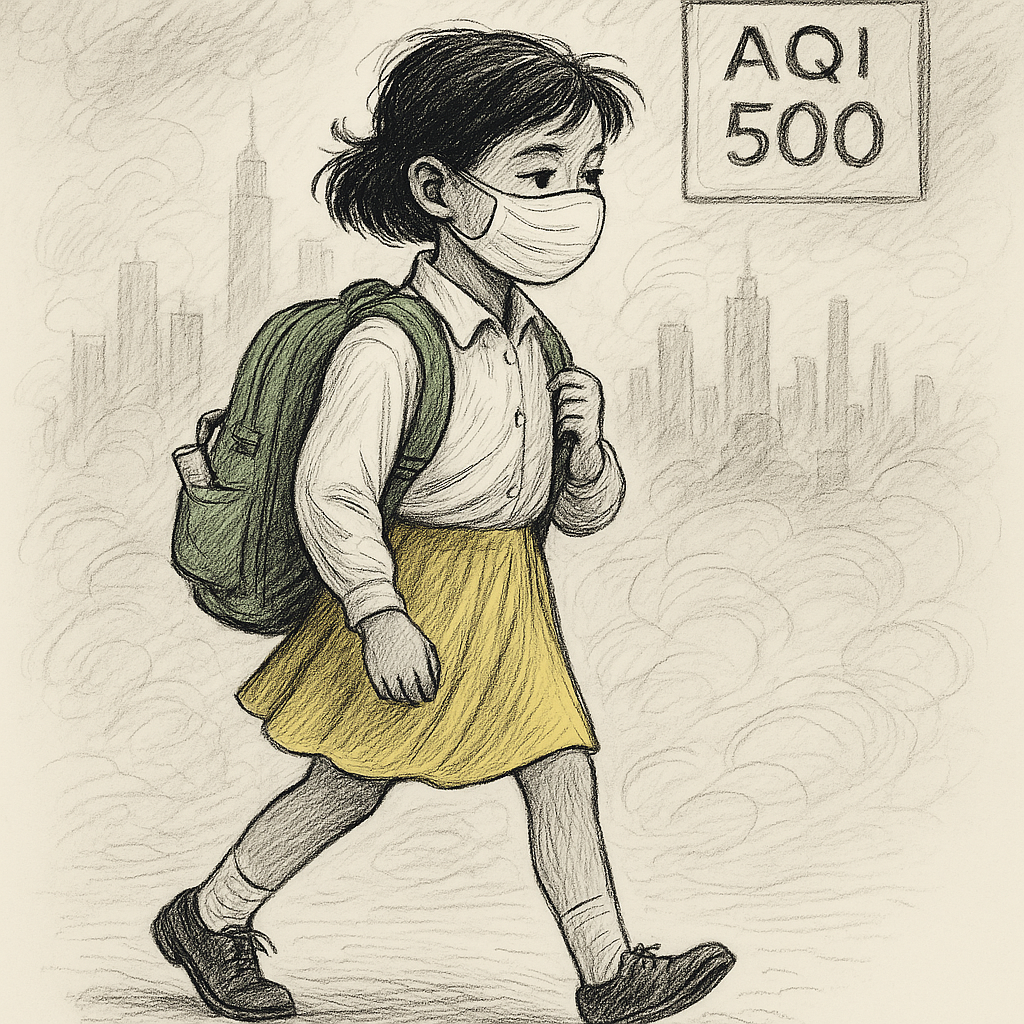
Let’s start with the air children breathe, because it tells a story that is hard to ignore. Across India’s big cities — Delhi, Mumbai, Kolkata, Lucknow — winter is no longer a season but a warning. Paediatric wards fill up weeks before Diwali. Nebulisers hum in living rooms. Parents compare inhalers the way they once compared tiffin ideas.
Doctors say children today are facing respiratory issues their predecessors rarely saw. Worse, these are not isolated spikes but chronic patterns: lingering coughs, repeated chest infections, compromised lung function, and in some cases, long-term developmental repercussions.
Yet, the political and societal response is maddening. Each year, we cycle through the same rituals: air quality dips, outrage rises, schools shut down, masks reappear and then — conveniently, predictably — we forget. India has normalised an emergency.
Behind every AQI statistic is a child whose lungs are still forming. Exposure at this stage doesn’t simply cause discomfort; it can permanently alter lung capacity and cognitive development. A toxic childhood is not something you outgrow, it shadows you into adulthood. When we talk about India’s economic future, this is the silent threat we are unwilling to confront.
The quiet hunger that weakens futures
Air pollution is only one dimension of the problem. The more insidious crisis lies inside classrooms, kitchens and anganwadis — a crisis of nutrition.
India still grapples with malnutrition levels that would be scandalous in any country aspiring to global leadership. Even before the pandemic, nearly a third of our children were stunted. In many districts, wasting rates remain among the highest in the world.
For all the debates on growth rates and GDP projections, India rarely pauses to consider what it means for millions of children to go through life with bodies and brains deprived of the nutrients required to learn, concentrate or build resilience against disease. Malnutrition is not just about hunger; it is about potential. It dims children’s capacity to think, reduces their earning prospects and reinforces cycles of poverty.
But these children do not march or protest. They do not write op-eds or trend on social media. They simply shrink into the background — quieter, weaker, less visible.
The deeper tragedy is that malnutrition is entirely preventable. And solutions, ranging from diversified diets to fortified foods to stronger public provisioning, are well known. What’s missing is political will, matched with consistent budgets and accountability.
Where mothers struggle, children suffer
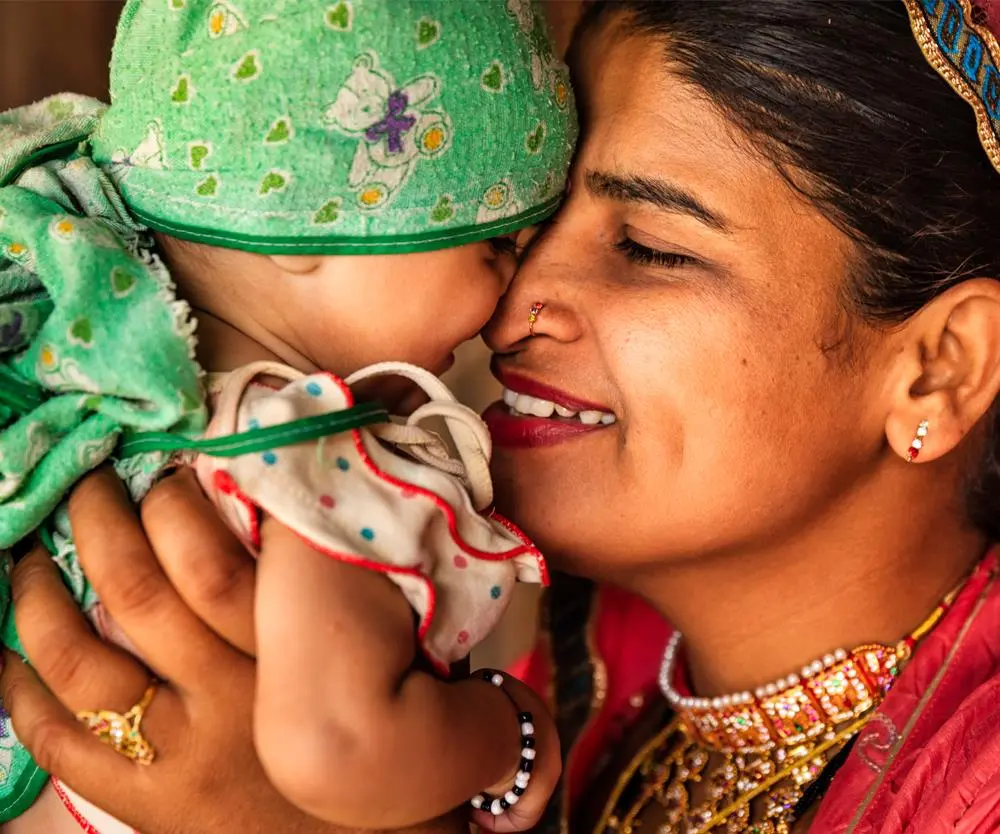
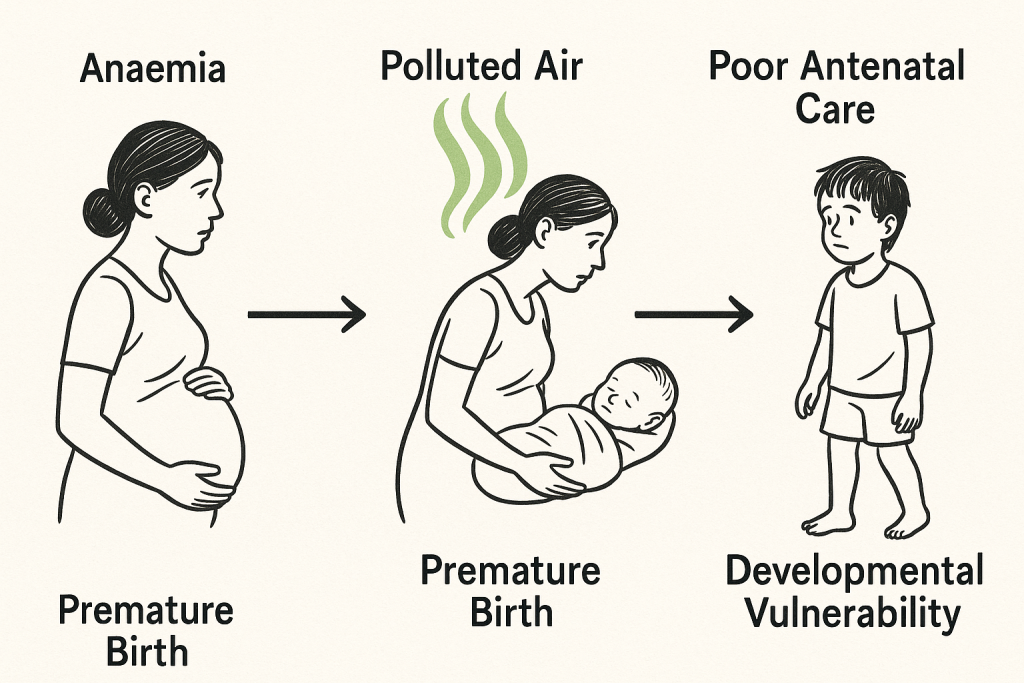
India’s child health crisis is intertwined with another uncomfortable truth of mothers remaining some of the least supported members of the population. A woman who enters pregnancy anaemic, overworked or exposed to polluted air is already carrying a disadvantage that her child will inherit.
Across urban slums and rural blocks, women continue to work through pregnancy out of necessity carrying bricks, stitching garments, cooking over smoky chulhas, inhaling dust and fumes. The idea of rest, nutritious food or regular antenatal care feels like a luxury. Many deliver babies too small, too weak, too vulnerable.
A healthy childhood begins long before birth, yet India’s maternal health ecosystem still feels fragmented. We offer advice without infrastructure, schemes without follow-through and entitlements without ensuring access. For many women, pregnancy is something to be endured, not supported. And children pay the price.
When illness becomes normal
One of the most worrying shifts over the last decade is the acceptance of poor health as an unavoidable part of childhood. Parents speak of recurring infections as “common these days,” as if the environment has rewritten the rules of biology. Teachers shrug off poor concentration among students. Doctors treat the same children for the same conditions every month.
Illness has become routine, and routine breeds complacency.
The consequences, however, are anything but routine. Poor health affects school performance, attendance, emotional well-being and long-term development. A child who misses weeks of school due to illness is not just missing lessons; they are falling off a trajectory that becomes harder to re-join with every absence.
Children deserve more than a revolving door of sickness and recovery. They deserve conditions that allow them to thrive in clean air, good nutrition, safe water, preventive healthcare and the simple ability to play outdoors without harm.
The myth that growth will solve everything
A common refrain in policy circles is that as India becomes richer, health will naturally improve. But this optimism obscures a hard reality. Economic growth does not automatically clean the air. It does not guarantee nutritious meals, functioning anganwadis or equitable healthcare. If anything, unregulated industrialisation and urbanisation often worsen conditions for children.
India risks repeating the mistakes of countries that achieved high GDP growth while inflicting irreversible environmental and health damage on their youngest citizens. The cost of inaction today will be paid in medical bills, lost productivity and diminished human capital tomorrow.
What a renewed promise could look like
This is not a hopeless story. India has the capacity — and increasingly, the institutional memory — to turn this crisis around. The question is whether child health will finally be treated as a national priority, not a welfare footnote.
A renewed promise of a healthy childhood would require:
1. A radical clean-air agenda
Not seasonal firefighting, but year-round policy coherence: stricter emissions controls, cleaner construction practices, support for electric mobility, agricultural alternatives to stubble burning and real accountability for violators.
2. A nutrition mission grounded in dignity
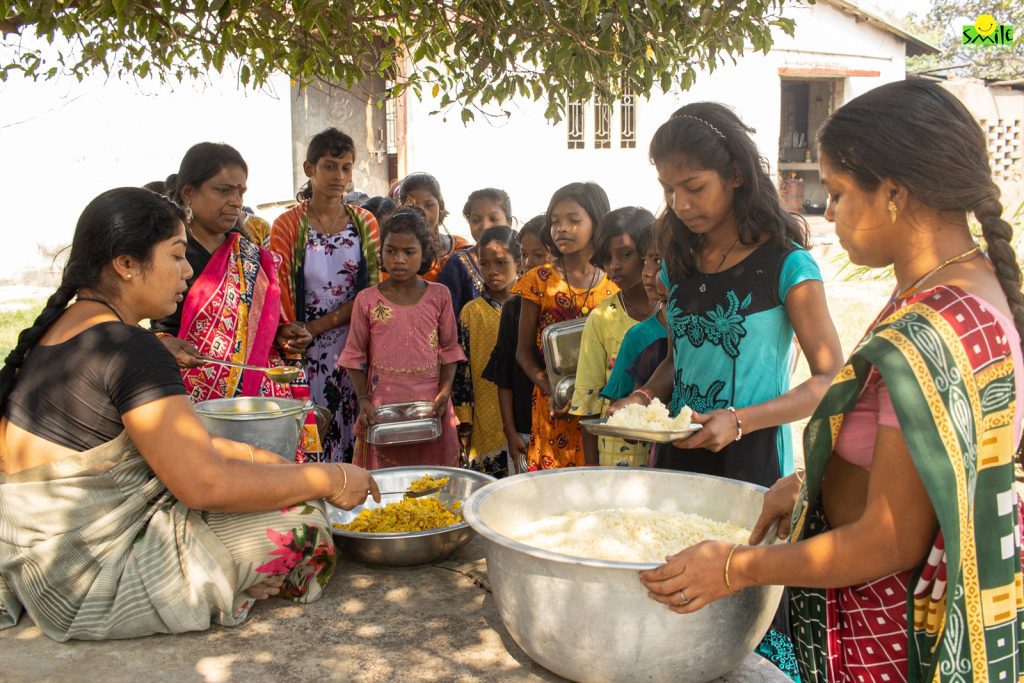
Not just calories, but quality. Access to protein, micronutrients, fortified staples and diversified diets must become non-negotiable. Anganwadis and schools should be equipped to be nutrition hubs, not mere distribution points.
3. Maternal health that feels like support, not struggle
Better antenatal care, safer workplaces, cleaner cooking fuel and community-level support systems — the basics that too many women still lack.
4. Preventive healthcare as a universal right
Regular screenings, early detection of chronic conditions and paediatric care that reaches rural and urban poor alike.
5. Safe spaces for children to grow
Parks, sports facilities, clean neighbourhoods — not just for recreation, but for physical and mental development.
India’s choice
Children cannot demand better policies. They cannot vote, litigate, lobby or negotiate. Which means the burden of protecting them falls entirely on adults — parents, policymakers, institutions, civil society and the rest of us who claim to care.
India is at an inflection point. It can choose a future where childhood is a fragile phase survived with luck. Or it can choose a future where childhood is the sturdy foundation it is meant to be — full of health, joy, curiosity and potential.
A nation that fails its children fails itself. And a nation that protects them secures its future.
Right now, India stands somewhere in the middle — aware of the crisis but not yet willing to confront it fully. The broken promise of a healthy childhood can still be mended. The question is whether we will act while there is still time or wait until an entire generation has already borne the consequences.