

Summary
Textbooks do more than teach; they shape a child’s self-image, empathy for classmates, and sense of possibility. In India, true representation means intentionally including diverse languages, family backgrounds, and everyday realities, while ensuring they’re depicted with dignity. Inclusive education in India should begin with representation, especially in ways of teaching and teaching materials.
Which story from your childhood textbooks do you vividly remember? Perhaps the one that reminded you of your own life experiences or felt as though it could happen to someone you knew. When a child opens a textbook, even a lesson as technical as permutations and combinations carries messages through its examples and illustrations. Over time, those details help shape what a child understands about who makes decisions, whose knowledge matters and what an ordinary life looks like.
Hasin’s story brings the question of whose lives appear on the page closer to home. He once feared that his disability might bring his education to an end. With support from Samarthanam Trust, he is now in school and hopes to become a doctor. His experience raises another question: when a child with a disability appears in a textbook, are they ever the one solving a problem, making a discovery or dreaming of a career in medicine?
Textbooks have the power to influence whether a child feels included or invisible. They introduce children to the wider world, but they also tell them whether their own experiences have a place in it. Some children find familiar details easily. Others keep turning the pages, looking for someone like themselves.
What does representation in textbooks mean? The starting point to inclusive education in India
The textbook definition of representation is ‘the way people, identities and everyday lives appear in words, images and examples. This would include the characters who speak, the occupations they hold, the homes they inhabit, languages they use, and even the gestures presented.’
Meaningful textbook representation is an important part of inclusive education in India, helping children recognise their own experiences while learning about lives different from their own.
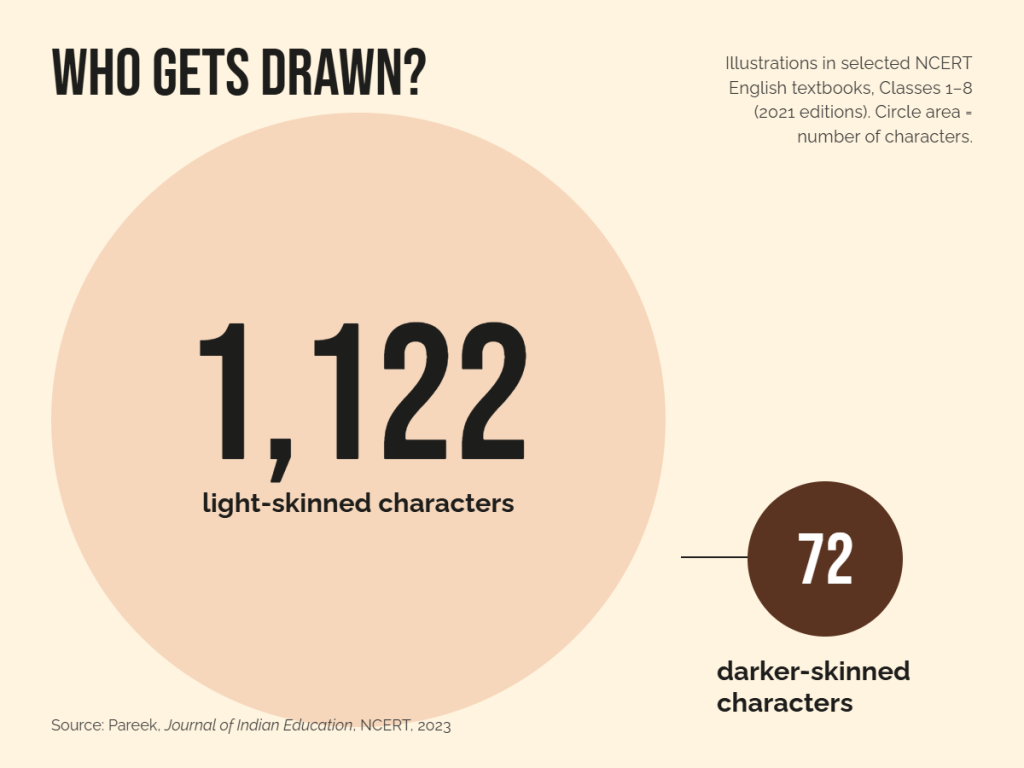
These details are easy to overlook until someone begins to count who appears, and how often. For a 2023 study published in NCERT’s Journal of Indian Education, researcher Dea Pareek examined selected content from the 2021 editions of English textbooks for Classes 1–8. She looked closely at the illustrations, recording who appeared in them and how different identities were portrayed.
In the illustrations analysed, she counted 1,122 light-skinned characters and 72 darker-skinned characters. The study also found limited representation of disability. These figures relate to the selected material, but they make a case for paying attention to pictures as well as words.
For instance, if illustrations repeatedly show the same body type and skin tone, or lead roles being played only by male characters, they present children with a very limited version of reality. Such portrayals can narrow the possibilities and imagination of the young minds. That’s why as much as representation matters, the quality of that visibility matters too.
Inclusive education in India requires attention to both: who appears on the page and what they are doing there.
Whose lives find a place in the chapters?
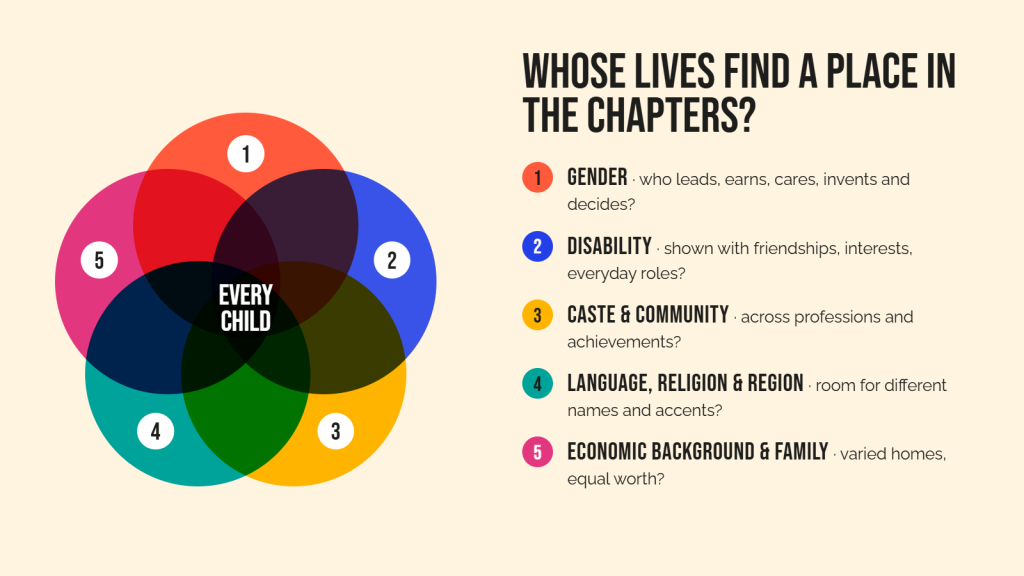
Textbook curators have a wealth of characters and experiences to draw upon, especially in a diverse country like India. For inclusive education in India to be meaningful, textbooks must reflect this diversity thoughtfully, not through token representation, but by portraying people from different backgrounds in varied and believable roles.
Visionary questions like these would help shape inclusive textbooks:
- Gender: Who leads, earns, cares, invents and makes decisions?
- Disability: Are children with disabilities shown with friendships, interests and everyday roles?
- Caste and community: Are marginalised and tribal people represented across different professions, achievements and experiences?
- Language, religion and region: Is there room for different names, traditions, accents and knowledge systems?
- Economic background and family: Do examples include varied livelihoods, homes and family arrangements without assigning them greater or lesser worth?
How does representation shape belonging, aspirations and engagement?
Representation does not require every child to find an exact version of themselves in a textbook. It simply means including examples and stories that children from different communities recognise and relate to.
A simple story about a weekly market, a fishing community or a family moving for work might give children something they recognise and deeply relate to. Their observations would become part of the lesson, and what they learn sparks their lively imaginations.
Imagining a broader spectrum of life
The roles characters occupy might open useful conversations about possibilities and a broader imagination. A woman repairing machinery or a person with a disability leading a research team gives teachers something concrete to discuss when questioning gender stereotypes and assumptions about ability.
Stories beyond textbooks raise the same question. Through SIFFCY, Smile Foundation brings children films that reflect varied lives. What children see on screen, like what they ca
Finding a way into the conversation
Familiar experiences can give the young minds something to contribute before they have comprehended and mastered every new term. A lesson on water, for example, might draw on students’ knowledge of wells, taps, rainfall or local storage practices that they are observing in their communal spaces. This may spark curiosity to learn beyond the textbook and think about how things around them could work differently.
Diversity in textbooks also widens the conversation for classmates, offering opportunities to encounter lives beyond their own.
What do inclusive textbooks look like in an Indian classroom?
India is both multicultural and multilingual, with varied communities, traditions, livelihoods and ways of life. Representation in textbooks should reflect this diversity across the people, places and experiences they portray.
One practical way to advance inclusive education in India is to create learning materials that connect classroom concepts with children’s home languages, local knowledge and everyday realities.
As the popular aphorism goes: Kos-kos par badle paani, chaar kos par baani (The language spoken in India changes every few kilometres, just like the taste of the water). Language deserves a closer look, particularly in how it affects a child’s understanding of a lesson and confidence to participate.
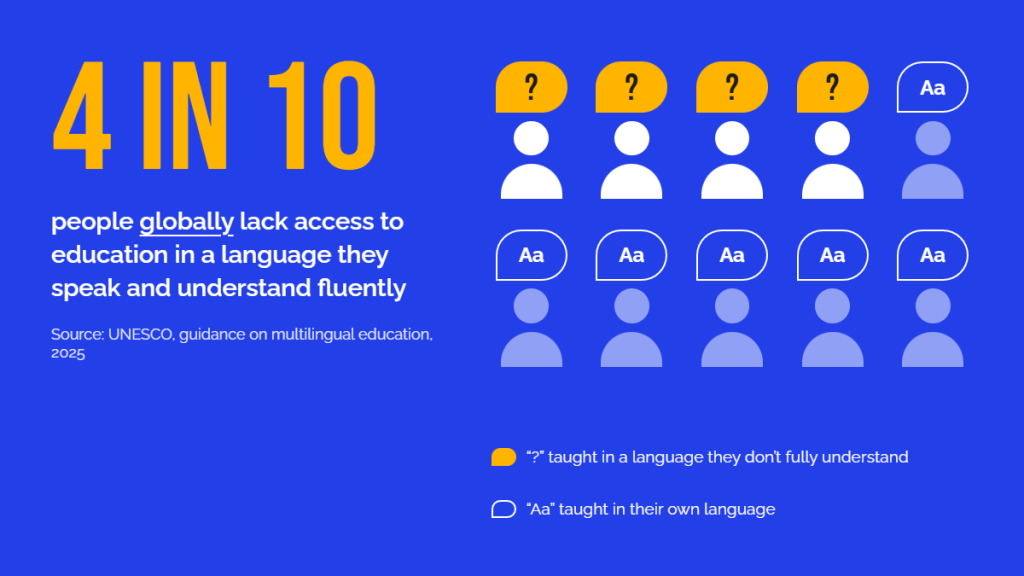
The language an Indian child speaks at home usually differs from the one used in their textbooks. Following a lesson then involves understanding unfamiliar words alongside new ideas. UNESCO’s 2025 guidance on multilingual education reports that 40% of people globally lack access to education in a language they speak and understand fluently. In India’s diverse classrooms, this raises a practical question: how do learning materials build on the languages children already know? An inclusive classroom should make room for both; learning global as well as local language.
How to ensure meaningful representation?
Meaningful representation introduces students to varied and believable characters and experiences, deepening their understanding of the concepts. A character with a disability can enjoy a joke, make a mistake or lead a group activity. An Adivasi character can have ambitions and interests that extend across many parts of contemporary life.
A few practical questions that will help reflect on the content more mindfully:
- Who speaks most often, and who gets to solve problems?
- Are particular communities repeatedly associated with a narrow set of roles?
- Do illustrations reflect varied skin tones, bodies and ways of living?
- Have people familiar with the communities portrayed helped review the material?
Teachers can build on this work through local stories, supplementary reading and examples contributed voluntarily by students. The students should also be encouraged to share their understanding and relevant stories from their lives and discuss instances with fellow classmates. These steps create opportunities for recognition while helping children explore unfamiliar experiences with curiosity and respect.
How does Smile Foundation support inclusion?
A textbook cannot hold every child’s story. But a teacher can notice when a child has something to bring to a lesson, even if it is not on the page.
At one of Smile Foundation’s rural education centres, a grandmother shared that her granddaughter, who had a speech delay, loved local folk songs. The teacher brought those songs into lessons, and the child began communicating with greater confidence.
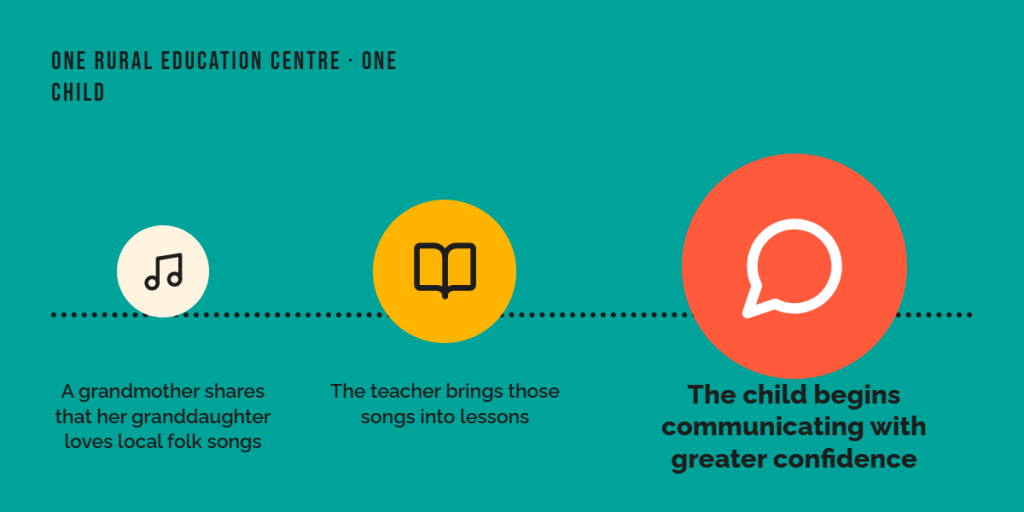
It is a small example of what inclusive education in India looks like in practice. Alongside stories and images that reflect different lives, children need teachers who recognise their experiences as something worth bringing into the classroom. That is part of what Mission Education’s work with teachers supports.
Pages that leave room to dream

Across their years at school, students should encounter many ways of living, speaking, working and imagining a future. Neither textbooks nor teachers should limit the horizon of a child’s dreams.
Thoughtful representation in textbooks would support this through familiar experiences, varied roles and respectful introductions to other people’s lives. Combined with responsive teaching and practical support, it will help make the classroom a place where children feel their experiences are welcome and their contributions matter.
Frequently asked questions (FAQs): Inclusive Education in India
- What counts as representation in a textbook? It is about who appears in the stories, pictures and examples, and what those people get to do.
- Whose lives should Indian textbooks reflect? Children from different communities, regions, abilities and family backgrounds should see varied lives and roles on the page. A familiar example gives a child something to bring to the lesson.
- When does representation become tokenism? When someone appears only to stand for a group. Meaningful characters have friendships, choices, interests and ambitions of their own.
- What can teachers do when a textbook leaves people out? They can bring in local stories, question narrow portrayals and invite children to share experiences if they wish.
- Can textbooks shape what children hope to become? Families, teachers and opportunities all influence aspirations. Textbooks add a picture, students return to every day of who gets to lead, discover and dream.