
Summary: 5 Key Points
- Thalassemia is an inherited disorder affecting haemoglobin production.
- Beta thalassemia is the most common form in India.
- Carriers may have no symptoms and remain unaware of their status.
- Early screening and genetic counselling can help prevent severe thalassemia.
- India needs stronger screening, blood safety and access to advanced treatment.
What is Thalassemia?
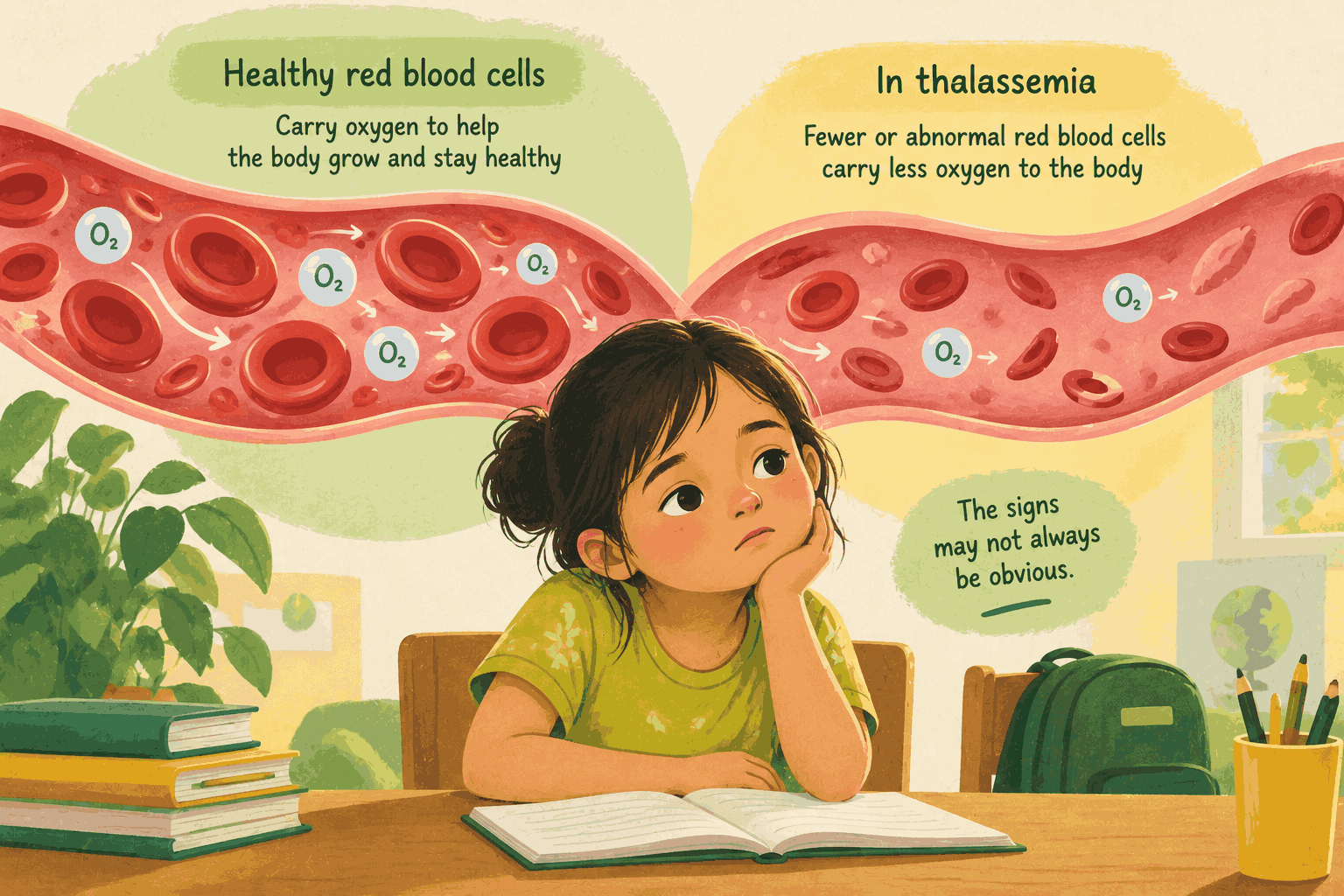
Thalassemia is a daily reality for thousands of Indian families. This inherited blood disorder disrupts the body’s ability to make healthy haemoglobin, the very molecule responsible for carrying oxygen in our blood. India shoulders a staggering burden, accounting for nearly a quarter of the world’s thalassaemia cases (largely Beta-thalassaemia). Thus, awareness and early screening are lifelines.
At its heart, thalassemia is a genetic condition affecting the production of haemoglobin’s protein chains.
There are two main forms:
- Alpha thalassemia: Mutations affect the alpha-globin gene.
- Beta thalassemia: Mutations affect the beta-globin gene—this is the most common type in India.
The disorder is passed down in an autosomal recessive manner. Two healthy-looking parents, each silently carrying the gene, can have a child with severe thalassemia major. The fact is, most carriers have no idea they’re at risk.
The Prevalence and Causes of Thalassemia
India faces a thalassemia crisis. The thalassemia trait affects an average of 3–4% of the population, translating to roughly 42 million carriers. Every year, between 10,000 and 15,000 infants are born with thalassemia major.
Thalassemia is caused by inherited mutations in the genes responsible for haemoglobin’s alpha or beta chains. Carriers usually have no symptoms, so the disorder can linger in families for generations undetected.
Symptoms: How Does Thalassemia Present?
In Children
Thalassemia major usually becomes apparent in the first two to three years of life. Parents may notice:
- Unusual paleness (pallor)
- Persistent tiredness and weak feeding
- Slow growth and delayed development
- A swollen abdomen (enlarged liver or spleen)
- Yellowing of skin or eyes (jaundice)
- Bone deformities, especially in the face, in severe cases
In Adults
Carriers (thalassemia minor) might have mild, persistent anaemia or no symptoms at all. Many discover their status only during routine blood work or if a child is diagnosed.
Why Early Screening Matters
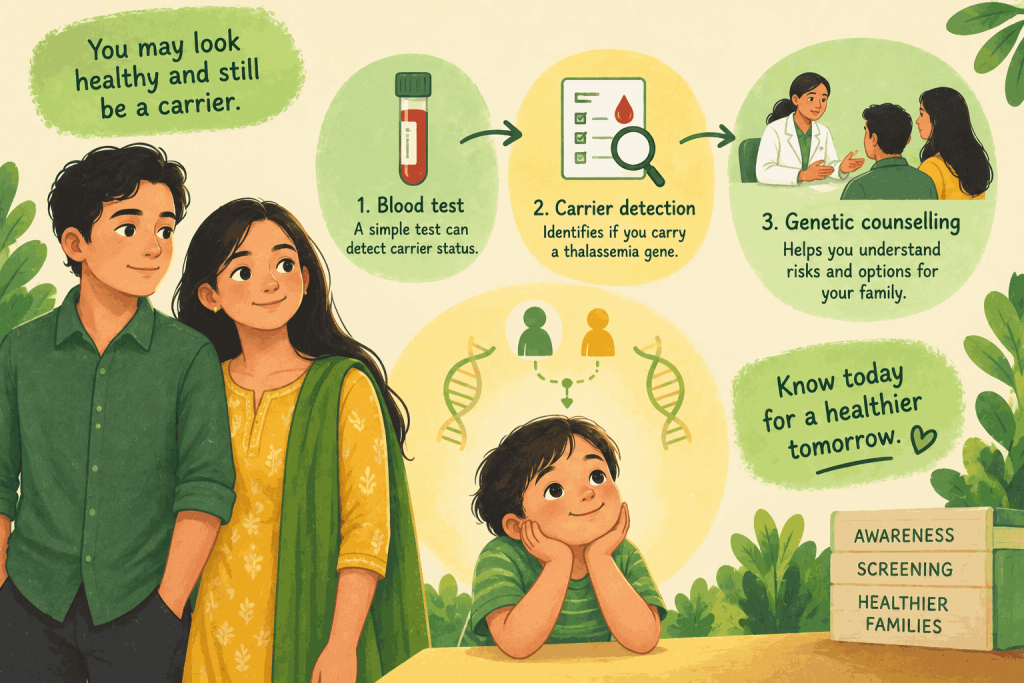
Early detection can change everything. Screening before marriage or pregnancy gives families the chance to make informed choices and prevent severe disease in future generations.
Screening involves:
- Complete Blood Count (CBC): can reveal suggestive patterns.
- Haemoglobin Electrophoresis/HPLC: confirms carrier status.
- DNA-based genetic testing: provides definitive results.
A single test before marriage or conception, particularly in high-risk communities, can save a family years of suffering and uncertainty.
Regional Trends and High-Risk Groups
Studies highlight significant regional differences. In the North East, Central and South, children are more likely to be diagnosed with haemoglobinopathies.
Most diagnoses happen in children under three, making newborn and early childhood screening absolutely crucial. From 1990 to 2023, the global disability-adjusted life years (DALYs) rate for thalassemias dropped by 44.8% and mortality fell by 31%. This reflects improved diagnosis, care and prevention in many countries. The highest prevalence globally is among those under 20 years — in 2023, the rate was 36.3 per 100,000 in this age group. China achieved a 78.2% reduction in thalassemia DALY rates since 1990 through mass screening, accessible treatment (including curative stem cell transplant) and strong insurance support. The Chinese model demonstrates the power of integrating screening, prevention and advanced care, but also highlights continued rural/urban health gaps.
The Importance of Prevention and Community Awareness
Mandatory screening for high-risk groups is strongly recommended by health experts. Genetic counselling helps carrier couples understand risks and explore options, including prenatal diagnosis or IVF with genetic testing.
Community education is equally vital. Breaking the stigma and normalising testing can prevent new cases. India can take inspiration from countries like Cyprus and Iran, where routine premarital screening and public awareness have nearly eliminated new thalassemia major cases. China’s success story to reduce thalassemia cases significantly is another example.
Advances in Diagnosis and Management
Diagnostic technology has made prevention and management more effective:
- High-Performance Liquid Chromatography (HPLC) and genetic testing are now widely available and highly accurate.
- Management for thalassemia major includes regular blood transfusions, iron chelation, and, when possible, bone marrow transplantation — the only curative option.
Early and accurate diagnosis means families can access optimal care from the outset.
Policy and Public Health Initiatives in India
The Indian government has created dedicated initiatives, such as the National Program for Control of Blood Disorders. Several states have made premarital or antenatal thalassemia testing mandatory. But, treatments are expensive and implementation is uneven.
India needs to scale up nationwide carrier screening and prevention by the following way:
- Expand premarital, antenatal and school-based screening programmes, especially in high-risk regions and communities.
- Integrate genetic counselling into primary healthcare to inform carriers and their families about risks and reproductive options.
- Embed thalassaemia awareness into school curricula and community health initiatives to foster early education and reduce stigma.
India needs to accelerate adoption of advanced curative therapies and make it accessible:
- Streamline regulatory pathways for approving new treatments like gene therapy and bone marrow transplantation.
- Subsidise and expand access to advanced therapies through public health insurance (e.g., Ayushman Bharat), making them affordable for more families.
- Encourage domestic research, manufacturing and public-private partnerships to drive innovation and reduce costs.
- Adopt advanced blood screening technologies and strict protocols to minimise transfusion-transmitted infections.
- Improve access, quality and coordination of blood banks and voluntary donation drives across the country.
- Support long-term care by providing holistic management for iron overload, organ complications and psychosocial support.
Conclusion
Thalassemia remains a formidable health challenge for India, but it is not insurmountable. India’s next leap against thalassaemia lies in scaling up prevention, embracing innovation, ensuring blood safety and putting patients at the centre of every policy. With urgency and alignment, the country can shift from managing the present to securing a healthier future. Empowering families with knowledge and encouraging testing before marriage or pregnancy will help create a future where thalassemia is no longer a hidden threat.
FAQs
1. What is thalassemia?
Thalassemia is an inherited blood disorder in which the body does not produce enough healthy haemoglobin. It can cause anaemia and, in severe forms, may require lifelong medical care.
2. What are the main types of thalassemia?
The two main types are alpha thalassemia and beta thalassemia. Beta thalassemia is the more common form in India.
3. What causes thalassemia?
Thalassemia is caused by inherited genetic mutations that affect the production of the alpha or beta protein chains that make up haemoglobin. A child can inherit a severe form when both parents carry a relevant gene variant.
4. What are the symptoms of thalassemia in children?
Children with severe thalassemia may develop symptoms such as persistent tiredness, pallor, poor growth, weakness, an enlarged liver or spleen, jaundice and, in severe cases, bone changes. Symptoms may become apparent during the first few years of life.
5. Why is thalassemia screening important?
Many thalassemia carriers have few or no symptoms and may not know they carry the condition. Screening before marriage or pregnancy can help people understand their carrier status and make informed reproductive decisions.
6. How is thalassemia diagnosed?
Initial blood tests such as a complete blood count can identify patterns suggestive of thalassemia. Haemoglobin electrophoresis or HPLC can help identify haemoglobin disorders, while genetic testing can provide more definitive information in appropriate cases.
7. Can thalassemia be treated?
Management depends on the type and severity of thalassemia. Severe forms may require regular blood transfusions and iron chelation therapy. Haematopoietic stem cell transplantation can be curative for some patients, while newer treatments, including gene-based therapies, are expanding the treatment landscape.