
As technology rapidly transforms our society, one truth stands out: nurturing scientific thinking must begin early, and it cannot be left solely to formal education. As India’s economy embraces technology, there’s a growing push to introduce children to STEM — science, technology, engineering, and mathematics — from the very start. Many parents, bombarded by adverts for coding robots and “smart” toys, wonder if they’re missing the boat without these tools. But the thing: scientific thinking isn’t born in a box. It grows when children are free to ask “what if?” and to get their hands a bit dirty along the way through play-based learning.
The journey starts with play that is curious, inventive, and often chaotic, where children ask questions, make discoveries and build the skills they’ll need for the future. Play is where curiosity takes shape, mistakes are made and ideas are tested (sometimes with a bit of mess thrown in for good measure).

Why STEM Toys Matter in Early Childhood
STEM toys have become a buzzword, but their true value lies in the way they bring science, technology, engineering and mathematics into a child’s everyday world. Playing, whether it’s building a bridge with blocks, programming a simple robot or solving a puzzle, teaches kids problem-solving skills, logical reasoning, teamwork and creative thinking. This direct approach is especially effective for Indian families. We are a society that is about to undergo rapid modernisation, yet is firmly rooted in tradition. STEM toys and activities provide a safe space for kids to experiment, fail and learn through doing.
The Power of Everyday Objects
A common misconception is that meaningful STEM learning demands pricey kits or digital subscriptions. In reality, some of the richest STEM experiences arise from the simplest materials. Indian homes are filled with everyday treasures: cardboard boxes, old spoons, plastic bottles, spare buttons, bits of string. These objects invite children to invent, test and rebuild. The lack of fixed instructions encourages planning, experimentation and perseverance, which are habits at the very heart of scientific thinking.
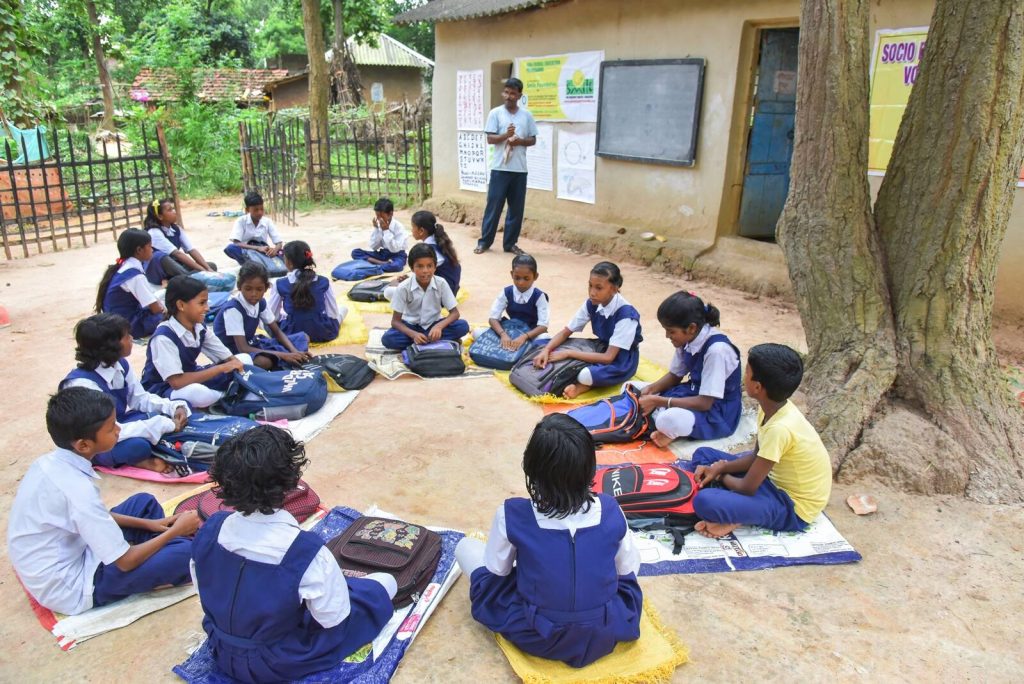
This, too, is a deeply Indian tradition. Watch any child in a rural courtyard stack earthen pots or a city child fashion a toy from discarded packaging, and you’ll see young scientists at work. Through this kind of open-ended, resourceful play, children develop resilience, creativity and the confidence to ask, “What if?”
Building Scientific Thinking in Early Childhood
Scientific thinking is not a mysterious process reserved for laboratories; it is an everyday skill that grows from observation, curiosity and reflection. When children play, they are constantly experimenting, mixing water with soil, building towers or sorting objects by shape and colour. Each activity prompts questions: Why did this sink? What happens if I use a different material? How can I make this stronger?
Through such inquiry, children naturally practise the scientific method: they observe, hypothesise, test and refine their understanding. The process matters more than the outcome. Whether a bridge collapses or stands firm, the child is learning to investigate, adapt and persevere.
In India, this approach is particularly relevant. Our children inhabit diverse environments, such as urban flats, small towns, rural villages, yet the impulse to tinker and explore is universal. The biggest challenge is to nurture it, not smother it with too many rules or rote-learning.
How Adults and Teachers Can Help
The adults in a child’s life are crucial to igniting scientific thinking. Parents, grandparents and teachers are not there to provide all the answers. Instead, they can act as facilitators — asking open-ended questions, encouraging children to explain their thinking and celebrating both small discoveries and big failures. A simple “What do you think will happen if…?” can turn a routine moment into an opportunity for critical thinking.
But supporting children’s scientific curiosity demands more than goodwill. Adults and teachers must themselves understand the value of inquiry-based learning. Teachers in particular need access to ongoing professional development — workshops, peer learning circles and practical resources that show how to guide hands-on, inquiry-led activities in diverse settings.
Parents, too, benefit from guidance. Community groups, local NGOs and educational organisations can all play a role, offering simple toolkits, demonstrations or parent-child workshops that demystify STEM play and build confidence. And let’s not forget policy. If governments invest in early-years teacher training and officially support playful, exploratory learning, it sends a strong message that curiosity is valued just as much as exam results.
The Role of Stakeholders
No single group can create a culture of scientific thinking alone. Ultimately, policymakers, educators, community groups and the private sector all have a role to play in helping those on the front lines. The government’s investment in early years education should focus on teacher professional development and resources for families. India’s rich legacy of craftsmanship and innovation can be harnessed to incentivise local businesses and toy makers to develop inexpensive, culturally relevant STEM toys and kits.
Community centres, libraries and museums can provide after-school clubs, hands-on exhibitions and free play spaces, ensuring that STEM learning isn’t confined to those who can afford private classes or expensive products. Media campaigns can help change societal attitudes by promoting curiosity, experimentation, and perseverance as essential Indian values.
Recognising High-Quality STEM Toys and Experiences
Not all toys are created equal. The best are age-appropriate, durable, open-ended and relevant to a child’s daily life. Increasingly, Indian toymakers are rising to the challenge, creating innovative products that draw on local traditions and materials. Yet, what matters most is not the cost or the brand, but whether a toy or activity invites children to explore, persist and create.
Beyond Scientific Thinking
Learning through play does more than build future engineers or scientists. It cultivates confidence, resilience and a collaborative spirit. Inclusive, hands-on activities break down gender and social stereotypes, opening doors for all children, regardless of background or ability. These experiences equip them for life.
Taking Play-Based STEM Learning to More Children
The principles of play-based and inquiry-led learning become even more important when we consider children who have limited access to specialised educational resources. A child should not need to attend a well-resourced private school or have an expensive STEM kit at home to experience the excitement of building, testing, questioning and discovering. Making these opportunities accessible is an important part of creating a more equitable STEM ecosystem in India.
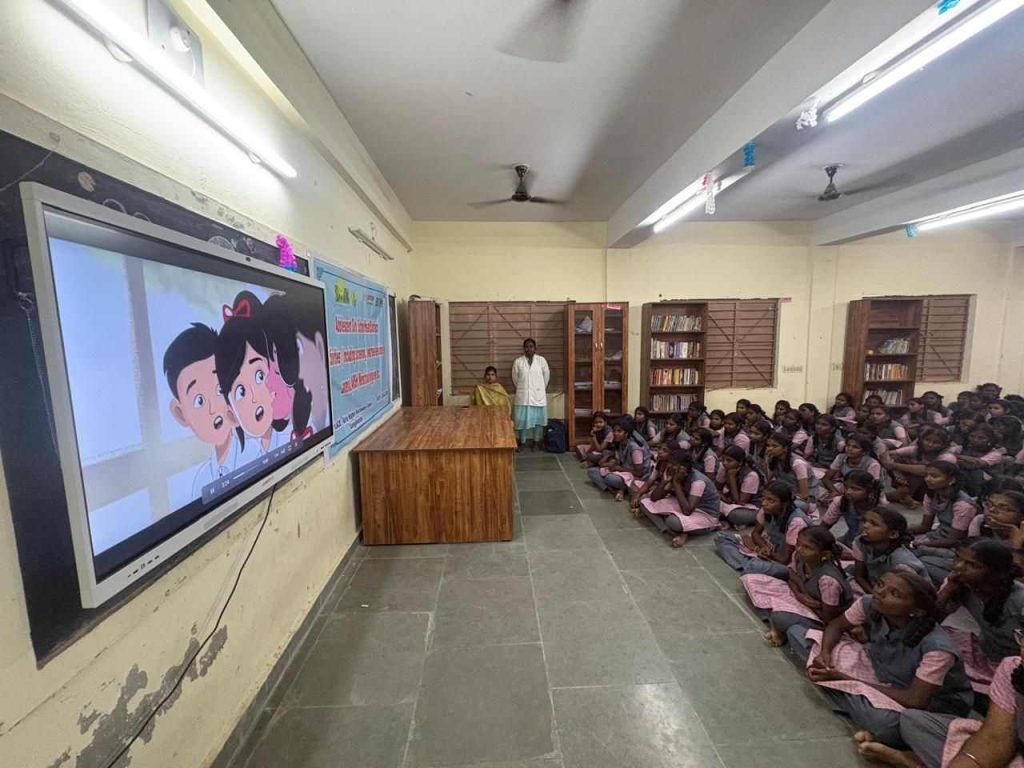
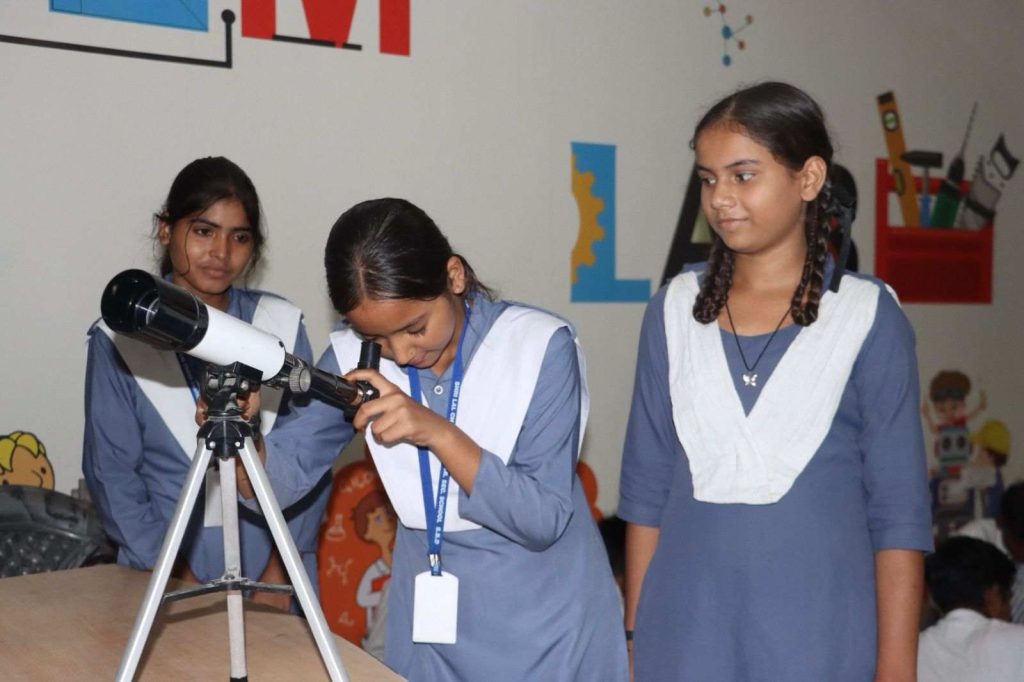
Smile Foundation’s Mission Education programme offers one example of how this can work at scale. Rather than treating STEM as a separate subject, the programme integrates STEM learning with activity-based education, digital learning, teacher development and efforts to strengthen learning environments for children from underserved communities. In 2025, Mission Education introduced STEM Labs at 32 locations, engaging more than 22,000 students in experiential learning through science experiments, robotics and model-based projects.
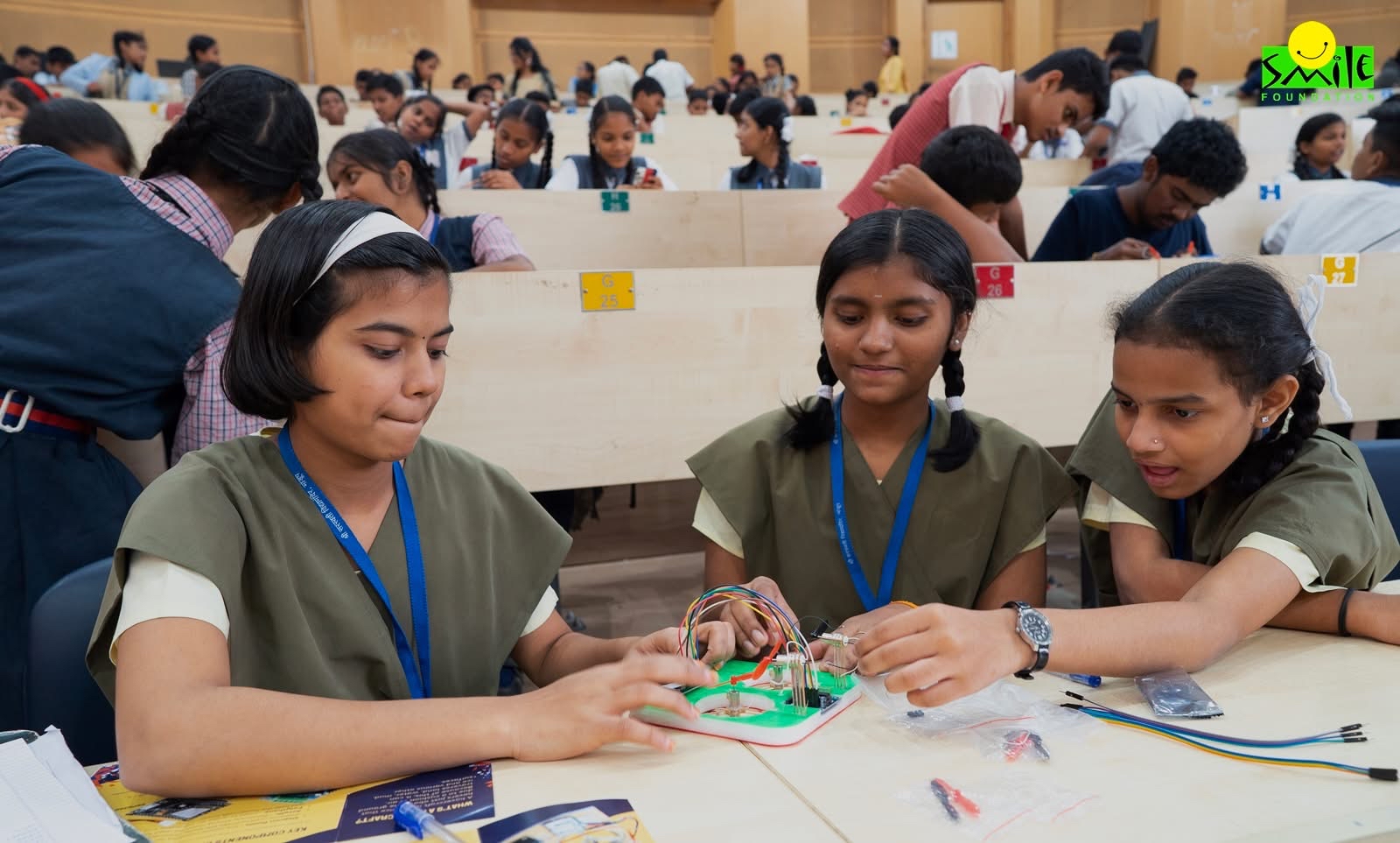
The emphasis is on learning by doing. Through STEM labs and DIY activity kits, children can build, test, observe and modify their ideas rather than simply memorising scientific concepts. Smile Foundation has also used mobile STEM laboratories to take these experiences beyond schools with permanent infrastructure. Its STEM on Wheels initiative, supported by the BMW India Foundation, brings robotics models, innovation kits, digital learning tools and hands-on experimentation to underserved schools and communities.
This is particularly relevant to the idea that STEM learning does not have to begin with expensive technology. A DIY activity can be a starting point for understanding a much bigger concept. Smile Foundation’s STEM interventions use hands-on activities to connect scientific ideas with children’s everyday surroundings, helping them move from “What is this?” to “How does this work?” and eventually to “What could I change?”
The organisation has also created opportunities for children to encounter forms of STEM that may otherwise seem distant from their lives. Through its collaboration with IIT Bombay, students from Mission Education centres have participated in workshops covering robotics, 3D printing, aero-modelling, astronomy, energy and Tinkerers’ Laboratory activities. Hundreds of children have benefited from these workshops with more workshops continuing to give students opportunities to build, experiment and engage directly with advanced scientific and technological concepts.
The experience matters for another reason: exposure changes aspiration. When a child who has never encountered a robotics laboratory gets to build a robot, experiment with electronics or explore astronomy, STEM stops being an abstract idea associated with someone else’s future. It becomes something they can imagine themselves doing.
But equipment alone cannot create this shift. Teachers are central to the process. Smile Foundation’s education programme invests in teacher capacity-building, including activity-based and experiential learning, child-centric pedagogy, classroom management and the effective use of technology. In 2025, 1,142 teachers participated in 244 training sessions under Mission Education.
This reflects an important principle for early STEM education: the most valuable STEM resource in a classroom may not be the robot, tablet or laboratory— it may be the adult who knows how to turn a child’s question into an investigation.
Smile’s partnerships also demonstrate how different organisations can contribute to this ecosystem. Collaborations with institutions such as IIT Bombay and Symbiosis Institute of Management have enabled students to explore robotics, coding, electronics, mechanics, aero-modelling, astronomy and other areas, while partners such as Elements have supported STEM lab infrastructure, DIY kits, teacher training and digital learning resources.
Equity is another important part of this work. Access to STEM is not only a question of geography or income; gender can shape whether children see themselves as belonging in science and technology. Smile Foundation has therefore also used mentorship and role-model exposure to encourage girls from underserved communities to consider STEM pathways. Through its partnership with BT Group and the British Asian Trust, adolescent girls have interacted with women working in technology and digital fields, helping make STEM careers more visible and attainable.
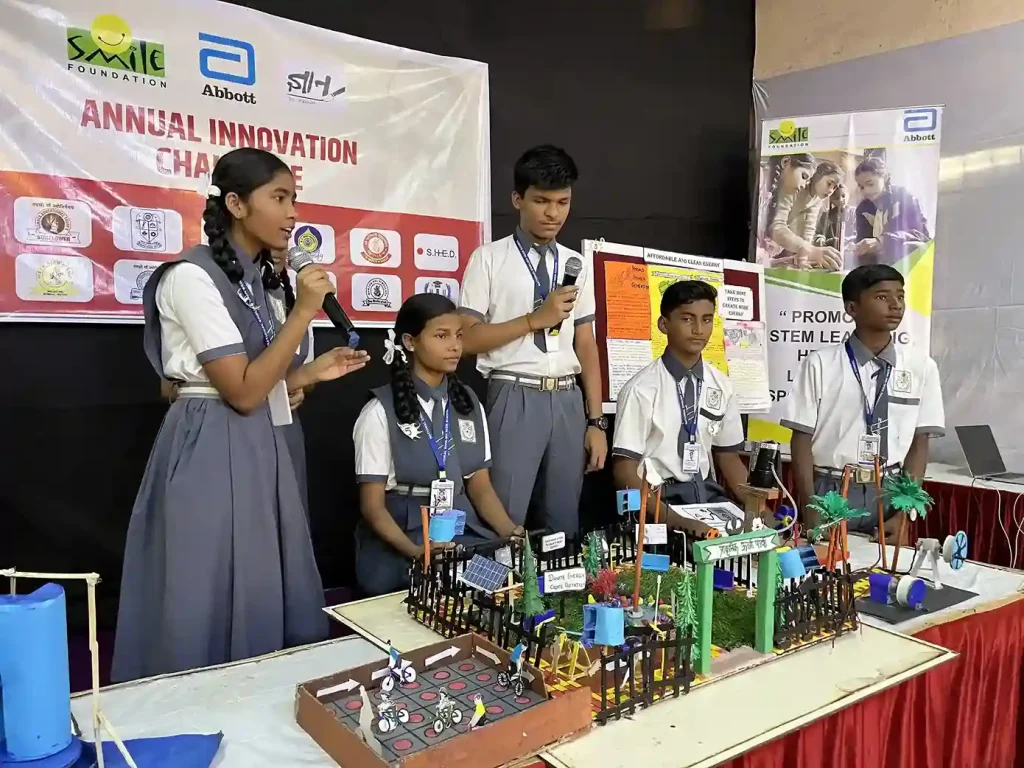
The journey can extend beyond the classroom as well. Science clubs, innovation fairs and challenges give children opportunities to collaborate, develop ideas and present solutions to real problems. Smile Foundation’s Annual Innovation Challenge, supported by BMW India Foundation, involved 100 students developing 25 working prototypes addressing social and environmental challenges. Such experiences take STEM from learning about problems to designing solutions.
Taken together, these initiatives point to a broader understanding of STEM education. It is not simply about putting a laboratory in a school or giving a child a coding lesson. It is about creating an ecosystem in which children have access to tools, opportunities to experiment, teachers who can facilitate inquiry, role models who expand their aspirations and spaces where their ideas are taken seriously.
That is also why the principles of play-based learning matter. Whether a young child is building a tower from blocks or an older student is constructing a robot, the underlying process is remarkably similar: observe, imagine, test, fail, rethink and try again. The equipment becomes more sophisticated with age, but the scientific mindset begins with the same simple invitation: “What if?”
Path Forward for India
Getting kids to think as scientists starts with interest, support and the freedom to explore, whether it’s with garden pebbles, a science experiment in the kitchen or an afternoon of making up stories. We must make sure that every child has a place to wonder, tinker and discover, at home, at school and everywhere else. Our job is to trust their play, invest in those who guide them, and watch them build a future none of us can yet imagine.
Partner with us and gift play-based STEM Education to children with less or no opportunities in life.
Sources:
FAQs
1. What is play-based learning?
Play-based learning is an approach where children learn through exploration, experimentation, problem-solving and interaction rather than relying only on direct instruction or memorisation.
2. How does play-based learning support STEM education?
Play-based learning encourages children to observe, ask questions, test ideas and find solutions. These are foundational skills for science, technology, engineering and mathematics (STEM).
3. Can everyday objects be used for play-based STEM learning?
Yes. Simple materials such as cardboard, bottles, blocks, string and household objects can encourage children to build, test, measure, sort and experiment without requiring expensive STEM toys.
4. What role do teachers and parents play in play-based learning?
Adults can support play-based learning by asking open-ended questions, encouraging children to explain their ideas, allowing them to experiment and treating mistakes as opportunities to learn.
5. Does play-based learning require expensive STEM toys or technology?
No. While STEM labs, robotics and digital tools can expand learning opportunities, meaningful play-based learning can begin with simple, readily available materials and activities that encourage curiosity and experimentation.
6. How is Smile Foundation supporting STEM and play-based learning?
Through its Mission Education programme, Smile Foundation supports experiential STEM learning through STEM labs, DIY activity kits, mobile STEM learning, robotics, digital tools, teacher training and innovation-focused activities for children from underserved communities.
7. Why is play-based learning important for children from underserved communities?
Play-based learning can provide children with opportunities to experiment, solve problems and build confidence, particularly when they have limited access to specialised educational resources. Equitable access to hands-on learning can also help broaden children’s aspirations and interest in STEM