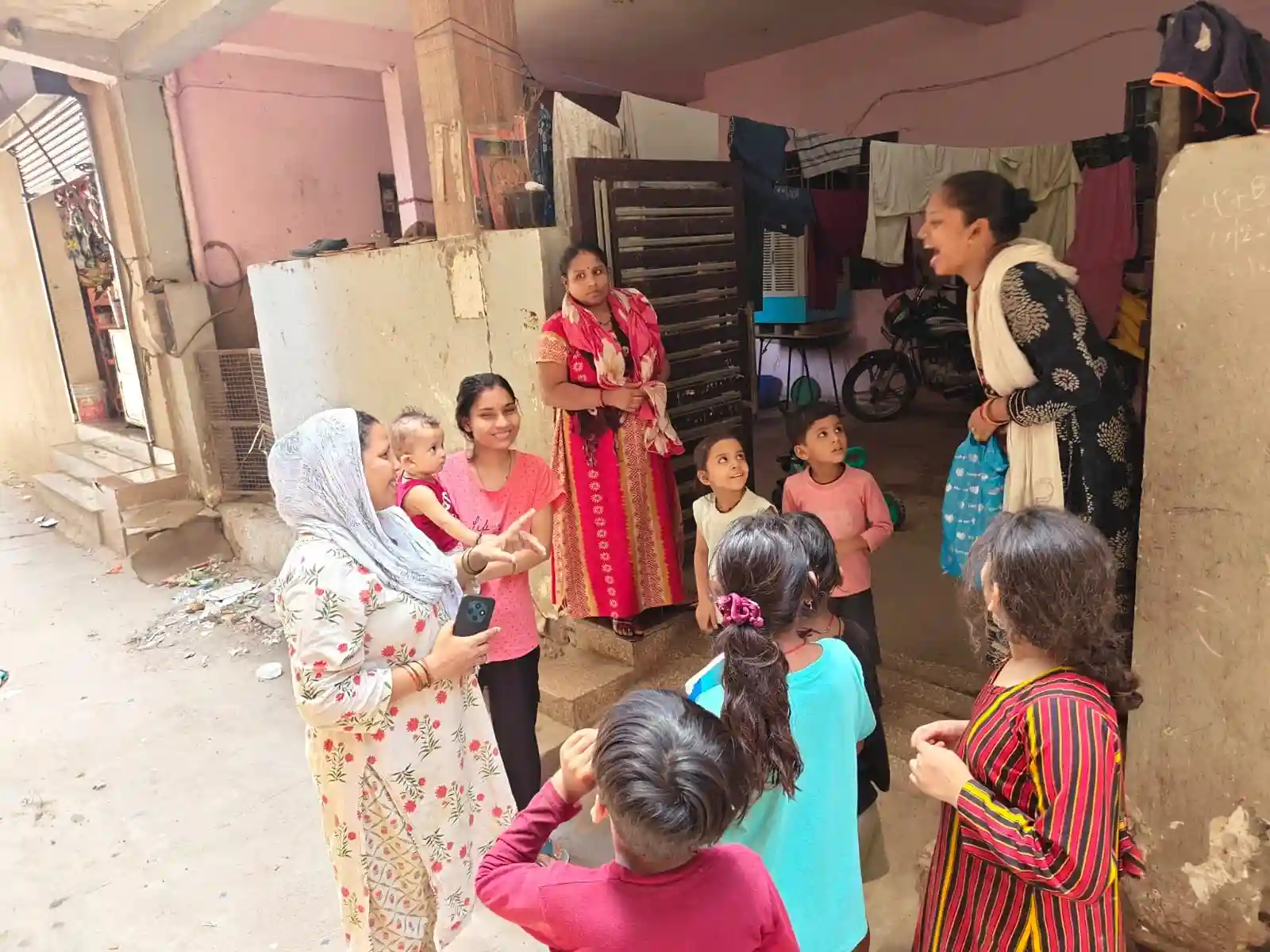

As communication professionals, we often spend our days discussing impact through reports, presentations, programme frameworks and outcome indicators. We understand the vision of our partners, the objectives of our interventions and the theories that shape programme design.
But every now and then, it becomes necessary to step away from the comfort of data and enter the communities where those numbers find their meaning.
A recent visit to Sarhol, Gurugram, offered me that opportunity.
My purpose was to spend a day with the community mobilisers working with Smile Foundation’s Swabhiman programme and understand their role within the Pink Smile intervention, supported through CSR partnerships focused on improving menstrual hygiene in India.
I coordinated with Arsalan, the Community Health Officer at the Swabhiman Centre in Sarhol. By the time I arrived, the team had already begun preparing for the day ahead. The centre itself is modest, a small office tucked away on the first floor of a freshly painted building.
Inside, however, exists something far more significant than its size suggests.
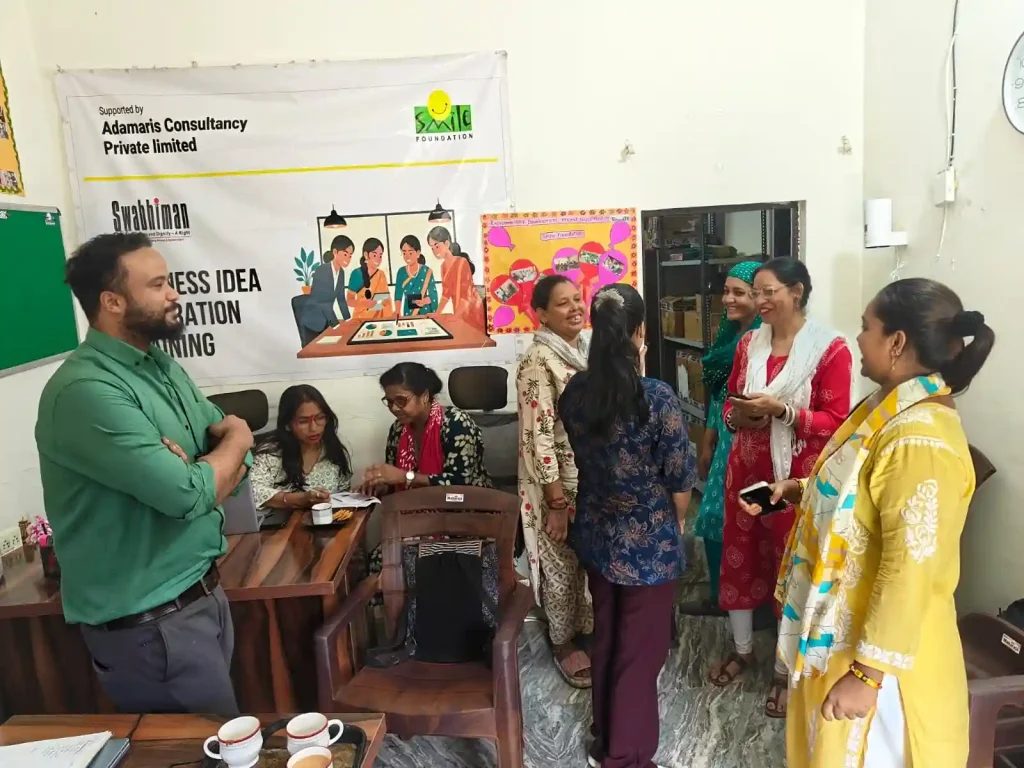
This is where community mobilisers Sonia, Farha, Savita, Manju and Dhanesh gather each morning alongside Nurse Sharmila and the whole team. Before stepping into the field, they discuss the day’s visits, review health concerns raised by women and adolescent girls, and prepare for outreach activities across the community.
A shared cup of tea, a briefing session, a list of households to visit and then the day begins.
Soon, they disperse into the narrow lanes of Sarhol, carrying with them information, reassurance, guidance and often something far more powerful than any material resource: trust.
As I followed them through the community, one realisation became increasingly clear.
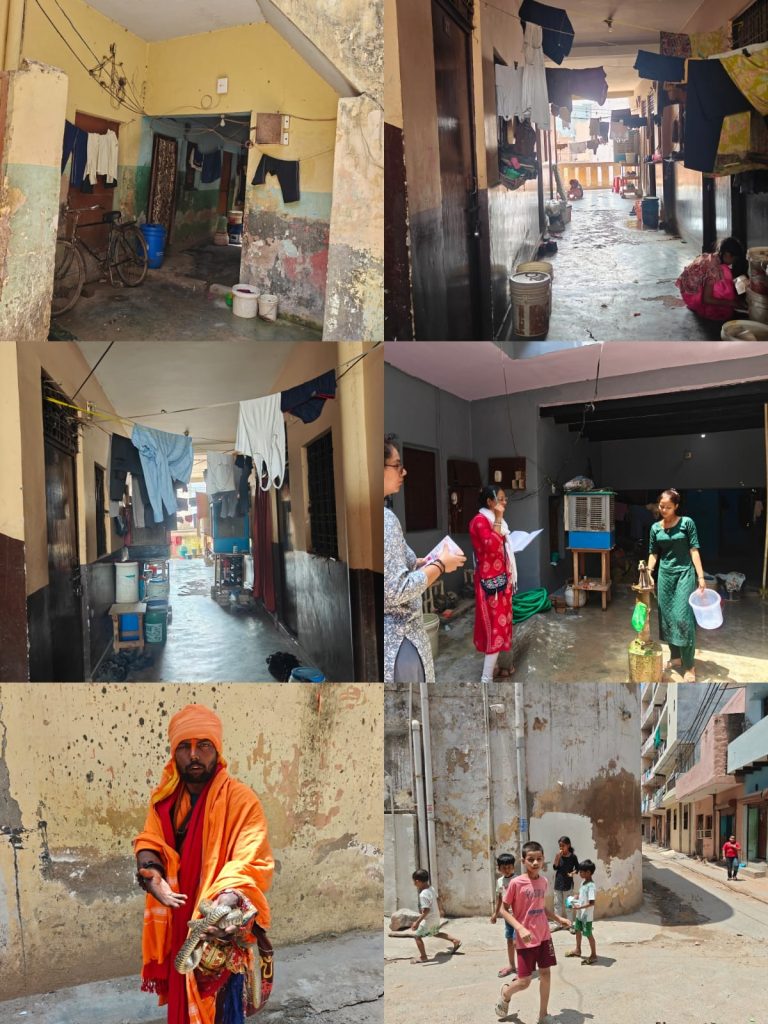
That after hearing the conversations around menstrual hygiene in India which unfolded in those narrow lanes of Sarhol, during the day, I knew it was impossible to write only about community mobilisers; those discussions revealed a much larger story of health, dignity and access.
The discussion around menstrual hygiene in India is wide and through this series “Beyond the Pad: Reimagining Menstrual Health in India”, we shall attempt to unravel its layers.
Writer’s reflection:
I am a 30+ year old working woman, living in Gurugram. I am someone who is aware of her right to safe menstrual hygiene practices and has the privilege of accessing menstrual hygiene products with a simple click, sometimes within minutes.
Yet that day in Sarhol, a bustling urban slum community which is just 20 minutes from my home, I found myself confronting a very different reality.
Behind every discussion on menstrual health were multiple layers of beliefs, practices, restrictions and social norms that continue to shape the experiences of women and girls across India.
Over the years, significant efforts have rightly focused on improving access to menstrual hygiene products. This work must continue until every woman and girl in India can manage menstruation safely and hygienically. However, as we move forward in 2026, it is equally important to recognise that access alone cannot solve the challenges surrounding menstrual health.
Many of the barriers faced by the girl child in India today are rooted in:
- stigma,
- misinformation,
- inadequate health education,
- poor sanitation infrastructure,
- restrictive social norms
- limited access to supportive healthcare systems.
These challenges continue to hinder the creation of a safe and enabling menstrual ecosystem for the girls of today and for the generations that will follow.
To truly understand menstrual health in India, we must acknowledge that
“A sanitary pad is only one piece of a much larger puzzle”
This realisation inspired the creation of this blog series – an exploration of the challenges, gaps, and solutions that can help strengthen menstrual health outcomes and advance menstrual dignity across India.
Because by now, the conversation must evolve.
- Every girl should have access to menstrual hygiene products.
- Every girl should know how to use them safely and confidently.
But most importantly, every girl should grow up in an environment where she does not fear, question, or feel ashamed of her body because of a natural biological process.
Through this series, we will explore:
• India’s Menstrual Health: From Access to Dignity
• The Six Dimensions of a Strong Menstrual Health Ecosystem
• Community Mobilisers: The Missing Link in Last-Mile Healthcare Delivery
• Taboos of India Around Menstrual Hygiene
Together, these conversations seek to answer an important question:
How do we move beyond menstrual access and build a future where every girl in India experiences menstruation with knowledge, confidence, safety and dignity?
And so, we begin with the first chapter of the series “Beyond the Pad: Reimagining Menstrual Health in India”
Menstrual Health in India: From Access to Dignity
In this essay:
- Menstrual hygiene in India has progressed significantly, driven by government initiatives, NGOs, schools and CSR-supported programmes.
- Access is only the beginning. Many adolescent girls still lack the knowledge, confidence and support needed to manage menstruation with dignity.
- Girl child in India continue to face barriers such as stigma, misinformation, inadequate sanitation and limited healthcare access.
- Urban-rural gaps persist, with many rural girls facing challenges related to affordability, availability, awareness and safe menstrual hygiene management.
- Menstrual dignity requires an ecosystem approach, where education, healthcare, sanitation, community engagement and CSR partnerships work together to create lasting change.
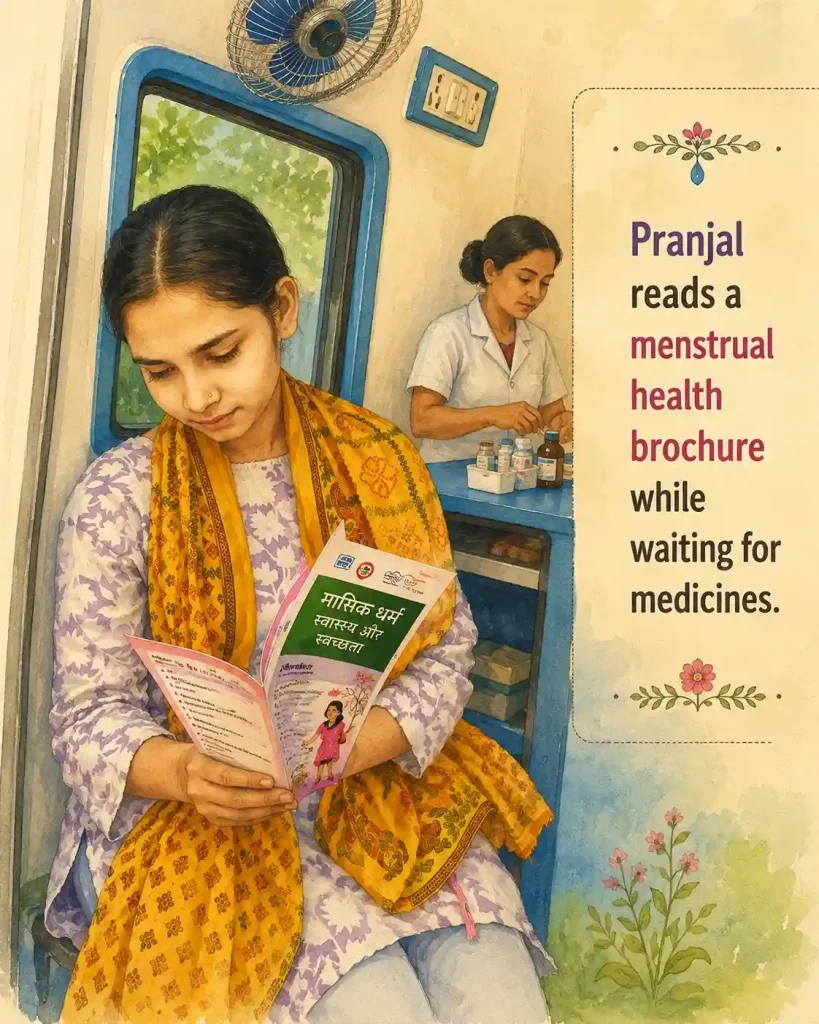
One moment she was sitting in class, and the next, she noticed a stain on her uniform. Confused and frightened, she thought something was wrong with her body. Her teacher quietly handed her a sanitary napkin and asked her to use it. The immediate problem was solved, but the questions remained unanswered.
Nobody explained why she was bleeding. Nobody told her what menstruation meant, how her body was changing or how often the sanitary napkin needed to be changed.
Later that evening, her elder sister showed her how to wear the pad.
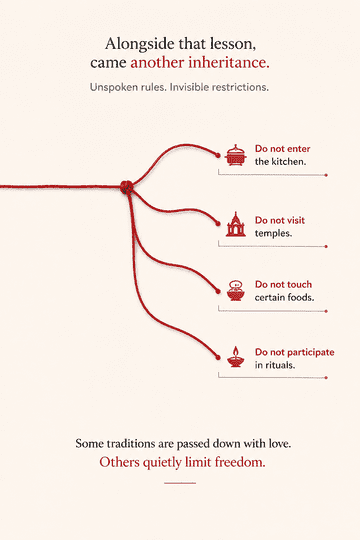
For Pranjal, menstruation arrived with access to a sanitary product, but not the dignity of understanding her own body. Her first lesson about womanhood was not about health. It was about restrictions. And for millions of girls across India, that remains the reality even today.
Menstrual Hygiene in India: Progress Worth Celebrating
India’s menstrual health journey – access to menstrual hygiene products, has undergone a remarkable transformation over the last decade.Furthermore, National surveys NHFS 5 and NHFS -6 indicate significant improvements in the adoption of hygienic menstrual practices among adolescent girls.
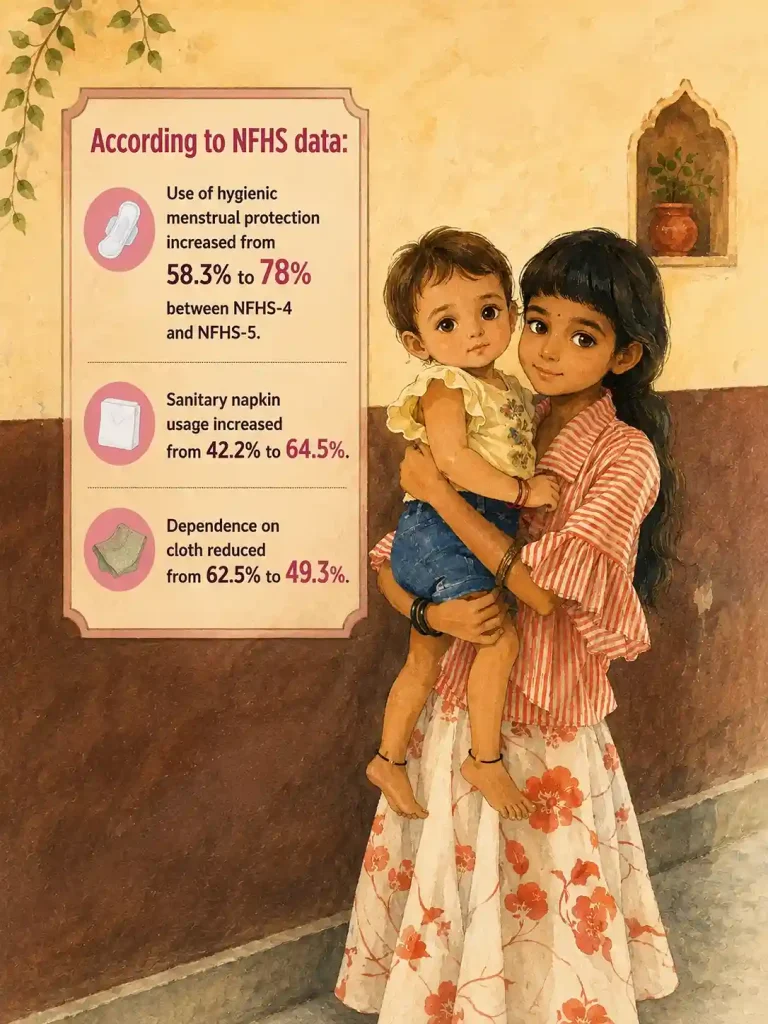
These figures reflect the collective efforts of government programmes, public health campaigns, civil society organisations, educational institutions, and CSR-supported interventions Menstruation, once confined almost entirely to private conversations, has gradually entered mainstream discussions around:
- Public health
- Education
- Gender equality
- Adolescent wellbeing
- Water, sanitation and hygiene
And this progress certainly matters. Why?
Because-
- Every girl who receives accurate information before periods is better prepared.
- Every school that provides safe sanitation facilities supports attendance.
- Every household that replaces silence with conversation contributes to dignity.
But now the question is no more about accessibility, the question is
Can she manage menstruation safely, confidently, comfortably and with dignity?
Menstrual Health Challenge
The girl mentioned earlier, Pranjal, comes from a small town near Hardoi in Uttar Pradesh. During our conversation, an elderly relative accompanying her explained that Pranjal had travelled to Sarhol to support her elder sister through pregnancy and childbirth. Her sister is married and lives there with her husband.
What struck me most was not only Pranjal’s circumstance, but the way she described her first experience of menstruation. Her experience reflects a larger challenge that continues to persist across many parts of rural India.
While progress has been made in improving menstrual hygiene awareness, gaps remain in the educational and social support systems that should prepare girls for menstruation before it begins. Far too many adolescent girls still enter this important stage of life with limited information, inadequate guidance and few opportunities to ask questions without fear or embarrassment.
Pranjal’s story also highlights the stark contrast in menstrual product accessibility across India. As I write this, I do so with the assurance that if I were to get my period today, I could order sanitary pads or a range of menstrual hygiene products and have them delivered within minutes.
For many girls, however, particularly those living in underserved communities, menstrual hygiene products are not always available, affordable or easily accessible.
The difference between these two realities reminds us that while India has made considerable progress in menstrual health, access remains deeply unequal, shaped by geography, awareness, income and social circumstances.
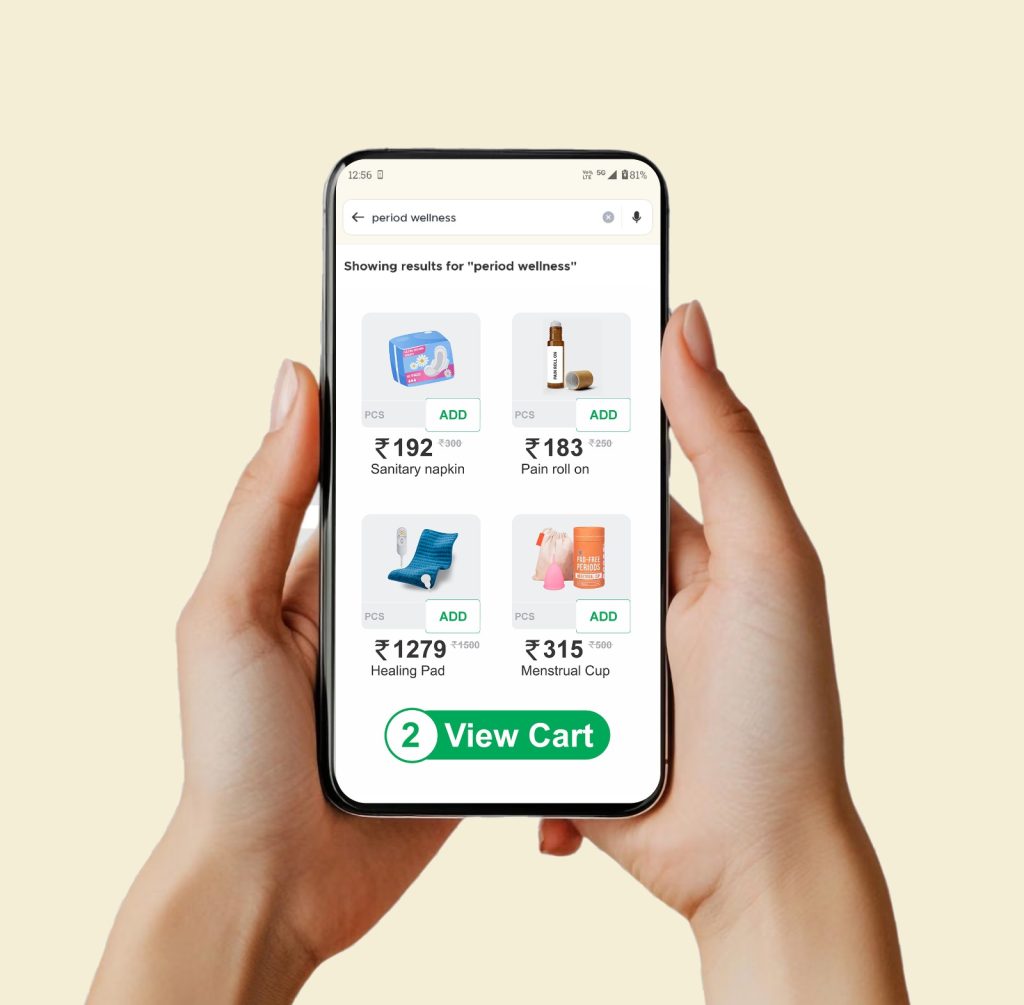
But then there are girls as age of 13, who when get their periods are lost about the multiple solutions that can keep them safe and healthy during menstruation
Menstrual Access: Urban–Rural Usage Gap
In urban areas, greater availability of menstrual products, higher levels of awareness, better sanitation infrastructure and increased exposure to health information have contributed to higher adoption of hygienic menstrual practices. In contrast, many rural girls continue to face barriers such as limited product availability, affordability concerns, inadequate disposal facilities and persistent social taboos surrounding menstruation.
The gap is not merely one of access but also of awareness. Many adolescent girls receive little or no menstrual education before their first period, relying on family members for information that may be influenced by myths and misconceptions. Consequently, some continue to use unhygienic materials such as old cloth, ash or rags, increasing their vulnerability to infections and absenteeism from school.
Bridging this urban–rural usage gap requires a comprehensive approach that combines affordable product access with menstrual literacy, community engagement, improved sanitation infrastructure and behaviour change communication to ensure that every girl can manage menstruation safely, confidently and with dignity.
The Swabhiman Approach
[dflip id=”17210″][/dflip]
We began this series with Pranjal’s story and a simple yet important question:
Is providing a sanitary pad enough?
The answer, quite clearly, is no.
While access to menstrual hygiene products remains a critical first step, building an inclusive menstrual hygiene ecosystem requires much more.
It calls for the collective efforts of governments, schools, healthcare systems, communities, families, civil society organisations and corporate partners working together to ensure that every girl can manage menstruation safely, confidently and with dignity.
Through this series, we will journey into communities, listen to the experiences of adolescent girls, women, community mobilisers, health workers, parents and local stakeholders, and explore the realities that shape menstrual health across India.
Their stories reveal an important truth: menstruation is an ecosystem issue.
- A girl may receive a sanitary napkin but still not understand her body.
- She may know how to use a pad but still miss school because there is no functional toilet.
- She may have access to healthcare services but hesitate to seek support because menstruation remains shrouded in silence.
- She may possess information but continue to live within restrictive social norms that associate menstruation with impurity, shame or exclusion.
This is why menstrual wellbeing cannot be addressed through a single intervention.
Menstrual health begins with access, but menstrual dignity begins with acceptance, understanding, agency and support. For India to become a truly menstrual-friendly nation, every girl must not only have access to menstrual products but also:
- Accurate and age-appropriate menstrual education.
- Safe water, sanitation and hygiene facilities.
- Access to healthcare and reproductive health services.
- Supportive schools and communities.
- Families that replace silence with conversation.
- Social environments that normalise menstruation rather than stigmatise it.
Most importantly, she must never be made to feel ashamed of a biological process that sustains human life itself.
Build Menstrual Ecosystems, Not Just Menstrual Interventions
Menstrual health outcomes improve when awareness, healthcare, infrastructure, nutrition, and community engagement work together. Through strategic CSR partnerships, organisations can help create sustainable menstrual health ecosystems that empower adolescent girls and women with knowledge, confidence, healthcare access and dignity.
Partner to strengthen community-led menstrual health programmes that go beyond product distribution and create lasting change for generations of girls across India.
Frequently Asked Questions (FAQs)
1. Why is menstrual hygiene important for the girl child in India?
Menstrual hygiene is essential for the health, education, confidence and overall wellbeing of adolescent girls. Proper menstrual hygiene management helps girls stay in school, prevent infections and participate fully in daily life.
2. What are the biggest menstrual health challenges facing girls in India?
Key challenges include lack of menstrual education, social stigma, inadequate sanitation facilities, limited access to menstrual products and insufficient healthcare support.
3. Is access to sanitary pads enough to improve menstrual health outcomes?
No. While access to menstrual products is critical, girls also need accurate information, supportive environments, healthcare services and safe sanitation infrastructure to manage menstruation with dignity.
4. How does menstrual hygiene affect education for girls?
Poor menstrual hygiene management can lead to absenteeism, reduced classroom participation and even school dropouts among adolescent girls, particularly in underserved communities.
5. What is the urban-rural gap in menstrual hygiene in India?
Urban girls generally have better access to menstrual products, healthcare information, and sanitation facilities, while many rural girls continue to face affordability, awareness and infrastructure challenges.
6. How can CSR contribute to menstrual hygiene for the girl child in India?
CSR initiatives can support menstrual health programmes through awareness campaigns, menstrual product distribution, school sanitation facilities, community outreach, healthcare services and behaviour change interventions.
7. Why are community mobilisers important for menstrual health programmes?
Community mobilisers act as trusted links between healthcare systems and communities. They provide information, address myths and misconceptions, encourage healthcare-seeking behaviour and support girls and women in managing menstrual health.
8. What does a strong menstrual health ecosystem look like?
A strong menstrual health ecosystem includes menstrual education, affordable product access, safe water and sanitation facilities, healthcare services, community support, gender-sensitive policies and sustained CSR investments that promote menstrual dignity.
Sources