
Scale is not a number.
It is a system.
At a glance
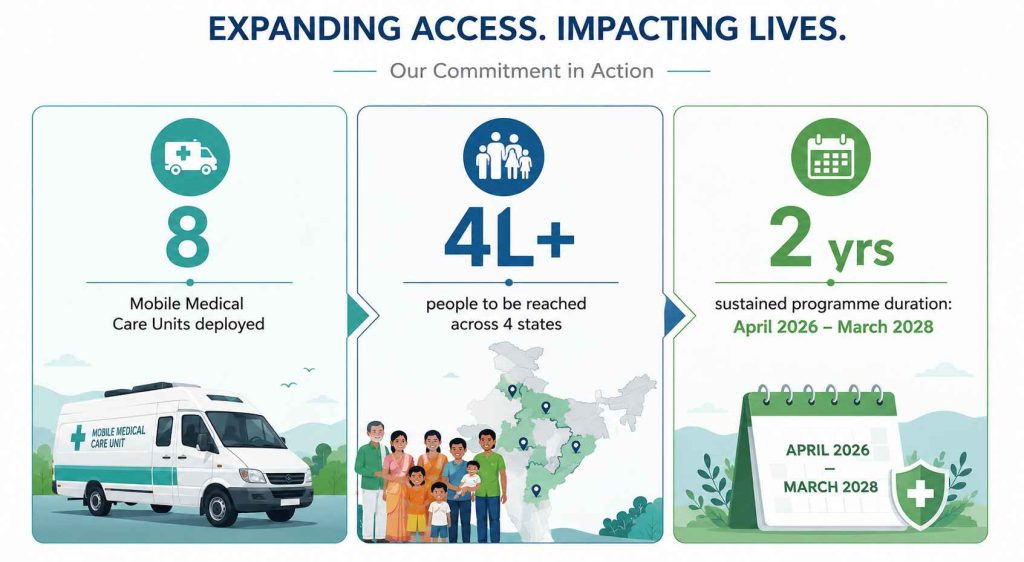
- Smile Foundation and HDFC Parivartan launched eight Mobile Medical Care Units (MMCUs) in March 2026, targeting four lakh people in remote communities across J&K, Ladakh, Punjab and Uttarakhand.
- The two-year initiative goes beyond treatment — it integrates preventive screenings, maternal and child health, and disease awareness to address health vulnerabilities before they become crises.
- The programme is embedded in a wider public health ecosystem, with referral linkages to PHCs, CHCs and government schemes under the National Health Mission, following ICMR protocols.
- The partnership reflects a wider shift in CSR from one-time philanthropy to long-term developmental infrastructure — and offers a replicable model for what impact at scale genuinely requires.
Impact at Scale: Eight vans. Four lakh people. One larger question.
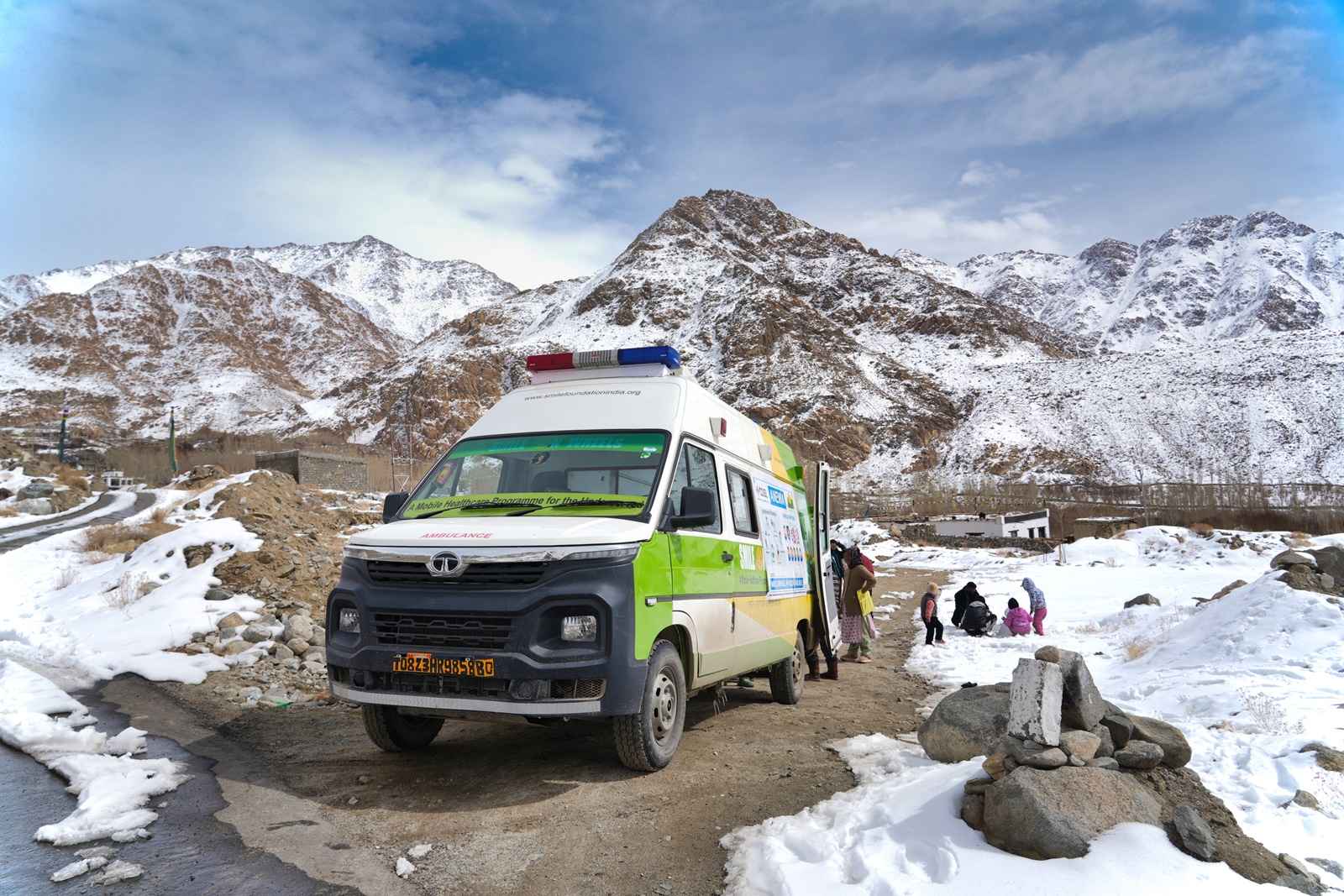
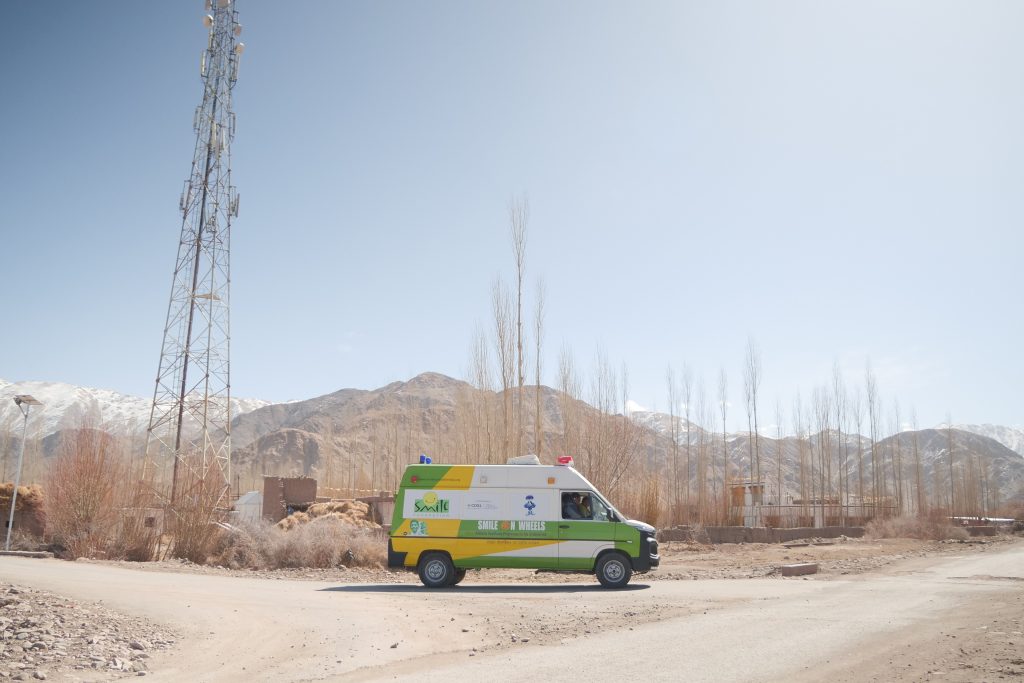
In March 2026, Smile Foundation and HDFC Bank’s CSR initiative, HDFC Parivartan, announced the launch of eight Mobile Medical Care Units (MMCUs) across Jammu & Kashmir, Ladakh, Punjab and Uttarakhand. The programme aims to deliver integrated primary healthcare services to more than four lakh people living in geographically remote communities over the next two years.
The mobile units will provide OPD consultations, diagnostics, medicines, maternal and child healthcare, disease screenings and health awareness programmes delivered directly at the community level, without asking people to travel to institutions that may be hours away or seasonally inaccessible.
At first glance, this may appear like yet another CSR-led healthcare intervention in rural India. There have been many. But the significance of this partnership lies less in the number of vans deployed and more in what the initiative reveals about the realities of delivering impact at scale in a country as vast and unequal as India. Because scale, in development work, is not simply about expansion. It is about systems.
In pursuit of last-mile access
Why These States for Impact at Scale?
Mountain & Border Regions
Among India’s most geographically challenging terrains. Extreme altitude, seasonal road closures and long travel distances make access to healthcare structurally difficult.
Rural Punjab
Better connected than mountain regions, yet many communities continue to face barriers to preventive healthcare and early diagnosis due to distance, awareness and limited healthcare-seeking behaviour.
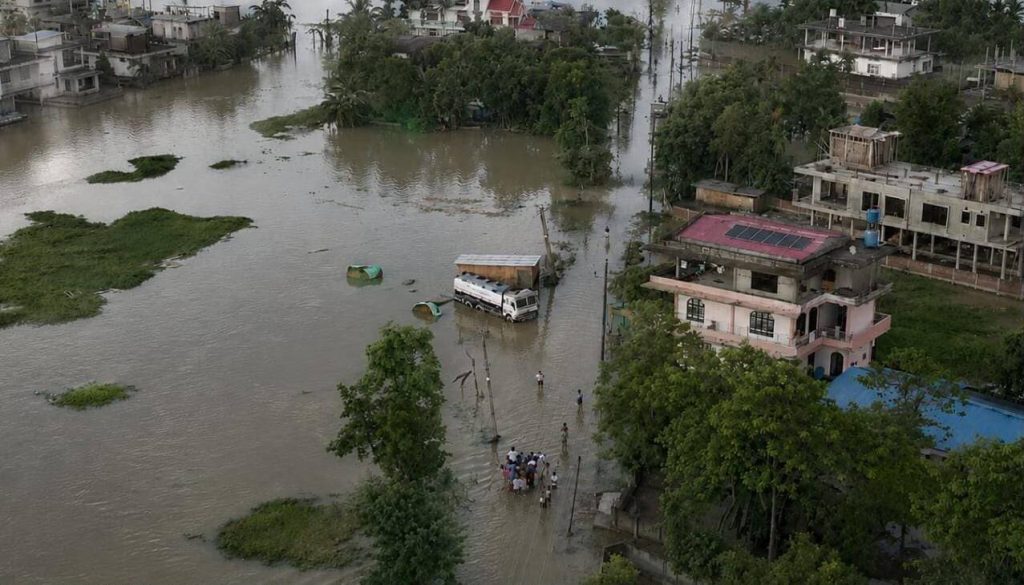
India’s healthcare infrastructure has improved substantially over the last decade. But access remains deeply uneven. In remote terrains such as Ladakh or the hilly districts of Uttarakhand, healthcare facilities are often separated from communities by long travel times, poor road connectivity, seasonal weather conditions and chronic shortages of trained medical personnel.
For vulnerable populations, healthcare is not always absent — it is frequently inaccessible. This distinction matters enormously. Absence implies a gap that more facilities could fill. Inaccessibility implies a structural problem that requires structural solutions — mobile infrastructure, community-embedded care and sustained engagement rather than episodic outreach.
This is where mobile healthcare models become genuinely important. Rather than expecting communities to navigate fragile infrastructure in search of care, the infrastructure itself moves toward them. The MMCUs launched under the Smile Foundation–HDFC Parivartan partnership are designed precisely around this principle of last-mile delivery.
More than a mobile clinic.
Each MMCU functions as a primary health facility on wheels, bringing essential healthcare services directly to communities that are often beyond the reach of conventional systems.
Consultation
Medical consultations, medicines and referrals delivered closer to communities.
Detect
Screening for hypertension, diabetes and anaemia — conditions that often remain undiagnosed for years.
Health Ed
Interactive sessions on hygiene, nutrition and menstrual health strengthen preventive healthcare among children.
The idea of last-mile access has become central to contemporary development discourse. But implementing it consistently is far more difficult than the phrase suggests. Reaching remote populations reliably requires logistical planning, local partnerships, medical staffing, data systems, and sustained financial commitment. It also requires interventions flexible enough to adapt to geography, culture, and resource limitations without compromising quality of care.
Why collaborations like this one are becoming essential for impact at scale
Corporate social responsibility programmes often possess the financial capacity to fund large-scale interventions. But funding is not the same as execution. This is why collaborations between corporations and implementation-focused nonprofits are increasingly indispensable to achieving impact at scale.
Organisations like Smile Foundation bring what cannot easily be purchased or replicated: operational knowledge of local ecosystems. How communities interact with healthcare systems. What barriers prevent uptake. How trust is built over time. What forms of outreach actually work on the ground as opposed to what looks effective in a programme document.
“Lasting impact requires patient infrastructure. It requires partnerships that combine funding with implementation expertise, mobility with continuity, and service delivery with systems integration.”— Smile Foundation Programme Framework, 2026
This partnership also reflects a growing shift within CSR itself — away from short-term philanthropy and toward long-term developmental infrastructure. The healthcare programme will run from April 2026 to March 2028, indicating a model built on sustained presence rather than one-time visibility.
That distinction is not rhetorical. Healthcare outcomes are rarely immediate. Building preventive health habits, ensuring continuity of treatment, and improving maternal or child health indicators require long-term engagement. A community that receives a health camp once every six months is not the same as one that has reliable access to primary care. The MMCU model is designed around the latter.
Prevention as infrastructure — the underemphasised half of healthcare
India’s public health conversation is dominated by treatment. How many hospital beds, how many doctors per thousand people, how many tertiary care facilities. These are important metrics. But they systematically undervalue the dimension of care that has the highest long-term return: prevention.
In underserved communities, preventive healthcare can significantly reduce both financial distress and health complications. Conditions like anaemia or hypertension frequently remain undiagnosed for years because communities lack regular access to screenings and basic primary care. By the time they are identified, the cost of treatment — personal, economic and social — has multiplied.
The MMCUs address this directly. Adult screenings for hypertension, diabetes, and anaemia are built into every unit’s service delivery. School health sessions extend the model to younger populations. The result is a programme that expands the very ambit of healthcare — from treatment alone to the full spectrum of prevention, early intervention, and awareness.
Healthcare becomes part of life, not just a response to illness.
Crisis-driven engagement
In many underserved communities, people seek medical care only when symptoms become severe.
Regular MMCU visits
Consistent presence brings healthcare closer, reducing the need for long and costly journeys.
A new habit forms
Consulting a doctor becomes routine rather than exceptional.
Health outcomes improve
Earlier diagnosis, timely treatment and greater health awareness strengthen community wellbeing.
Ecosystem thinking — why integration matters more than coverage
Healthcare delivery often fails not because services are entirely absent, but because systems remain fragmented. A patient diagnosed through a mobile unit still requires continuous care — referrals, access to medicines, institutional follow-up and sometimes hospitalisation. If that pathway is broken, the diagnosis itself provides limited long-term value.
The Smile Foundation–HDFC Parivartan initiative addresses this explicitly. The programme integrates referral linkages with Primary Health Centres, Community Health Centres and government schemes under the National Health Mission, while adhering to protocols set by the Indian Council of Medical Research. This is the architecture that makes impact at scale possible rather than merely impressive.
Effective social interventions depend on how well different systems — nonprofit, corporate and public — work together. The MMCU model is designed as a connector: it reaches communities that public infrastructure struggles to serve consistently, while feeding into the public system rather than operating parallel to it. That integration is what allows individual encounters to become sustained healthcare relationships.
Beyond healthcare, the broader Smile Foundation–HDFC Parivartan partnership also extends into skilling and livelihoods. In Bareilly, Uttar Pradesh, the two organisations recently launched a Parivartan Skilling Centre, training underserved youth for employment in BFSI and retail sectors. This reflects an increasingly important understanding in development practice: social vulnerabilities are interconnected. Healthcare outcomes are linked to livelihoods, nutrition, education, mobility, and financial stability. Addressing one in isolation rarely achieves the depth of change that communities actually need.
The real meaning of impact at scale
What emerges from this partnership, then, is not simply a story about mobile healthcare vans. It is a larger lesson about how change transforms into impact at scale, and why the phrase deserves more scrutiny than it typically receives.
Impact at scale is frequently discussed as if it were a question of reach alone. How many people, how many districts, how many units. But reach without continuity is outreach. Reach without integration is fragmentation. Reach without trust is low uptake. The Smile Foundation–HDFC Parivartan model is notable precisely because it takes all of these seriously, not as afterthoughts, but as foundational design principles.
In a country where millions still remain outside the effective reach of quality healthcare, the systems that enable consistent access matter as much as the services themselves. Transformation — in public health, in poverty reduction, in human development broadly — rarely happens because of one large announcement. More often, it happens through sustained, repetitive acts of access. Through the van that shows up every month. Through the health worker who knows the community. Through the referral that actually connects to the right facility.
“Scale is not only about reaching more people. It is about building systems capable of reaching people consistently — and with dignity.”— Smile Foundation, Programme Philosophy
That, perhaps, is the most important lesson from this initiative: that the ambition to achieve impact at scale must be matched by the patience to build the infrastructure that makes it real — and the humility to recognise that in development work, consistency is a form of excellence.
Frequently asked questions (FAQs)
What exactly are Mobile Medical Care Units and what services do they provide? ▾
Mobile Medical Care Units (MMCUs) are fully equipped vehicles designed to bring primary healthcare directly to communities that lack easy access to health facilities. Each unit provides OPD consultations, basic diagnostics, medicines, maternal and child healthcare, disease screenings — including for hypertension, diabetes, and anaemia — and health awareness sessions covering hygiene, nutrition, and menstrual health. Unlike one-time health camps, MMCUs operate on regular schedules in fixed community locations, making healthcare engagement predictable and routine rather than crisis-driven.
Why were Jammu & Kashmir, Ladakh, Punjab and Uttarakhand chosen for this initiative? ▾
These states represent some of India’s most geographically challenging terrains for healthcare delivery. In Ladakh and the hilly districts of Uttarakhand, extreme altitude, seasonal road closures, and long travel distances make consistent access to health facilities structurally difficult — particularly for elderly, pregnant, or seriously ill community members. Jammu & Kashmir has remote communities where healthcare infrastructure, while present in theory, remains functionally inaccessible to large portions of the population. Punjab, despite better connectivity, has rural pockets where preventive healthcare and early diagnostics remain significantly underutilised.
How does this programme connect to the wider public health system — does it operate independently? ▾
No — integration with the public health system is central to its design. The programme establishes referral linkages with Primary Health Centres (PHCs) and Community Health Centres (CHCs), and connects patients to government health schemes under the National Health Mission. Medical protocols follow ICMR guidelines. This is deliberate: the MMCUs are not a parallel healthcare system but a connector — designed to reach communities that public infrastructure serves inconsistently, while ensuring patients are channelled into public systems for continuous care, follow-up, and hospitalisation where needed.
What makes this different from a typical CSR health camp or outreach programme? ▾
Three things distinguish it from conventional outreach. First, duration: the programme runs for two years (April 2026 – March 2028), not a single day or season. Second, prevention focus: it doesn’t only treat existing illness — it screens for undiagnosed conditions, conducts school health sessions, and builds health literacy in communities over time. Third, systems integration: it is linked to public health infrastructure through referrals and government schemes, ensuring patients can access continuous care beyond what the MMCU itself provides. Together, these features shift the model from outreach to infrastructure.
How does Smile Foundation’s role in this partnership differ from that of HDFC Parivartan? ▾
HDFC Parivartan — HDFC Bank’s CSR initiative — provides the financial capacity that enables the programme to operate at the scale and duration required for meaningful impact. Smile Foundation brings implementation expertise: knowledge of local ecosystems, experience building community trust, understanding of what forms of healthcare outreach actually work on the ground in specific geographies, and the operational infrastructure to manage staffing, logistics, and quality across multiple remote locations simultaneously. This combination — funding with field knowledge — is increasingly recognised as the minimum viable model for impact at scale in development work.
Smile Foundation
Smile Foundation is an Indian development organisation working across health, education and livelihood sectors. This article was produced by the Smile Foundation analysis desk. For partnership enquiries, contact cp@smilefoundationindia.org.