For many children today, the boundaries between online and offline life no longer exist. Friendships, classrooms and identities are increasingly mediated through screens. But so is harm, especially the one at the cross-section of cyberbullying and children.
Cyberbullying, once dismissed as an extension of schoolyard teasing, has evolved into a complex, persistent and often invisible form of violence. Unlike traditional bullying, it does not end with the school day. It follows children home, into their bedrooms and into spaces that were once considered safe.
Understanding cyberbullying today requires more than awareness. It requires systems to identify, track and respond to harm in ways that reflect how children actually experience the digital world.
What is cyberbullying, and why is it different?
Cyberbullying refers to the use of digital platforms—social media, messaging apps, gaming environments—to harass, threaten or humiliate others.
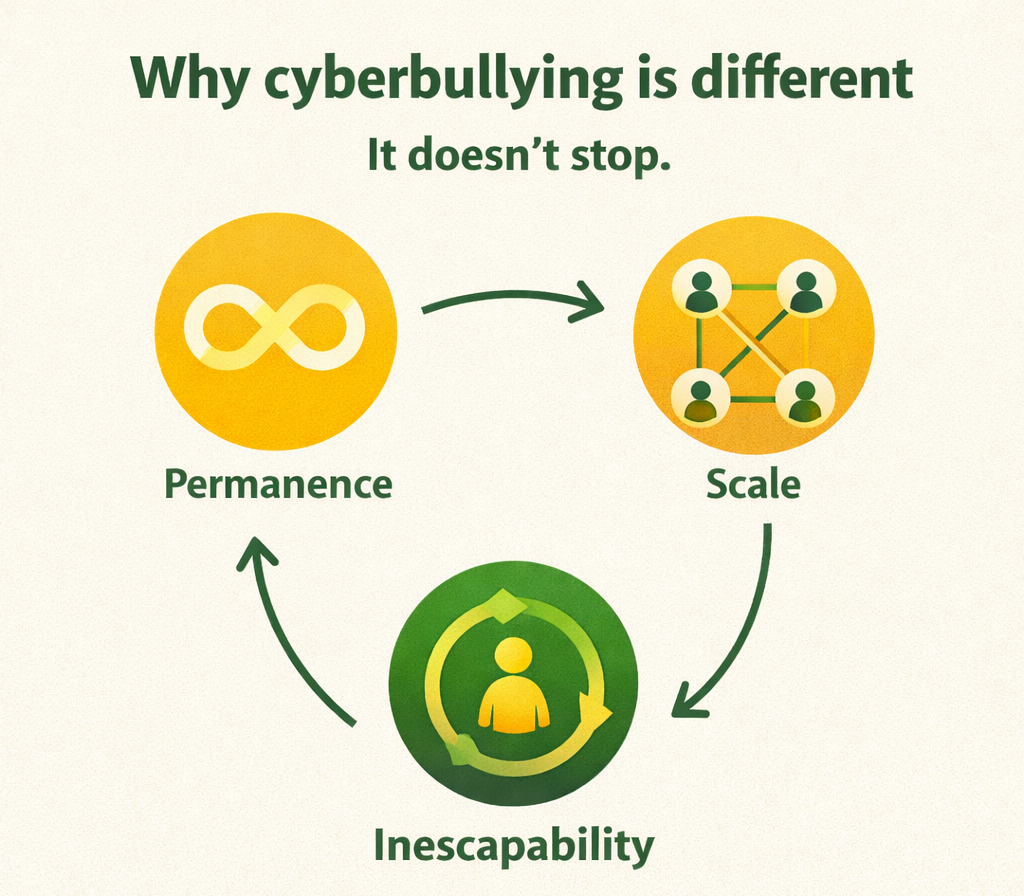
But its impact is amplified by three structural features:
- Permanence: Harmful content can remain online indefinitely
- Scale: A single incident can reach hundreds, sometimes thousands
- Inescapability: There is no physical boundary to retreat from
According to UNICEF, over one in three young people across 30 countries report being victims of online bullying. In India, where smartphone access has expanded rapidly, children are entering digital spaces faster than support systems are evolving to protect them.
What the research tells us about cyberbullying and children
Over the past decade, cyberbullying has moved from anecdotal concern to a well-established field of study.
A landmark meta-analysis by Mitch van Geel and colleagues found a strong association between cyberbullying and suicidal ideation among adolescents. Other studies have consistently linked it to:
- Depression and anxiety
- Low self-esteem
- Academic decline
- Social withdrawal
Researchers like Sameer Hinduja and Justin W. Patchin have also shown that cyberbullying rarely exists in isolation. It often overlaps with offline bullying, reinforcing cycles of harm across environments.
Importantly, children are not just victims or perpetrators. Many occupy both roles at different times, while a large number are silent bystanders—witnessing harm without the tools or confidence to intervene.
The Indian context: A growing but under-recognised challenge
In India, cyberbullying is shaped by a distinct set of social and structural factors:
- Digital access outpacing digital literacy
- Gendered harassment, especially targeting adolescent girls
- Language diversity, enabling region-specific abuse patterns
- Limited reporting mechanisms in schools and communities
Despite increasing awareness, cyberbullying often remains underreported. Children may not recognise it as abuse or may fear repercussions—loss of device access, blame or social isolation.
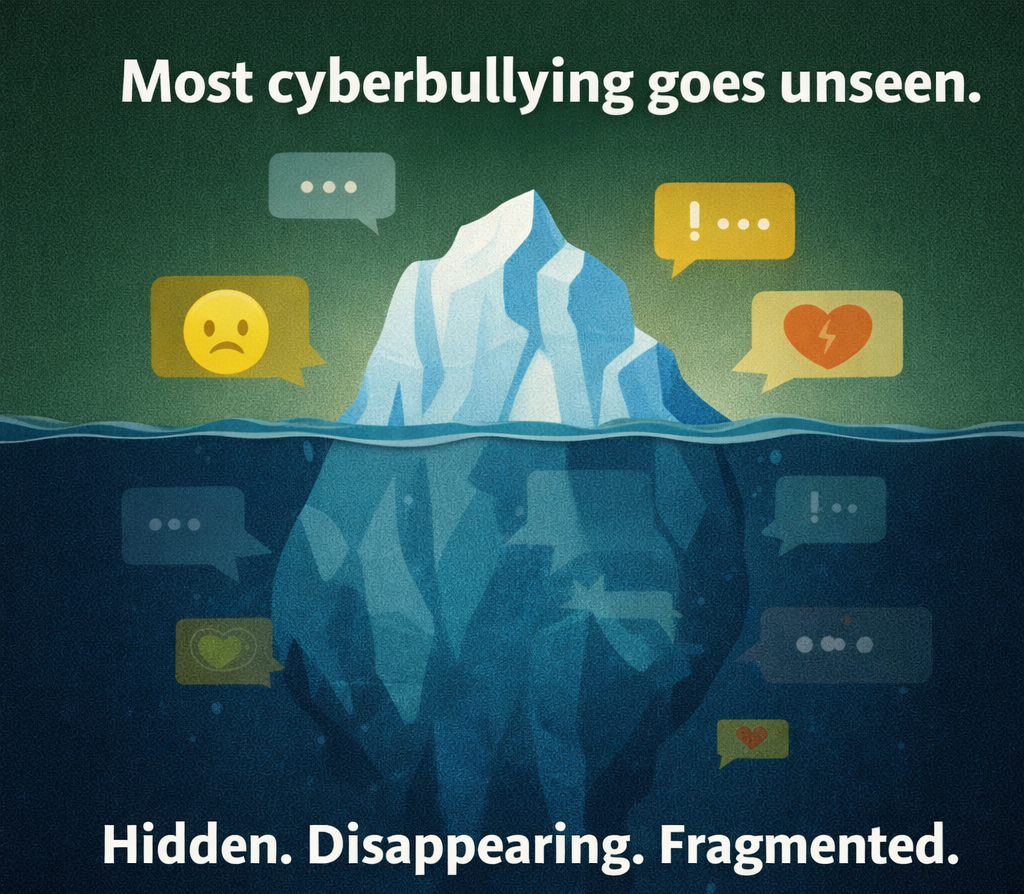
This invisibility makes tracking the issue particularly difficult, and addressing it even more so.
Why tracking cyberbullying is so challenging
Unlike physical bullying, cyberbullying does not leave visible markers. It is fragmented across platforms, private chats and ephemeral content.
Tracking it requires navigating multiple challenges:
1. Lack of standard definitions
Different studies and institutions define cyberbullying differently. This leads to wide variations in prevalence data — ranging from 10% to 40%.
2. Platform fragmentation
Children move across platforms, WhatsApp, Instagram, gaming apps, making it difficult to monitor patterns of harm.
3. Ephemeral content
Features like disappearing messages reduce traceability, making evidence collection harder.
4. Underreporting
Children often do not report incidents due to fear, shame or lack of trust in response systems.
So how can we track cyberbullying effectively?
Tracking cyberbullying is not about surveillance. It is about building responsive ecosystems that can detect early signs of distress and intervene appropriately.
1. Strengthening school-based reporting systems
Schools remain a critical point of contact.
- Anonymous reporting mechanisms can encourage disclosure
- Teachers need training to recognise behavioural changes
- Cyberbullying must be integrated into school safety policies
2. Building digital literacy among children
Children need to be equipped not just to use technology, but to navigate it safely.
This includes:
- recognising harmful behaviour
- understanding privacy settings
- knowing when and how to seek help
3. Engaging parents without over-surveillance
Parental involvement is crucial, but excessive monitoring can backfire.
Effective approaches include:
- open conversations
- trust-based communication
- awareness of platforms children use
4. Leveraging peer networks
Peers are often the first witnesses.
Programs that encourage:
- bystander intervention
- peer support systems
can significantly reduce harm.
5. Integrating mental health screening
Cyberbullying often manifests as emotional distress before it is reported as abuse.
Simple tools, regular check-ins, counselling access, can help identify early warning signs.
Moving from awareness to action: The role of organisations
Addressing cyberbullying requires moving beyond isolated interventions toward integrated child protection frameworks.
This is where organisations like Smile Foundation play a critical role.
Smile Foundation’s approach: Supporting children beyond the classroom
Smile Foundation’s work with children, across education and healthcare, has increasingly recognised that learning outcomes cannot be separated from emotional well-being.
Through our education and health programmes, the organisation integrates mental health awareness and psychosocial support into its interventions.
1. Creating safe spaces for children
Smile Foundation’s learning environments prioritise:
- trust-building
- open dialogue
- emotional safety
Children are encouraged to express concerns, online and offline, without fear of judgment.
2. Mental health awareness and counselling
Through its outreach, Smile Foundation promotes:
- awareness around emotional well-being
- access to counselling support where needed
- early identification of distress
This becomes particularly important in cases where cyberbullying may not be explicitly reported but manifests through behavioural changes.
3. Engaging communities and parents
Recognising that children do not operate in isolation, Smile Foundation works with:
- parents
- caregivers
- community stakeholders
to build awareness around emerging risks, including digital harm.
4. Integrating digital awareness into education
As digital access expands, Smile Foundation’s programmes increasingly emphasise:
- responsible technology use
- online safety practices
- critical thinking in digital spaces
What more needs to be done
While interventions are growing, the scale of the challenge requires a broader shift.
1. Policy alignment
India’s regulatory frameworks need stronger alignment between:
- education systems
- child protection mechanisms
- digital governance
2. Platform accountability
Technology platforms must move toward:
- safety-by-design features
- stronger moderation systems
- child-centric risk assessments
3. Data and research
There is a need for:
- more India-specific longitudinal studies
- better data on rural and underserved populations
- intersectional analysis (gender, caste, socio-economic status)
Reframing the issue: From behaviour to systems
Cyberbullying is often framed as a behavioural issue — something children do to each other.
But this framing is incomplete.
It is also:
- a design issue (how platforms function)
- a systems issue (how institutions respond)
- a social issue (how communities understand harm)
Addressing it requires coordinated action across all three.
A way forward
For children, the digital world is not separate from reality — it is part of it. Safety, therefore, cannot be limited to physical spaces.
Tracking cyberbullying is not about control. It is about visibility—ensuring that harm does not go unnoticed, unaddressed or normalised.
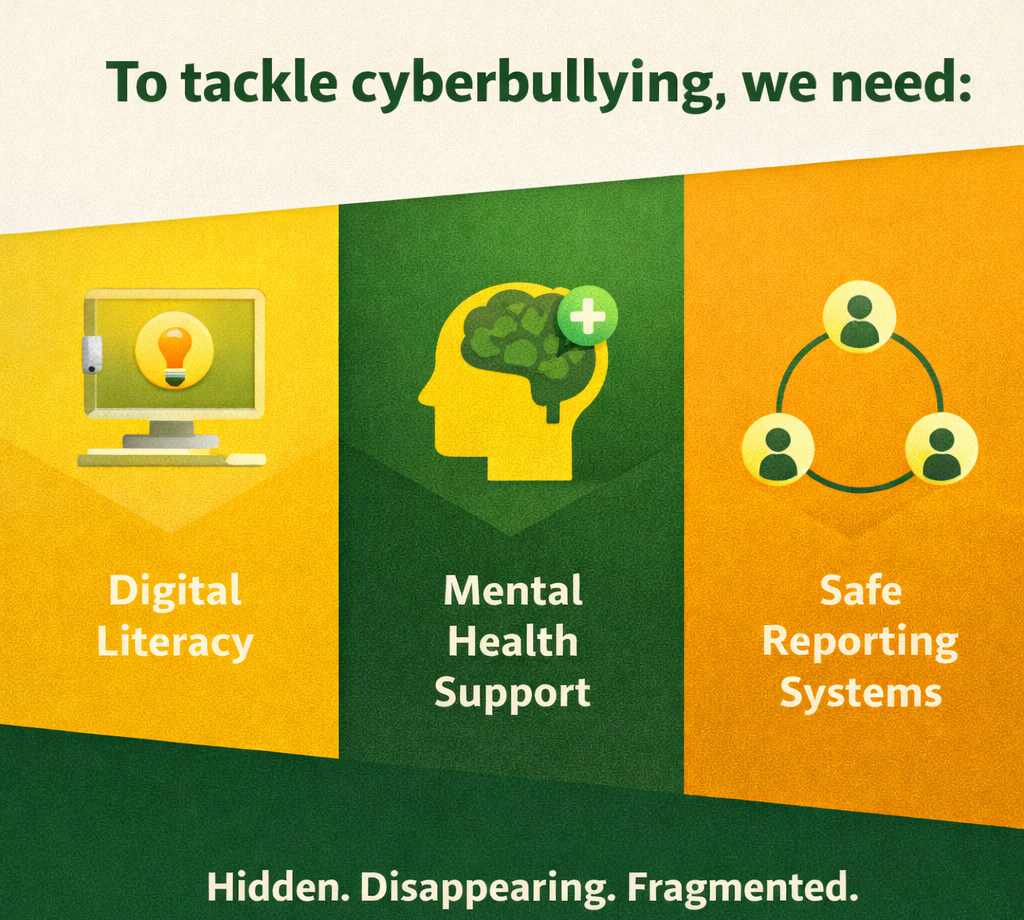
For organisations working with children, the path forward lies in:
- integrating digital safety into existing programmes
- strengthening mental health support systems
- building trust-based reporting mechanisms
- and engaging communities as active participants
Cyberbullying may be invisible, but its impact is not.
Recognising it, tracking it and responding to it with care and urgency is essential to ensuring that every child can grow, learn and participate in digital spaces without fear.
Frequently Asked Questions (FAQs)
What is cyberbullying, and how is it different from traditional bullying? Cyberbullying refers to the use of digital platforms — social media, messaging apps, gaming environments — to harass, threaten or humiliate others. Unlike traditional bullying, it does not end when the school day does. It is persistent, often anonymous, and can reach a large audience instantly. Harmful content can remain online indefinitely, and there is no physical space a child can retreat to for relief.
How common is cyberbullying among children in India? Globally, UNICEF reports that over one in three young people across 30 countries have experienced online bullying. In India, the challenge is compounded by rapidly expanding smartphone access, limited digital literacy, and insufficient reporting mechanisms in schools and communities. Many cases go unrecognised or unreported, making the true scale difficult to measure.
What are the signs that a child may be experiencing cyberbullying? Cyberbullying rarely announces itself. Warning signs often appear as behavioural changes — withdrawal from social interactions, declining academic performance, anxiety, low self-esteem or reluctance to use devices. Because children may not identify what they are experiencing as abuse, emotional distress is often the first indicator.
Why do children not report cyberbullying? Several barriers prevent children from coming forward. These include fear of losing access to devices, concern about being blamed, shame and a lack of trust in adult responses. In India, many children may also not recognise what they are experiencing as a form of harm, particularly when it happens across private messages or platforms parents are unaware of.
What can parents do without resorting to surveillance? Excessive monitoring can erode trust and push children to conceal their online experiences further. More effective approaches involve open, non-judgmental conversations about digital life, building awareness of the platforms children use and creating an environment where children feel safe disclosing problems without fear of punishment or device restrictions.
What role do schools play in addressing cyberbullying? Schools are a critical point of contact. Anonymous reporting mechanisms, teacher training to recognise early signs of distress, and the integration of cyberbullying into school safety policies all make a meaningful difference. In India, schools are required to form Anti-Bullying Committees, though their effectiveness depends heavily on awareness and implementation.
Is cyberbullying a behavioural problem or a systemic one? Both — and that distinction matters. While it involves individual behaviour, cyberbullying is also shaped by how platforms are designed, how institutions respond and how communities understand harm. Addressing it effectively requires coordinated action across all three, rather than placing responsibility solely on children or their families.
What needs to change at a policy and platform level? India’s regulatory frameworks need stronger alignment between education systems, child protection mechanisms and digital governance. Technology platforms must move toward safety-by-design features, stronger content moderation and child-centric risk assessments. There is also a significant need for more India-specific research, particularly on rural populations and the intersections of gender, caste and socio-economic status.