

A few years ago, finishing education felt like reaching a destination.
Today, it feels more like the beginning.
In 2026, upskilling has become one of the most important forces shaping how people build careers in India. A young graduate learning Excel on a borrowed phone, a tailor figuring out how to sell through WhatsApp or a healthcare worker adapting to digital records for the first time.
What is changing is not just the job market. It is the idea of what it means to be “ready” for work.
Upskilling Meaning — Explained Simply
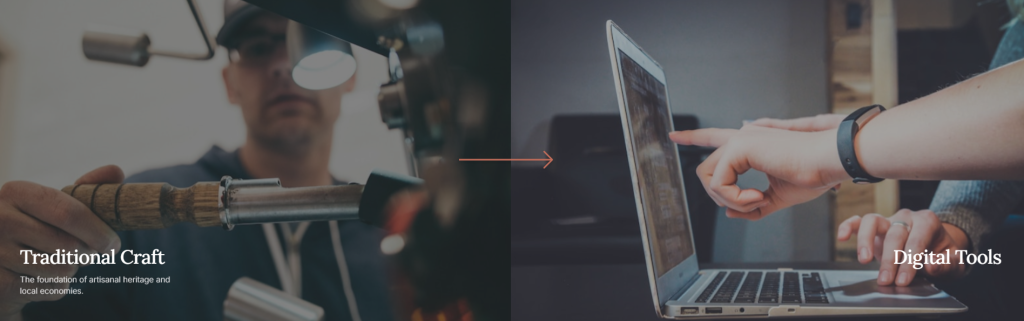
At its core, upskilling is about learning something new without leaving what you already know behind.
It is not about starting over. It is about moving forward.
In a country where millions enter the workforce each year, this distinction matters. Most people are not looking to reinvent themselves completely. They are trying to build on what they have, often with limited time, limited resources and immediate financial pressure.
Upskilling in Your Own Words — An Everyday Example
Consider a young woman in a small town who has learned basic tailoring.
For years, her work depends on local demand. Then someone shows her how to:
- Take orders through social media
- Accept digital payments
- Track customers on her phone
Nothing about her core skill changes. But her income, reach and confidence do.
That shift, quiet but powerful, is what upskilling looks like in real life.
Key Terms Related to Upskilling
The conversation around upskilling often overlaps with other ideas:
- Skill development India continues to focus on scale
- Vocational training India connects people to trades and services
- Digital skills India are becoming foundational across sectors
- Employability skills youth India emphasise communication and adaptability
Together, these shape how individuals navigate the future of work India.
Upskilling vs Reskilling — Know the Difference
There is a tendency to treat all learning as the same. But the difference matters.
Upskilling helps a person grow within their current path.
Reskilling helps them change direction entirely.
A delivery worker learning route optimisation tools is upskilling.
That same worker learning coding to move into IT is reskilling.
Both are important. But for many in India’s informal and semi-formal economy, upskilling is often the more immediate and accessible pathway.
Upskilling in India: Why It Matters in 2026
India’s workforce is young, ambitious and increasingly aware of opportunity. But it is also unevenly prepared.
For individuals, learning new skills is no longer about standing out. It is about staying relevant.
For organisations, it is no longer efficient to hire ready-made talent. It is necessary to build it.
And for the economy, the gap between education and employability is becoming harder to ignore.
This is why conversations around job skills 2026 are expanding beyond degrees and certifications to include adaptability, digital familiarity and continuous learning.

Where the real shift is happening
The most important change is not happening in large institutions. It is happening in small, incremental ways.
A young man in a village learns how to repair smartphones because demand is growing.
A nurse learns to use digital health systems introduced in clinics.
A student takes free online courses late at night, hoping to improve their chances in interviews.
These are not dramatic transformations. They are layered ones.
And together, they are reshaping what career development looks like.
Real examples of upskilling in India
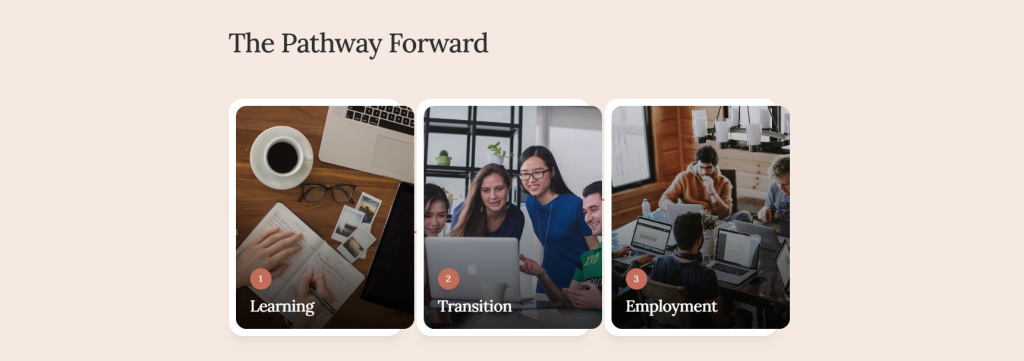
Across the country, different pathways are emerging:
- Government-supported programmes like Pradhan Mantri Kaushal Vikas Yojana are helping youth access structured training
- The National Skill Development Corporation is working to standardise and expand skilling ecosystems
- Informal workers are learning platform-based skills to increase earnings
- Women are entering micro-enterprises through digital tools
These examples show that learning is no longer confined to classrooms. It is embedded in work itself.
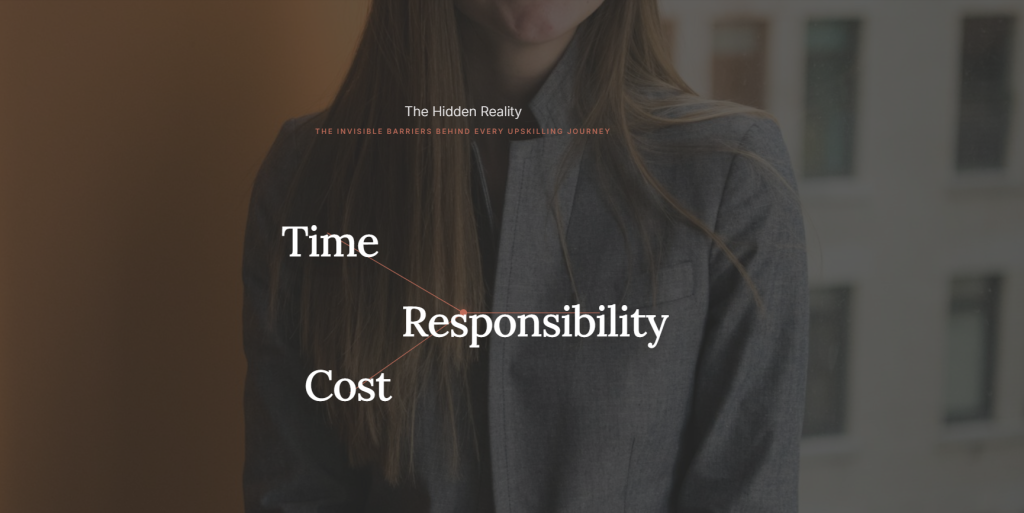
A quiet constraint: not everyone can afford to learn
For many, the barrier is not willingness. It is capacity.
Learning takes time.
Time often means lost income.
For women, it may also mean negotiating household responsibilities.
This is where many skilling efforts fall short. They assume that access equals participation.
In reality, the question is often more basic. Can someone afford to spend time learning today for a benefit that may come later?
How to start upskilling — a realistic first step
Upskilling does not always begin with a formal programme.
It often begins with a small decision:
- Learning one tool
- Improving one skill
- Trying one new method
In a world shaped by online learning India platforms, even limited access can open new possibilities.
What matters is consistency, not scale.
How Smile Foundation builds pathways, not just skills
For many young people, especially in underserved communities, the challenge is not just learning. It is navigating everything around it.
Smile Foundation approaches this differently.
Its programmes do not treat skilling as a standalone intervention. Instead, they:
- Combine vocational training with life skills
- Support confidence-building and communication
- Work closely with communities to improve participation
- Link training to real livelihood opportunities
This recognises a simple truth. Skills alone do not change lives. Pathways do.
If you are looking to support meaningful change, exploring Smile Foundation’s work in workforce training can be a starting point.
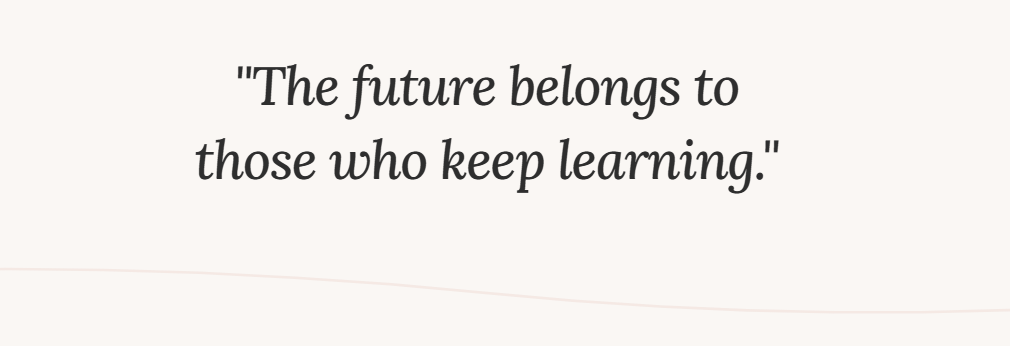
The future will belong to those who keep learning
There was a time when careers followed a predictable path.
That certainty is fading.
Today, growth depends less on what you know once and more on how willing you are to keep learning. This is where upskilling becomes central, not just to employment, but to dignity, stability and mobility.
In India, where aspirations are rising faster than systems can adapt, this shift matters deeply.
Because the future of work is not just about jobs.
It is about whether people are prepared for them.
FAQ — Upskilling Meaning
What is the exact meaning of upskilling?
Upskilling means improving existing skills or learning new ones to stay relevant in a job or industry.
What is the difference between upskilling and reskilling with examples?
Upskilling builds on current skills, like learning digital tools in the same job. Reskilling involves learning a completely new field.
Why is upskilling important for students and professionals in India?
It improves employability, helps adapt to change and increases career opportunities in a competitive economy.
What are some simple examples of upskilling in everyday life?
Learning Excel, improving communication, using digital platforms for work or taking short online courses.
How is upskilling different from general education or training?
Upskilling is continuous, practical and focused on improving current abilities, while education is broader and foundational.
What are the most in-demand skills to learn in India in 2026?
Digital skills, communication, data handling, healthcare support skills and technical trades.
How can someone start upskilling with limited resources?
By using free online platforms, community programmes and self-learning methods with consistent practice.
What government schemes support skill development in India?
Schemes like Pradhan Mantri Kaushal Vikas Yojana and initiatives by the National Skill Development Corporation.
How does Smile Foundation help youth with upskilling?
It provides training, life skills and employment-linked opportunities for underserved youth across India.