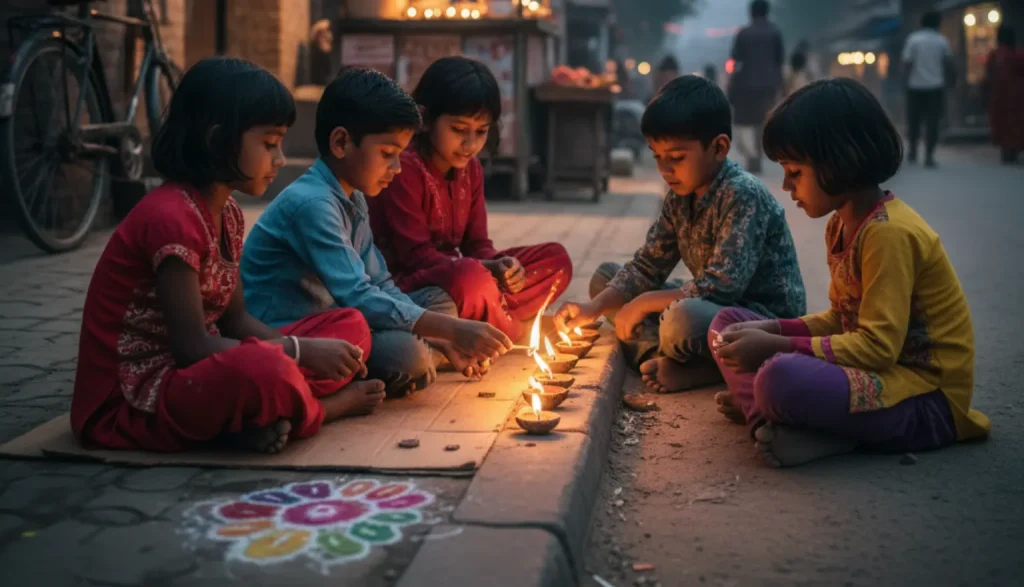


Every year on 28 February, India celebrates National Science Day — commemorating the discovery of the Raman Effect by Sir C.V. Raman in 1928. The day is more than a tribute to scientific curiosity. It is a reminder that science has shaped India’s past, and will define its future.
As India envisions a Viksit Bharat — a developed, innovation-driven nation — science is central to that ambition. But in 2026, the conversation must go further.
The theme “Women in Science: Catalysing Viksit Bharat” invites us to ask a deeper question:
Can India truly become a developed nation without fully unleashing the scientific potential of its women?

India’s Scientific Moment
India’s scientific journey has moved from resource constraints to global recognition.
The Indian Space Research Organisation (ISRO) has placed India among elite spacefaring nations. From Chandrayaan missions that expanded lunar understanding to cost-effective Mars exploration, India demonstrated that innovation need not be expensive to be transformative.
India’s vaccine manufacturing capacity positioned it as a global supplier during the COVID-19 pandemic. Indigenous vaccine development, including Covaxin, reflected the country’s growing biotech capability.
In pharmaceuticals, India became known as the “pharmacy of the world,” producing affordable generics that expanded access to life-saving medicines globally.
Digital public infrastructure such as Aadhaar and UPI redefined financial inclusion at scale. These systems are now studied globally as models of technological architecture.
India has built supercomputers under constraints, expanded renewable energy research, advanced genomics through national initiatives and strengthened biotechnology start-ups.
The ambition is clear: science and innovation are central to India’s development pathway.
Yet one statistic continues to temper celebration.
India spends roughly 0.6–0.7% of GDP on research and development — significantly lower than global innovation leaders. And within this ecosystem, women remain underrepresented at senior research levels.
The next leap toward Viksit Bharat requires both deeper investment and wider inclusion.
Women in Science: The Untapped Multiplier
India produces a large number of women STEM graduates each year. In some disciplines, female enrolment in undergraduate science programmes is strong.
Yet the numbers narrow as careers advance.
Fewer women occupy senior research positions, lead laboratories, or hold decision-making roles in R&D institutions. Structural barriers — caregiving expectations, limited mentorship networks, institutional biases — contribute to attrition.
The paradox is clear: India trains women in science, but does not always retain them in science leadership.
Research across global innovation systems shows that diverse research teams produce stronger outcomes. Inclusion enhances problem-solving, interdisciplinary thinking and societal relevance.
For a nation aspiring toward scientific leadership, inclusion is not symbolic. It is strategic.
Women in science are not a peripheral theme. They are catalysts.
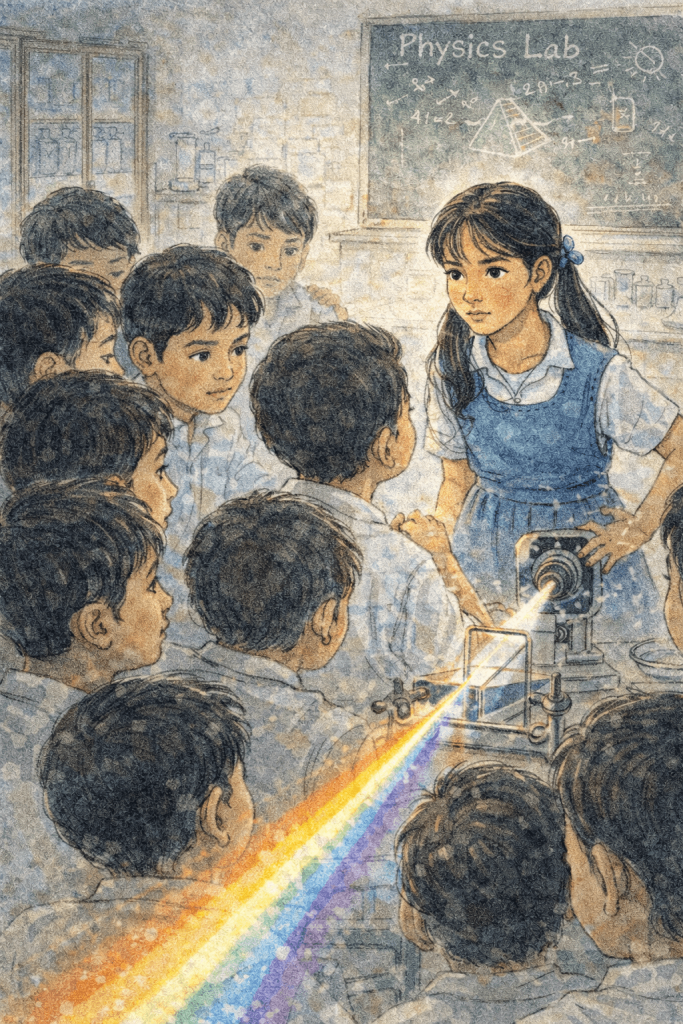
Science, Society and Systems this National Science Day 2026
Science is not confined to laboratories.
When women scientists contribute to public health research, vaccine development improves. When they become engineers design digital platforms, accessibility expands, and when women climate researchers lead renewable innovation, sustainability strengthens.
The ripple effects extend beyond invention.
Consider healthcare innovation. India’s biomedical research institutions contribute to vaccine development, diagnostic tools and public health surveillance. Yet healthcare access gaps remain across regions.
Bridging research and access requires inclusive thinking — scientists who understand community realities.
Women researchers often bring lived experiences that influence problem framing and solution design.
In agriculture, biofortified crops addressing micronutrient deficiencies have emerged from research collaborations. Nutrition-sensitive science can transform public health outcomes.
In digital innovation, India’s public infrastructure demonstrates how large-scale technological architecture can serve millions. Ensuring gender-inclusive design in such systems determines who benefits.
Science is powerful when it serves society.
From Frugal Innovation to Frontier Science
India’s scientific reputation has long been associated with frugal innovation — high-quality engineering under cost constraints.
Low-cost medical devices, affordable diagnostics, and generic drug manufacturing reflect this strength.
But Viksit Bharat requires expansion into frontier science as well — quantum computing, semiconductor research, advanced materials, AI ethics, green hydrogen and space commercialization.
To compete globally in these domains, India must:
- Increase R&D spending
- Strengthen academia-industry linkages
- Reduce bureaucratic bottlenecks
- Encourage interdisciplinary collaboration
- Expand participation of women scientists
Frontier science thrives where ecosystems are inclusive.
Education as the Starting Point: National Science Day 2026
National Science Day is not only about celebrating laboratories. It is about nurturing curiosity in classrooms.
In many parts of India, girls show strong interest in science subjects. Yet access to advanced labs, mentorship and exposure varies widely.
Rural and underserved communities often lack structured STEM exposure. Without sustained encouragement, potential fades.
Building a pipeline for women in science begins early — in schools where girls are encouraged to ask questions, experiment and imagine careers in research.
Science education must not reinforce stereotypes. It must dismantle them.
Women Scientists Shaping India’s Future
Across sectors, women scientists are contributing to:
- Space research missions
- Vaccine development
- Climate modelling
- Artificial intelligence research
- Biotechnology startups
- Environmental conservation
Their presence challenges outdated narratives about who belongs in science.
Representation matters. When girls see women leading research missions, publishing studies, or designing complex systems, aspiration shifts from possibility to probability.
Catalysing Viksit Bharat requires visible role models.

The Road to Viksit Bharat
Commemorating the Raman Effect reminds us that scientific discovery can reshape global understanding.
But today’s scientific moment demands collective action.
“Women in Science: Catalysing Viksit Bharat” is not a ceremonial slogan. It is a developmental imperative.
A developed India must:
- Invest more deeply in research.
- Create equitable institutional cultures.
- Support re-entry pathways for women researchers.
- Expand mentorship networks.
- Integrate science access with social inclusion.
Scientific excellence and equity are not competing goals. They are mutually reinforcing.
National Science Day 2026: From Celebration to Commitment
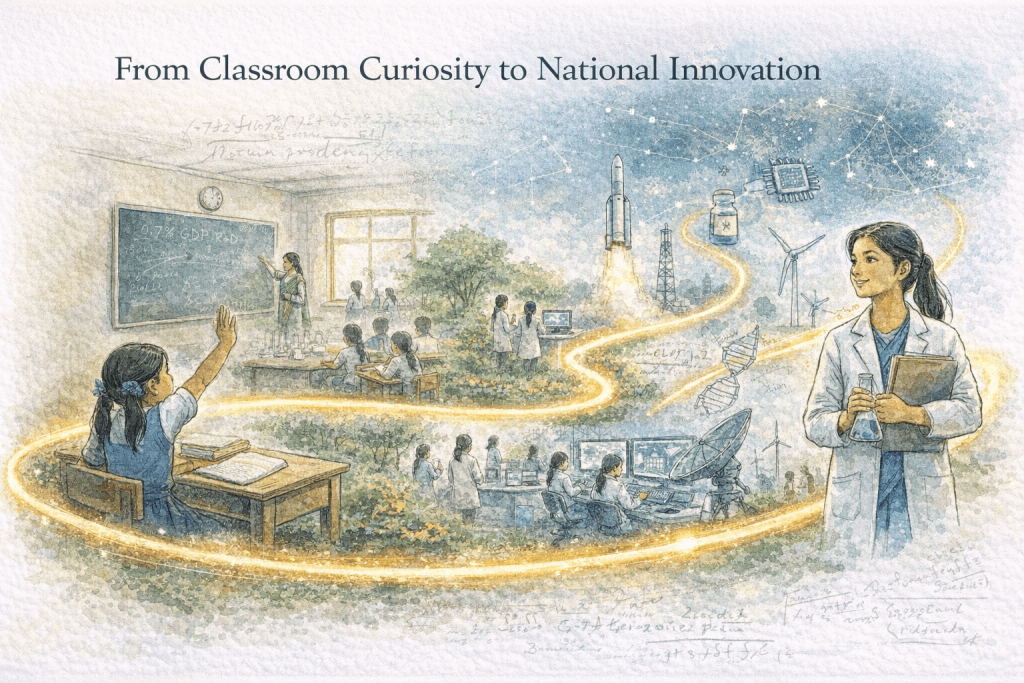
A Viksit Bharat is one where innovation is not confined to elite institutions but is nurtured in classrooms across cities, towns and villages. Where research talent is identified early. Where girls are encouraged not only to study science, but to lead it.
This is where the journey truly begins.
Across underserved communities, many girls demonstrate curiosity in mathematics and science but lack exposure, mentorship and access to laboratories or digital tools. Without structured encouragement, that curiosity can diminish under social and economic pressures.
Through its education initiatives, Smile Foundation works to strengthen foundational learning, digital literacy and STEM exposure among children from underserved backgrounds. By improving access to quality education, integrating experiential learning opportunities and encouraging scientific inquiry among girls, the foundation supports the early pipeline of future researchers, engineers, and innovators.
Exposure visits, digital classrooms, science-led workshops and life skills integration help students connect classroom theory with real-world applications. When girls participate in hands-on learning — whether through digital tools, science modules or guided exploration — confidence grows alongside competence.
Building a future-ready India requires expanding this pipeline.
Encouraging girls to pursue science is not only about representation. It is about strengthening India’s research ecosystem in the long term. Every girl who remains in school, who develops analytical thinking skills, and who is exposed to scientific problem-solving becomes a potential contributor to India’s innovation story.
National Science Day 2026 reminds us that scientific progress begins with curiosity — and curiosity must be nurtured equitably.
India has shown the world what it can achieve in space exploration, vaccine development, digital infrastructure and affordable innovation.
The next milestone is ensuring that girls from every background have the opportunity to participate in shaping that future.
When education systems support girls in science, when institutions retain women researchers, and when policy invests in inclusive R&D ecosystems, the path toward Viksit Bharat becomes stronger and more sustainable.
Science has propelled India forward.
Inclusive science will propel it further.
On this National Science Day, the call is clear:
Invest in research.
Support women in science.
Strengthen the pipeline from classrooms to laboratories.
Because a developed India will be built not only by discovery —
but by opportunity.