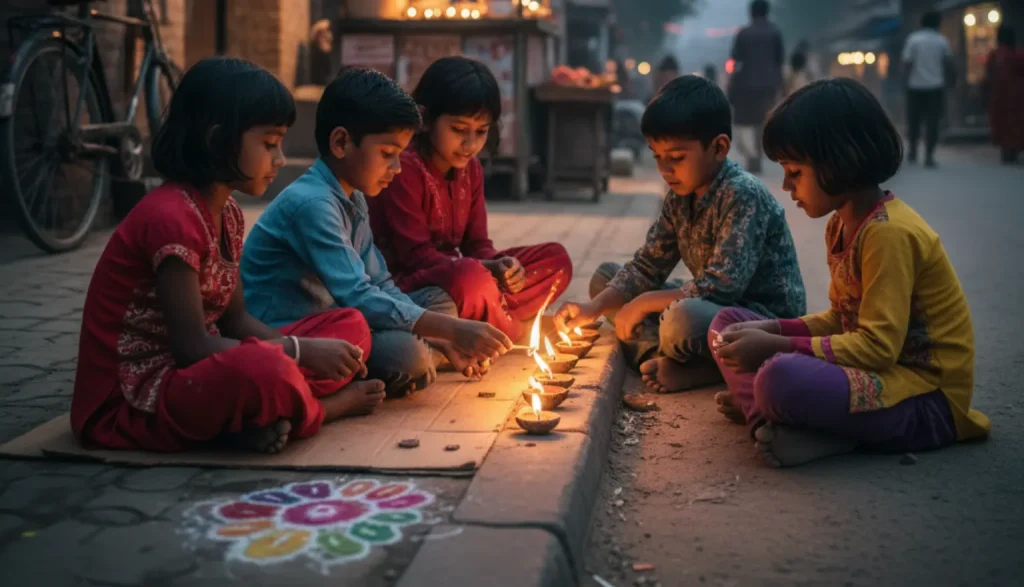


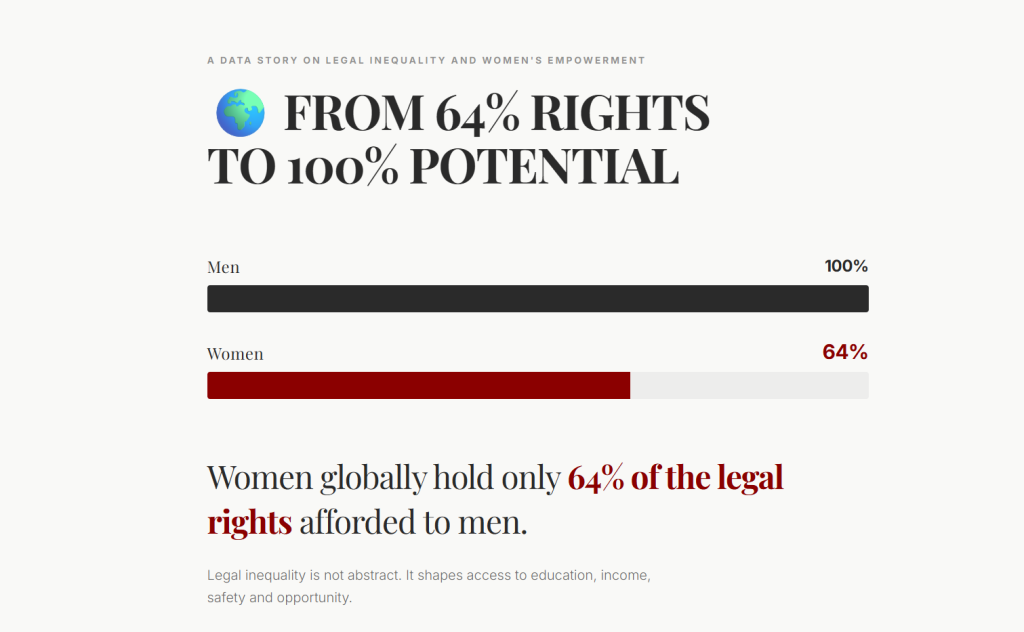
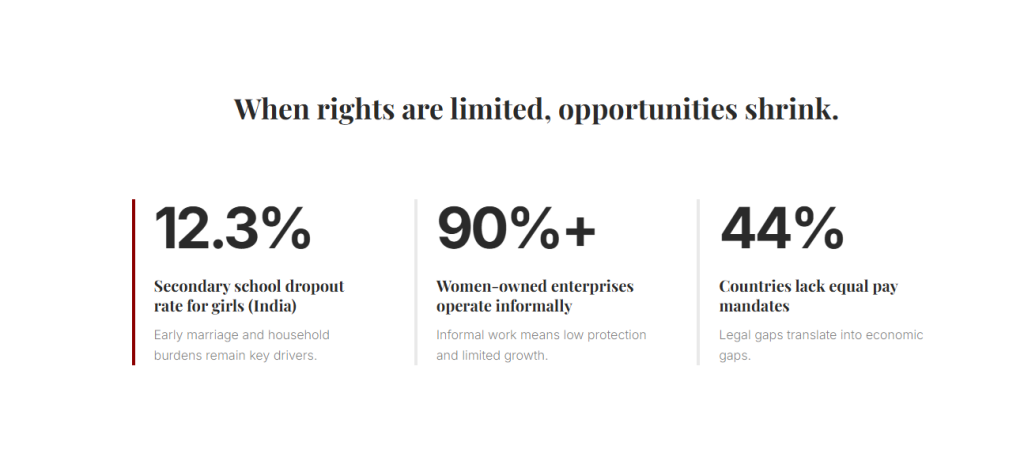
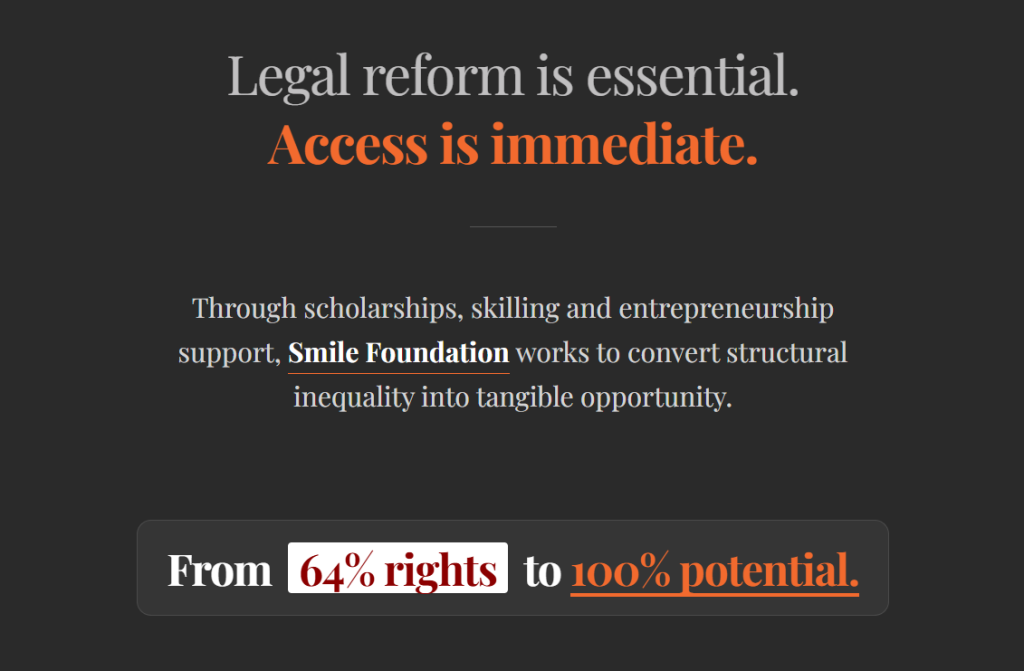
A new UN Women report finds that no country grants women full legal equality, globally women hold only about 64% of the legal rights that men enjoy[1]. These gaps, from weak equal-pay laws to laws allowing child marriage, leave women exposed to discrimination, violence and exclusion throughout life[1][2]. For instance, in nearly 75% of countries, girls can still be legally forced into marriage, and 44% of countries have no equal-pay requirement[2]. These legal shortfalls translate into lost opportunities: girls drop out of school and women stay out of the formal workforce. In India alone, 12.3% of secondary-school girls drop out, often due to early marriage or household pressures[3]. With laws lagging, organizations like Smile Foundation step in on the ground, strengthening girls’ education and women’s economic agency to counter these structural barriers.
Education as Empowerment
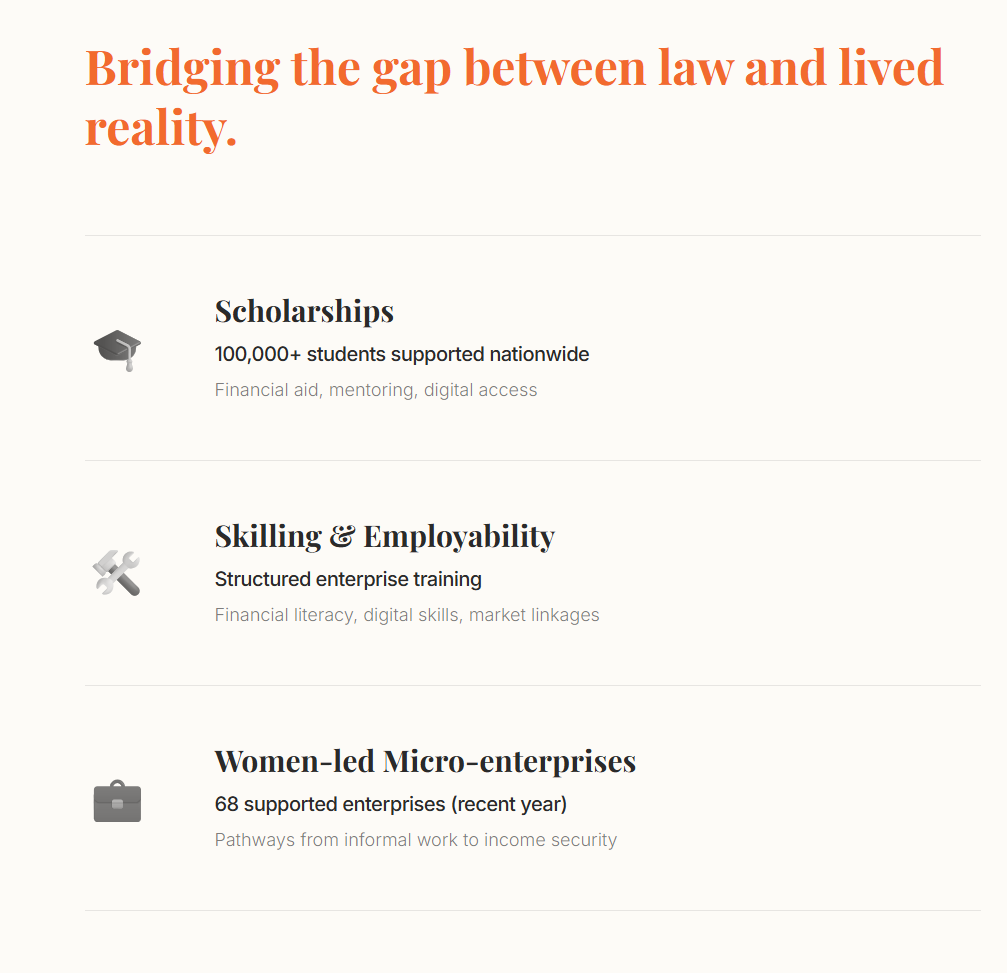
When laws don’t guarantee rights, families often deprioritise girls’ schooling. Smile Foundation combats this through scholarships and mentorship. For example, its Scholarships@Smile programme has supported over 100,000 students (mainly girls) nationwide with financial aid, life-skills workshops and mentoring[4]. By covering fees and school supplies, Smile keeps girls learning instead of dropping out. This matters: well-educated women earn more and lift up their communities[5]. (In fact, one analysis showed countries with the least gender-education gaps enjoy higher per-capita income than those with the widest gaps[6].

Figure: Girls in Smile’s scholarship programme attend a skills and mentoring session. Beyond tuition, Smile’s “She Can Fly” campaign provides laptops, stipends and life-skills workshops to keep talented girls in school[7].
Investing in girls also brings big social dividends. Educated women tend to marry later, have fewer children and give their families better health care[8][5]. For example, UNICEF finds that children of literate mothers are far more likely to survive childhood[8]. Smile’s programmes seize on this: its She Can Fly campaign explicitly provides scholarships, laptops, mentoring and confidence-building to vulnerable girls[7]. Another programme offers secondary and college scholarships plus communication and leadership training[9]. These efforts ensure that girls can finish school, and even pursue STEM studies, despite the legal and cultural barriers around them.
Entrepreneurship and Skills Training
When formal laws leave gaps (for example, no guaranteed equal pay in many countries[10]), many women end up in informal, low-paid work. In India over 90% of women-owned enterprises are informal[11], meaning no formal contracts or protections. Smile Foundation’s Women’s Economic Empowerment programmes step in here. Through structured training, women learn business planning, financial literacy, marketing and digital skills[12][13]. They also get help developing business models (via Generate-Your-Business and Start-Your-Business workshops) and access to seed capital or government scheme funds[12][13]. In short, women emerge with real enterprises rather than subsistence activities.
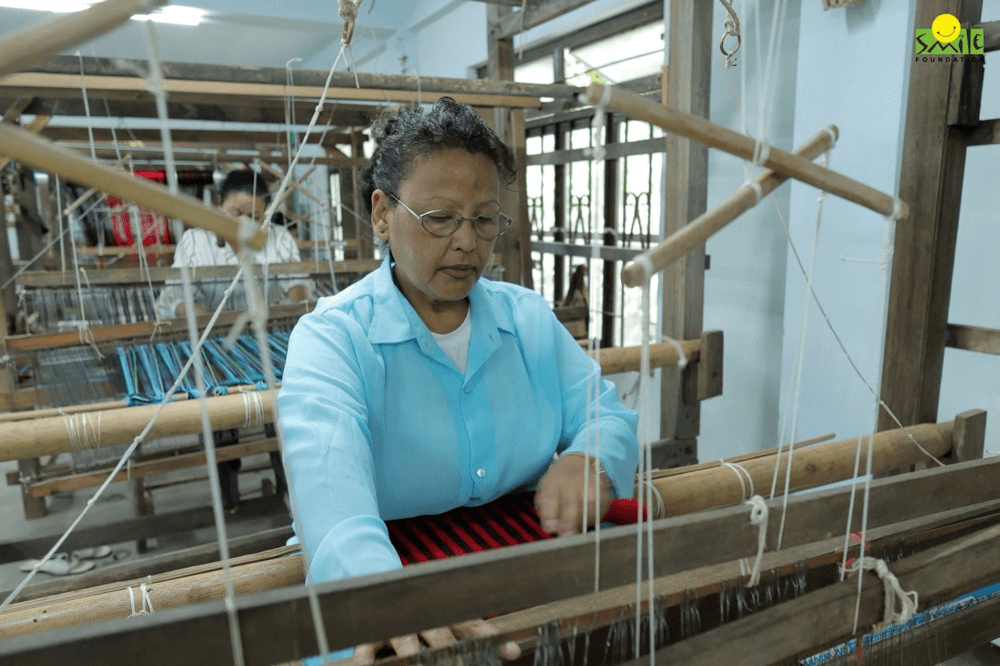
Figure: A woman artisan practices weaving as part of a Smile-supported microenterprise. Smile’s entrepreneurship training helps turn traditional skills into viable businesses by pairing craftsmanship with financial and digital training[12][13].
This integrated approach pays off. Smile’s Swabhiman livelihood initiative has supported 68 women-led micro-enterprises in 2023–24[14], directly creating income-earning opportunities. The impact is multi-fold: women gain financial independence, build digital literacy, and become decision-makers in their households[12][13]. These local enterprises, in turn, inspire others; a trained woman entrepreneur can mentor the next. As Smile’s own analysis notes, empowered women spend more on education and nutrition for their families, generating an education and nutrition dividend that fuels community development[5][6].
From Legal Reform to Lived Equality
The UN report makes clear that legal reform alone won’t happen overnight. Discriminatory norms persist even where laws exist[15]. That’s why Smile Foundation’s model is so aligned: it works at the community level to translate opportunities into access. While advocacy pushes for better laws, Smile gives women the skills and support they need today. By keeping girls in school and training women to start businesses, Smile helps bridge the gap between rights on paper and rights in practice. Each scholarship or entrepreneurship workshop is a step toward the equality that law promises but has yet to deliver.
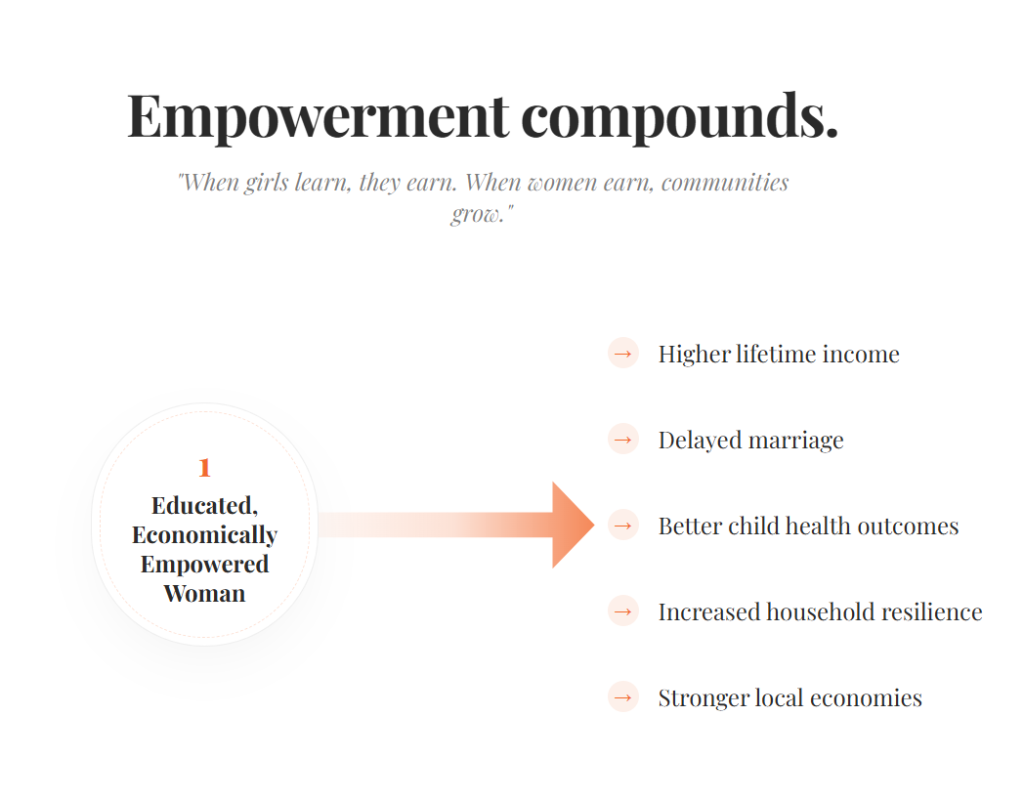
Join the effort: Empowering a girl or woman now pays dividends far beyond her lifetime. Donations and partnerships that fund Smile’s education and livelihood programmes are investments in healthy families, stable incomes and stronger economies. As Smile’s experience shows, when girls finish school and women build businesses, entire communities benefit[5][6], making progress toward the equality we all deserve.
Sources: Global legal-rights data from UN Women (reported in Down To Earth[1][2]); Smile Foundation program statistics and analyses[4][12][14][5][7] (see Smile Foundation annual reports and blogs for full details).
[1] [2] [10] [15] UN Report: Women Hold Only 64% of Men’s Legal Rights Globally
https://www.downtoearth.org.in/governance/women-globally-hold-just-64-of-the-legal-rights-of-men-un
[3] [4] The Future She Deserves Starts With A Scholarship
[5] [6] [7] [8] [9] Investing in Girls Changes Entire Economies – Smile Foundation
[11] The Present Must Be Female: Ft. Female Entrepreneurship
[12] [13] Smile Foundation Connect
https://www.smilefoundationindia.org/csr/partner-for-economic-empowerment
[14] Women Empowerment NGO in India | Empower Futures