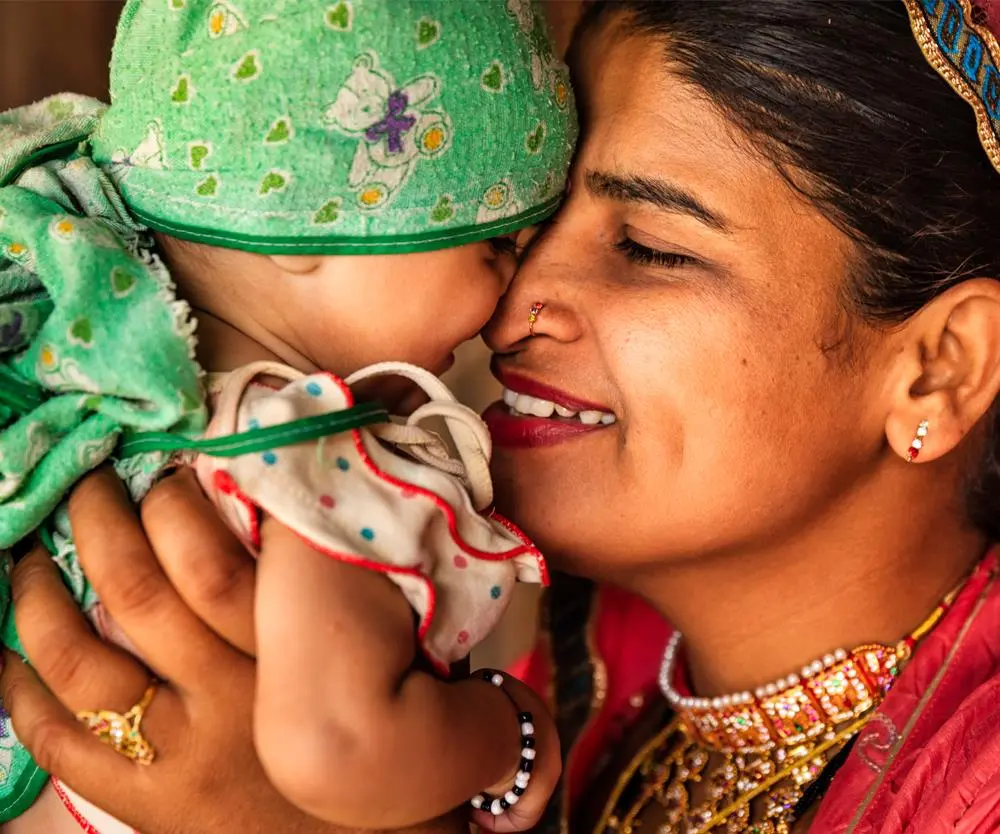

When a baby is born, the first food offered is more than nourishment. It is connection. Protection. Regulation. It is the body’s promise: I will keep you safe.
Breast milk has long been recognised as the biological norm for infant feeding. It adapts to a baby’s needs. It contains antibodies that respond to local pathogens and supports gut development and immune resilience. For most families, it is also the most accessible and affordable source of infant nutrition.
And yet, the safety of this first food does not rest on the mother alone.
It rests on the safety of her environment.
Breastfeeding is not the problem
Let us begin here: breastfeeding remains one of the most powerful ways to protect infant health.
When concerns arise about environmental contaminants—heavy metals in groundwater, pesticide residues, industrial pollutants—it can be easy to misdirect the worry toward breast milk itself. But decades of research consistently show that, even in environments with contamination concerns, the benefits of breastfeeding overwhelmingly outweigh the risks.
The real question is not whether breast milk is safe.
The real question is whether we are doing enough to protect the mother.
The invisible pathways
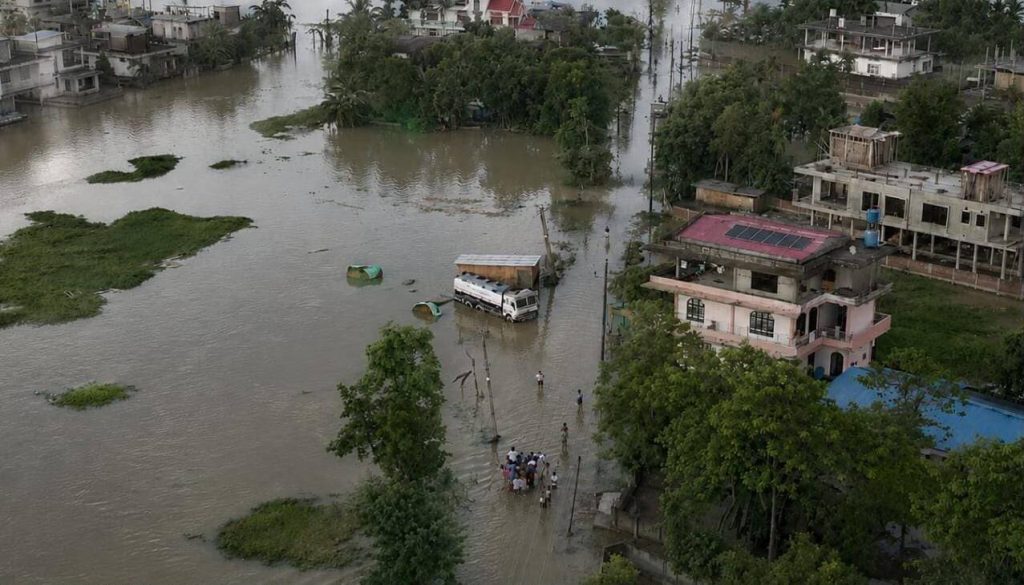
Water is often described as life. In many communities, it is also a daily uncertainty.
Groundwater contamination has been detected in various regions due to naturally occurring minerals, agricultural runoff and industrial activity. These exposures are rarely visible. Families may rely on borewells or local sources without knowing what lies beneath.
A lactating mother drinks this water. She cooks with it and uses it to prepare food for her family.
The body is remarkably protective. Breast milk is not simply a reflection of maternal blood levels. It is a regulated biological fluid, produced with mechanisms that limit the transfer of many harmful substances.
But maternal exposure still matters.
Not because it makes breast milk unsafe in most cases but because mothers deserve environments that support their health as fully as their milk supports their babies.
Maternal health begins before birth
We often speak about the first 1,000 days of life as critical for development. That timeline begins in pregnancy, but it is shaped long before.
Safe water influences:
- Maternal nutrition
- Kidney function
- Immune health
- Overall well-being during pregnancy and lactation
When water sources are compromised, women may experience repeated infections, anaemia or chronic exposure to low levels of contaminants. These conditions can affect energy, recovery, and long-term health.
Supporting breastfeeding means supporting maternal health. Supporting maternal health means ensuring safe water.
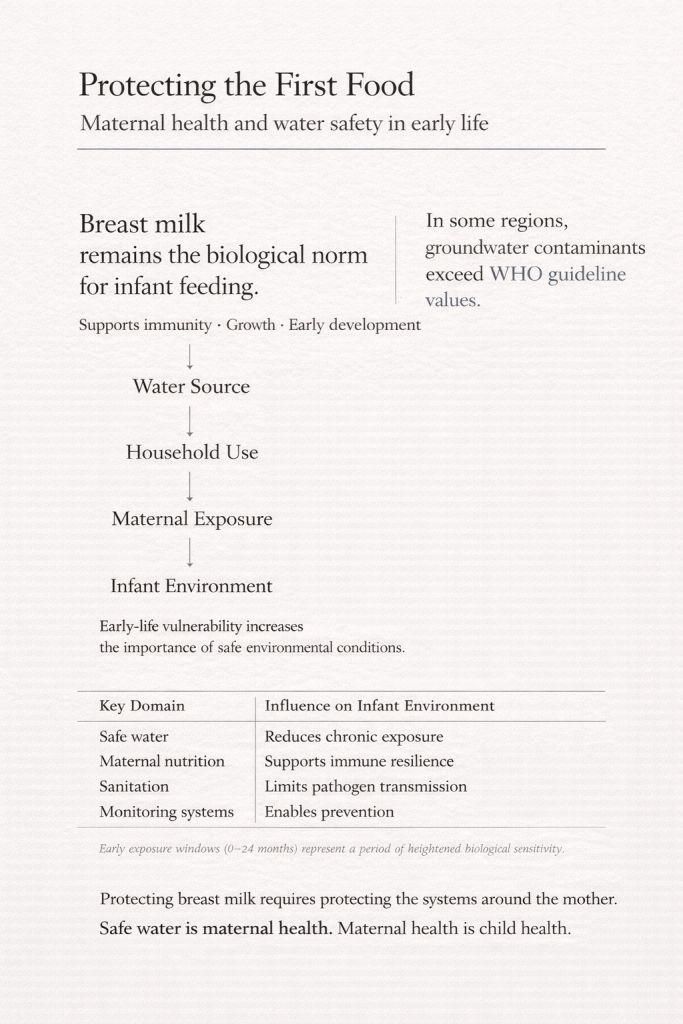
The environment is part of the maternal health care team
We tend to think of maternal care as clinic-based: antenatal check-ups, iron supplements, skilled birth attendants, postnatal counselling.
But the environment is part of the care team too.
A safe water source.
Sanitation facilities.
Knowledge about hygiene and storage.
Community awareness.
These factors quietly shape outcomes.
Community health workers often build trusted relationships with mothers. With simple additions, such as education about water storage, boiling practices where needed, or information about testing, they can strengthen this invisible layer of protection.
Water safety conversations do not undermine breastfeeding. They reinforce it.
Protecting confidence while strengthening systems
One of the most important principles in infant feeding support is preserving maternal confidence.
Fear-based messaging can do harm. If mothers are told their milk might be unsafe, even without context, anxiety rises. Some may prematurely stop breastfeeding, turning to alternatives that may be less safe or less accessible.
So we must be careful.
The solution is not to question mothers’ milk.
The solution is to improve the systems around them.
Routine groundwater monitoring.
Public transparency about contamination levels.
Accessible purification technologies.
Infrastructure investment.
When these systems function well, mothers can focus on what they do best—responding to their babies.
Why this is a justice issue
Environmental contamination does not affect all communities equally.
Rural households, low-income families and marginalised communities are more likely to rely on untreated groundwater sources. Women in these settings often carry the responsibility for water collection and household management.
The burden, therefore, is gendered.
When we speak of protecting the first food, we are also speaking of equity. Every mother, regardless of geography, deserves the assurance that the water she drinks supports—not compromises—her health.
This is not about individual behaviour change alone. It is about structural commitment.
A Holistic View of Maternal and Child Health
Maternal and child health programmes that integrate water, sanitation and hygiene create stronger foundations.
Imagine:
- Antenatal visits that include brief conversations about water sources.
- Anganwadi centres that model safe storage practices.
- Mobile health units that partner with local authorities to flag contamination hotspots.
- CSR initiatives that combine maternal nutrition with water purification support.
When maternal health and environmental health are treated as separate silos, families fall through the cracks. When they are treated as interconnected, protection becomes layered and durable.
Breast Milk Remains a Powerful Safeguard
It is important to return to this reassurance: breast milk is remarkably protective.
It contains immune factors that help buffer infants against pathogens. It adapts to infections circulating in the community and is biologically designed to support early development.
Even in challenging environments, breastfeeding often remains the safest and most protective feeding option available.
The responsibility, then, is ours—not the mother’s—to improve environmental conditions.
The power of prevention
Protecting safe water may not carry the emotional resonance of a newborn’s first feed. It may not appear as dramatic as a hospital intervention.
But it is prevention at its most fundamental.
Every borewell tested and every filtration system installed.
Every informed conversation between a health worker and a mother.
These actions do not replace breastfeeding support. They strengthen it.
Beginning at the source
Maternal health begins at the water source, in the kitchen, in the fields, in the daily routines of women who carry both life and responsibility.
Protecting the first food is not about raising doubt. It is about raising standards.
It is about ensuring that when a mother brings her baby to her breast, she can do so with confidence—knowing that the systems around her honour and support that act of care.
Safe water is not separate from maternal health.
It is the foundation beneath it.