
Take a moment to scroll through any social media platform and you’ll find confidence neatly packaged into short reels. Those smiles seem effortless, opinions come across with absolute certainty and lives look both curated and spontaneous. You may like a few, scroll past some or comment on some. But what you don’t see is the mental gymnastics that go on behind every single post. Creating content is a creative and psychological task.
When it comes to mental health challenges, one group that often gets overlooked in research is social media influencers. These are individuals who have built a large and engaged following on platforms like Instagram or YouTube, and they have the power to sway the opinions and behaviours of their audiences. However, they also deal with a unique set of stressors that can impact their well-being.
The process starts long before the camera rolls or a sentence is typed out. Creators carefully consider their tone, timing, how their audience might react, and the quirks of each platform before sharing a single thought. They brace themselves for potential backlash. A 2024 study found that influencers who spend more time on social media are more likely to feel anxious, depressed and emotionally drained.
Defining “Mental Content”
The mind of a creator is both a creative space and a battlefield. It’s about the thoughts that creators sift through, the emotions they manage and the risks they weigh. This internal editing is what decides what remains unspoken. They ponder questions like: Will this upset someone? Will it resonate with my audience? Will I lose followers over this?
Acing the Algorithmic
Modern platforms intensify this mental load with their constant evaluations and instant feedback. Metrics refresh in real time and comments come pouring in within seconds. You see both praise and criticism side by side. A post that does well validates the content and boosts the creator’s sense of relevance. On the flip side, a post that flops can feel like a public judgment. Plus, the pressure to stay relatable adds another layer of stress. If you evolve or shift your beliefs, you risk alienating the very community that supported you. This leads to an identity strain where you end up performing a version of yourself that once felt genuine but now feels confining.
The Myth of Passion as Protection
A lot of people in creative fields believe that if you love your work, it somehow protects you from harm. But in reality, passion can actually make you more vulnerable. When your sense of self is wrapped up in what you create, even small criticisms can feel deeply personal. Research on social media jobs shows just how intense this can be—the constant need to stay online, always be available and keep up a public image for your income brings a huge amount of pressure and stress. This constant need to be visible can really wear down the boundaries between work and downtime.
Helps to be Honest
There are, however, some content creators and influencers who have spoken up not only to address their own challenges but also to foster greater sensitivity around them. This is helpful for many people and deserves acknowledgement. They have emphasised the importance of addressing mental health and showing more empathy towards others. Some have shared their experiences with anxiety and how therapy has helped them cope. Others have spoken about their efforts to combat the misinformation surrounding these topics.
Prioritising Mental Health in the Creator Journey
The mythology of the digital creator economy often celebrates autonomy, visibility and scale. It frames content creation as liberation from institutional hierarchies — an open marketplace where talent and relatability are rewarded directly. However, emerging research suggests that this apparent freedom is accompanied by a psychological burden that remains poorly acknowledged.
Recent reporting in The Guardian and The Atlantic has documented what psychologists are beginning to term “algorithmic anxiety” — a chronic stress response triggered by dependence on platform metrics that are opaque, volatile, and financially consequential. Studies from the University of Oxford’s Internet Institute (2023) have noted that digital creators often operate within an environment of “precarious visibility,” where livelihood is tied to fluctuating public approval. Unlike traditional professions, where feedback is periodic and mediated, creators experience instantaneous and often unfiltered commentary.
A 2024 survey by Influencer Marketing Hub found that over 65% of full-time content creators reported experiencing burnout within their first two years, citing pressure to maintain relevance and constant engagement as primary drivers. Meanwhile, the American Psychological Association has increasingly highlighted the mental health implications of social comparison and performance metrics in digital environments — phenomena amplified for those whose income depends on those metrics.
Many young creators enter this ecosystem armed with technical proficiency — editing software, brand strategy, analytics dashboards — but lack psychological preparation for sustained public exposure. Exposure at scale transforms ordinary feedback into reputational volatility. Criticism becomes searchable. Mistakes become permanent. Silence becomes algorithmically penalised.
The creator economy promises flexibility, but often demands relentless visibility.
Income volatility compounds this pressure. According to a 2023 report by Linktree and ConvertKit on the global creator economy, fewer than 15% of creators earn stable, full-time income. Most rely on fluctuating sponsorships, affiliate revenue, and platform payouts. When financial security is directly tethered to audience engagement, rest itself can feel economically dangerous.
This is not simply a matter of individual resilience. It is structural.
Families, Schools and the Legitimacy of Digital Ambition
One of the most under-discussed dimensions of the creator economy is the generational gap in understanding it. For many families and educators, content creation still feels like an extracurricular hobby rather than a legitimate career trajectory. But in India alone, industry estimates suggest the influencer economy crossed ₹1,200 crore in 2024 and continues to expand rapidly.
When digital ambition is dismissed as frivolous, young creators are left to navigate psychological strain in isolation. Unlike traditional careers, there is often no institutional mentorship, no HR department, no supervisor to mediate conflict or burnout.
Recent UNESCO discussions on digital citizenship education emphasise that media literacy must now extend beyond consumption into creation. Schools increasingly recognise that students are not merely users of digital platforms but producers within them. Integrating emotional resilience training, digital boundary-setting, and online safety protocols into curricula is no longer optional.
Colleges and universities are beginning to respond. In the United States and parts of Europe, student counselling centres have introduced programming around online identity, para-social relationships and public feedback management. Indian institutions are still at an early stage in acknowledging these needs.
The mental health burden of digital labour should be treated with the same seriousness as academic stress or exam anxiety.
The Algorithm and the Self
There is also a philosophical dimension to the mental health question. When identity becomes monetised, the line between self and performance blurs. Sociologists studying digital labour argue that creators often inhabit a dual consciousness — they must be authentic enough to maintain trust, yet strategic enough to sustain engagement. This tension creates cognitive strain.
Research published in New Media & Society (2023) suggests that creators frequently experience “self-commodification fatigue,” where aspects of personal life are packaged for audience consumption. The expectation of relatability requires emotional transparency. Yet transparency can expose vulnerability to harassment.
The World Health Organization has repeatedly emphasised that social media environments intensify risk factors for anxiety and depression among adolescents and young adults. For creators, these risk factors are magnified by professional dependency.
Scheduled breaks, time-bound engagement and defined work hours are often recommended coping mechanisms. However, these practices are difficult to maintain in ecosystems that reward constant presence. The solution therefore cannot be purely individual but requires cultural recalibration.
A Healthier Creative Ecosystem
A healthier creative ecosystem would recognise that creators are workers — albeit within a decentralised labour market. It would normalise rest without algorithmic punishment and encourage audiences to practice digital empathy. It would also support creators in establishing boundaries between public persona and private identity.
Recent debates in the European Union around platform accountability include provisions that address transparency in algorithmic systems and mental health risks associated with online exposure. While India’s regulatory framework is still evolving, the conversation has begun. The Information Technology (Intermediary Guidelines and Digital Media Ethics Code) Rules have primarily focused on content moderation, but the mental health implications of digital production remain largely unaddressed.
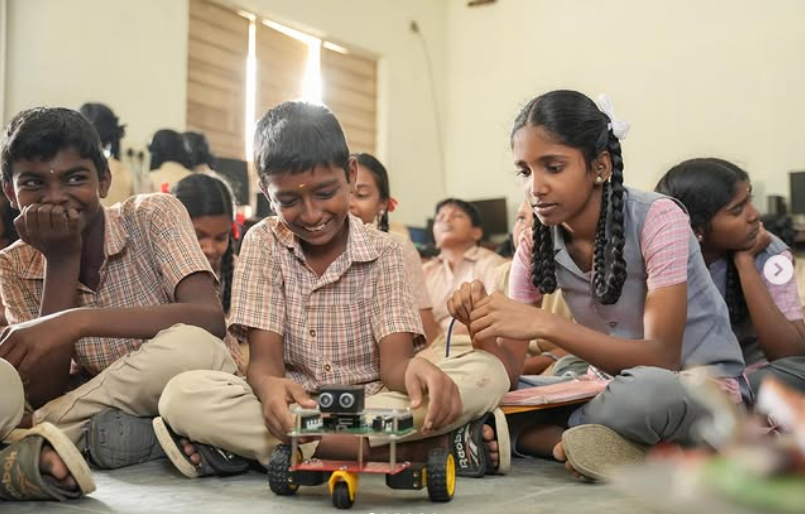
Smile Foundation’s flagship programme Child for Child offers an instructive example of preventive mental health support. Through structured mental health first aid workshops, teachers are trained to recognise early signs of anxiety, stress, and trauma among students. These three-hour sessions, followed by refreshers, equip educators with tools to integrate coping exercises and emotional regulation practices into classroom environments.
While originally designed to address broader student wellbeing, such models are increasingly relevant in a digital context where identity formation unfolds online as much as offline. Teaching resilience, boundary-setting, and self-worth independent of external validation becomes critical in a generation growing up under constant digital evaluation.
Mental health literacy must evolve alongside media literacy.
Mental Content is Most Important
As audiences scroll through curated feeds, it is easy to forget that behind each influencer is a human nervous system responding to praise and criticism in real time. We consume content after our own demanding workdays, often unaware that the person producing it may have experienced theirs under the pressure of algorithmic survival.
Empathy, in this context, is stabilising.
The creator economy is not inherently harmful. It offers opportunity, creative autonomy and economic possibility. But like any labour system, it carries risks that must be mitigated through institutional awareness and cultural maturity.
If digital careers are here to stay, and they are, then mental health infrastructure must evolve accordingly.
Creators deserve recognition not only for their content, but for the emotional labour that sustains it.