
There was a time when corporate social responsibility in India felt almost ceremonial, a predictable sequence of donation, documentation, and departure. A cheque would be handed over, a photograph taken beside a school wall or hospital camp and a press note would affirm that responsibility had been discharged. The gesture was sufficient. The optics were adequate. And for a while, that model endured because expectations were modest and scrutiny was limited.
That era has quietly dissolved.
Today, corporate partnerships in the development sector operate in a far more demanding climate. Investors want ESG disclosures that withstand audit. Employees want to work for organisations that reflect their moral vocabulary and communities expect continuity rather than appearances. CSR is no longer a symbolic extension of corporate identity; it is increasingly part of its structural foundation. Companies are not simply asking how much to spend. They are asking what this spending means, how it integrates with business strategy, how it is measured and how it shapes long-term legitimacy.
In this reconfigured terrain, partnerships between corporations and development organisations are being rewritten, and it is within this shifting landscape that Smile Foundation’s 2025 corporate collaborations reveal something instructive about where the sector is headed.
The most visible shift is philosophical. CSR is moving away from isolated acts of philanthropy toward what might be described as collaborative capital. Corporations are no longer content to transfer funds and step aside. They want to co-design, co-monitor and co-own the narrative of impact. They want alignment with business geographies, workforce ecosystems and supply chain realities. They want data, dashboards and documentation. And they want employees to feel personally invested in the causes supported.
This transformation is perhaps most evident in the growing prominence of Cause Related Marketing. Where earlier CSR lived in a separate vertical from commerce, CRM dissolves that boundary. A product sold supports a classroom. A campaign funds mobile healthcare. A festive purchase translates into preventive screening in a semi-urban community. Consumption becomes contribution. The act of buying becomes intertwined with the act of giving. In 2025, Smile Foundation’s CRM partnerships reflected precisely this evolution. Brands integrated social outcomes into their marketing ecosystems, ensuring that visibility was not detached from verifiable impact. This model carries power because it scales, but it also carries responsibility because it demands transparency. Consumers today are acutely aware of performative philanthropy. Without measurable reporting and credible field execution, CRM risks eroding the trust it seeks to build.
Parallel to CRM, Payroll Giving has emerged as another quiet transformation in corporate engagement. Instead of CSR remaining confined to executive decisions, employees across hierarchies voluntarily contribute a portion of their monthly salaries toward development programmes. In partnerships such as those facilitated with Flipkart Foundation, this model institutionalises a culture of giving within corporate structures. The significance here is subtle but profound. CSR ceases to be an external activity undertaken by “the company” and becomes an internal practice embraced by “the workforce.” In an era where younger professionals increasingly evaluate employers through the lens of purpose and social alignment, Payroll Giving functions as both a funding mechanism and a cultural anchor.
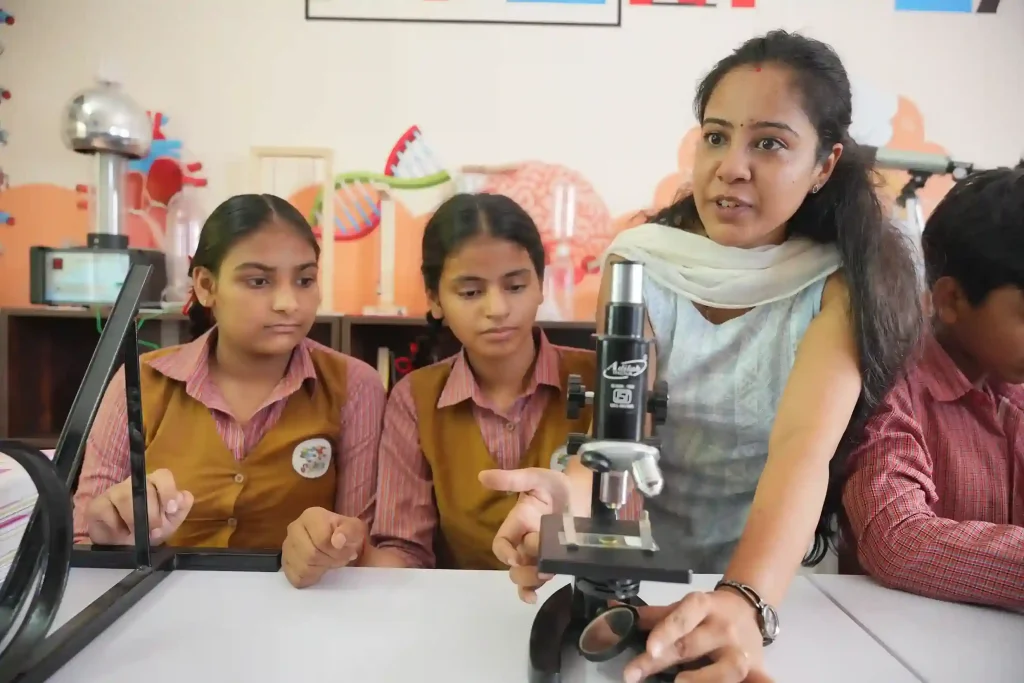
Yet philosophy alone does not sustain partnerships; operational depth does. In education, corporate collaborations in 2025 extended beyond infrastructure symbolism. Partnerships with KONE Elevators and BMW India Foundation supported the establishment of STEM laboratories designed not merely as spaces but as pedagogical interventions. Teacher capacity building accompanied equipment installation. Curriculum integration accompanied infrastructure enhancement. Students from underserved communities were exposed to experiential learning models that attempt to bridge the gap between aspiration and access. Such interventions acknowledge a persistent truth: inequality in India is not only about enrolment; it is about the quality and relevance of learning.
Healthcare partnerships similarly reveal the changing expectations placed upon CSR. Smile on Wheels, the mobile medical initiative, operates as a response to geographic inequity, delivering primary care into communities where clinics remain distant or overstretched. In 2025, collaborations with HDB Financial Services expanded physiotherapy and health outreach to truck drivers in Indore, addressing occupational vulnerability often invisible in mainstream policy discourse. The Pink Smile Initiative, supported by Thermo Fisher Scientific India, focused on maternal and child health, anaemia detection, and preventive screening in Chakan. These interventions are less photogenic than ceremonial events but more structurally meaningful. Preventive healthcare, particularly in contexts of low awareness and high economic precarity, reduces long-term social and financial costs. It also signals that corporate capital can address systemic gaps rather than episodic crises.
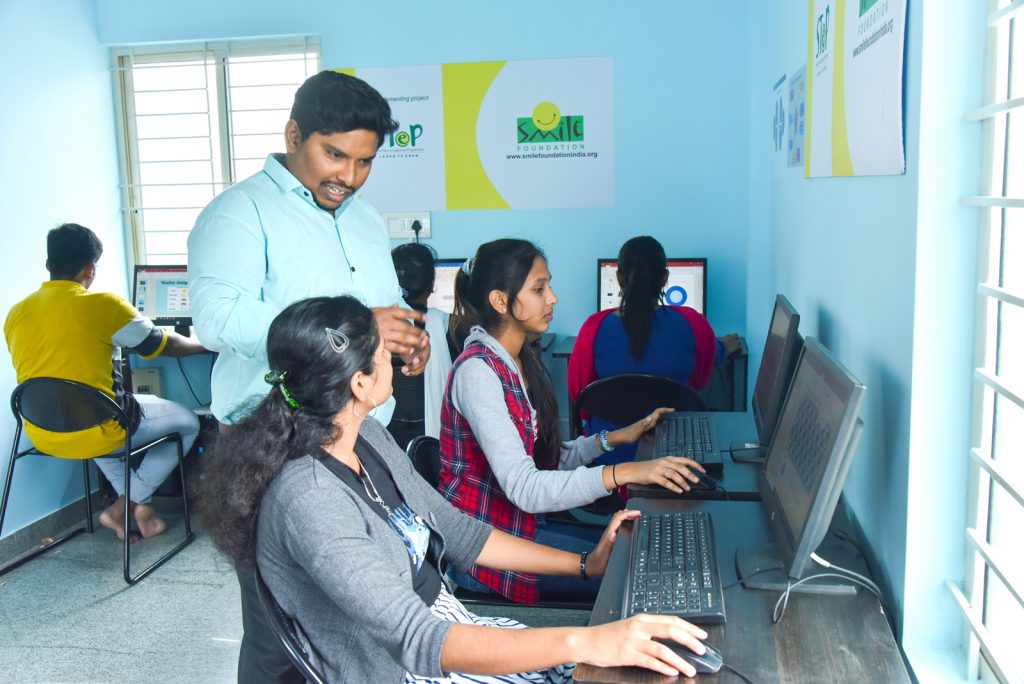
Skilling and livelihood partnerships perhaps touch the most sensitive nerve in India’s development narrative: the education-employment disconnect. Training without absorption produces frustration. Degrees without jobs produce instability. Collaborations such as those with Holiday Inn Express linked skill development directly to placement pipelines, ensuring that training translated into tangible employment outcomes. Meanwhile, initiatives like iTrain on Wheels, implemented with Berger Paints India, extended upskilling into the informal labour sector, enhancing productivity and income resilience for painters across hundreds of districts. Here CSR intersects with economic dignity, transforming livelihoods rather than merely supplementing them.
Beneath all of these interventions lies a less visible but more consequential variable: trust. Trust between corporations and NGOs, between communities and institutions and between employees and employers. In a global climate where institutional credibility is fragile, corporate-development partnerships serve as stabilising mechanisms. They demonstrate seriousness of intent, continuity of engagement and willingness to invest beyond optics. But trust cannot be manufactured through campaigns alone. It accumulates through transparency, reporting discipline and sustained presence.
The development sector, too, has had to adapt. Professionalised reporting systems, compliance rigour and impact documentation are no longer optional. Partnerships now demand longitudinal thinking, not annual cycles. They require organisations capable of operating across geographies without diluting accountability. Smile Foundation’s partnership architecture reflects this institutional maturation, combining thematic depth with operational scale.
Design Your CSR Strategy
Allocate your CSR approach and see how layered partnerships multiply impact.
Projected Partnership Impact
The broader implication is that CSR in India has entered a stage of integration rather than isolation. Cause Related Marketing integrates consumer behaviour. Payroll Giving integrates employee identity. Structured volunteering integrates workplace culture. Education and health programmes integrate public systems. The boundaries between business and social responsibility are becoming porous, not because idealism has triumphed, but because interdependence has become undeniable.
India’s economic future will unfold within a society marked by inequality, demographic pressure, and infrastructural gaps. Corporations do not operate outside this reality; they operate within it. The seriousness with which they approach development partnerships increasingly shapes how they are perceived, regulated and trusted.
The grammar of giving has changed. It is less sentimental and more structural.
And in that shift lies the possibility that corporate partnerships, when thoughtfully constructed, may become not a peripheral obligation but a central expression of responsible capitalism.