
Khemraj and his wife Mangla lived in a remote village in Rajasthan, where recurring droughts destroyed their crops and pushed the family into severe financial distress. With no harvest to sustain them, Khemraj was forced to borrow from local moneylenders, gradually losing his land and eventually even his domestic animals to repay mounting debts. Healthcare was a luxury. In fact, the nearest medical facility was far away and daily survival took precedence over treatment.
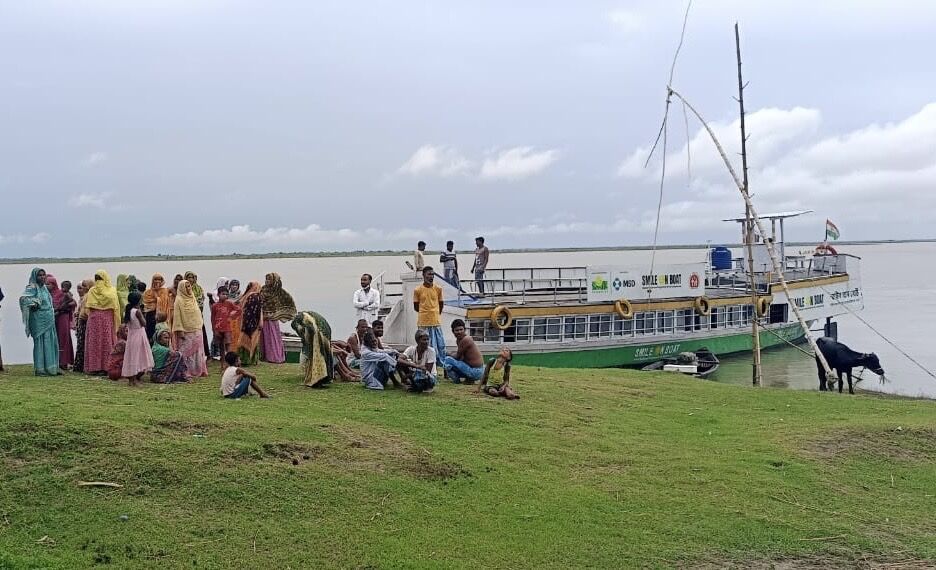
Their circumstances changed when Smile Foundation’s ‘Smile on Wheels’ initiative reached their village, bringing medical care directly to those who had long been excluded from it. Through mobile clinics offering consultations, diagnostics and free medicines, Khemraj and Mangla finally received the healthcare they had been denied for years.
A cluster of obstacles
In a country like India that is geographically vast and fragmented, delivering even basic services to remote regions remains a challenge. The right to health is written as a fundamental aspiration of the Constitution, yet its material realisation remains limited. The spatial inequity in India is not incidental but systemic—difficult terrains lengthens the travel time to the nearest health facility, weakens supply chains for medical resources, disincentivises skilled health professionals from serving the areas that most need them, among other problems.
A case can be observed in the rural districts of the Jammu region, where geography shapes access to healthcare. Geospatial analyses of health infrastructure indicate that nearly one-third of villages lie beyond a 20-minute travel time to the nearest healthcare facility, even under regular conditions. In practice, this distance is often amplified by mountainous terrain, narrow roads, seasonal snowfall and landslides, all of which routinely disrupt mobility. For residents in these villages, accessing primary care frequently requires long, physically demanding journeys, as well as, emergency referrals can involve delays that increase health risks. The implications are especially severe for vulnerable populations, such as pregnant women, the elderly and patients requiring time-sensitive interventions. Limited public transport and the high cost of private vehicles further constrain healthcare utilisation, effectively converting geographic distance into a socio-economic barrier too.
Another revealing case emerges from Odisha, where geography operates as a quiet but powerful determinant of health. Official estimates indicate that around 13.5 per cent of the state’s health facilities are classified as “hard to reach”. This is shaped by hilly terrain, dense forest cover, and absence of all-weather roads. These structural barriers are compounded by a persistent human-resource deficit. Remote districts such as Rayagada, Mayurbhanj, etc. continue to experience acute shortages of doctors, specialists, and paramedical staff, reflecting a broader pattern of workforce attrition in difficult terrains.
Rethinking the approach towards most difficult terrains
Strategic policy frameworks and digital innovations have reshaped how healthcare reaches geographically marginalised populations. The National Rural Health Mission was established in 2013 to reinforce rural health systems by upgrading infrastructure and enabling decentralised planning tailored particularly to vulnerable and hard-to-reach regions. Norms for service provision were adapted to improve accessibility, with sub-health centres established at a ratio of one per 3,000 population, primary health centres per 20,000 etc. To address workforce shortages, various incentives (such as the ‘Hard Area Allowance’ and ‘You Quote We Pay’ policies) were introduced to attract doctors and specialists in remote locations.
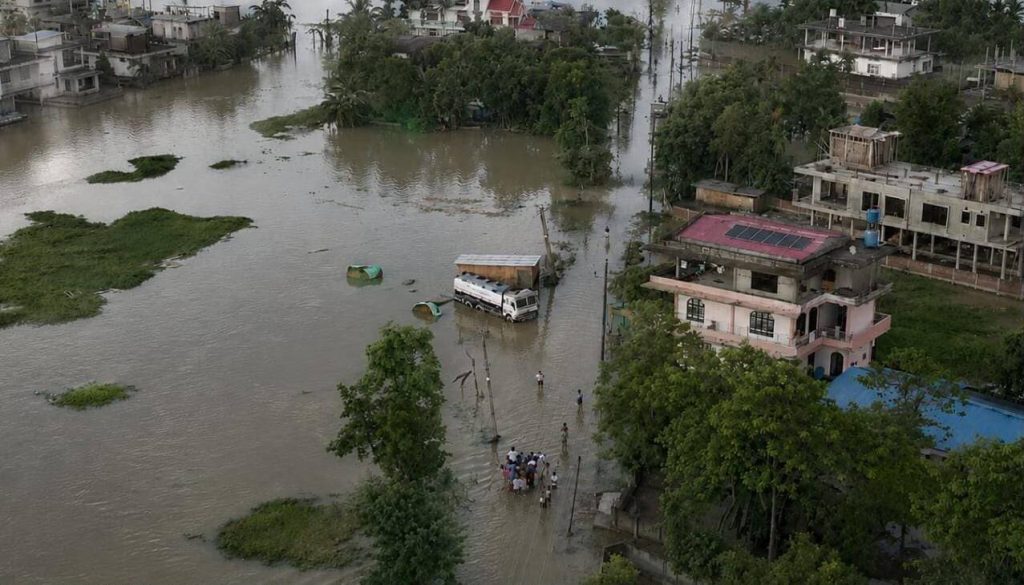
By combining institutional reform with key experimental technological solutions, we can thus reduce distance-driven inequities. In regions where conventional healthcare infrastructure is ineffective due to geography, some specific terrain-responsive service models have been introduced that take care directly to communities. Growing evidence suggests that in geographically fragmented settings, health access improves not simply by constructing more hospitals, but by redesigning delivery systems to align with terrain and mobility patterns. Take for instance, in the flood-prone riverine belts of Assam, boat clinics function as floating health centres, navigating rivers to reach villages that remain cut off for months during monsoons. These clinics provide primary healthcare, maternal and child health services, immunisation, and basic diagnostics, ensuring continuity of care despite seasonal displacement. Similarly, in many Himalayan states, mobile mountain clinics operate through specially equipped vehicles and outreach teams that traverse steep terrain to serve remote settlements. More recently, drone-based medicine delivery pilots have emerged as an innovation to ensure last-mile healthcare access, particularly for vaccines, blood supplies and emergency medicines in areas without reliable road connectivity. The drones bypass physical barriers such as forests, mountains and floodwaters, significantly reducing delivery time during medical emergencies.
These initiatives mark a shift from static, facility-centric healthcare systems toward mobile and community-embedded models of care. In a nutshell, such adaptive approaches can help healthcare systems become further resilient to geography, transforming distance as an obstacle into a design consideration.
How far is healthcare?
Emergency at 2:30 AM
With Mobile Healthcare
Design Changes Outcomes
Time to Care: High
Cost Burden: High
Complication Risk: High
Trust in System: Low
Time to Care: Reduced
Cost Burden: Lower
Complication Risk: Lower
Trust in System: Strengthened
Infrastructure is not enough.
Policy interventions for future
Going forward, addressing these terrain-driven health inequities requires a shift away from uniform models toward decentralised solutions as addressed above. Mobile medical units such as the ‘Smile on Wheels’ initiative by Smile Foundation along with telemedicine services supported by last-mile digital connectivity and community-based health workers drawn from local populations offer scalable ways to overcome distance and workforce shortages.
Infrastructure investments must prioritise both human resources and material services. Crucially, planning must be guided by geospatial data rather than administrative convenience, ensuring that resources follow need rather than population averages. Policymakers need to treat geography as a core variable in health policy. It is only then that the country will come further closer to the constitutional promise of health equity, even in its most difficult terrains.