
“The future is female” has become a familiar refrain in boardrooms and policy forums. It signals optimism and long-term correction. But for India — a country navigating demographic transition, labour market volatility and growth recalibration — the argument is no longer about the future.
It is about the present.
The Participation Gap
India has over 63 million micro, small and medium enterprises (MSMEs), which contribute roughly 30% to GDP and nearly half of exports. But only about one-fifth of these enterprises are owned by women. When examined more closely, the disparity deepens: most women-led enterprises remain micro in scale, informal in structure and constrained in growth.
Female labour force participation in India remains among the lowest for large economies, hovering around 20–25% in recent surveys. This statistic is often cited as a sign of exclusion. However, it obscures the fact that many women are economically active — in agriculture, home-based production, informal services and unpaid family enterprises — without formal recognition.
Entrepreneurship frequently becomes the most viable pathway for women navigating mobility constraints, caregiving responsibilities and limited access to formal employment.
The gap, therefore, is not in aspiration but is in structural support.
Credit and Capital Constraints
Access to capital remains the most significant barrier facing women entrepreneurs. Women are less likely to own property, reducing collateral eligibility. They are less likely to have established credit histories. Formal lending institutions often require documentation and guarantees that are harder to secure.
While government initiatives such as MUDRA Yojana and Stand-Up India have improved access to microcredit, scaling beyond subsistence-level enterprises remains difficult. Women-led businesses are heavily concentrated in low-margin sectors — retail, beauty services, tailoring, food processing — where entry barriers are low but growth ceilings are limited.
At the higher end of the spectrum, the imbalance is stark. A small proportion of startups have women founders and venture capital allocation to all-women founding teams remains minimal. The issue is not talent; it is network access and risk perception.
Informality and Its Consequences
Nearly nine out of ten women-owned enterprises in India operate informally. Informality restricts access to institutional credit, digital marketplaces and government procurement opportunities. Formalisation demands digital literacy, regulatory familiarity and time — resources that many women entrepreneurs lack without structured support.
This informality trap keeps enterprises small and vulnerable.
The pandemic underscored these vulnerabilities. Women-led enterprises were more likely to shut down permanently during lockdowns, as caregiving burdens intensified and working capital dried up. Recovery has been uneven, though digital adoption — including use of messaging platforms and digital payments — demonstrated adaptability.
Resilience, however, should not substitute for reform.
Build Her Business
Can you help a woman entrepreneur grow her enterprise?
Capital: ₹50000
Growth: 0
Stability: 50
The Macroeconomic Argument for Female Entrepreneurship
The economic case for female entrepreneurship is well established. Closing gender gaps in labour force participation and enterprise ownership could add substantially to India’s GDP. Estimates by international research institutions suggest that increasing women’s economic participation could contribute several percentage points to national output.
For a country seeking sustained high growth, underutilising half its working-age population is fiscally imprudent.
Moreover, the impact extends beyond aggregate growth. Women’s income participation is associated with improved household spending on education, nutrition and healthcare. Entrepreneurship thus carries intergenerational implications.
Structural Barriers Beyond Finance
Capital is only one dimension. Women entrepreneurs face layered constraints:
- Limited access to markets
- Restricted mobility
- Inadequate childcare support
- Health interruptions
- Social expectations that prioritize domestic roles
High prevalence of anaemia and uneven healthcare access further affect continuity. Enterprise sustainability is inseparable from health stability.
Policy frameworks must therefore integrate credit reform with social infrastructure — safe transport, digital inclusion, skill training and healthcare access.
Community-Level Implementation
While macroeconomic arguments dominate national discourse, meaningful change often begins at the community level.
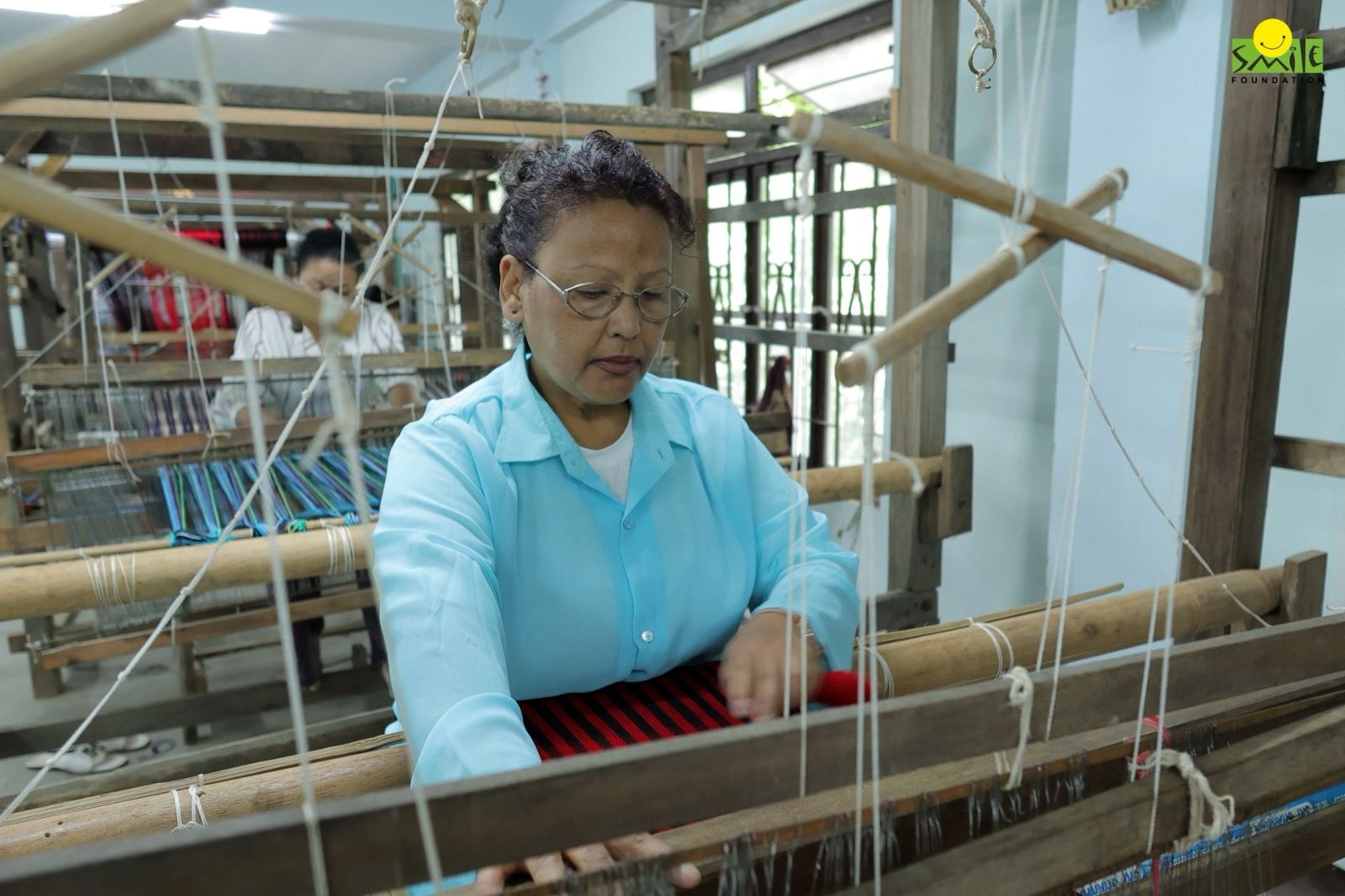
Smile Foundation’s Women Empowerment Programme situates female entrepreneurship within a broader ecosystem. Skill training is paired with financial literacy, health awareness and market linkage support. Group-based learning builds social capital, while mentoring reduces entry anxiety.
The objective is not merely to create income-generating activity but to enable economic agency.
Such interventions recognise that entrepreneurship does not flourish in isolation. It requires an enabling environment.
From Slogan to Strategy
“The future is female” risks remaining rhetorical if institutional systems do not adapt. Gender-sensitive credit models, procurement incentives for women-led enterprises, digital onboarding support and affordable childcare infrastructure are not peripheral reforms. They are central to growth strategy.
India’s demographic window is narrowing. Labour expansion through women’s participation is not optional.
The present must be female not as a slogan, but as policy.
When women build enterprises, they diversify household income streams, stabilise local economies and contribute to national output. Enabling their scale is not charity; it is economic logic.
The question, therefore, is not whether women will lead. It is whether systems will evolve quickly enough to recognise that the case for inclusion is no longer aspirational.
It is immediate.