
India’s education system has achieved remarkable expansion over the past two decades. School enrolment at the elementary level is nearly universal, infrastructure has improved substantially, and gender gaps in participation have narrowed in many states. However, the central challenge facing Indian education today is not access alone. It is learning.
Evidence from national surveys indicates that while children are in school, many are not acquiring foundational skills at expected levels. This gap between schooling and understanding invites renewed attention to an idea that has long circulated in education discourse: contextual education.
Contextual education refers to teaching that connects textbook knowledge to students’ lived realities — their languages, environments, occupations and social contexts. It moves beyond rote memorization and seeks to cultivate understanding, application and relevance.
Learning levels and the limits of rote instruction
The Annual Status of Education Report (ASER) 2022 (Rural) offers a sobering snapshot of foundational learning. According to ASER 2022, only 42.8% of Grade 5 children in rural India could read a Grade 2 level text, and just 25.9% could solve a basic division problem (ASER Centre, 2022). While these figures reflect partial recovery from pandemic-related disruptions, they also underscore a structural issue: progression through grades does not guarantee mastery of foundational skills.
The persistence of learning gaps suggests that classroom instruction often remains disconnected from comprehension. Memorization may help students reproduce answers in examinations, but it does not necessarily enable them to apply concepts to everyday situations. When mathematics is detached from measurement in local markets or agriculture, or when language learning ignores children’s home languages, the classroom can feel distant from lived experience.
Contextual approaches attempt to bridge this gap by situating knowledge within familiar settings. Teaching fractions through food distribution in a mid-day meal setting or environmental science through local water conservation practices, can deepen understanding in ways that abstract instruction cannot.
Access has improved, but engagement varies
India’s progress in schooling infrastructure and enrolment is well documented. According to UDISE+ 2022–23, over 97% of schools have functional girls’ toilet facilities, a critical factor in improving attendance, particularly for adolescent girls (Ministry of Education, UDISE+, 2022–23). Total school enrolment from pre-primary to higher secondary remains above 25 crore students.
At the higher education level, the All India Survey on Higher Education (AISHE) 2022–23 (Provisional) reports total enrolment of 4.46 crore students, with female enrolment reaching approximately 2.18 crore. The Female Gross Enrolment Ratio (GER) in higher education stands at 30.2, reflecting steady growth over the past decade (Ministry of Education, AISHE 2022–23 Provisional).
These indicators demonstrate substantial gains in participation and infrastructure. However, participation alone does not ensure meaningful engagement. India’s linguistic, cultural and regional diversity complicates the assumption that a standardized curriculum will resonate equally across contexts.
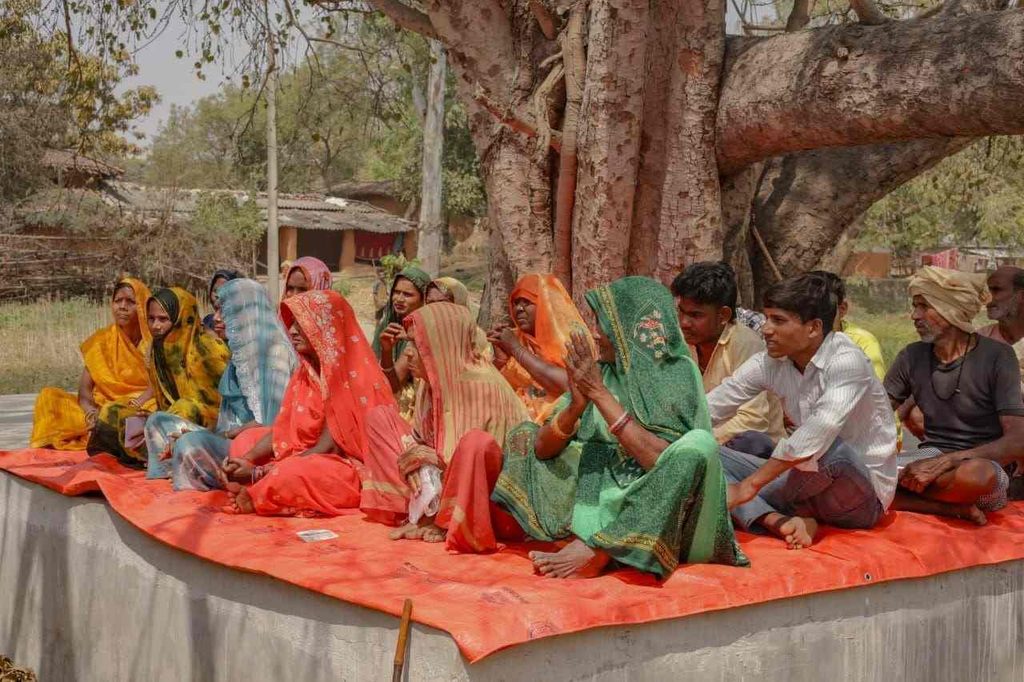
Children in rural Maharashtra may encounter agricultural cycles daily; those in the North East may navigate distinct ecological and cultural landscapes; urban students may grow up in dense industrial environments. When curricular examples fail to reflect such contexts, learning risks becoming abstract rather than experiential.
While India does not operate a single uniform curriculum — state boards adapt frameworks from the National Council of Educational Research and Training (NCERT) — classroom practice often relies heavily on prescribed textbooks. Contextual education does not seek to replace curricular standards, but to interpret them through locally meaningful examples.
Policy direction and implementation gaps
The National Education Policy (NEP) 2020 explicitly emphasises experiential learning, competency-based assessments and mother-tongue instruction in early grades. The policy recognises foundational literacy and numeracy (FLN) as a national priority and advocates connecting learning with real-world contexts.
But policy articulation does not automatically translate into classroom practice. Teachers frequently operate within constraints of syllabus completion, examination schedules, and resource limitations. In such environments, textbook-centred teaching remains prevalent.
Contextual education, therefore, is not a new policy innovation but a pedagogical imperative — one that requires systemic support, teacher training and flexibility in implementation.
Inequality, identity and learning
Educational outcomes in India continue to reflect broader social and economic inequalities. While national surveys do not always disaggregate data by caste categories in public summaries, multiple academic and policy analyses have documented persistent disparities across socio-economic groups.
The digital divide during the pandemic further highlighted unequal access to devices and connectivity. ASER’s pandemic-era surveys indicated that while smartphone access increased in rural households, shared device usage and inconsistent internet connectivity remained common (ASER Centre, 2021–22 wave surveys).
Contextual approaches to education acknowledge these realities. They do not assume uniform access to technology or identical cultural references. Instead, they draw on locally available materials, languages and community knowledge.
Gender patterns illustrate a similar complexity. While AISHE 2022–23 shows significant female participation in higher education and near parity at aggregate levels, challenges remain in retention at certain stages and in representation across specific disciplines. Educational engagement is shaped not only by policy but by household expectations, safety concerns and economic pressures.
Recognizing these layered realities is central to contextual education. Teaching that validates identity and incorporates local knowledge can enhance confidence, belonging and participation.
From comprehension to critical thinking
An education system that privileges memorization risks constraining critical inquiry. Contextual learning, by contrast, encourages problem-solving and dialogue.
Measuring rainfall in one’s own village to understand data patterns, analyzing local waste management practices to learn about environmental science or mapping neighbourhood markets to explore economic principles are examples of contextual engagement. Such methods do not dilute academic standards; they reinforce them through application.
The aim is not to reject examinations but to ensure that what is examined reflects comprehension rather than recall.
The role of community-based interventions
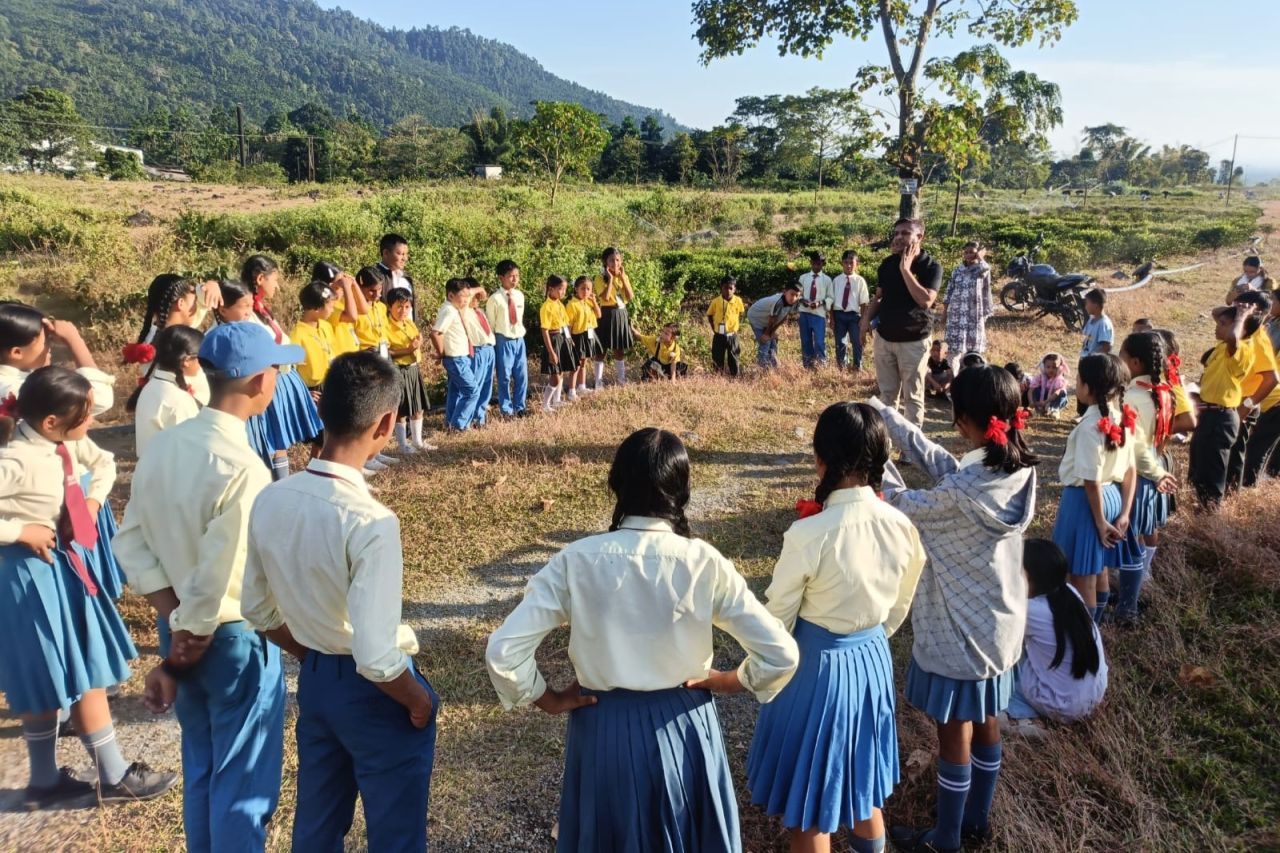
Organizations working in underserved communities often attempt to operationalize contextual principles. Smile Foundation’s Mission Education programme, for instance, integrates foundational learning support with community engagement and experiential activities. By aligning instruction with students’ lived environments, such interventions aim to strengthen retention and understanding.
Take the contextual education journey of Smile Foundation: Smile's Understanding of Contextual Education
These initiatives operate alongside formal schooling, reinforcing rather than replacing it. Their experience underscores a broader lesson: learning deepens when children recognise themselves in the curriculum.
A matter of relevance
India’s education system stands at a moment of consolidation. Infrastructure and access have expanded significantly. Participation rates at both school and higher education levels have improved, as UDISE+ 2022–23 and AISHE 2022–23 demonstrate. But foundational learning gaps, as documented by ASER 2022, persist.
Contextual education does not claim to be a universal remedy. It is, however, a reminder that relevance is integral to retention and comprehension. When learning connects to lived reality, children are more likely to engage, question and apply.
In a country as diverse as India, recognizing context is not a pedagogical luxury. It is a necessity.
References
- ASER Centre. (2022). Annual Status of Education Report (Rural) 2022. New Delhi
- Ministry of Education, Government of India. (2022–23). Unified District Information System for Education Plus (UDISE+)
- Ministry of Education, Government of India. (2022–23 Provisional)
- All India Survey on Higher Education (AISHE)