India has cut malaria by more than 80% in less than a decade, a turnaround that ranks among the most striking public‑health victories in the world. Reported cases fell roughly from 1.17 million in 2015 to just 227,564 in 2023 and the number of deaths dropped even more sharply.
This progress means fewer families forced into debt for treatment, fewer children missing school, fewer parents choosing between wages and care. It means 122 districts recorded zero malaria cases, a milestone once thought out of reach.
India has also exited the World Health Organization’s High Burden to High Impact grouping and set clear elimination timelines: zero indigenous cases by 2027 and nationwide elimination by 2030. Even annual malaria testing has risen by roughly by 45% between 2016 and 2024, strengthening early detection and treatment.
India’s malaria story is no longer about overwhelming burden. It is about narrowing the gap, district by district, until elimination becomes reality.
Where Malaria in India Still Hides
Historically, malaria has hit rural and forest-fringe communities harder, where breeding sites are abundant and health facilities are distant. But rapid urbanization has changed the map. The spread of Anopheles Stephensi, a mosquito well-adapted to cities, has made urban malaria a growing concern, especially in informal settlements with poor drainage and water storage. To respond, India’s Urban Malaria Scheme now covers over 142.9 million people across 131 towns, targeting vector control and surveillance where cities are expanding fastest.
Research consistently links higher malaria risk to poverty, poor housing and limited sanitation—conditions that create breeding sites and slow care-seeking. In some communities, misinformation and belief delay diagnosis where fever is treated at home, attributed to seasonal change or first taken to informal medical advice, losing precious days.
Many southern states report far lower incidence today, reflecting sustained surveillance and health-system reach, while patterns in the northeast remain dynamic and sensitive to climate and mobility. Odisha, Chhattisgarh and Jharkhand continue to contribute a disproportionate share of cases, driven by forested terrain, migration and access gaps. Also men often show higher reported prevalence linked to occupational exposure, while children and pregnant women face the gravest risks when care is delayed.
Malaria in India is more than a public health issue
The final phase of malaria elimination exposes connections that often remain invisible when the disease is framed only as a health problem.
Malaria tracks poverty and precarity. Poor housing, inadequate sanitation and insecure water access create breeding sites faster than they can be controlled. Migrant workers—often men working in forests, farms, mines or construction—face higher exposure and disrupted continuity of care. Mobility turns individual infections into moving transmission risks.
Gender and age shape vulnerability in different ways. Children and pregnant women face the most severe consequences when diagnosis is delayed—anaemia, low birth weight and life-threatening complications. Yet women’s care-seeking is frequently deprioritized, constrained by household economics, distance or social norms.
Climate adds another layer. Changing rainfall patterns and rising temperatures are extending transmission seasons and shifting vector habitats. Districts once considered low-risk now face new exposure, demanding surveillance systems that can adapt quickly.
Seen together, these factors make one thing clear: malaria persists where development systems fail to converge. Health interventions alone cannot compensate indefinitely for gaps in housing, sanitation, labour protection and urban planning.
Why the last 3% is the hardest
As malaria cases decline, the nature of the challenge changes. The remaining pockets of transmission are smaller, more localized and more deeply embedded in structural disadvantage. They are also more expensive to address—requiring granular surveillance, sustained engagement and rapid response capacity.
National averages can obscure these realities. A district may report low incidence while still harbouring micro-hotspots: a construction corridor, a forest hamlet, a dense informal settlement. Eliminating malaria here requires not just programmes, but presence.
It also requires resisting complacency. When success becomes visible, attention often shifts elsewhere. Yet the last phase of elimination is precisely when systems must be most vigilant.
Where Community Health Closes the Gap
This is where last-mile health delivery becomes decisive.
At Smile Foundation, malaria prevention and care are embedded within a broader community-centred health model—one that recognizes that early diagnosis and complete treatment depend on proximity, trust and continuity.
Through Smile on Wheels, mobile medical units bring doctors, diagnostics, medicines and health education directly to underserved communities, both in remote rural areas and dense urban settlements. By lowering the distance between symptom onset and care, these services reduce the delays that allow malaria to escalate from a treatable fever into a public health risk.
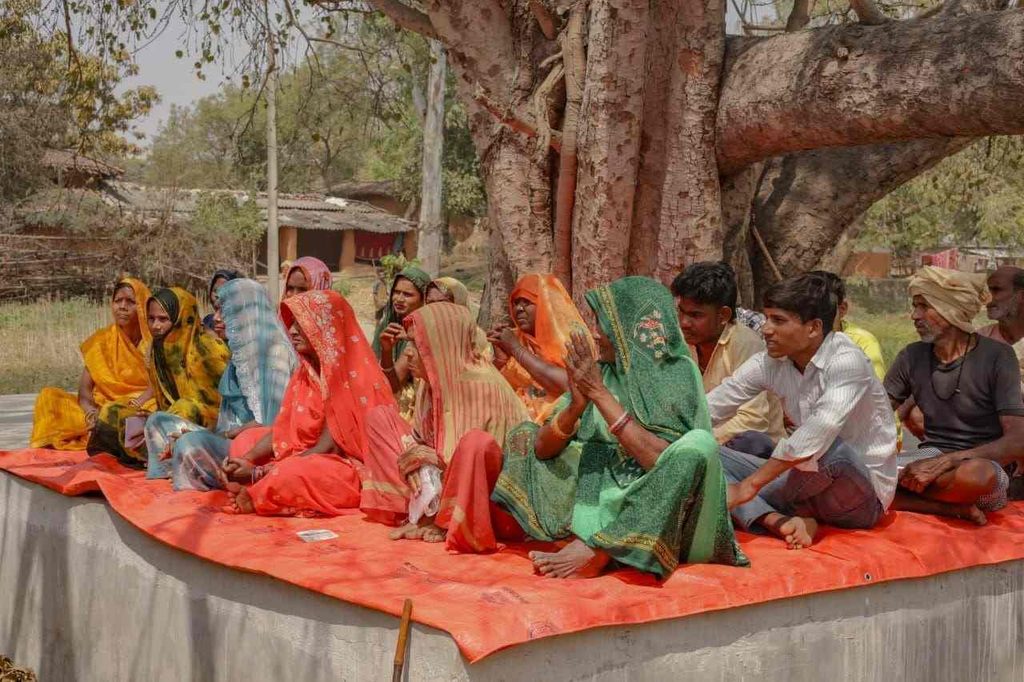
Equally important is what happens beyond the clinic. Community meetings conducted in local languages address misconceptions around fever, emphasize the importance of testing and reinforce treatment adherence. Frontline workers are trained to recognize early symptoms and guide timely referrals. Surveillance becomes a shared responsibility rather than an external imposition.
In contexts where health facilities are distant or overcrowded, this model ensures that elimination does not stall simply because people cannot reach care in time.
Elimination as a systems test for Malaria in India
India’s malaria progress reflects years of coordination across national programmes, state health systems and frontline workers. Completing the journey will require even tighter alignment.
Data must move faster than transmission. Urban local bodies must coordinate with health departments. Labour-intensive sectors must be integrated into prevention strategies. Housing, sanitation and water infrastructure must be recognized as malaria interventions in their own right.
Above all, elimination demands patience. Outbreaks will still occur. Climate shocks will test preparedness. But holding the line—especially in the hardest places—is what will determine whether gains endure.
Why finishing matters
The final 3% is not just about malaria. It represents communities where development often reaches last: migrant families without fixed addresses, forest settlements beyond roads, informal urban residents without secure services, women and children whose health is negotiated rather than guaranteed.
If malaria can be eliminated here, it sets a precedent for tackling other complex challenges—from tuberculosis to climate-linked health risks. It shows that public health victories can be sustained through systems that work for those most likely to be missed.
India’s malaria story is already one of remarkable progress. Its conclusion will be defined by whether elimination is achieved not only statistically, but socially—embedded in communities, supported by systems and protected against reversal.
For Smile Foundation, working in the last mile means staying present precisely when the numbers are lowest and the work is hardest. Because that is where elimination is truly decided.
Through Smile Foundation’s mobile healthcare units and community outreach, primary care in urban slums and remote rural pockets reduces the very delays that turn treatable fevers into emergencies. The Smile on Wheels programme brings doctors, diagnostics, medicines and health education to families who might otherwise never arrive at a clinic.