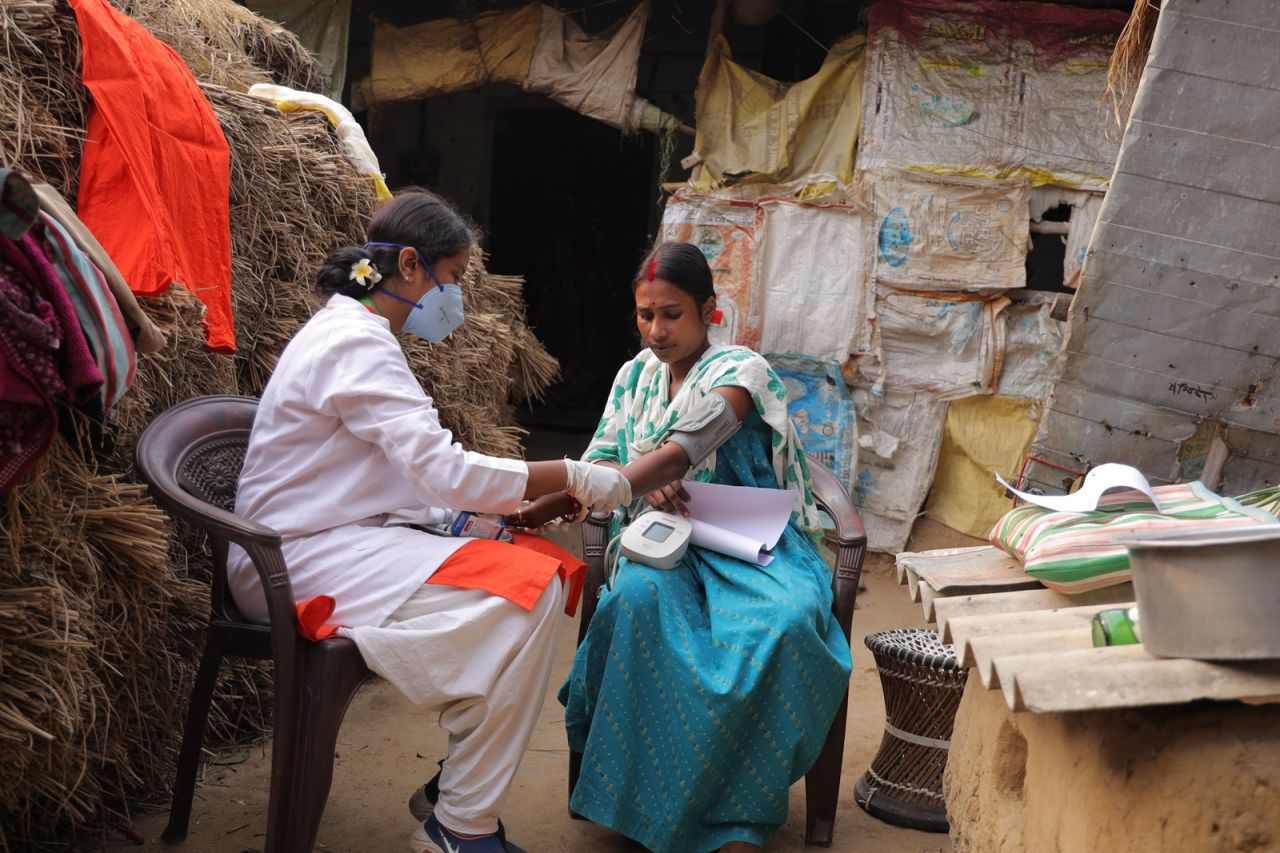

The case that health is a high-return investment is now well established. Preventive care improves productivity, reduces avoidable costs and strengthens human capital. Digital health systems — when interoperable and widely adopted — can amplify these gains by reducing waste, improving access and enabling earlier intervention.
India’s digital health push has been cited as early evidence that this model can scale. But the more difficult question comes after proof of concept: what determines whether health and digital health investments actually deliver sustained economic and social returns?
Recent research suggests that returns are neither automatic nor evenly distributed. They depend on where investments are made, who they reach and whether health systems are strong enough to convert digital capacity into real outcomes.
From Infrastructure to Impact: Why Digital Alone Is Not Enough
Digital health infrastructure lowers transaction costs and improves system efficiency but only when paired with functional care delivery. Health economists increasingly warn against “digital overbuild”: systems that generate data faster than they generate care.
A 2023 review in The Lancet Digital Health found that while digital tools improve screening, follow-up and provider productivity, their impact on morbidity and mortality is contingent on underlying primary healthcare capacity including trained staff, medicines and referral pathways.
In low- and middle-income settings, digital systems often succeed in urban and tertiary care environments first, where institutional capacity already exists. Returns are highest where digital tools close gaps, not where they merely optimise already well-resourced services.
This distinction matters for India, where regional variation in health system strength remains substantial.
The Productivity Channel: Health Dividend and Gains Must Reach the Workforce
One of the strongest arguments for health investment is its effect on labour productivity. But productivity gains accrue only when healthier years are added within working life.
The Global Burden of Disease (GBD) 2023 update shows that India’s gains in life expectancy are increasingly offset by years lived with disability, driven by non-communicable diseases such as diabetes, cardiovascular disease and chronic respiratory illness.
This means that digital health investments that focus on early detection, continuity of care and chronic disease management are far more likely to yield economic returns than those focused solely on episodic care.
A World Bank working paper (2024) estimates that improving NCD control in working-age populations could raise GDP growth by up to 1.5 percentage points annually in middle-income countries but only if care pathways reduce long-term disability.
Financial Protection: The Missing Link in the Health Dividend
Health investment yields returns only when it prevents households from falling into poverty.
Despite expanded insurance coverage, out-of-pocket expenditure remains a dominant feature of India’s health system. A 2024 Scientific Reports study confirms that catastrophic health spending continues to affect over 75% of cancer-affected households, with diagnostics and medicines as major cost drivers.
Digital claims processing and interoperable records can reduce administrative friction but financial protection fails when diagnostics, transport and outpatient care remain uncovered.
Health economists increasingly argue that digital efficiency without financial risk protection produces asymmetric returns: system savings accrue to institutions, while households remain vulnerable.
For digital health to deliver inclusive returns, it must be embedded in benefit design that protects households across the care continuum.
Equity Determines Scale
A consistent finding across recent studies is that equity is not a moral add-on but an economic multiplier.
A 2023 McKinsey Health Institute analysis shows that health investments targeting underserved populations generate higher marginal returns because baseline health deficits are larger.
Similarly, WHO’s Global Report on Universal Health Coverage (2023) finds that investments in primary care and community health yield stronger long-term fiscal returns than hospital-centric spending.
This evidence explains why community-embedded models where digital tools are paired with outreach, screening and navigation consistently outperform technology-only approaches.
Interoperability Is an Economic Choice for Health Dividends
Interoperability is often discussed as an IT challenge. In reality, it is an economic one.
Fragmented systems impose recurring costs: duplicate diagnostics, delayed referrals, and preventable complications. A 2024 OECD report estimates that 20–40% of health spending globally is lost to inefficiency, much of it due to information silos.
India’s experience with shared digital rails shows how interoperability changes incentive structures. When providers can access records across settings, follow-up improves and unnecessary repeat tests decline — key drivers of cost containment.
However, international experience suggests that interoperability must be governed, not merely enabled. Without standards for data quality, privacy and clinical accountability, systems risk becoming repositories rather than decision tools.
Why Prevention Delivers the Highest Compound Returns
Among all health investments, prevention produces the most durable returns but often the least immediate visibility.
A 2023 modelling study in The Lancet Public Health estimates that scaling preventive interventions for hypertension, diabetes and tobacco use in South Asia could avert over 10 million premature deaths by 2040, with benefit–cost ratios exceeding 10:1.
Digital tools enhance prevention by enabling:
- population-level risk stratification
- reminders and follow-up
- longitudinal monitoring
But prevention works only when trust exists. Community-based engagement remains essential for uptake, especially among women, migrants and informal workers.
The Role of Civil Society in Unlocking Returns
Evidence from implementation science shows that digital health adoption accelerates when civil society bridges the last mile supporting awareness, navigation and continuity.
Models that integrate digital systems with community outreach help ensure that investments reach populations most likely to generate high marginal gains. This is where organisations like Smile Foundation become structurally relevant as system enablers.
By linking health education, screening, referral and follow-up within underserved communities, such approaches improve utilisation of digital and public health infrastructure already in place.
From Health Spending to Health Capital
The emerging consensus in health economics is that health delivers returns when treated as capital, not consumption.
Capital investments require:
- time horizons longer than electoral cycles
- outcome tracking, not activity counts
- alignment between digital systems, financing and care delivery
India’s experience shows that the building blocks exist. The challenge now is to ensure that digital health investment translates into longer healthy working lives, lower household vulnerability and sustained productivity gains.
The health dividend is real but it is not automatic. It compounds only when systems are designed to include those who need care the most, not just those easiest to reach.
That is where the next phase of India’s health story will be decided.