
For decades, India’s labour conversation revolved around a single promise: job security. A stable role, protected by law, was the ultimate marker of economic dignity. But, almost without ceremony, that promise has begun to change.
India is no longer guaranteeing jobs. It is promising something else instead: the ability to move, adapt and reskill.
At the centre of this shift lies the Worker Re-skilling Fund, introduced under the Industrial Relations Code, 2020 and brought into sharper focus as India’s new labour codes took effect in late 2025. On paper, the fund appears modest. Employers are required to deposit the equivalent of 15 days’ wages for every retrenched worker, transferred directly to the worker. But its significance is not financial but philosophical.
For the first time, Indian labour law formally acknowledges a reality long felt but rarely stated outright: that jobs will disappear, roles will change and what needs protection is not the job itself, but the worker’s capacity to transition.
A labour market under pressure
This policy shift is unfolding against a stark backdrop. Automation, artificial intelligence and platform-based work are reshaping employment across sectors. Estimates suggest that nearly one in five Indian jobs faces a high risk of automation by 2030, while close to nine crore workers may need some form of reskilling in the coming years.
These changes are no longer confined to factories or IT services. Retail, logistics, customer support, construction and even parts of healthcare are being reconfigured. Mid-skill roles, once considered stable stepping stones into the middle class, are increasingly vulnerable.
India’s labour market, young and vast, cannot rely on the old assumption that education ends with a degree or that a single skill will carry someone through a lifetime of work. The Worker Re-skilling Fund signals an official recognition of this shift.
From compensation to capability
Traditionally, retrenchment in India was treated as an endpoint. Severance pay compensated loss, but offered little support for what came next. Training, where it existed, was fragmented, optional and often disconnected from real labour demand.
The Worker Re-skilling Fund reframes retrenchment as a transition point rather than a dead end. It nudges employers, government and workers into a shared responsibility model, where continuous learning is not a personal luxury but a systemic obligation.
This aligns India, belatedly but decisively, with a global rethink of labour protection. Across economies grappling with automation, the focus is shifting from preserving roles to preserving employability.
Lifelong learning, written into law
What makes the Worker Re-skilling Fund distinctive is not its scale, but its symbolism. It is India’s first legal commitment to the idea of lifelong learning.
This matters because learning in India has historically been front-loaded. Formal education is concentrated in the early years, after which skill development becomes ad hoc, employer-driven or self-financed. Workers who fall behind often do so permanently.
By embedding reskilling within labour law, India is signalling that employability must be maintained across a working life, not just at entry. The challenge, of course, lies in execution.
A fund alone does not create skills. Without alignment to credible training platforms, quality standards and placement outcomes, reskilling risks becoming another short-term payout rather than a pathway to mobility.
The ecosystem problem
Experts across staffing, academia and training agree on one thing: the success of India’s reskilling push depends on ecosystem coordination.
Training must be aligned with real demand, not abstract certification. Courses need to be modular, stackable and accessible to workers who cannot afford to stop earning. Digital platforms like Skill India Digital and nationally aligned frameworks such as NSQF and NCrF offer the infrastructure but it is not the same as impact.
There is also the question of quality. As reskilling becomes a legal entitlement, the risk of low-quality training providers entering the system grows. Without strong accreditation and outcome tracking, the promise of reskilling could erode trust rather than build it.
The gig worker moment
Perhaps the most consequential aspect of India’s labour reforms is the formal recognition of gig and platform workers. By 2030, this segment could include over two crore workers, many of them young, mobile and operating outside traditional employer–employee relationships.
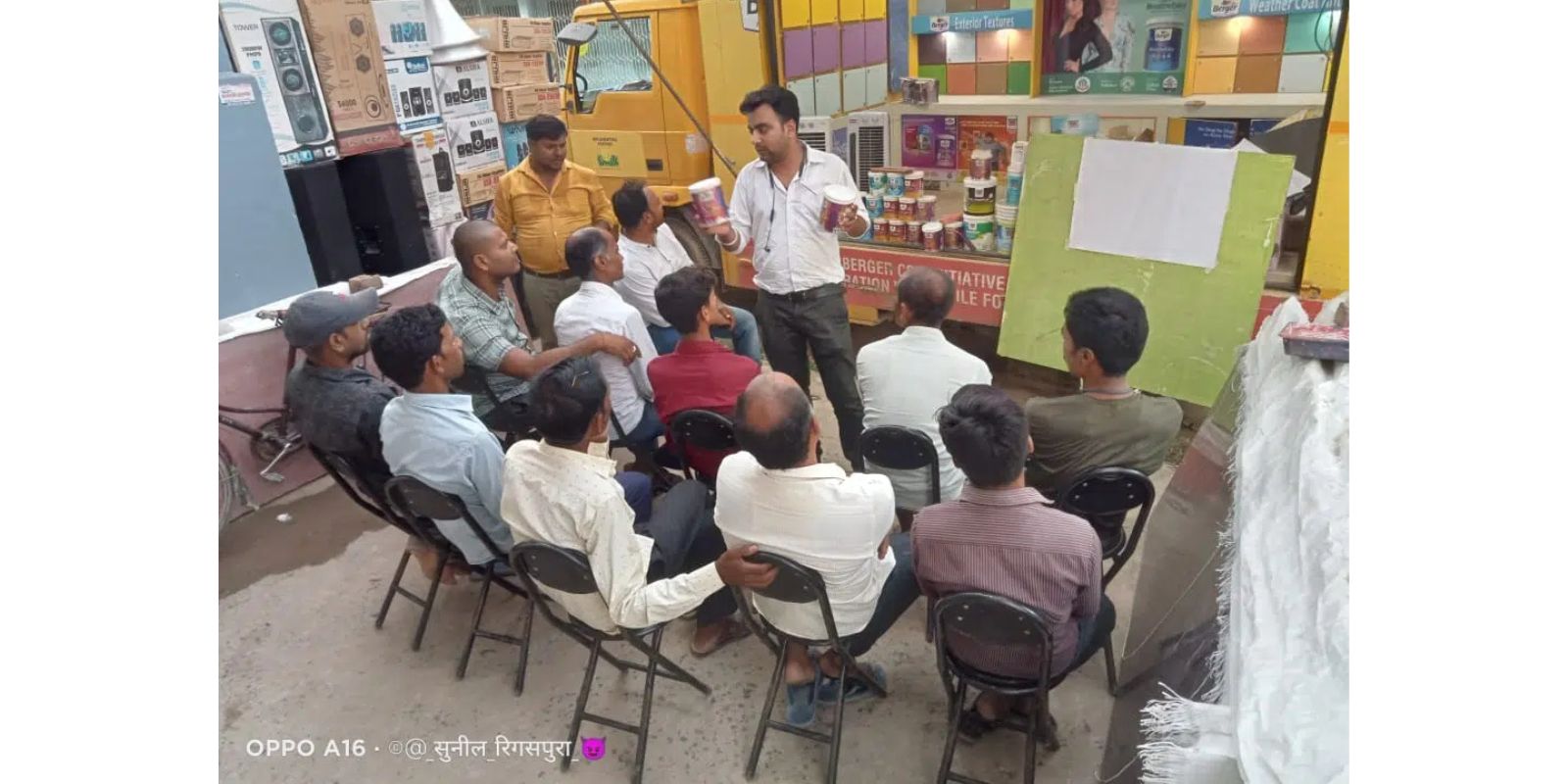
For gig workers, reskilling cannot follow conventional classroom models. It must be flexible, short-cycle and tightly linked to adjacent opportunities. A delivery partner today might need to become an EV maintenance technician tomorrow or a warehouse supervisor the year after.
Micro-credentials, recognition of prior learning, and “earn while you learn” models are no longer experimental ideas. They are necessities in a labour market defined by churn.
Where reskilling meets social reality
Even the most sophisticated skilling frameworks risk overlooking a critical factor: inequality.
Reskilling is easier for workers who are already secure, those with savings, digital access and social capital. For informal workers, first-generation earners, women returning to the workforce or those in low-resource communities, the barriers are higher.
Time, not motivation, is often the constraint. So is health, childcare and access to reliable information. Any reskilling agenda that ignores these realities risks deepening, rather than narrowing, labour market divides.
The role of civil society
This is where civil society organisations play an essential, often under-recognised role. While government systems create scale and structure, community-based organisations translate policy into lived pathways.
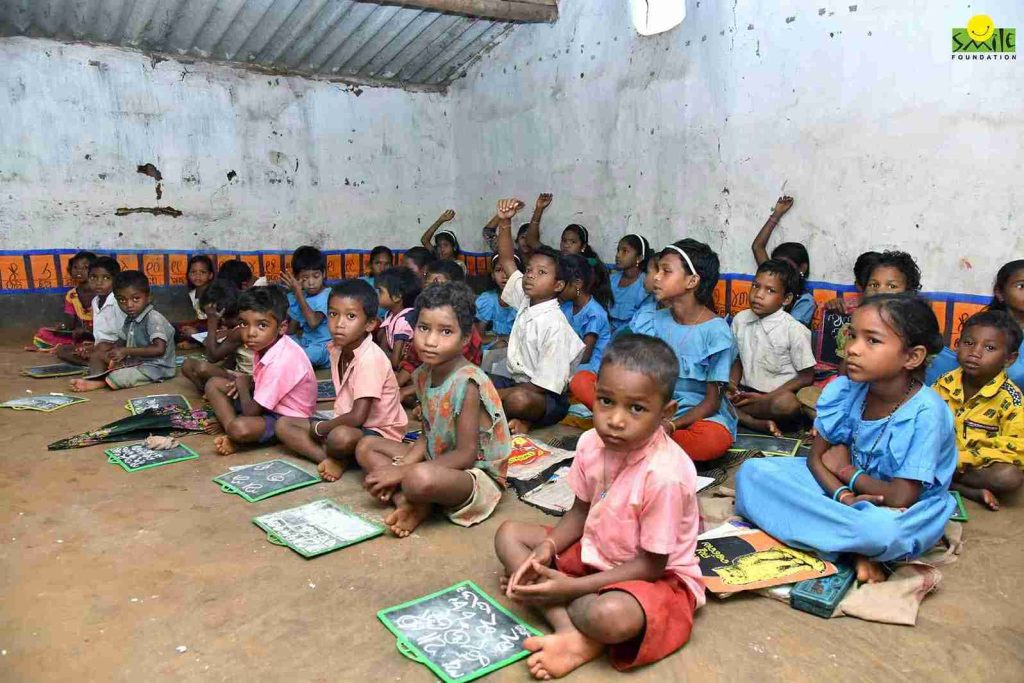
Smile Foundation’s work offers one such example. Through its education, health and livelihood programmes, we engage precisely with populations for whom reskilling is not an abstract future challenge, but a present survival strategy.
Our livelihood initiatives focus on skill-building that is locally relevant and linked to actual employment opportunities, particularly for youth and women from underserved communities. Importantly, these programmes are embedded within a broader ecosystem of support of healthcare access, nutrition, digital literacy and community mobilisation, without which skilling alone would falter.
For women, especially, reskilling is inseparable from empowerment. Smile Foundation’s Swabhiman programme addresses this intersection by combining livelihood training with financial literacy, health awareness and social support. When women are healthier, informed and economically active, skill acquisition translates into sustained participation rather than short-term certification.
A new definition of security
What India is witnessing is not only a labour reform, but a renegotiation of social expectations. Security is no longer defined by permanence, but by adaptability. Stability no longer comes from holding onto a single role, but from the ability to move across roles with dignity.
This shift is unsettling. It demands more from workers, employers and the state alike. It also demands honesty. Reskilling cannot be sold as a panacea. Not every transition will be smooth, and not every worker will benefit equally without targeted support.
But the alternative of clinging to the illusion of static jobs in a dynamic economy is far riskier.
The road ahead
For the Worker Re-skilling Fund to fulfil its promise, three conditions must be met.
First, reskilling must be demand-led, with employers actively shaping curricula and committing to placement outcomes.
Second, quality assurance must be non-negotiable. Training that does not lead to better work is not reskilling, it is delay.
Third, inclusion must be intentional. Women, informal workers and first-generation earners need tailored pathways, not generic solutions.
India has taken an important first step by writing reskilling into law. Whether this becomes a meaningful social contract or another under-utilised policy instrument will depend on how seriously the ecosystem treats learning as a lifelong right.
If done well, the shift from job security to skill security could be one of the most consequential labour reforms of this generation. If done poorly, it risks becoming another promise that sounded transformative on paper, but faltered on the ground.
The choice, as ever, lies not in legislation alone, but in how India chooses to implement, invest and include.