

For decades, India’s progress on girls’ education has been measured in enrolment numbers. How many girls entered school and how many stayed until Class 8. How many cleared secondary examinations. These figures tell an encouraging story, one of narrowing gender gaps and expanding opportunity. But they obscure a quieter question: how many days of school do girls actually attend, and at what cost?
For millions of adolescent girls, schooling is not a continuous experience but a punctuated one, interrupted regularly by something as predictable as the calendar itself. Each month, menstruation quietly redraws the boundaries of participation. A few days lost here, a few days missed there. Over time, the interruptions accumulate, shaping learning outcomes, confidence and the likelihood of staying in school at all.
Menstrual poverty is rarely framed as an education issue. It is discussed in the language of hygiene, health or dignity, often siloed away from classrooms and curricula. Yet its effects are deeply educational. When schools lack functional toilets, when sanitary products are unavailable or unaffordable, when stigma makes asking for help impossible, attendance becomes conditional. Education, in practice, becomes something girls can access only part of the month.
This is not an accident of culture or biology. It is the result of infrastructure choices, policy blind spots and a persistent discomfort with acknowledging how girls’ bodies shape their access to public life. In a country where staying in school through adolescence increasingly determines economic and social mobility, these monthly absences are not minor inconveniences. They are structural barriers hiding in plain sight.
What the data reveals, and what it smooths over
India has made real progress in bringing girls into classrooms. According to the Unified District Information System for Education (UDISE+), gender parity at the primary level has largely been achieved. But attendance and retention tell a more fragile story, especially after puberty.
The National Family Health Survey (NFHS-5) reports that nearly one in four girls aged 15–19 has missed school during menstruation, citing pain, lack of facilities, or fear of embarrassment. Other studies suggest the number may be higher in rural areas and urban informal settlements, where sanitation infrastructure is weakest.
What these figures rarely capture is accumulation. Missing two or three days of school every month translates into weeks of lost instruction over the course of a year. For students already navigating crowded classrooms, limited teacher attention and household responsibilities, the margin for falling behind is narrow. Over time, learning gaps widen, participation drops and disengagement sets in.
Attendance data, averaged across the year, masks these patterns. A girl may be counted as enrolled and “regular,” even as she misses nearly a quarter of instructional days.
Menstrual poverty is more than a product gap
Public discussions of menstrual poverty often centre on access to sanitary pads. Cost matters, especially for low-income families, but the problem is broader and more structural.
Menstrual poverty includes:
- lack of private, functional toilets in schools
- unreliable access to water and disposal facilities
- absence of pain management or basic health support
- stigma that discourages conversation and help-seeking
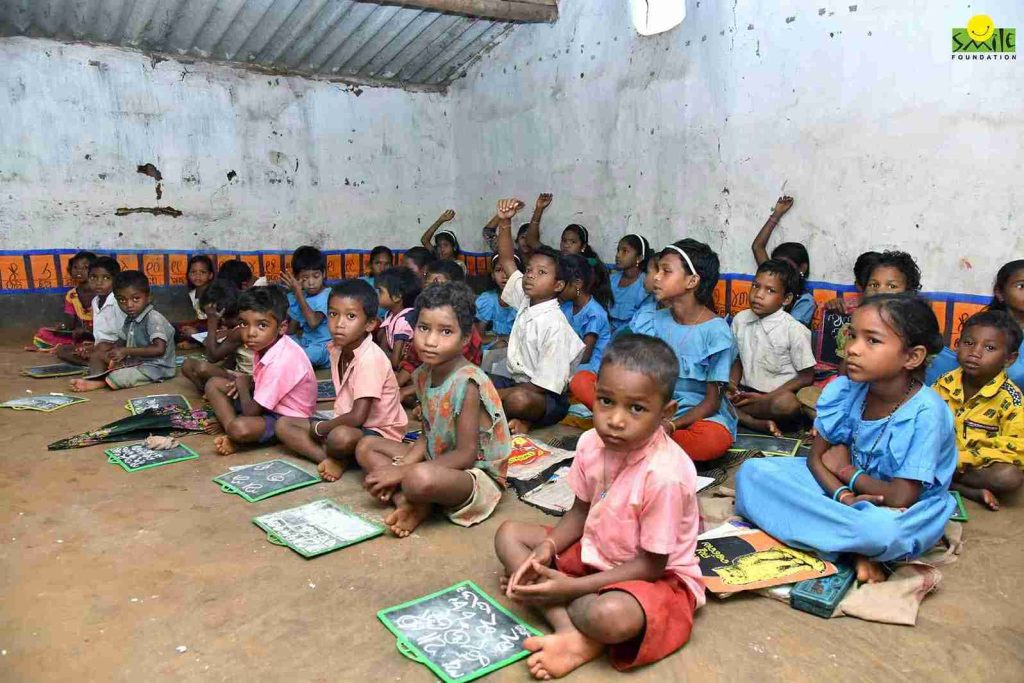
According to UNICEF, only about 42 percent of schools in India have separate, usable toilets for girls. Even where toilets exist, many lack doors, running water or safe waste disposal. In such environments, attending school during menstruation becomes an exercise in managing risk and humiliation.
For adolescent girls, especially first-generation learners, this vulnerability is magnified. A single incident—stained clothing, teasing, a reprimand—can be enough to trigger prolonged absence.
The role of stigma in shaping absence
Menstruation in India remains surrounded by silence. Many girls are taught early on to conceal it, endure discomfort quietly and restrict their movement. At school, teachers may lack training or comfort to address menstruation openly. Boys are often excluded from any education on the subject, perpetuating myths and ridicule.
Fear, rather than pain alone, drives absence. Fear of staining uniforms and fear of being singled out. And, the fear of becoming the subject of gossip that travels beyond the classroom.
Studies conducted across several states indicate that girls may stay home for two to five days each month during their period. These absences are often normalised within families and schools. Over time, missing school becomes routine, and returning becomes harder.
From absence to exit
The link between menstruation and school dropout is rarely linear. Girls do not leave school because of one missed day. But repeated absences intersect with other pressures: household work, caregiving responsibilities, early marriage expectations and safety concerns during travel.
For girls at the secondary level, academic momentum matters. Once that momentum breaks, catching up becomes difficult. Teachers move forward. Exams approach. Confidence erodes.
UNESCO’s Global Education Monitoring reports consistently show that adolescent girls who experience irregular attendance are significantly more likely to drop out, particularly in low-resource settings. Menstrual poverty acts as a quiet accelerant, pushing girls closer to the edge of the system without ever being recorded as the cause.
The intent, and the uneven reality
India has not ignored menstrual health. Government schemes under the National Health Mission promote menstrual hygiene awareness and subsidised product distribution. The Swachh Bharat Mission and school infrastructure guidelines mandate separate toilets for girls.
But implementation remains uneven. Distribution of products can be irregular. Facilities may exist on paper but remain unusable in practice. Teachers and frontline workers are often overburdened, and menstrual education is delivered inconsistently.
Crucially, menstrual health is often treated as a health issue, detached from educational outcomes. Attendance records do not track menstrual-related absence. Dropout data rarely accounts for it. Without visibility, the problem remains peripheral.
The economic logic of keeping girls in school
From an economic perspective, menstrual poverty represents a striking inefficiency. Relatively low-cost interventions—safe sanitation, reliable products, education—can protect years of schooling.
The World Bank has repeatedly shown that each additional year of schooling for girls improves lifetime earnings, health outcomes and educational attainment for the next generation. Conversely, early dropout carries long-term costs: reduced labour force participation, poorer maternal health and intergenerational disadvantage.
When girls miss school because they cannot manage menstruation safely, the loss is not just personal. It is societal.
What evidence suggests works
Evidence from India and comparable contexts points to a simple but often ignored conclusion: single interventions are rarely enough.
Pad distribution without toilets has limited impact. Toilets without water go unused. Education without safe spaces fails to translate into behaviour change.
Programmes that show measurable improvements in attendance tend to combine:
- consistent access to menstrual products
- functional, private sanitation facilities
- school-based education for all genders
- engagement with families and communities
Where these elements converge, stigma reduces and attendance stabilises.
Civil society filling critical gaps
In areas where public systems struggle to deliver consistently, civil society organisations often play a bridging role. Smile Foundation’s work offers insight into how menstrual health can be addressed as part of a broader education and well-being framework.
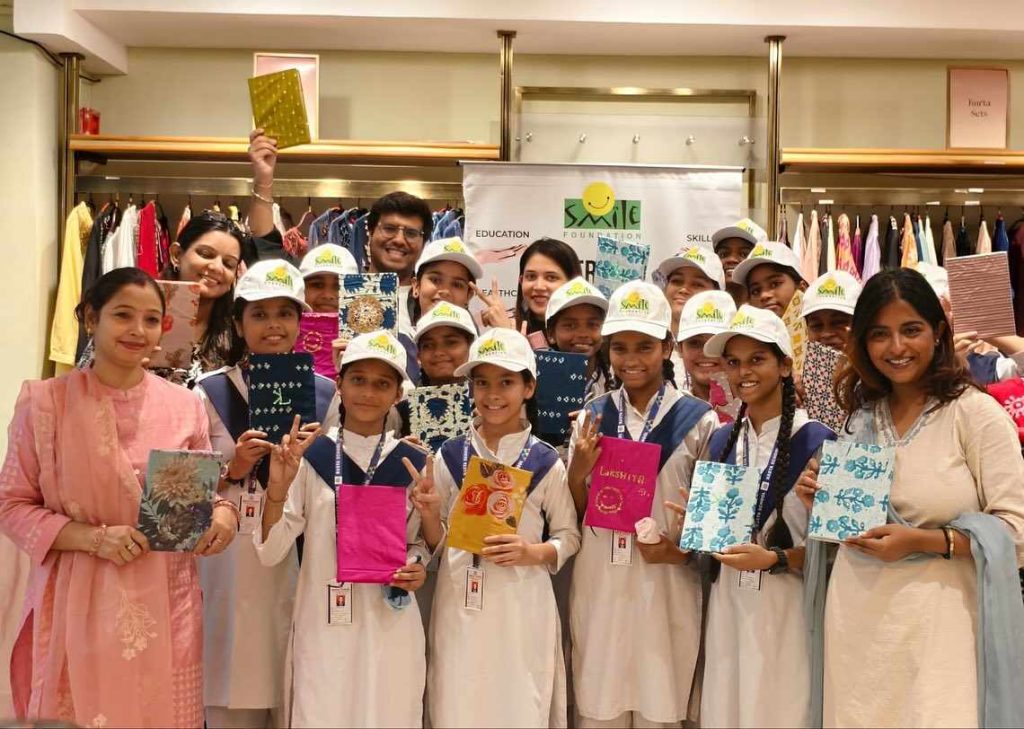
Through initiatives such as Swabhiman and Mission Education, menstrual health is integrated into school health programmes rather than treated as a standalone issue. Girls receive access to sanitary products alongside education on menstrual health, nutrition and hygiene. Schools are supported in improving sanitation facilities, and teachers are engaged to create safer, more responsive environments.
Importantly, Smile Foundation extends its work beyond the classroom. Community sessions involve mothers, fathers and caregivers, addressing stigma where it originates. Mobile health units under the Smile-on-Wheels programme reach remote and underserved areas, where school infrastructure is weakest and absenteeism highest.
By linking menstrual health to attendance, confidence and academic continuity, these interventions demonstrate how addressing menstrual poverty can keep girls engaged in education during the most vulnerable years.
Why this connection matters now
As India pushes to improve secondary and higher education outcomes, the adolescent years have become decisive. Completing secondary school is increasingly the minimum threshold for economic participation.
Menstrual poverty, when left unaddressed, undermines this goal quietly and consistently. It does not announce itself as a crisis. It shows up as irregular attendance, slipping grades and gradual withdrawal.
The pandemic exposed how fragile school attendance can be. As education systems rebuild, menstrual health must be recognised not as an add-on, but as foundational infrastructure.
From silence to systems
Breaking the link between menstruation and school absence requires more than awareness campaigns. It demands systemic change: better data, stronger coordination between education and health departments, and sustained investment in school infrastructure.
It also requires listening to girls. Many already know what would help them stay in school. Privacy. Products. Permission to speak.
The question is no longer whether menstruation affects education. The evidence is clear. The question is whether India is willing to treat this monthly interruption as a public responsibility rather than a private burden.
Ensuring that girls can attend school every day of the month is not only a matter of dignity. It is a matter of educational equity—and of recognising that progress is measured not just by who enters the classroom, but by who is able to stay.
Sources (recent and relevant):
- NFHS-5: https://rchiips.org/nfhs
- UNICEF WASH in Schools: https://www.unicef.org
- UNESCO Global Education Monitoring Report: https://www.unesco.org/gem-report
- World Bank on girls’ education: https://www.worldbank.org