

In classrooms across India, science is often taught as certainty. Formulas are memorised, experiments are demonstrated rather than attempted, and answers are expected to be right the first time. This approach has produced generations of competent exam-takers, but far fewer confident problem-solvers. As India positions itself as a future knowledge economy, this distinction matters more than ever.
Problem-solving is not a skill that emerges fully formed in adulthood. It is cultivated slowly, through exposure to uncertainty, failure, iteration and curiosity. In many ways, the question India now faces is not whether it has enough young people studying science, technology, engineering and mathematics (STEM), but whether it is creating the conditions for those students to think scientifically.
This is where corporate social responsibility (CSR) enters the conversation, not as philanthropy alone, but as a long-term investment in the cognitive infrastructure of the country.
From STEM as subjects to STEM as ways of thinking
Globally, there has been a shift in how educators understand STEM. No longer is it viewed simply as a pipeline to technical jobs. Research increasingly frames STEM education as a means of developing transferable skills: critical thinking, systems reasoning, collaboration and adaptive problem-solving.
A 2023 UNESCO report on science education emphasised that early and inclusive STEM exposure improves not only technical competence but also civic reasoning and resilience in uncertain environments.
In India, however, access to such exposure remains uneven. Elite schools experiment with robotics labs and inquiry-based learning, while many government schools struggle with basic science infrastructure. According to ASER 2022, a majority of rural students in upper primary grades are unable to apply basic science concepts to real-world problems.
This gap is not simply about resources. It reflects a deeper divide in how learning itself is experienced.
Why problem-solving cannot be taught late
Cognitive science is clear on one point: habits of thinking are shaped early. The brain’s executive functions—planning, flexible thinking, working memory—develop throughout childhood and adolescence, strengthened through repeated engagement with open-ended challenges.
A growing body of research shows that students exposed to hands-on, inquiry-driven STEM learning in middle school demonstrate stronger reasoning skills and greater persistence in later academic and professional contexts.
Yet in India, meaningful STEM engagement is often postponed until higher secondary or even college. By then, many students—especially girls and those from marginalised communities—have already internalised the idea that science is inaccessible or intimidating.
CSR interventions that focus only on scholarships or merit awards, while valuable, often arrive too late in the learning journey to change this perception.
The unequal geography of scientific curiosity
India’s STEM landscape mirrors its broader inequalities. Urban students are more likely to encounter science as experimentation. Rural and tribal students encounter it as abstraction.
For girls, the barriers are compounded. Social expectations, safety concerns, lack of role models and limited encouragement converge to narrow participation. NFHS-5 data shows that adolescent girls continue to lag in science stream enrolment in many states, despite comparable early aptitude.
Climate change, public health crises and technological disruption further sharpen the stakes. India does not merely need more engineers. It needs citizens capable of reasoning through complex systems—whether managing water scarcity, understanding health misinformation or adapting livelihoods to environmental change.
Problem-solving, in this sense, is not an employability skill alone. It is a democratic one.
What CSR in STEM can do that schools often cannot
Schools operate under constraints: curriculum mandates, assessment pressures, limited teacher training and infrastructural shortfalls. CSR initiatives, when thoughtfully designed, can occupy a different space.
They can:
- Introduce exploratory learning without the pressure of exams
- Support teacher capacity-building beyond syllabus coverage
- Fund experimentation, failure and iteration
- Bring real-world problems into classrooms
Importantly, CSR in STEM can take a long view. Unlike short-term academic cycles, companies can invest across years, tracking not just test scores but confidence, curiosity and persistence.
Internationally, this approach has gained traction. Corporate-backed STEM programmes in Finland, Singapore and parts of Africa have focused on inquiry-based learning and teacher mentorship rather than hardware alone. Evaluations consistently show that outcomes improve when technology is paired with pedagogy, not treated as a substitute for it.
The risk of “STEM-washing”
At the same time, CSR-led STEM initiatives are not inherently effective. Many fail by mistaking exposure for learning.
A robotics kit delivered to a school without trained facilitators often ends up unused. Coding workshops conducted as one-off events may generate excitement but little retention. Measuring success by the number of devices distributed or sessions conducted risks reducing STEM to spectacle.
Aeon’s long-standing critique of “solutionism” in education applies here. Learning is relational and contextual. It requires time, trust and continuity. CSR initiatives that overlook this reality may unintentionally reinforce the very gaps they aim to close.
India’s CSR in STEM moment and its limits
The National Education Policy (NEP) 2020 signals a conceptual shift, emphasising experiential learning, critical thinking and multidisciplinary education. It explicitly calls for early exposure to scientific temper and problem-solving.
Yet policy intent does not automatically translate into classroom transformation. Teacher training systems remain stretched. Assessment reforms move slowly. In many states, schools lack the flexibility to implement inquiry-based models consistently.
This is where CSR, aligned with public systems rather than parallel to them, can act as a catalytic layer—piloting models that the state can later scale.
Where civil society fits in for CSR in STEM
The most effective CSR-STEM initiatives in India tend to operate through partnerships with civil society organisations that understand local contexts. NGOs bring community trust, long-term presence and an understanding of social barriers that companies often lack.
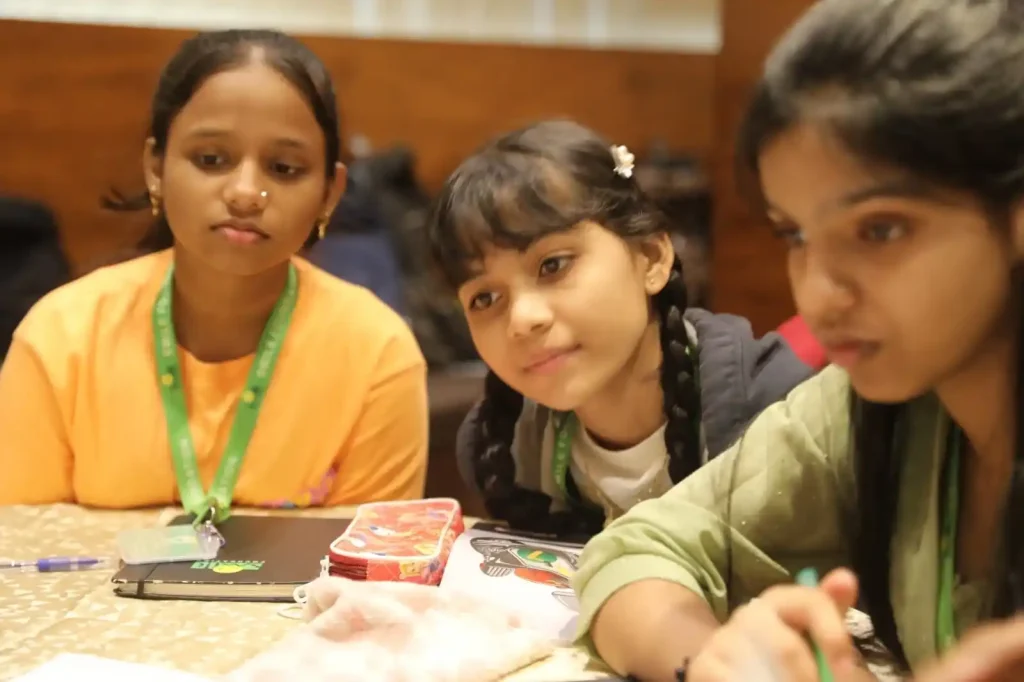
Smile Foundation’s education programmes offer a useful illustration. Through its Mission Education initiative, the Foundation integrates STEM learning into broader educational support for children from underserved communities. Rather than treating science as a standalone subject, STEM concepts are embedded within real-life problem-solving—water conservation, basic health science, environmental sustainability and digital literacy.
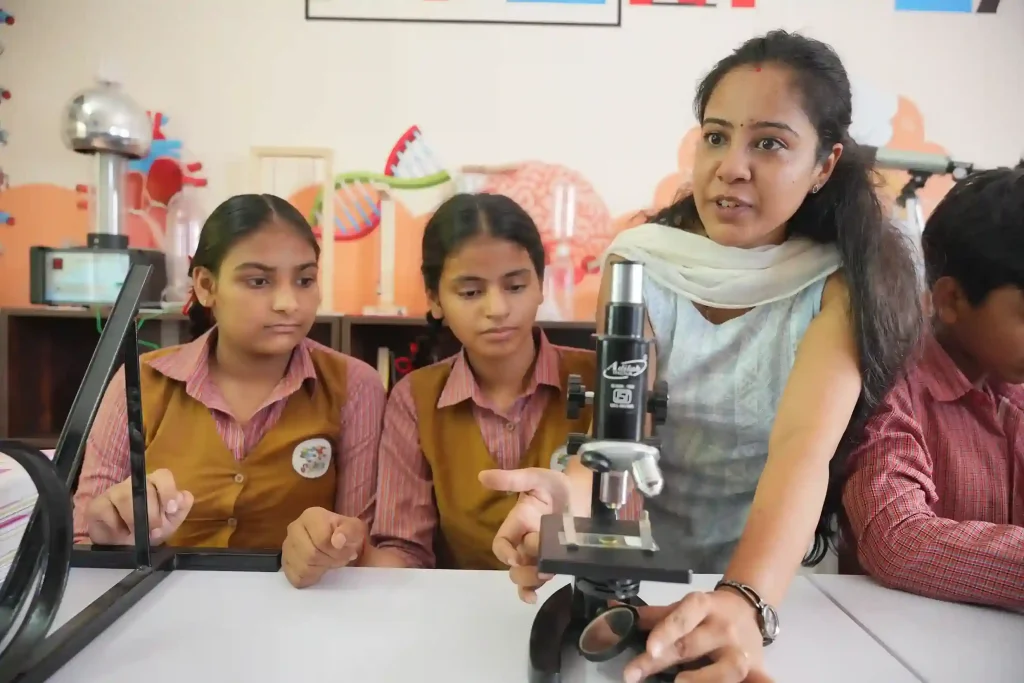
In several centres, STEM labs and smart classrooms are paired with teacher training and student-led projects. The emphasis is not on producing future engineers per se, but on nurturing curiosity and confidence. Students are encouraged to ask questions, test ideas and collaborate—skills that extend beyond science.
Smile Foundation’s approach also recognises that learning does not occur in isolation. Nutrition, health and emotional safety shape cognitive capacity. By addressing these factors alongside education, the programmes create conditions in which problem-solving can take root.
CSR partnerships have enabled the scaling of such models, particularly in regions where public resources are limited. The lesson here is not that CSR replaces the state, but that it can support experimentation within it.
Reframing success
If companies are serious about contributing to India’s STEM future, they may need to rethink how success is defined.
Instead of asking:
- How many students were reached?
- How many devices were distributed?
They might ask:
- Did students become more willing to attempt difficult problems?
- Did girls participate as actively as boys?
- Did teachers feel equipped to sustain the approach?
- Did students begin to see science as relevant to their lives?
These questions are harder to quantify, but more meaningful.
A longer view of responsibility
CSR in STEM, at its best, is not about creating a workforce pipeline tailored to immediate industry needs. It is about contributing to a society capable of reasoning through uncertainty.
India’s future challenges—climate adaptation, public health, urbanisation, technological ethics—will not yield to formulaic thinking. They will require citizens who are comfortable with complexity, evidence and debate.
By investing in STEM as a way of thinking rather than a set of subjects, companies have an opportunity to play a quiet but consequential role in shaping that future.
The next generation of problem-solvers will not be built through labs alone. They will be built through patience, partnership and a willingness to see education not as output, but as formation.