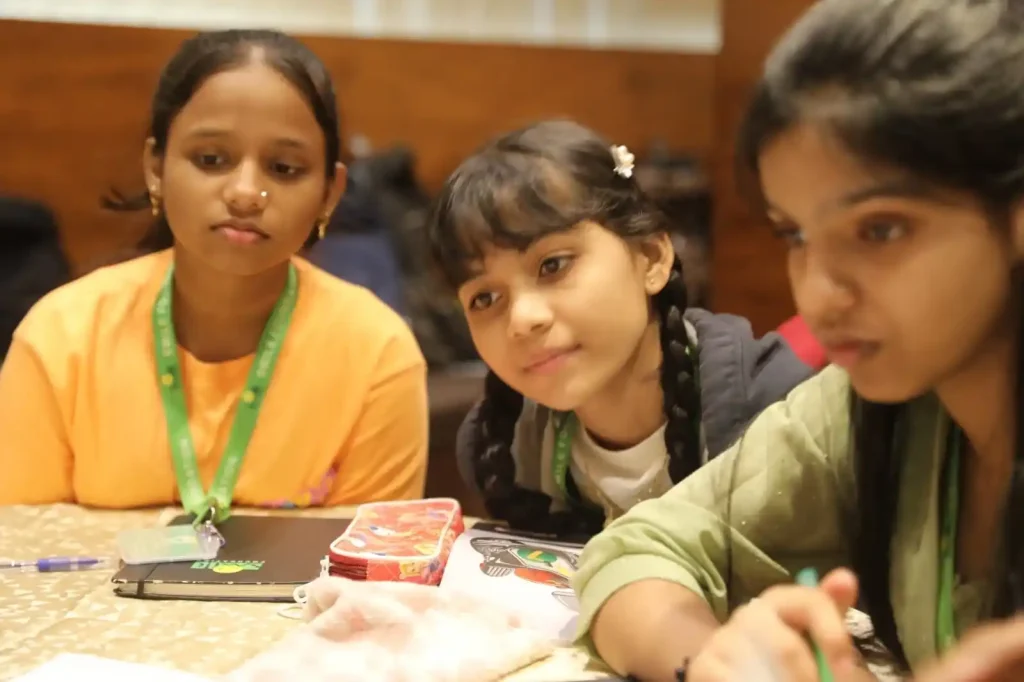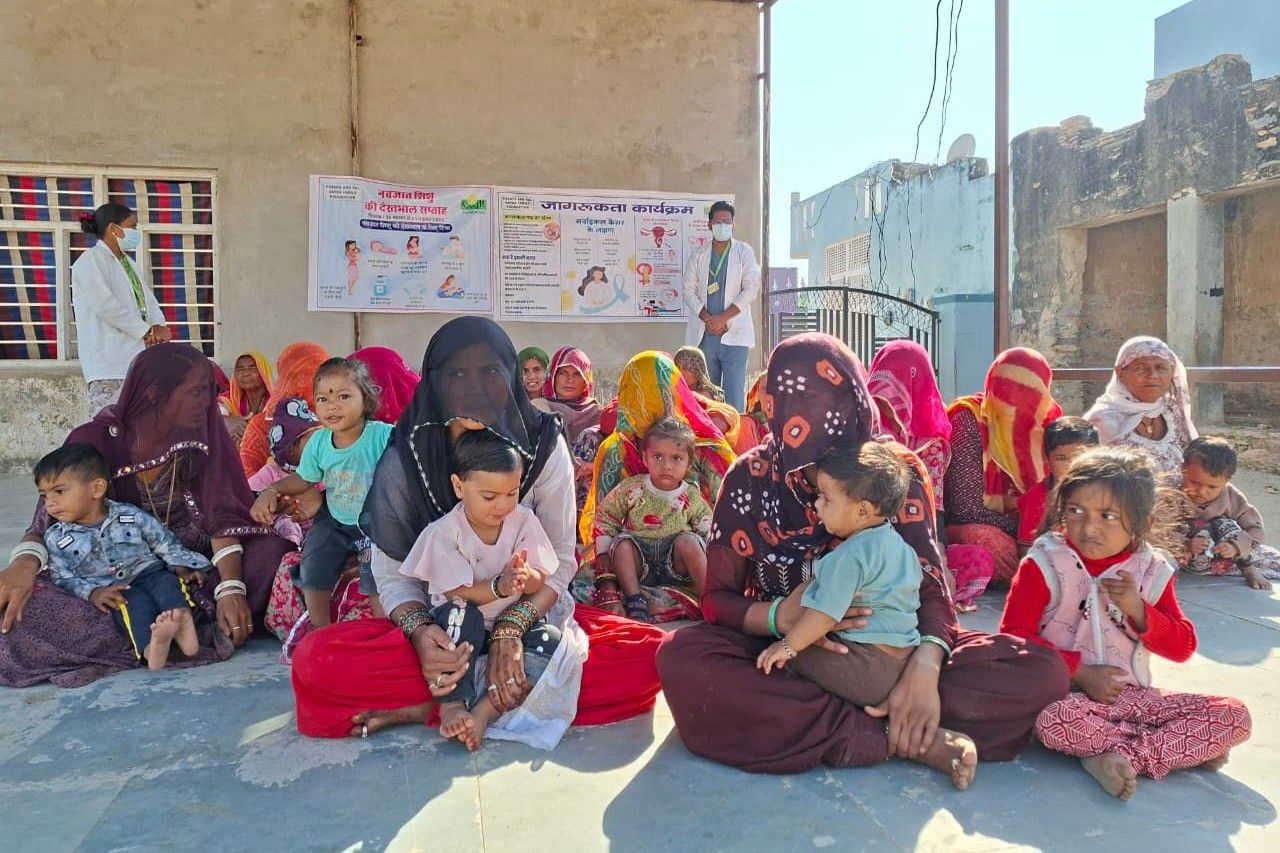

In a village meeting hall under the neem tree of Badiya Gena, expectant mothers and new mothers sit eagerly on wooden benches as an Auxiliary Nurse Midwife (ANM) speaks in their dialect about caring for their newborns. For many, this is their first time learning that the yellow, sticky colostrum — once thought to be “dirty milk” — is actually the vital first food for the infant. “Earlier we gave our babies honey and sugar water as a tradition,” recalls one young mother from the crowd. “Now I know that only mother’s milk protects her tiny body, and I saw my little one thrive after I started exclusive breastfeeding.” Such scenes are no longer unusual in rural India.
Across the hinterland, community-led awareness sessions have begun to reshape age-old practices around the cradle. Health educators and local workers respectfully address traditional beliefs (like elixir-giving and early baths) and replace them with science-backed newborn care. The result is a new generation of babies who are fed, kept warm, immunized and watched over for danger signs.
Many of these sessions are organized by government and NGO teams who have learned that change comes fastest when neighbours teach neighbours. Indeed, studies confirm that community education saves lives: a Cochrane review found that group and home-counselling by local health workers significantly improved newborn survival and boosted breastfeeding – mothers who received such education were 56% more likely to initiate breastfeeding immediately. In India, this has translated to rising breastfeeding rates.
Recent analysis of NFHS data shows exclusive breastfeeding for six months climbed from about 46% in 2005–06 to nearly 65% by 2019–21, thanks in part to counselling by ANMs and community volunteers. Local surveys echo this. In Uttar Pradesh, for example, women with repeated contacts (three or more visits) from frontline workers were far more likely to breastfeed within an hour of birth than those with no visits. As one rural woman put it after an ANM’s home-visit, “Before, I bathed my baby right away and gave water; now I dry and wrap her, put her on my chest and feed her first. She’s much healthier.”
Core Newborn Care Practices
Community sessions focus on a short list of proven practices, each one grounded in science but taught through familiar analogies. Key messages include:
- Exclusive Breastfeeding (EBF): Only mother’s milk (no water or animal milk) for the first six months dramatically reduces infections. Mothers are encouraged to give colostrum (the first thick milk) immediately after birth.
- Hygiene and Cord Care: Handwashing before delivery, using clean instruments to cut the cord and keeping the umbilical stump dry or treated with chlorhexidine – these steps prevent life-threatening infections. Educators often use local metaphors (e.g. “to make curd, you wash hands and sterilize utensils; do the same for your newborn so they don’t get spoiled”) to win acceptance.
- Warmth and Thermal Care: Newborns must be kept warm. They are dried immediately, wrapped snugly and held skin-to-skin on the mother or other caregiver. Delaying the first bath by at least 24 hours is emphasized to prevent hypothermia. (“A dry, warm baby grows strong,” goes the slogan in many sessions.)
- Timely Immunization: Ensuring birth-dose vaccines (BCG, Oral Polio Vaccine zero-dose, Hepatitis B) and follow-ups protects babies from deadly diseases. Workers explain each vaccine’s purpose in simple terms, so parents understand why they must return for the next doses.
- Danger Sign Recognition: Mothers learn to watch for any danger sign – poor feeding, high fever, fast breathing, lethargy, convulsions or jaundice – and to seek prompt medical help if any occur. (A recent survey found only 43% of mothers knew even three basic danger signs, so education emphasizes this continually.)
By covering these essentials, sessions leave mothers with practical checklists. As one city caregiver said, “I didn’t know a baby could get polio drops the same day she’s born. At the camp they explained it all, even helped me mark her immunization card.” This mix of knowledge helps mother and child stay safe in the critical neonatal period.
Changing Beliefs and Behaviours Towards Newborn Case
Introducing these practices must be done with cultural sensitivity. Many villages still have strong traditional beliefs. In some areas, people bathe newborns early, fearing the placenta’s dangers; in others, they apply cow dung or ash to the cord for blessings. However, evidence from the field shows a clear shift: modern hygiene is replacing harmful customs. For example, a 2024 study in Odisha found that while grandmotherly remedies (applying ash or herbal pastes to the cord, putting substances in the baby’s eyes) were once common, young mothers were much less likely to use them.
Even rituals to ward off the “evil eye” remain more a comfort than a threat – these harmless chants continue, but the dangerous practices do not. Educators never mock traditions; they acknowledge elders’ intentions and then show the scientific ‘why’. Over time, as mothers see healthier outcomes, trust grows.
Similarly, myths about breastfeeding and nutrition are dispelled through dialogue. In many communities, there was an old belief that newborns needed additional fluids (like honey or water) right away. Health workers patiently explain that these introduce germs and dilute breastmilk’s nutrients. The fact that national surveys now show rising EBF rates suggests these messages are sinking in.
Frontline Workers: Building Trust for Long-term Newborn Care
At the heart of this change are the frontline workers – ANMs, Accredited Social Health Activists (ASHAs), Anganwadi Workers and visiting doctors. These are often local women who speak the mother’s language and understand village life. They build trust one home at a time. As one study noted, mothers in Andhra Pradesh who had antenatal counselling by ASHAs/ANMs were more than twice as likely to recognize danger signs.
Across studies, increased contact with these health workers correlates with better newborn care behaviours: in one UP survey, mothers with three or more worker visits were significantly more likely to breastfeed within an hour and to get tetanus shots, compared to those with none. This isn’t surprising – when a trusted ANM explains why exclusive breastfeeding matters, families listen.
In a Madhya Pradesh community, people resisted polio drops for fear of side effects; it took time, home visits and even treating a sick child to break the ice. As UNICEF reports from Nashik recount, once a health team helped cure a migrant mother’s diarrhoeal baby, she “became an advocate” for vaccination and helped bring the others around. Gradually, scepticism gives way to acceptance – as the ANM Nirmala in Nashik put it, after adjusting timings to suit day laborers, “Now they welcome us warmly!”.
Doctors at primary health centers also join this effort, often visiting villages with outreach clinics. Seeing a white-coat giver of vaccines or a doctor examining a newborn can reassure worried parents. Joint sessions – where an ANM teaches feeding and an MBBS doctor reinforces it – can be very effective. Over time, this consistent presence has helped bridge the gap between rural minds and medical advice. Indeed, an Odisha study found mothers increasingly “seeking healthcare promptly for even minor problems,” a big change from the past. The village worker who was once just a neighbour is now a respected “didi” (elder sister) who brings not just medicine, but compassion.
Grassroots Success: Stories from the Field
These combined efforts are translating into stories of real change. In Chhattisgarh, a mother in the Bastar region remarked with pride, “On the first night, I kept my baby on my chest instead of beside the stove. He slept warmer.” In Jharkhand’s Khunti district, after ASHAs taught mothers to delay bathing and give colostrum, hospital referrals for sick newborns rose (in this case, a good thing – once people recognized danger signs, more babies got the urgent care they needed). In urban slums, too, migrants take note: “I came from Bihar thinking bottle-feeding was modern,” says a Mumbai woman who attended an awareness fair. “But in the session I learned about exclusive breastfeeding and even kangaroo care. I adjusted and my baby’s doctor commented on her good weight gain.” An office in Delhi tells of male volunteers running neighborhood education drives – proof that even in cities, community awareness can bridge gaps in knowledge.
Two participants’ reflections capture the shift: “In our village I used to bathe my newborn at once and give her honey,” one rural mother says. “After the meeting, I kept my second baby warm on my chest and fed him only breastmilk. He’s strong now, much better than my first.” Meanwhile, a young mother from an urban slum adds, “I thought vaccines could wait, but the nurse explained that Polio drops and BCG start at birth. Now I’ve marked my daughter’s shot dates and feel at ease.” Such voices show how learning translates immediately into changed practice.
Mobile Outreach and the Road Ahead
To ensure no village is left behind, NGOs have joined the chorus. Mobile medical units of Smile Foundation bring these lessons directly to hamlets and slums. In one example, a rural clinic-on-wheels organized an infant-care session right in the heart of the community. For instance, a recent newborn health awareness camp in Badiya Gena (Ajmer district, Rajasthan) was run by Smile Foundation’s mobile “Smile on Wheels” team. There, the travelling doctors and nurses reviewed all the key points – breastfeeding, hygiene, immunizations, keeping babies warm and spotting illness – with dozens of local parents. It was a subtle reminder that the work of trust-building extends beyond static clinics.
The cumulative impact is encouraging. National indicators show India’s infant mortality steadily declining (IMR fell from 34 to 30 per 1,000 births between 2015–21), and experts credit not just hospitals but empowered communities for this trend. Yet challenges remain: some areas still show hesitation around modern care, and urban slums can be as ignorant of newborn needs as remote villages. Continued emphasis on dialogue and respect for culture will be key. As one seasoned ANM put it, “We never tell mothers their ways are bad; we tell them how to keep the good and make the baby safer.”
These stories underscore a larger truth: newborn care is as much about people and trust as it is about medicine. When an ANM kneels down to speak in the mother tongue, or a doctor listens to elders’ concerns, new ideas have room to grow. As rural India educates itself, villages cradle not just their infants, but a hopeful future – one community meeting at a time.