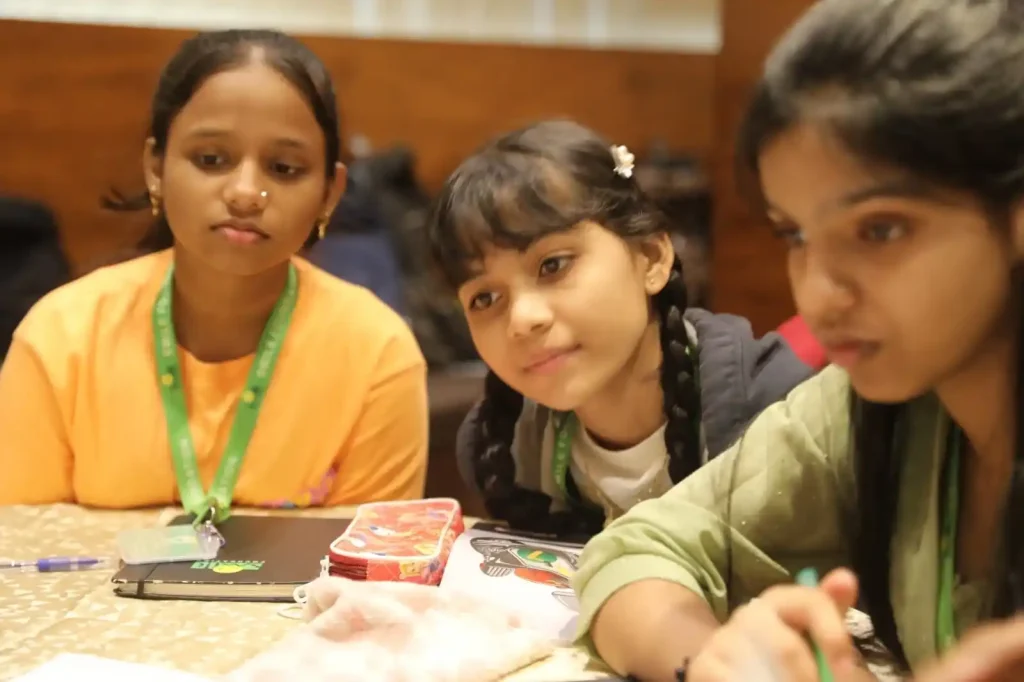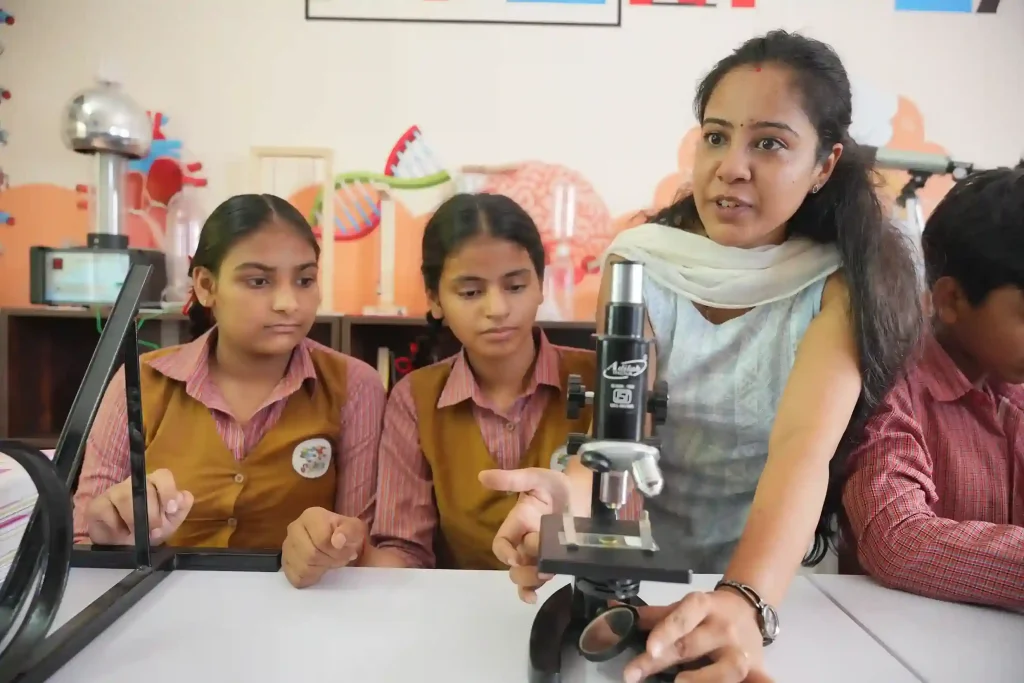

In village after village, and in the crowded lanes of city slums, women who once depended on meagre daily wages or the family income are now designing their own destiny. Fuelled by targeted entrepreneurship training, they are stitching, baking, farming and selling their way to dignity and independence. Across India, NGOs and social programmes are teaching women business planning, vocational crafts, financial and digital skills, and marketing know-how to help them launch sustainable enterprises. In the process, hundreds of women are transforming not just their own lives but entire communities into women entrepreneurs.
Under Smile Foundation’s Swabhiman, women like Ranjana from Palghar district of Maharashtra have seized new opportunities. Ranjana started a small poultry farm during the pandemic, and today she beams with pride:
“This poultry farm has been a boon in disguise for me. Not only do I feel economically independent but also empowered to make my own decisions. I want to run my farm on a big scale.”.
Her story is typical: women who learned animal husbandry or horticulture are feeding their families and generating income, instead of watching loved ones migrate or go hungry. These programmes often include hands-on agriculture and animal-rearing training – whether it’s kitchen gardens, mushroom and poultry farming, or spice cultivation – along with guidance on budgeting and sales. A rural woman was helped to cultivate vegetables in her backyard, sell the produce and even build a women’s collective around it, leading entire communities toward financial independence and confidence.
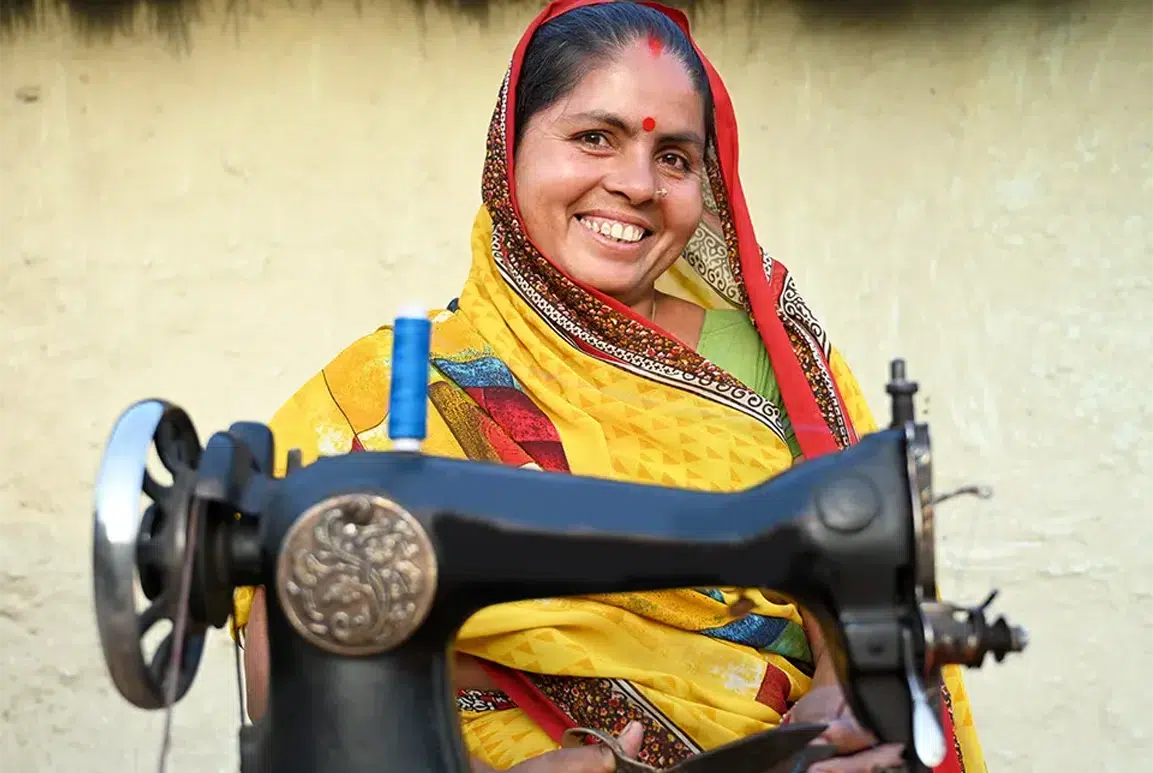
At the same time, urban women are getting just as much support. In city slums and small towns, women are being trained in tailoring, catering and digital marketing. One participant in Haryana, Shyama, recounts how a community mobilizer began teaching her about financial literacy and entrepreneurship during COVID:
“I learned sewing and got a tailoring machine. After that, we started receiving orders and getting back on our feet… Now, thankfully, things are much better.”
Shyama’s family had been on the brink: her husband lost his tailoring job, they fell behind on bills and tension was rising at home. But with training in sewing and guidance on managing orders, the family business rebounded. Shyama even taught other women in the neighbourhood to stitch masks when the lockdown hit. Her experience – gaining new skills, confidence and customers – shows how urban entrepreneurship programmes can reverse poverty and restore self-respect.
Programmes for Women Entrepreneurs
The secret behind these successes is structured support, combining hard and soft skills. Programmes follow a step-by-step model that begins with basic skilling and continues through enterprise launch and scaling. Women receive training in concrete business skills – for instance:
- Business Planning & Financial Literacy: Learning to budget, price products and manage cash flow.
- Marketing, Communication & Digital Exposure: Understanding branding, social media, e-commerce platforms and online payments.
- Vocational & Technical Skills: Hands-on instruction in trades like tailoring, food processing, beauty services or even organic farming.
- Soft Skills and Confidence-Building: Coaching in leadership, networking, presentation and decision-making.
Such training bridges a glaring gap. Historically, women’s enterprises in India were often informal and under-resourced. According to an industry report, only a small fraction of women-led ventures reach markets effectively and few integrate technology or formal marketing. By teaching not just how to stitch or cook, but how to run a business – from writing a simple plan to negotiating with vendors – these programmes unlock vast potential. We even include sessions on digital literacy, from using a smartphone to accepting online payments, so that rural artisans can sell textiles or spice mixes on e-commerce sites and urban entrepreneurs can advertise and ship products nationwide.
Holistic Change for Women Entrepreneurs
The impact is visible and measurable. The entrepreneurship training alone has spawned dozens of women-led micro-enterprises – small shops, home-delivery food ventures, dressmaking centres and more. Tailoring units and handmade garment businesses top the list, but others include catering start-ups (making snacks, pickles or tiffin services) and even digital services. Empowered with business plans and marketing support, many women have taken to selling on e-commerce platforms. For instance, groups of village women trained in tailoring now collectively run an online boutique, stitching wedding dresses for orders received through WhatsApp and local marketplaces.
Crucially, the transformation is as social as it is economic. Women who manage their own incomes gain a voice at home and in the community. Studies show that women’s entrepreneurship can significantly boost household decision-making power and reduce gender inequalities.
As women earn and save, they invest in children’s education, household health and community projects. Confidence grows as business skills grow. When women master technology and financial concepts, they become change-agents mentoring others and inspiring younger girls to aim higher.
The personal stories are rich. In one Mumbai suburb, an enterprising caterer learned to use digital payment apps and now supplies lunches to local offices, quadrupling her earnings. In Odisha, a group of rural women trained in value-added food processing transformed local agricultural produce, turning raw vegetables into pickles and papads, and began selling branded products under a cooperative label. After training and seed funding, each woman now contributes to a common enterprise and shares profits. Across fields, from mushroom cultivation to mobile-phone repair, the common thread is skill support plus market access.
The Importance of Loan Networking
Programmes often link graduates to subsidies or microloans, and help them secure government scheme benefits. One alumna says that after learning bookkeeping, she even opened a bank account and regularly saves a portion of her income – a habit that would have been unimaginable before.
These shifts take time. But the evidence of change is strong. Nearly 84 women from a rural cohort launched their own businesses within a year of training. Many women increased their monthly income severalfold, moving from occasional labour to a steady business. Surveys of participants consistently report higher self-esteem and community standing. Women trained in tailoring or baking often say they are now respected in the neighbourhood in ways they never were as dependents. One tea-stall worker from Bengaluru took a government-approved entrepreneurship course and now hires other women to help run a home catering venture – she calls it a “dream come true to feed my family and run a business of my own.” Although detailed impact evaluations are scarce, anecdotal and early quantitative indicators all point toward sustainable enterprise creation. In year-long follow-ups, most women remain in business or have upgraded their skills for better opportunities, rather than slipping back into precarious work.
In sum, these programmes are tackling multiple challenges at once. Rural and urban women often start at a disadvantage – lacking education, credit history or even the confidence to leave home. By offering structured training (not just one-off workshops), NGOs and partners give women a clear road map: Plan → Prototype → Profit. Women learn to spot market demand (say, demand for home-cooked snack boxes), draft a simple business model and then actually execute it with ongoing mentorship. Courses blend traditional livelihoods (tailoring, food processing) with modern tools (digital marketing, e-payments). The programmes also nurture soft skills: participants practice pitching their business and negotiating with suppliers, which is crucial for survival.
Consider two contrasting examples, one rural and one urban, that capture this change. In a farming village in Jharkhand, a group of women learned mushroom cultivation and cold-chain logistics. With support, they formed a collective, pooled their modest savings and now supply fresh mushrooms to restaurants in the nearby town. A village elder reports that the project lifted dozens of families above the poverty line. In the heart of Delhi, another woman – previously a home-maker – was trained in graphic design and e-commerce. She started an online handicrafts store, marketing the creations of her neighbourhood women through Instagram. Today she not only earns enough for her own household expenses, but has hired her former sewing-teacher as an assistant, exemplifying a chain of empowerment.
The Walk to Viable Businesses
The overarching message is clear: when women receive comprehensive training including business planning, vocational craft and financial literacy – they can turn any skill into a viable enterprise. Whether stitching clothes, cooking meals, tending fields or selling on the internet, they are becoming self-reliant entrepreneurs. The economic impact is tangible: rising household incomes, better nutrition for children, savings and investments in health and education.
The social impact is equally profound with changing family dynamics and community perceptions. A financially independent woman is more likely to insist on her rights, less likely to tolerate domestic abuse and more likely to educate her daughters. Each empowered entrepreneur, in effect, becomes a role model, showing others that traditional barriers (poverty, caste, gender norms) can be overcome.
By the end of 2025, Swabhiman had already helped launch over eighty businesses and trained hundreds of women across rural and urban areas. We salute the women leading these ventures and the mentors and trainers who guided them. Only by continuing to invest in such holistic training can India tap the full potential of its women.
This op-ed is based on data and stories from field initiatives supporting women entrepreneurs. We gratefully acknowledge the role of the Swabhiman entrepreneurship programme in many of these successes.