

The alarm rings at 4:00 AM, as it always does. Long before the sun, Sita’s kitchen glows faintly under a single bulb. The fan clicks overhead while she folds the bedsheet, ties her hair tight and packs lunch for everyone in the family, in silence, while streetlamps outside flicker and the world is still half asleep.
Sita moves through the darkness with practiced precision — the clink of steel vessels, the hiss of the stove, each sound marking another task completed in the quiet race before her own day begins. By the time the first pale thread of dawn slips into the lane, she is already at the bus stop, every step marked by the weight of chores already done, pressing silently on her shoulders.
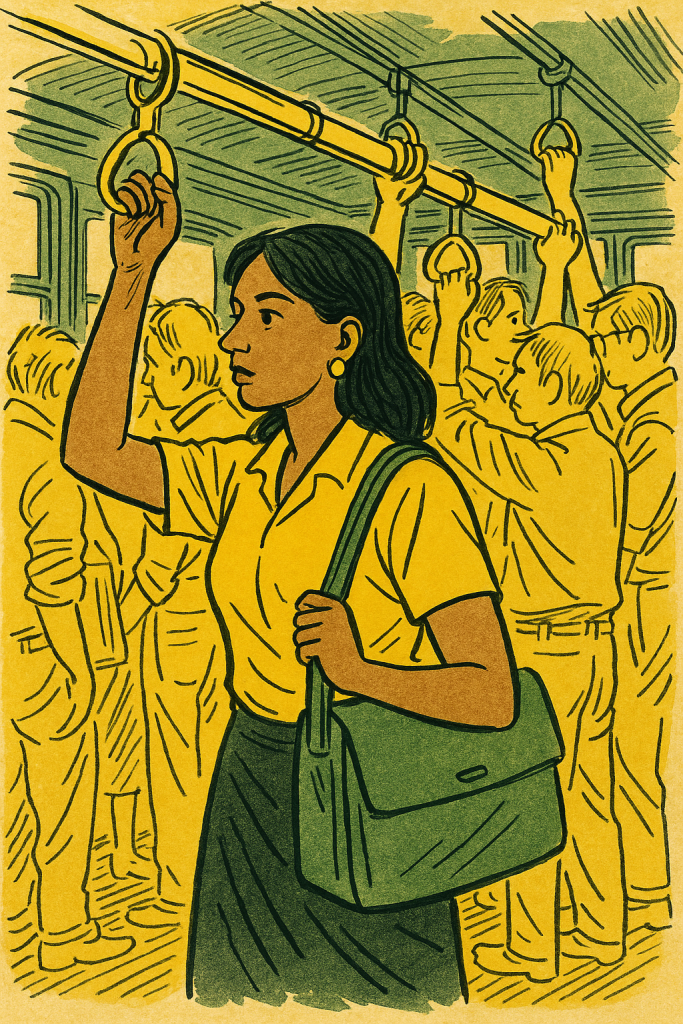
The bus lurches in with impatient horns. She braces herself, eyes narrowing at the high step. It takes all her strength to climb aboard and then she grips the overhead bar with her right hand. Her left arm reaches back, fingers searching until they catch the trailing pallu. And she draws it forward, sliding the fabric under her elbow, and presses it firm against her waist. The pallu clings there, held by the steady weight of her arm pressed throughout the journey. The bus sways, the crowd leans, but her arm does not move.
The day gets brighter, the streets get busier and the bus packs tighter. Her left arm, pressed at her waist with the pallu, now lifts higher. The pallu drops back naturally, but her arm climbs, crossing her chest and the palm sets at her right shoulder. The crowd sways, the bus bumps and her arm stays strong protecting herself from getting hurt by bearing every push from all sides.
She feels a cool breeze at her waist, glowing, not from the latest skin care routine on social media, but from sweat gathered since 4:00 AM.
Now her phone rings. A sharp trill of a hand‑me‑down mobile phone ringtone slices through the roar of the bus. But she just holds the bar tighter, and her other arm steady across her chest. Now the phone keeps ringing, but she cannot reach it.
Her thoughts spin — could it be family? something urgent? or is it something at work again — a deadline, a warning? The phone keeps ringing, each trill digging deeper questions.
Lost in her worries, she glances around. The men travel with ease — one hand steady on the bar, the other free for their phones.
They’re laughing, they’re relaxed and smiling, and they treat the commute like a break rather than a burden.
She begins to dwell on how heavy it already feels, though the day has barely begun. Then the whistle cuts through her thoughts. Her stop is called. Time to rise, step off the bus and begin work.
And this is how millions of women begin their day — balancing safety, space and exhaustion long before work even starts. Rising before everyone, carrying responsibilities, navigating unspoken rules shaped by culture and then stepping into workplaces where they must prove their worth twice to be seen once, expected to be tireless, calm and capable all over again.
According to the National Family Health Survey (NFHS‑5), Indian women face layered, measurable disadvantages across safety, health, education and economic life that constrain their agency and well‑being. Child marriage, while slowly declining in some states, remains widespread: the NFHS‑5 indicator for women aged 20–24 shows that a substantial proportion were married before 18, with rates systematically higher in rural areas than urban ones; national averages improved slightly (from about 27% to 23% across survey rounds), but the practice persists strongly in several states and continues to limit girls’ education, health and economic prospects.
Decision‑making and control over resources still remain uneven. Although financial and digital inclusion have improved in many places (more women now hold bank accounts and own mobile phones) gaps persist in regular paid work, asset ownership and meaningful control over earnings and mobility, which together keep many women economically vulnerable and dependent.
Large shares of ever‑married women report experiences of physical or sexual violence by a husband, showing that intimate‑partner violence remains a common and persistent problem with wide public‑health and social consequences. These patterns are not isolated: they interact. Early marriage increases the risk of school dropout and economic dependence; limited mobility and workforce participation raise vulnerability to exploitation and make reporting violence harder; and weak economic autonomy reduces the range of feasible choices when facing coercion or abuse.
What the numbers whisper: The gender gap in everyday India
Child marriage remains driven by economic precarity and entrenched social norms. Nationally, nearly one in four young women aged 20–24 were married before 18, based on the NFHS‑5 indicator used by UNICEF; rural prevalence remains higher than urban, reflecting structural disadvantages and normative pressures.
In Karnataka’s Belagavi district, 42 child marriages were recorded between April 2024 and March 2025, despite prevention efforts. Local data show the highest counts among the Kuruba community, illustrating how tradition, social expectations and household vulnerability intersect at the district level.
Child marriage is linked to interrupted schooling, early pregnancy, higher maternal and neonatal risks, and constrained lifetime earnings, perpetuating intergenerational disadvantage. NFHS‑5 and UNICEF analyses consistently associate early marriage with poorer health and economic outcomes, underscoring the urgency of sustained prevention, social protection, and norm change strategies.
A positive shift is visible: Prevention efforts have multiplied and spread across regions.
In 2023–24, more than 70,000 child marriages were reportedly prevented across 265 districts in 17 states and UTs, with both panchayats and civil society playing significant roles in detection, counseling and enforcement.
Workplace harassment and career barriers
Despite increasing female participation in formal employment, women continue to encounter bias, harassment and exclusionary practices that hinder retention and career progression. The Aon Voice of Women in Corporate India 2024 survey, which engaged nearly 24,000 professional women across more than 560 companies, highlights the scale of the challenge:
- 42% reported experiencing bias or potential bias.
- 37% cited insensitive behavior.
- 6% reported sexual harassment.
Importantly, less than half of those affected chose to formally report incidents, underscoring persistent gaps in workplace redress and trust in grievance mechanisms.
India’s POSH Act, 2013 establishes mandatory Internal Complaints Committees, local committees and employer duties, yet implementation gaps persist. Academic and practitioner analyses identify weak awareness, compliance shortfalls and limited trust in redress mechanisms as recurring barriers, reducing the law’s effective reach and deterrence.
Virtual harassment, AI‑generated deepfakes and technology‑fueled violence
AI‑generated deepfakes are intensifying school cyberbullying: surveys and educator reports show that 40–50% of students are aware of deepfakes circulating in schools, victims are disproportionately girls who suffer severe and lasting psychological harm, and many teachers and districts lack training or clear policies to respond. A 20-year-old student from the International Institute of Information Technology (IIIT) in Naya Raipur was arrested for allegedly creating obscene images of female classmates using AI tools, said the police.
In Assam, an influencer was reportedly targeted with explicit AI‑generated content allegedly created and monetized by an ex‑partner. Media coverage in July 2025 noted her large follower base and subsequent police action, highlighting how personal violations can quickly scale into public crises. The case highlights systemic vulnerabilities, revealing how existing mechanisms struggle to keep pace with AI‑driven harms.
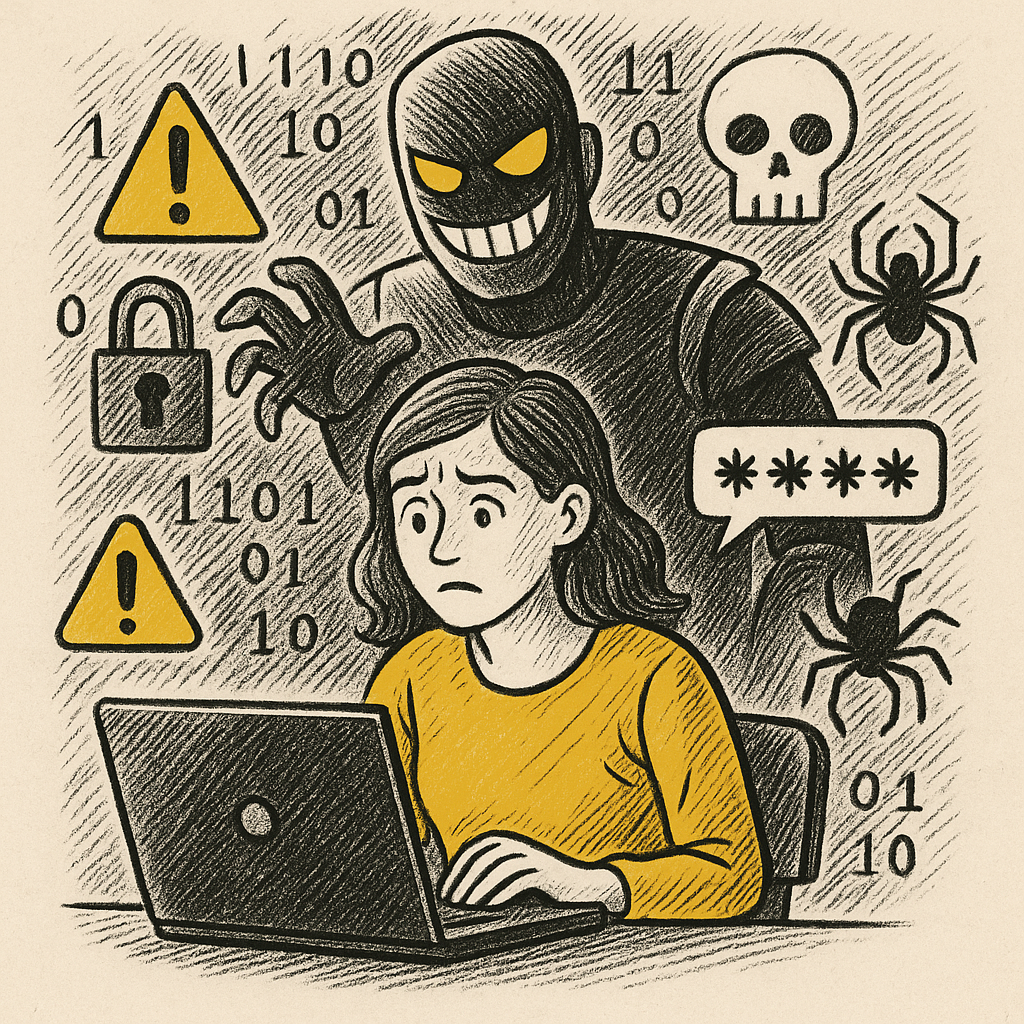
The growing risk environment chills women’s participation online, damages reputations, and can fuel extortion and social isolation. Current regulatory and enforcement frameworks struggle to keep pace with the speed and scale of AI‑enabled abuse, pointing to the need for clearer platform obligations, faster takedown protocols and victim‑centric remedies.
Safety concerns and harassment in everyday public life
Women’s safety in public spaces shapes mobility, access to work and education and time use. Policy guidance highlights design and planning gaps in transport, lighting, last‑mile connectivity, and reporting pathways; surveys indicate fear and harassment that rarely appear in official records. Perception data from urban India suggest many women feel unsafe and under‑report incidents, reinforcing the need for gender‑responsive urban mobility and public‑space planning.
Intersecting norms: Culture, caste, superstition and religion
Harmful practices are embedded in gendered power structures: ideas about family honor, marriage timing, and “protection” of girls combine with economic pressures like dowry costs and poverty. In Bihar, a multi‑district survey found women branded as “witches” were often aged 46–66, married or widowed, and disproportionately from lower castes; accusations frequently followed visible increases in women’s or households’ income or leadership roles, pointing to control and retaliation beyond superstition. Jharkhand reports persistent witch‑hunting, with Gumla recording high caseloads; survivors face prolonged insecurity even after convictions.
In 2020, two individuals were killed after being accused of witchcraft in Karbi Anglong, Assam. The incident was reported as mob violence, followed by police arrests. The tragedy highlights how entrenched beliefs can spiral into extreme harm when left unchecked. It highlights the urgent need for preventive community engagement, swift police intervention, and robust legal accountability to dismantle harmful practices and protect vulnerable lives.
From schemes to systems: India’s multi-pronged push for women’s safety, education, and economic power
Beti Bachao Beti Padhao: Changing the narrative from birth
Launched in 2015, Beti Bachao Beti Padhao (BBBP) targets declining child sex ratio and girls’ education through national campaigns and district-level action. Government updates report sex ratio at birth improving from 918 in 2014–15 to around 930 by 2023–24, alongside increases in girls’ secondary enrollment, attributed to sustained outreach and enforcement under BBBP.
One Stop Centre (Sakhi): Integrated support for survivors
The One Stop Centre (OSC) scheme offers co-located medical, legal, counseling, and shelter services for women facing violence, operational across hundreds of districts. Analyses note 700+ centres are functional nationwide, with documented support across domestic violence, sexual assault, trafficking and acid attack cases; however, capacity and coordination challenges persist and vary by state.
Ujjawala and Swadhar Greh: Rehabilitation and reintegration
Ujjawala focuses on trafficking prevention, rescue and rehabilitation, while Swadhar Greh provides shelter and comprehensive support for women in distress. Both schemes have been evaluated by NITI Aayog and integrated into Mission Shakti to strengthen continuity of services; official briefings describe provisions for shelter, food, medical/legal aid and vocational training across homes nationally. Independent effectiveness studies highlight variability in implementation and recommend integration and improved staffing norms.
Mahila E‑Haat and Stand Up India: Pathways to economic independence
Mahila E‑Haat, launched under Rashtriya Mahila Kosh, provides an online marketplace for women entrepreneurs and SHGs to showcase products and services, positioning technology as a bridge to markets; early releases frame it as a Digital India/Stand Up India aligned platform. Public-facing dashboards and third-party summaries cite thousands of sellers and products onboarded, though official consolidated performance metrics are limited in the public domain.
Nirbhaya Fund and Safe City projects: Building safer urban spaces
The Nirbhaya Fund supports multi‑agency interventions for women’s safety, including Safe City projects in major metros that deploy hotspot mapping, improved lighting, CCTV, panic buttons, increased patrols and dedicated help desks. As of 2025, the government reports ₹7,712.85 crore allocated with roughly 76% utilization, 14,658 women’s help desks established and cyber forensic‑cum‑training labs operating across 33 states and Union Territories. Safe City, launched in 2018 and extended through 2024, is documented by the Ministry of Home Affairs and summarized in global databases that outline its core components and city coverage.
Gendered violence across belief, labor and digital spaces
Technology has become a weapon in silencing women journalists. What begins as trolling quickly escalates into manipulated images, deepfakes and sexualized threats designed to erode credibility and drive women out of public life. UNESCO’s The Chilling project and ICFJ’s global study reveal not only the scale of this abuse but also its strategic intent: to intimidate, discredit and isolate. Their findings call for urgent accountability — from platforms that host abuse, law enforcement that must treat it as a crime and newsrooms that need to protect their reporters rather than leave them exposed.
The Sumangali system drew adolescent girls and young women—many from Dalit communities—into bonded labour through “lump‑sum” promises tied to dowry savings. Despite legal action and brand pressure, investigations and academic studies reveal that risks persist in informal supply chains, where coercion and debt bondage remain entrenched. Addressing these harms requires more than compliance: robust enforcement, worker organizing, and transparent sourcing practices are essential to dismantle exploitative recruitment and ensure dignity in labor.
Domestic violence survivors rebuilding livelihoods
During and after COVID‑19, the National Commission for Women (NCW) expanded helplines and documented a rise in complaints. Greater awareness and improved access enabled more survivors to report violence and seek support. Alongside this, state programmes and women’s collectives have played a critical role in helping survivors reintegrate economically. To capture these shifts responsibly, analysis should draw on state‑level NCRB and NCW data to illustrate broad trends, while avoiding precise percentage spikes unless directly supported by official figures.
Beyond schemes: Education, gender inclusion, and social norms
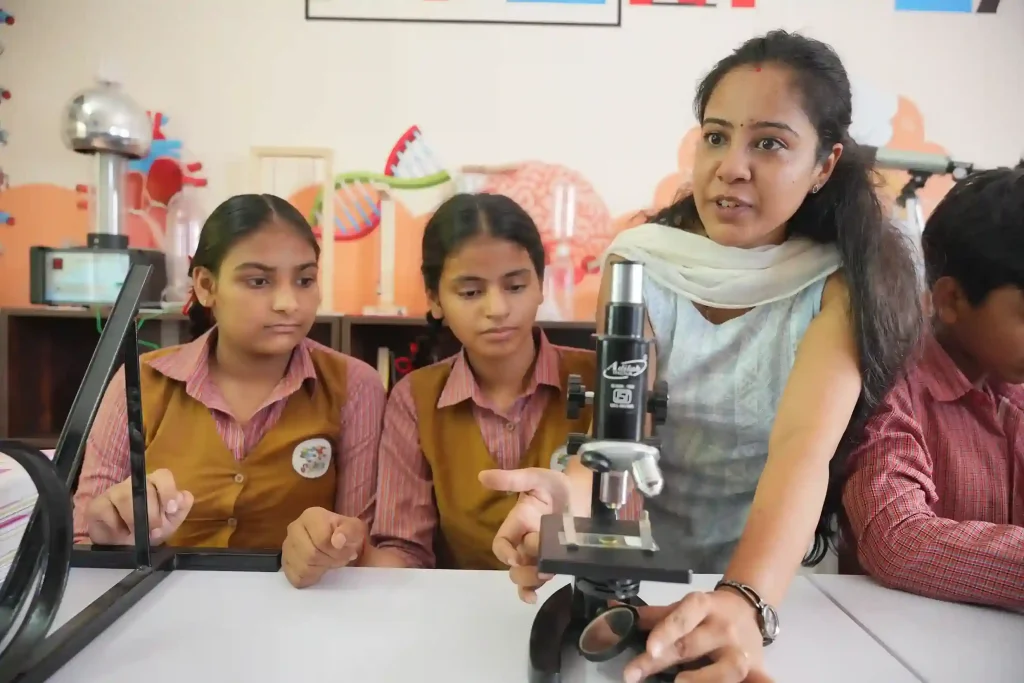
Education is the foundation of durable social change. Government schemes and protection services create vital safety nets, but lasting shifts in life trajectories come when girls complete secondary education and gain practical skills. Completing higher secondary reduces the likelihood of early marriage, early motherhood and vulnerability to exploitation, because it expands options, delays household dependence and strengthens negotiating power.
Educational empowerment must go beyond basic literacy. Effective programmes combine:
- Core schooling and retention strategies;
- Life skills and socio‑emotional learning that build confidence and agency;
- Digital literacy so women can participate safely in online economies and civic life;
- Gender sensitisation for boys and men to reshape norms about care, leadership, and consent.
When girls are taught to claim space and boys are taught empathy and equality, the cultural script that normalises control and abuse begins to change.
Education is only the start: building pathways to equity
Economic and financial inclusion
Education without economic opportunity leaves empowerment incomplete. Financial literacy, access to safe savings, affordable credit and market‑linked livelihoods turn knowledge into autonomy. Programmes that combine skill training with linkages to markets, digital payments and tailored microfinance produce stronger shifts in household decision‑making and mobility than education alone.
Accessible health services
Affordable and accessible health services reinforce families’ ability to keep girls in school and women in work. Social protection reduces immediate economic incentives for child marriage and mitigates risks that push women into exploitative labor.
Social norms and cultural change
Long‑standing gender roles, caregiving burdens and mobility restrictions blunt the returns to both schooling and work. Evidence from community studies shows that increases in education and employment translate into empowerment only when accompanied by normative change: men’s engagement in caregiving, community endorsement of girls’ education, and public messages that contest honor‑based controls.
What effective programmes do differently
- Integrate schooling with life skills, digital training and vocational pathways.
- Couple financial inclusion with market access and mentorship for entrepreneurs.
- Invest in male‑focused gender education and community dialogue to shift household practices.
- Combine legal protections with accessible, survivor‑centred services and local accountability mechanisms.
Education starts the transformation; inclusive finance, social protection and conscious efforts to change norms complete it. Together, these levers reduce vulnerability, expand choice and make equality sustainable.
Swabhiman by Smile Foundation — community‑led health, livelihoods and agency for marginalised women
Smile Foundation launched Swabhiman in 2005 as a women‑and‑girl child empowerment programme. Over two decades it has evolved from safety and awareness activities into a multi‑sector, community‑anchored model that combines reproductive and child health outreach, nutrition awareness, entrepreneurship and livelihoods support, and digital and financial literacy training. Smile Foundation’s public materials report a wide geographic footprint — over 400 active projects across roughly 25 states — and an annual reach of approximately 1.5 million beneficiaries across Smile’s combined programmes, including a substantial share of women and adolescent girls.
Core approaches:
- Community mobilisation and peer models: Swabhiman trains local “change agents” — peer educators, community health volunteers and women leaders — to drive sustained behaviour change and referral linkages to public services.
- Health and nutrition outreach: The programme runs health camps, antenatal/postnatal follow‑ups, immunisation drives and nutrition awareness sessions to strengthen maternal‑child health outcomes at the community level.
- Livelihoods and entrepreneurship: Swabhiman provides vocational training, enterprise development support and market linkages, promoting women‑led micro‑enterprises and self‑help group (SHG) participation. Programme materials cite cohorts of women trained and multiple small enterprises incubated through these interventions.
- Digital and financial inclusion: Digital literacy, mobile money, and basic financial training are embedded to increase women’s access to markets and formal financial services.
- Convergence with public systems and CSR partners: Smile Foundation partners with government bodies, CSR funders and private partners to scale services and strengthen referral systems.
The next morning, Sita wakes again at 4 a.m. The air is cool, the tap water colder. The house is quiet except for the soft hum of the ceiling fan and the ticking of her alarm clock.
But this morning feels different when she’s commuting. A new poster catches her eye — a government campaign on women’s safety with helpline numbers bold and visible. A poster from Smile Foundation’s Swabhiman hangs beside it, announcing a free health camp for women in her area. She remembers hearing about them from her neighbour — women who visited those camps said they learned how to manage nutrition, menstrual hygiene and even small savings.
During the tea break, she notices a few men standing unusually still around a phone. They’re reading how a group of school students exploited AI to produce inappropriate images of their female peers. One of them mutters, “This is terrifying.” Another sighs, “If this feels this awful to read, I can’t imagine how a woman must feel. This isn’t okay”. They head back to their desks, to the same familiar room, but it no longer feels the same. The usual conversations that objectified women taper off. Words are picked more thoughtfully. And when someone cracks an inappropriate joke, it’s met with an immediate stop.
Upon returning home, she lies down, the ceiling fan hums again, steady and familiar. The world hasn’t changed overnight, but it is changing through policies that protect, initiatives that empower and ordinary people who decide that respect and safety are not privileges, but rights.
Tomorrow at 4:00 AM, she’ll wake up again. But now, somewhere between the streetlight and the sunrise, she knows she is part of something larger, a country slowly learning to stand up for its women.
Each of these people become a thread in the larger fabric of change. They remind us that empowerment isn’t just policy or programmes; it’s a daily act of humanity that multiplies.
You can be that person — by speaking up when it’s uncomfortable, showing up when it matters, donating when you can and helping make the world a place where every woman, from the pre-dawn bus stop to the late-night return home, walks without fear and lives with dignity.
Every small act builds into something vast and unstoppable.
Be that quiet revolution.
Be her reason to believe again.
As Mother Teresa said,
“Not all of us can do great things. But we can do small things with great love.”
Be that shift.
Be that voice.
Be the courage others lean on.





One reply on “Her Shift Starts Before the Sun, Hidden in Plain Sight”
The biggest discrimination still in vogue is against the female gender.
Great work being done by your foundation.