How much effort does it take to wash one’s hands? A few seconds under a tap, a swirl of soap, a rinse. And yet, this small act, almost too simple to think twice about, remains one of the most powerful public health interventions ever known. It saves lives invisibly, and far too often, unnoticed.
In homes across the world, parents have long insisted that children wash their hands before meals, after play and upon returning from school. It is a rule so ordinary that it’s often ignored, especially when water is scarce or time is short. But behind that parental admonition lies a profound truth. Handwashing with soap can reduce diarrhoeal diseases by as much as 30%, respiratory infections by 20% and dramatically curb the spread of outbreak-related diseases like cholera, Ebola and even COVID-19.
If the pandemic taught us anything, it was the simple act of washing hands can draw the line between life and death, between containment and catastrophe. Yet, in the years since, as urgency has faded and taps have run dry, old habits of neglect have crept back in.
The Forgotten Frontline
For all its simplicity, handwashing is still a privilege. In 2025, an estimated 3.4 billion people lack safely managed sanitation, while 1.7 billion have no basic hygiene services at home including 611 million without access to any handwashing facilities at all. It is one of the deepest inequities in global health: a gap not of knowledge, but of means.
The irony is inescapable. We have learned to edit genes, design AI models to predict disease patterns, and launch billion-dollar vaccine programs. Yet, a third of humanity cannot routinely do what a toddler learns at home: wash their hands.
World Hand Hygiene Day, observed each year on 5 May, tries to refocus attention on this fundamental act. But attention is fickle. Between global crises and shifting political priorities, the conversation on hygiene rarely holds the floor for long. The consequences are millions of preventable infections, chronic absenteeism from schools, lost productivity and the perpetuation of poverty through ill health.
The Science in the Soap
There is no rocket science behind the act. Washing hands with plain soap and water for 20 seconds removes the microscopic pathogens that hitchhike on our skin. The scrubbing action breaks down oils that trap germs, allowing water to carry them away. It is not glamorous, but it is effective — a simple mechanical intervention that, repeated enough, builds population-level resilience.
But beyond its medical utility, handwashing represents something more intimate: dignity. The ability to wash one’s hands before eating, after caring for a sick relative or before feeding a child is part of what it means to live safely and self-respectfully. It is a bridge between personal well-being and public health.
Where Soap meets Scarcity
For millions, however, handwashing is not a habit but a hardship. In many parts of India, fetching water is still a daily struggle. Taps in schools and Anganwadis run dry or the soap is missing from a cracked plastic dish. In such places, hygiene becomes a conditional luxury practiced only when possible, rather than when needed.
Behavioural barriers compound the problem. Many assume that rinsing with water alone suffices, or that “clean-looking” hands are safe. Old customs persist like eating with fingers, serving food communally or washing at shared tanks where soap dissolves quickly.
“People know the message, but not always the meaning,” says a public health worker from Bihar. “They’ve heard about handwashing campaigns for years. But when the nearest water source is a kilometre away, what do you think matters more — cooking, cleaning or washing hands?”
It is a dilemma repeated across low- and middle-income countries, where water scarcity collides with habit and hardship. The result is predictable: even where awareness exists, behaviour change lags far behind.
Teaching Hygiene, One Child at a Time
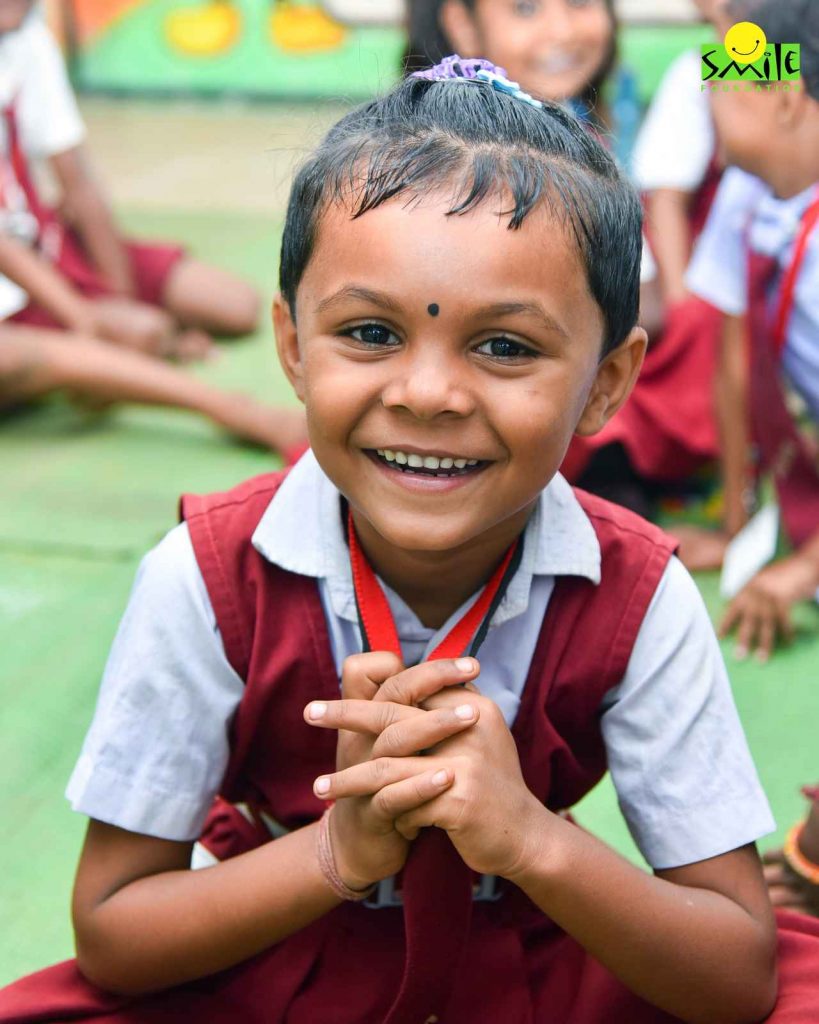
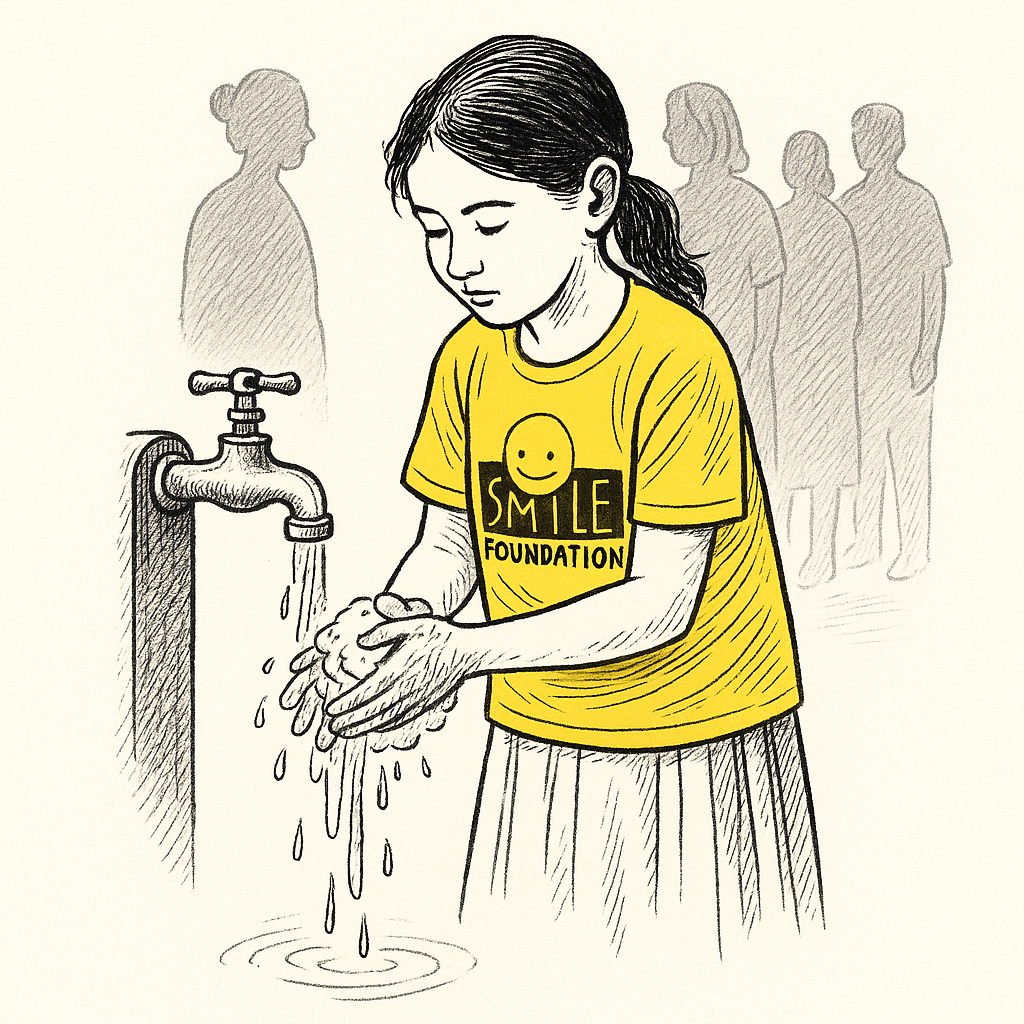
In India, Smile Foundation’s Smile on Wheels programme takes hygiene education directly to rural and peri-urban communities that lack healthcare access. Mobile health units visit remote villages, offering basic care and live demonstrations on the correct way to wash hands. Mothers, schoolchildren and community health workers gather around to learn — not just when to wash, but why.
These moments are deceptively simple: a bowl of clean water, a bar of soap, a lesson in protection. But the impact accumulates. “When a child goes home and tells their parents what they learned, that’s where change begins,” says a Smile Foundation educator from Rajasthan.
Elsewhere, the Saamuhika Shakti initiative in Bengaluru, led by Sparsha Trust and WaterAid, reached hundreds of children in vulnerable settlements during Global Handwashing Day 2024. By bringing playful demonstrations to street corners and community halls, they transformed hygiene into a collective act of empowerment.
Across borders, similar stories echo. In refugee camps in Bangladesh, the Red Crescent Society has made handwashing a cornerstone of outbreak prevention. In each case, small habit, multiplied across thousands, becomes a shield against disease.
Behaviour is Policy
For decades, global health efforts have wrestled with the challenge of turning hygiene awareness into habit. It is not merely a question of building taps or distributing soap, but of understanding behaviour. Why do people wash or not wash their hands? When do they feel it matters? Who do they trust enough to model the behaviour?
Behavioural economists have long argued that public health succeeds when it meets people where they are — culturally, socially and practically. That means designing interventions that account for time, convenience and cultural perception, rather than assuming rational compliance.
In that sense, handwashing is as much a social policy issue as a technical one. It sits at the intersection of education, gender, infrastructure and governance. When a child learns to wash hands in school, it is because a teacher reminded them and because the school had running water. When a healthcare worker disinfects hands between patients, it reflects not just training, but institutional discipline.
Making hygiene a social norm requires reinforcement from every direction: teachers, health systems, local leaders and media. It requires steady policy and persistent storytelling.
When AI meets Soap
Curiously, technology may now be finding its way into this most human of acts. Artificial intelligence is being used to predict antimicrobial susceptibility, identify infection patterns and even model where hygiene breakdowns might lead to outbreaks. It is not a replacement for washing hands — rather, it underlines how fragile our defences are when we don’t.
As global antimicrobial resistance (AMR) grows, prevention becomes our best protection. Every unwashed hand that spreads infection adds to the burden of antibiotics, accelerating resistance. A bar of soap, in this light, is as vital to global health security as a vial of medicine.
The Cost of Neglect
Neglecting hygiene is costly. According to the World Bank, poor sanitation costs some countries up to 5% of GDP annually in lost productivity and healthcare expenses. For women and girls, the burden is particularly acute. Inadequate hygiene facilities in schools lead to absenteeism during menstruation, while the lack of private washing spaces affects dignity and safety.
In hospitals, the stakes rise even higher. Healthcare-associated infections claim millions of lives every year — infections often preventable through proper hand hygiene. When doctors and nurses skip a wash between patients, they inadvertently become conduits of disease.
It is here that institutional culture matters most. Hospitals and schools must not only provide facilities but also model consistency. The difference between a clean ward and a contaminated one can hinge on compliance with something as ordinary as handwashing.
Building a Habit, not a Headline
Public health has a short attention span. The global enthusiasm for hygiene that surged during COVID-19 has largely ebbed away. Hand sanitizer dispensers stand empty in office lobbies; soap campaigns have lost airtime. Yet, the threat of disease remains constant.
Making handwashing a social norm requires patience. It cannot depend on emergencies or one-off observances like Global Handwashing Day. Instead, it must be embedded in routine taught in schools, reinforced in workplaces and normalised in homes.
Governments can lead the way through investment in WASH (Water, Sanitation and Hygiene) infrastructure. Every household, school and clinic needs reliable water and affordable soap. But infrastructure alone is not enough. Behavioural change programs, designed with community participation, can make the difference between access and adoption.
Collaboration between public and private sectors can spur innovation — from low-cost, water-efficient handwashing stations to creative campaigns that make hygiene aspirational rather than obligatory.
The Politics of Clean Hands
Washing hands may seem apolitical, but it is entwined with politics in the most basic sense: who gets water, who has soap, who is taught to use it. In villages where women queue for hours at a hand pump, hygiene competes with survival. In urban slums, overcrowded conditions make shared washing facilities risky or unusable.
When governments underinvest in public health, it is the poorest who pay — often with preventable illnesses. Conversely, where sanitation and hygiene are prioritized, the benefits ripple outward: healthier children, stronger economies and more resilient communities.
In that light, washing hands is not just a personal act of care. It is a collective statement of equity.
Each One, Teach One
Real change often starts with the smallest gesture. In communities where public health workers use the “Each One Teach One” approach — encouraging everyone to teach one other person the importance of handwashing — adoption rates have climbed significantly. A mother teaches her child, the child teaches a classmate and suddenly a village learns together.
We often think of progress in terms of breakthroughs — a new vaccine, a medical discovery, a technological leap. But sometimes, progress looks like a bar of soap next to a running tap. It looks like a child reminding their family to wash before dinner.
If there is a lesson in the simple act of washing hands, it is that public health begins not with complexity, but with care. And in a world constantly chasing innovation, perhaps what we need most is to remember what our mothers told us long ago — wash your hands.