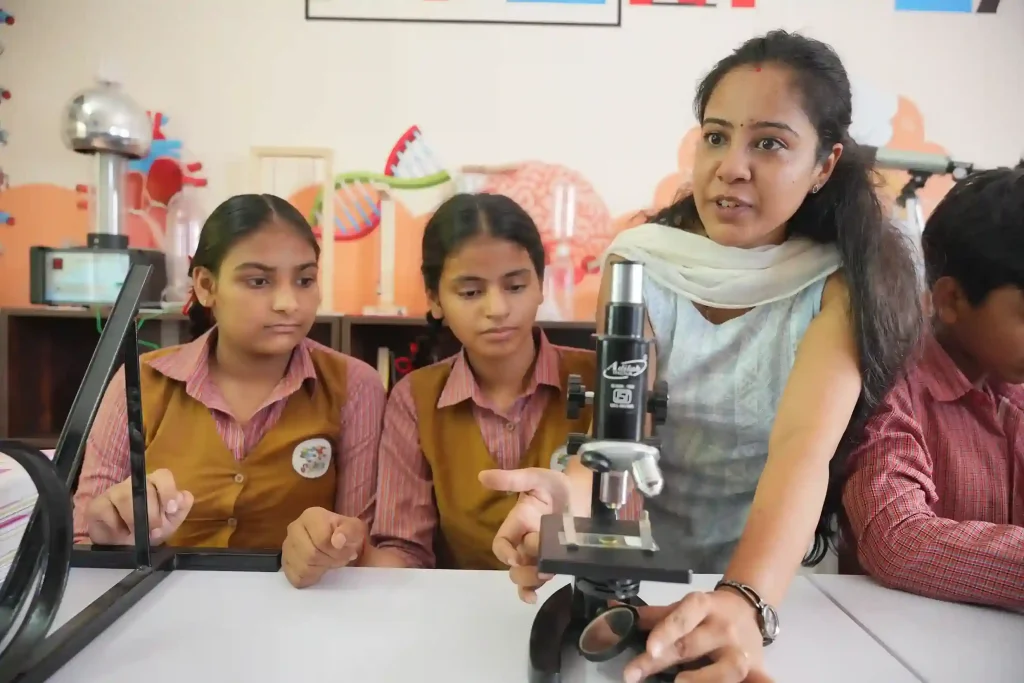

In a small government secondary school on the outskirts of Barabanki, Uttar Pradesh, a gleaming plaque outside a locked room reads “Science Laboratory – Gifted under CSR Support.” The lock has gathered dust. Inside, through the mesh window, one can see microscopes still wrapped in plastic, a rack of test tubes untouched and a gas burner that has never been connected. The headmaster says the school received the equipment two years ago, but the lab never became operational. “We have no trained lab assistant. The science teacher teaches three grades alone,” he says with a half-smile. “And there’s no gas connection.”
This image of a science lab that exists, yet does not, is a striking metaphor for India’s uneasy relationship with scientific education. On paper, every secondary school in the country is supposed to have a functioning laboratory. In reality, according to the Unified District Information System for Education Plus (UDISE+ 2024–245) data shows only 57.1% integrated science lab availability in Indian schools with secondary sections. India must accelerate to bridge the gap by 2030. Of those, many remain underutilised or entirely non-functional due to lack of maintenance, power supply or trained personnel.
The Mirage of Access
The past decade has seen an expansion in physical infrastructure across India’s education system. Classrooms have been built, electricity connections provided and computers distributed. Yet, the quality and functionality of these facilities remain patchy. In science education, this gap is especially visible.
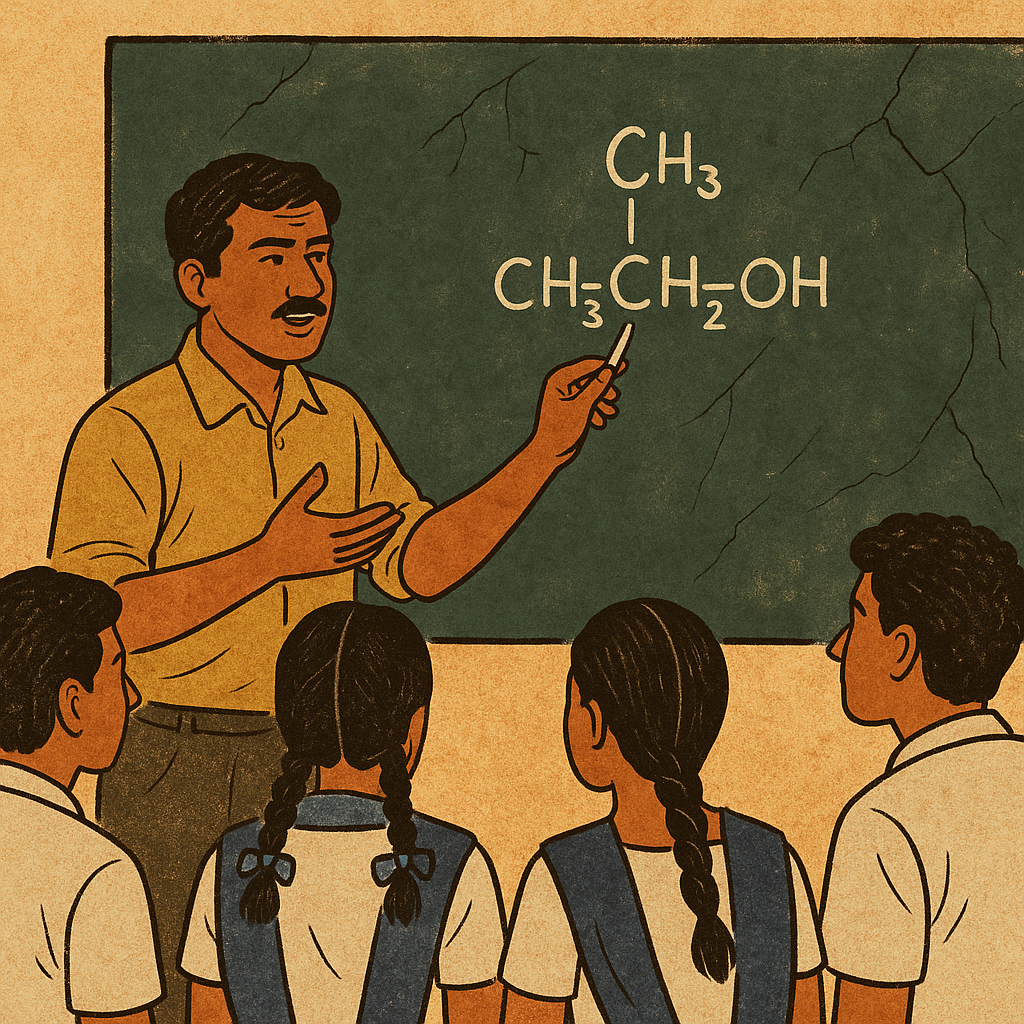
A recent ASER (Annual Status of Education Report) survey found that over 70% of students in Classes 9 and 10 had never performed even a single hands-on science experiment in school. What students experience as “science” is often reduced to textbook definitions and rote memorisation — the periodic table copied by hand, the laws of motion explained through chalk diagrams, the human heart drawn on a blackboard.
It is not that schools lack awareness of the need for practical science learning. Many have rooms designated as laboratories. What they lack is the functional ecosystem of steady funding, skilled teachers, consumables, and accountability that allows those labs to operate meaningfully.
Infrastructure Without Systems
The problem begins with how infrastructure projects are conceived. Under schemes like RMSA (Rashtriya Madhyamik Shiksha Abhiyan), funds were allocated for constructing science laboratories in government schools. But once the physical space was built and equipment purchased, there was no consistent provision for upkeep or consumables.
A microscope can last years, but chemicals, slides and wires degrade quickly in India’s humid climate. Without recurring maintenance budgets, labs quickly fall into disrepair.
Another invisible gap lies in staffing. Most government secondary schools have only one science teacher for all upper grades. The norm of having a dedicated laboratory assistant, as envisaged by NCERT’s Lab Manual Guidelines, is rarely met outside Kendriya or Navodaya Vidyalayas. Teachers must unlock the lab, prepare the experiment, supervise the class, clean up and then rush back to teach the next period.
This burden has led to what many educators call “symbolic science” — schools tick boxes to show compliance, but no meaningful experimentation takes place.
When Labs Become Locked Rooms
In rural schools, power supply and safety are constant concerns. Many labs cannot run equipment for lack of electricity or proper ventilation. Others are kept locked for fear of misuse or accidents. In several states, school principals confessed to keeping laboratories closed during inspections to “avoid damage.”
The irony is painful. Facilities meant to ignite curiosity are locked away in the name of protection. Students learn that science is something too fragile, too expensive or too dangerous for them to touch. This invisibly reinforces inequity between elite schools where lab work is routine and public schools, where science is mostly theoretical.
Digital Labs and the New Divide
The pandemic shifted attention toward digital learning. The push for “virtual labs” and online science content promised to fill gaps in physical infrastructure. The Ministry of Education’s Virtual Labs platform, developed by IITs and Amrita University, now offers over 200 simulations for Class 9–12 students. While innovative, these solutions require reliable internet access and trained teachers.
In practice, most rural and low-income schools still lack that digital readiness. Less than 30% of government secondary schools have functional computer labs, according to UDISE+. Many computers remain packed or outdated. As a result, the digital turn risks deepening inequalities instead of reducing them.
The Question of Teacher Preparation
A lab is not just a room full of equipment. It is a pedagogy in motion — an approach that requires confidence, curiosity and time. Unfortunately, teacher preparation programmes in India devote minimal hours to laboratory management or inquiry-based learning.
Pre-service teacher education remains largely theory-driven. In-service training sessions, often one-day workshops, cannot equip teachers with practical confidence.
Without institutional support, even the most dedicated teachers become deskilled. Science teaching turns into textbook recitation.
The CSR Paradox
Corporate Social Responsibility (CSR) programmes have stepped in to fill some gaps. From setting up digital labs to funding STEM equipment, several companies and foundations have invested in science infrastructure. Yet, many of these projects face the same challenge as government schemes — sustainability.
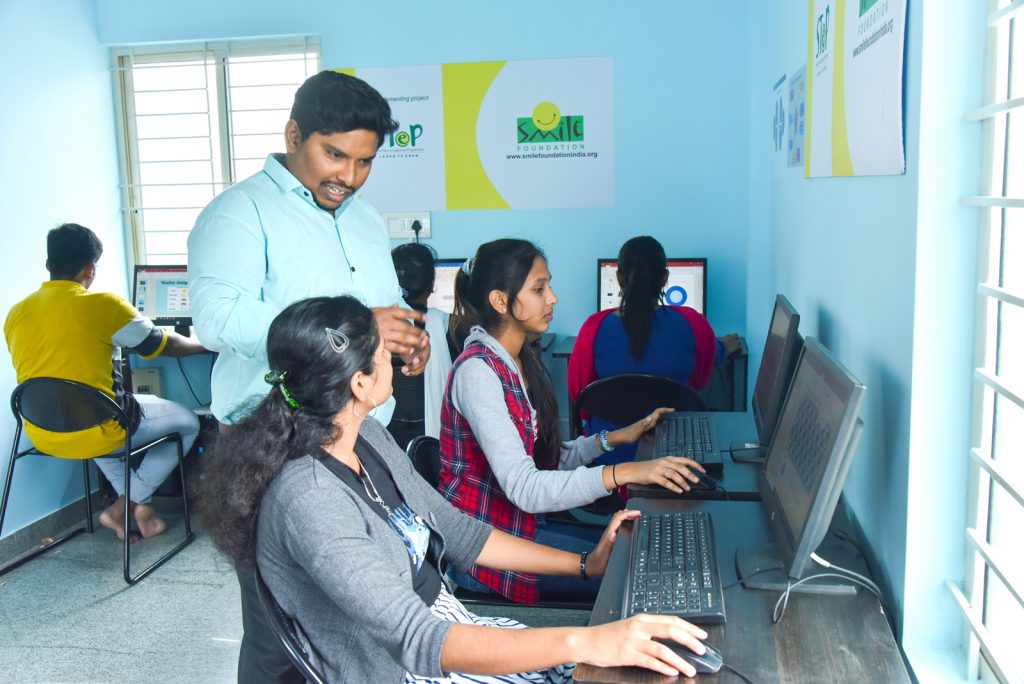
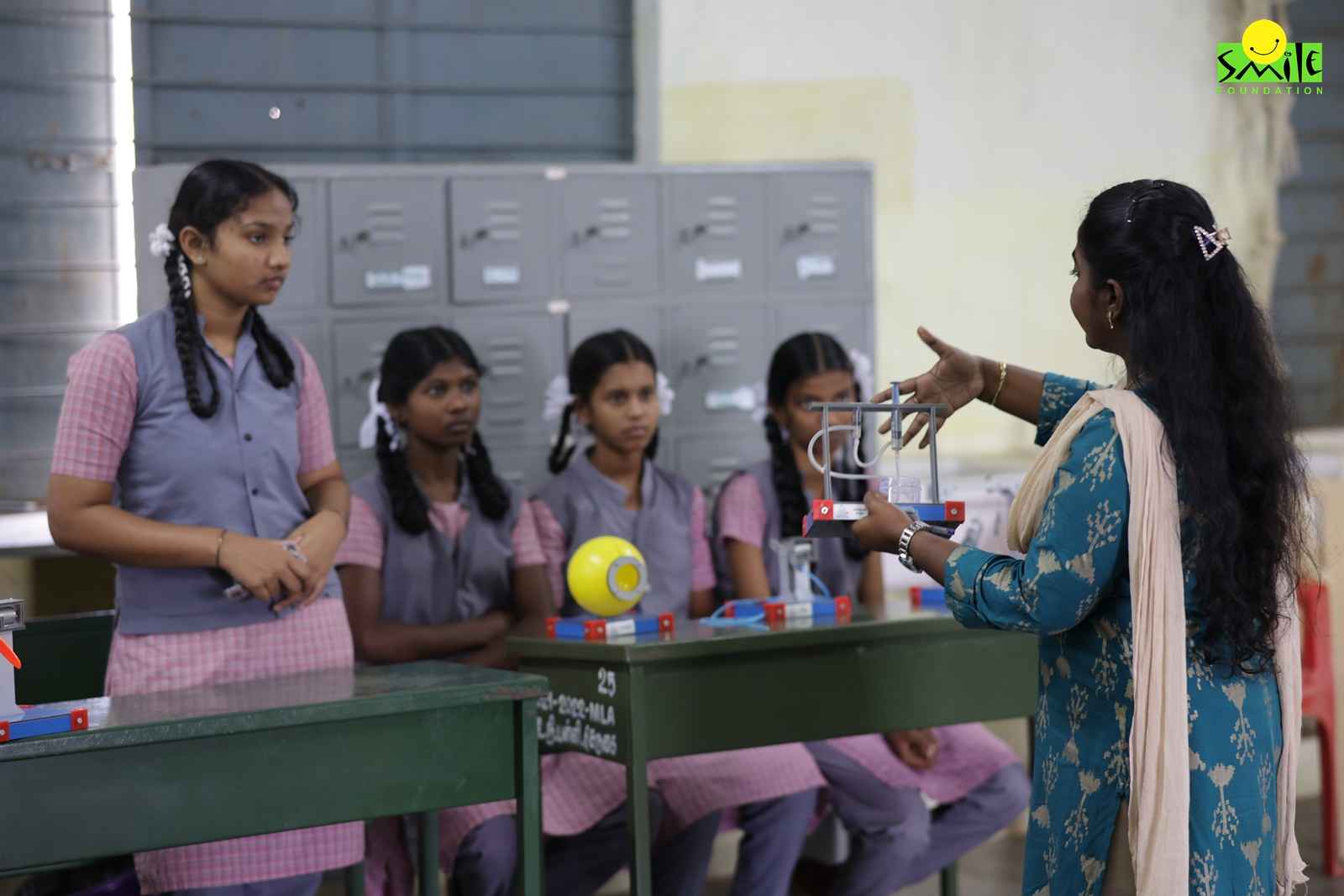
Smile Foundation’s education initiatives offer a revealing counterexample. Rather than focusing only on equipment, Smile integrates teacher training, curriculum alignment and maintenance into its science and digital learning interventions. In its AI-enabled and solar-powered digital classrooms, students not only use devices but learn how technology connects with real-world problem solving.
This model works because it treats the lab not as a product but as a process. The emphasis is on capacity-building and contextual learning, ensuring that technology enhances curiosity rather than replaces it.
Too many CSR interventions, however, stop at delivery. Donated kits gather dust once the partner NGO leaves. Without a long-term relationship between donors, schools and local authorities, even the most sophisticated infrastructure fails to deliver educational outcomes.
The Policy Blind Spot
India’s National Education Policy (NEP) 2020 places strong emphasis on experiential learning and multidisciplinary education. It envisions every child developing “scientific temper” through experimentation and observation. Yet, the policy remains silent on the operational realities of science infrastructure.
While it promotes coding and tinkering labs under the Atal Innovation Mission, the policy does not address the systemic maintenance crisis of traditional laboratories. The assumption seems to be that digital and innovation labs will leapfrog old constraints. But without fixing foundational issues like regular funding, accountability and teacher support, we risk repeating the same mistakes in new forms.
Rethinking the Idea of a Lab
Perhaps the most important shift needed is conceptual. The science lab should not be seen merely as a physical room, but as a pedagogical mindset. Experiments can begin in classrooms, school gardens or community spaces. Many successful low-cost innovations — from using kitchen materials to simulate chemical reactions to turning mobile phones into microscopes — show that inquiry-based learning does not require expensive setups.
However, these innovations must be scaled through teacher networks, not left to individual ingenuity. When teachers see experimentation as integral to teaching, not an extra burden, the lab can truly open — in spirit, even before in space.
Opening the Lab Again
The story of the unopened lab is not a story of failure. It is a story about priorities. We have built walls before building systems. We have measured success in square feet rather than student engagement.
To change this, India needs a three-pronged approach:
- Dedicated funding for maintenance and consumables in science labs, integrated into annual school budgets rather than one-time grants.
- Training and hiring of laboratory assistants to support teachers, especially in multi-grade rural schools.
- Embedding practical science in teacher education, with continuous mentoring rather than episodic workshops.
Complementing this, partnerships between government, NGOs and private sector must move from donation to co-creation — designing labs that are accessible, safe and alive with use.
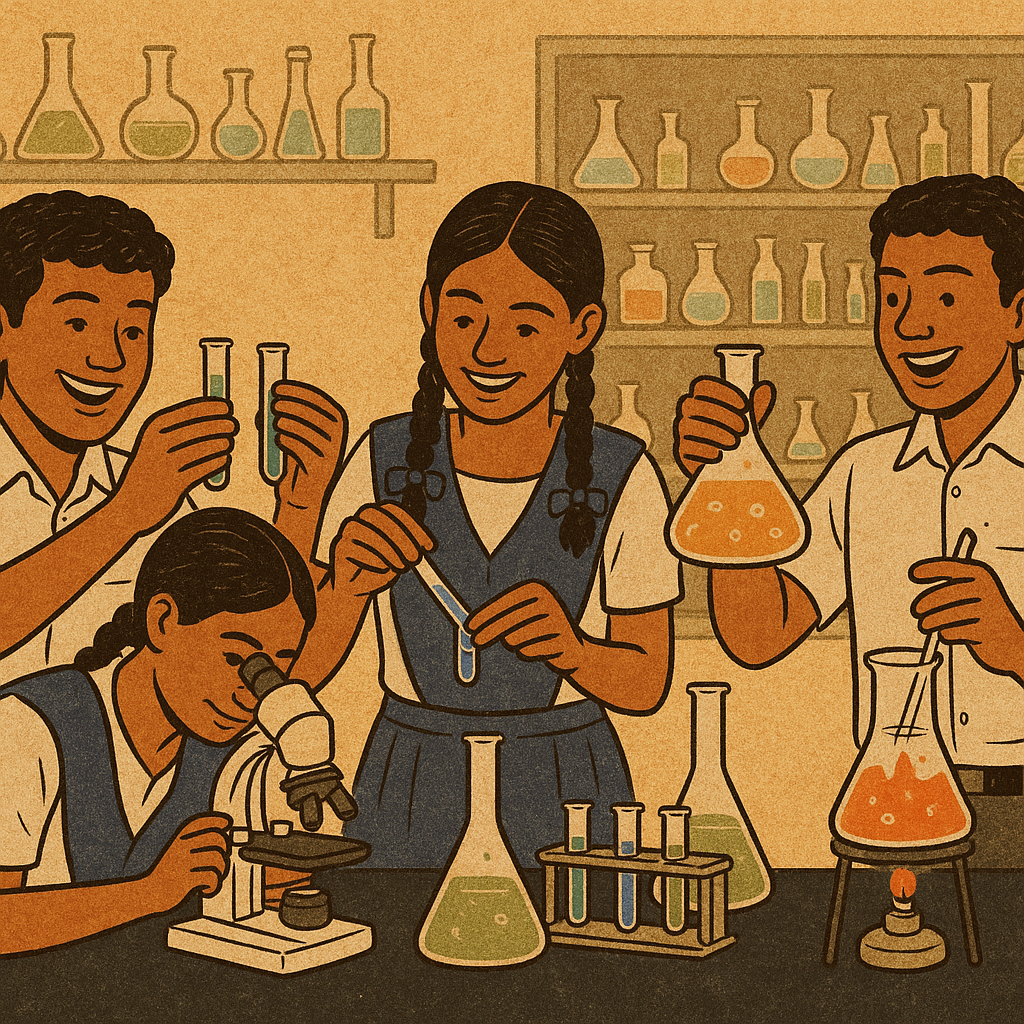
The unopened lab in Barabanki, then, is not a lost cause. It is a reminder of what education could be if policy met practice. When students finally hold those microscopes, when they watch a reaction happen before their eyes, the abstract world of science turns tangible. Curiosity becomes confidence.
India’s challenge is not that it lacks science labs. It is that too many remain locked. Opening them requires imagination, trust and investment in the people who make science come alive.