October 11 marks International Day of the Girl Child, a moment for the world to pause—not just to celebrate girls, but to reflect on the obstacles they still face and recommit to dismantling them. Since the day was established by the UN in 2012, the global conversation around girls’ rights has grown louder and sharper. Yet too many girls remain invisible in policy, education, health and opportunity.
In India, where half the population is female, the journey toward gender equity is urgent—and uneven. This year’s Girl Child Day offers a chance to look at facts, tell stories and point toward impact. Below is a narrative with data, insight and hope—with a look at how Smile Foundation is walking the talk for girls.
Global Snapshot: Why Girls Are Still Held Back
To begin with, the numbers tell a story we must not ignore:
- Around 133 million girls worldwide are out of school. The dropout rate among adolescent girls (15–19) is higher than for boys. (United Nations)
- UNESCO estimates that 122 million girls are still denied schooling globally. (UNESCO)
- From UNICEF: girls aged 15–19 are twice as likely as boys to be out of education, employment or training. (UNICEF)
- Violence shadows many girls’ lives: WHO reports that nearly 1 in 4 adolescent girls who have ever been in a relationship experience physical or sexual violence. (World Health Organization)
- Under-nutrition among girls is stubbornly persistent: The prevalence of underweight adolescent girls has only slightly improved over decades. (United Nations)
These statistics are roadblocks that many girls confront daily.
India’s Landscape: Progress, Gaps and Contradictions
India’s story is one of both promise and persistent challenges.
- Child marriage, once rampant, has seen some decline. According to older UN commentary, India’s percentage of girls married before 18 fell from 47% to 27% over a decade.
- Still, adolescent pregnancy remains a threat, especially in parts of India. For example, in Karnataka, over 25,000 teenage pregnancies were recorded in one 11-month period.
- Health outcomes also reflect gender bias. A Lancet Global Health study estimated that about 230,000 girls under five die prematurely every year in India due to neglect and gender discrimination. (
- In education, while India has made solid gains, many girls still drop out in secondary school or never access STEM opportunities.
So despite policies and schemes, structural inequities remain. The question is: Can more targeted, community-anchored interventions deliver at scale?
What It Takes to Empower the Girl Child
Empowering girls is not a single intervention—it is a mosaic of strategies that must be woven together:
- Access to education & retention: Schools must be safe, welcoming, and relevant. Sanitary facilities, girl-friendly curricula, scholarships and mentorship programmes all matter.
- Health, nutrition, and reproductive rights: Without physical well-being, learning suffers. Anaemia, adolescent pregnancy, menstrual health — these are not side issues, but foundational.
- Protection & legal rights: Girls must be safe from violence, trafficking, and child marriage. Legal awareness and enforcement must align with community attitudes.
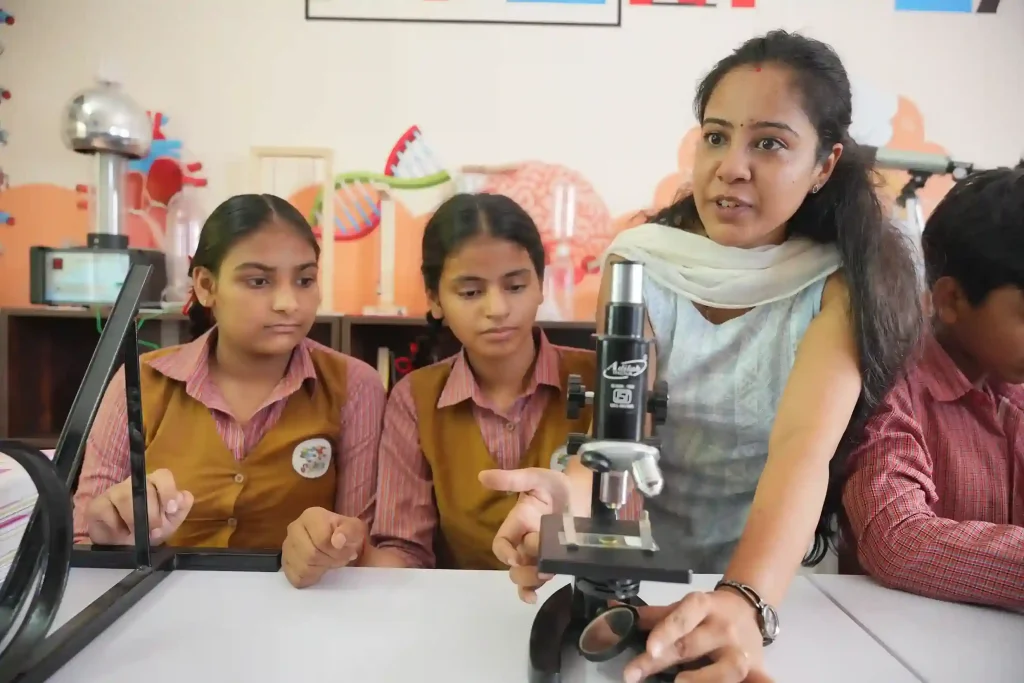
- Skills, digital inclusion & agency: In a digital world, access to devices, connectivity, coding, STEM skills are not optional—they are lifelines. Girls must lead, not be left behind.
- Community norms & male engagement: Girls don’t live in isolation. Families, communities, religious and local leaders must shift norms. Engaging boys and men is essential.
Smile Foundation & the Girl Child: From Vision to Action
Smile Foundation has long embraced a life-cycle approach: investing in children, youth, families and communities so that advancement is sustained across generations.
Here’s how Smile is working for girls in concrete ways:
a. Mission Education & Holistic Support
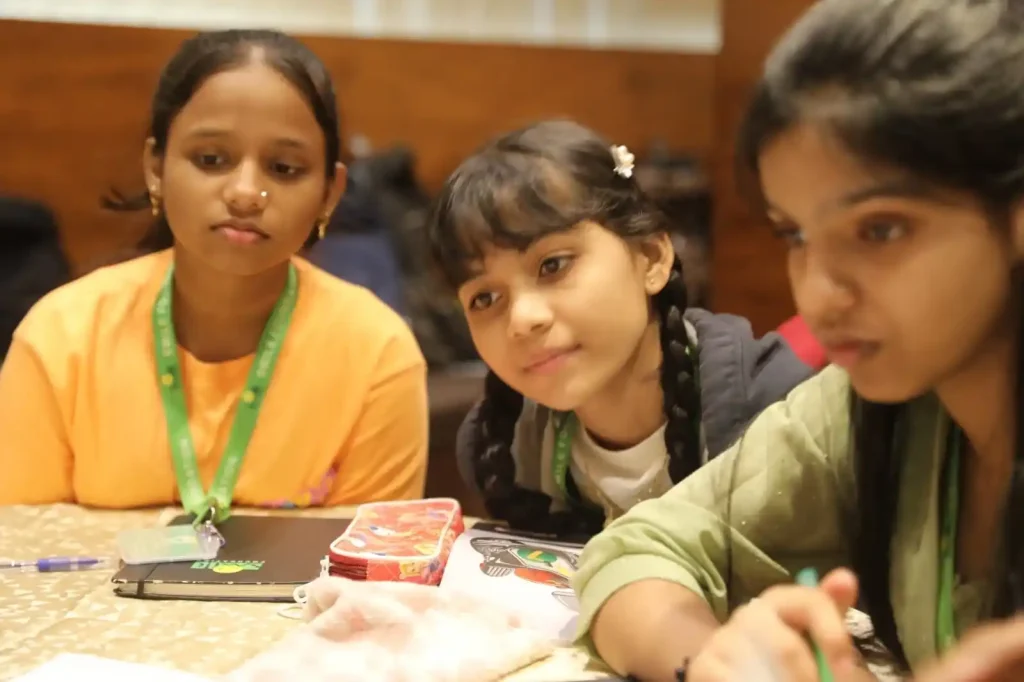
Through Mission Education, Smile supports children aged 3 to 18 in underserved settings—tribal belts, conflict zones, remote villages—providing education, health, nutrition and wellness support.
In Delhi slums, for example, the model integrates health check-ups, nutritional supplements and counselling with school activities, giving girls a safety net they might otherwise lack.
b. Child For Child — Peer Awareness & Sensitisation
Gentle yet powerful: Smile’s Child For Child programme takes youth into schools to sensitise students on rights, gender and equality.
When girls hear these messages from peers, the impact is amplified. It helps change perceptions from within.
c. Swabhiman — Women & Girls’ Empowerment
Although Swabhiman is a women’s empowerment programme, its ripple effects reach adolescent girls too. It focuses on nutrition, health capacity building, livelihood support for marginalized women.
By enhancing mothers’ agency, it indirectly reshapes girls’ possibilities—raising aspirations, role models and support.
d. Education & Gender Focus in All Interventions
Smile’s core programmes do not treat girls as an “add-on.” Gender sensitivity is embedded: ensuring equal access, scholarship support, sanitary infrastructure, mentorship and career exposure.
Through its network of 158 projects across 25 states, Smile connects with over 400,000 children, youth and women each year.
Challenges & The Road Ahead
No amount of good intent can substitute for sustained commitment. Some of the hurdles:
- Scale & quality: Reaching millions of girls with depth—good teachers, safety, continuity—remains tough.
- Data gaps: Disaggregated tracking by gender, region, caste is weak. We often don’t know how many girls drop off, where and why.
- Norms & resistance: In many places, investments in girl children are viewed skeptically; backlash or inertia slows progress.
- Transition support: Going beyond school matters. Girls need skills, digital access, job linkages, safe transport.
- Sustainability & funding: Many programmes run on project cycles; continuity is fragile.
Yet for every challenge, there is innovation: mobile health vans, digital mentors, community-based savings, mentoring networks, “safe spaces” in schools, etc.
This Year’s Call: “Girls’ Vision for the Future”
UNESCO’s theme for International Day of the Girl in 2024 is “Girls’ vision for the future.” (UNESCO)
It is a demand for policy that listens to girls, budgeting that invests in them, technology that includes them and leadership that is gender-balanced.
India must pivot from “for girls” to “by girls”: creating platforms where girls lead narratives, design solutions and hold systems accountable.
How Every Stakeholder Can Rise
- Government: strengthen girl-friendly budgets, enforce child protection laws, expand adolescent health, digital access, safe transport.
- Schools & educators: integrate life-skills, girls’ health, mentorship, internships in school systems.
- Community & parents: challenge gender norms, support girls’ aspirations, incentivise education.
- Civil society & NGOs: complement state systems, innovate locally, scale what works.
- Private & tech sector: invest in digital inclusion for girls—connectivity, devices, training, safe online spaces.
Measuring Impact: What Should We Watch
We need robust indicators:
- Enrolment, retention and completion rates by gender, across grades.
- Dropout causes (especially in middle and secondary school).
- Health indicators: anaemia, adolescent pregnancy, menstruation outcomes.
- Digital access: device ownership, connectivity, girls’ use.
- Transition outcomes: girls entering vocational courses, urban migration, employment.
- Perception & safety: reports of violence, safety in school, mobility.
- Leadership and voice: fraction of girls in student bodies, community forums, mentoring roles.
When data is disaggregated, interventions can course-correct.
Why This Day Must Be More Than a Token
International Girl Child Day is a lens—a moment to look across society and ask: are we enabling or constraining girls’ futures?
For Smile Foundation, the mission is clear: to turn opportunity into equity, dreams into trajectories. Each girl educated, each community sensitised, each programme refined is a step toward a society where gender no longer predetermines destiny.
In the words of the day itself: “Girls’ vision for the future.” Let us make space, resources, power and protection so that vision is not deferred, not silent—and not compromised.