
In South Asia, a woman’s life is shaped not by one, but by a series of overlapping systems — social, economic and cultural — that influence her ability to live safely, stay healthy and earn a livelihood. These aren’t separate strands. They form a web. Health determines whether she can work. Safety dictates whether she can step outside. Economic independence influences how much control she has over her own body and choices.
Despite years of social progress and policy reform, the region continues to struggle with gender inequality that is structural, persistent and deeply entrenched.
Health: A Foundational Barrier to Participation
Women’s health remains one of the most powerful — and often overlooked — determinants of economic and social empowerment. The evidence is stark. A WHO report released during the Nourishing South Asia conference in July 2025 found that nearly 50% of women and adolescent girls in the region suffer from anaemia, making South Asia the world’s anaemia hotspot. Without coordinated action, that number could rise by another 18 million by 2030, adding to the 259 million women already affected.
Anaemia is not just a medical condition. It is a silent saboteur of progress. Fatigue, reduced concentration and decreased stamina limit women’s ability to study, work or even perform basic household tasks. For millions, it translates into a lifetime of unrealised potential — a physiological barrier that quietly dictates who gets to thrive.
Maternal health tells a similar story. While India has made significant strides in expanding antenatal care and institutional deliveries, access to quality care remains unequal, heavily correlated with women’s education, household wealth and mobility. Inadequate maternal health services don’t just endanger mothers — they also have cascading effects on children’s well-being, family stability and the economy at large.
The persistence of preventable conditions such as anaemia and maternal complications reveals that without prioritising women’s health, the promise of gender equality remains hollow.
Safety: The Unspoken Limitation
Health determines whether women can live fully; safety determines whether they can live freely.
In India, one in three women continues to face intimate partner violence (IPV), according to NFHS-5 data. But the numbers barely scratch the surface. Economic abuse — a quieter, often invisible form of violence — continues to strip women of financial autonomy and the ability to make decisions about their own lives.
A 2021 study revealed that women were frequently denied control over income, access to property or even basic financial tools like bank accounts — often by intimate partners or family members. The pattern is consistent across South Asia. Laws exist, but enforcement remains weak and patriarchal norms normalise control and silence.
What is often framed as a matter of “domestic” safety is, in fact, a structural issue of power. When a woman’s mobility, earnings and bodily autonomy depend on others’ permission, safety ceases to be a private concern. It becomes a societal failure.
Research has shown that women with greater financial inclusion and decision-making power are significantly less likely to face violence. But the systems meant to ensure these rights — from legal protections to community interventions — often remain disconnected, fragmented or chronically underfunded.
The Missing Women in the Workforce
Even as education levels among women rise, India’s female labour force participation has been falling for over a decade, dipping below 25% in many states. The reasons are complex — inadequate job opportunities, the burden of unpaid care, safety concerns during commuting and a persistent bias that continues to view women’s work as secondary.
Education, while essential, is not enough if the ecosystem around it does not support women’s participation. Girls from rural or minority communities face barriers in accessing both formal education and vocational training. Even when they complete school, they often find themselves without viable job opportunities that are flexible, local and safe.
Workplaces, too, remain inadequately equipped to address women’s safety and health needs. Lack of childcare, unsafe transport and workplace harassment discourage women from entering or staying in the workforce. The result is that more women are educated than ever before, but fewer are earning.
Studies have shown that women’s economic autonomy reduces the likelihood of domestic violence, improves reproductive health outcomes and increases household investment in children’s education. Economic opportunity, then, becomes a vehicle for safety, dignity and intergenerational change.
Interconnected Challenges, Integrated Solutions
The relationship between health, safety and economic opportunity isn’t linear — it is circular, each influencing and reinforcing the other. Poor health limits earning potential; lack of income constrains access to healthcare; insecurity reduces women’s ability to travel, work or seek medical help.
This cycle cannot be broken by addressing one issue at a time. The need of the hour is a multi-sectoral approach — one that recognises the intersection of these challenges and responds with integrated interventions.
For instance, maternal health programmes could incorporate domestic violence screening and provide safe referral systems. Financial inclusion initiatives could educate women about their legal rights and protection mechanisms. Job creation programmes could include guarantees of safe transportation and workplace equity.
Equally vital is changing the narrative through community-level engagement and education — shifting gender norms, involving men in behaviour change campaigns and creating environments where women’s choices are respected, not restricted.
A Model for Holistic Empowerment
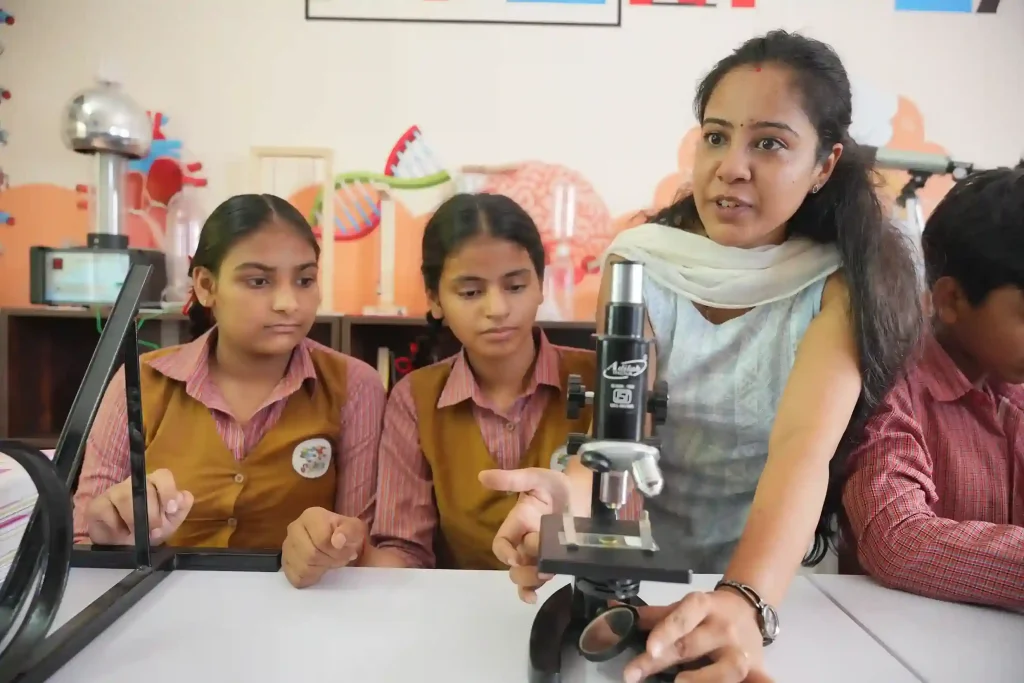
A powerful example of this integrated approach is Smile Foundation’s She Can Fly initiative. The programme addresses multiple barriers simultaneously — education, healthcare and vocational training — to empower adolescent girls across India.
By combining classroom learning with health awareness and skill-building, She Can Fly doesn’t just prepare girls for jobs; it prepares them for agency. It provides mentorship, counselling and life skills that enable girls to navigate social and economic systems with confidence.
This multi-dimensional approach recognises what decades of development policy have sometimes missed. Empowerment is not an outcome of isolated interventions but of interlinked ones. A healthy woman is more likely to seek education; an educated woman is more likely to earn; and an economically independent woman is more likely to live safely.
The Road Ahead
The path to gender equity in South Asia lies in cohesive, intersectional policymaking. Governments must invest in public health systems that prioritise women’s nutrition and reproductive health. Laws protecting women from violence must be accompanied by stronger enforcement and social support structures. And economic empowerment must be seen not as an endpoint but as the foundation for sustainable gender equality.
When we address these three dimensions together — health, safety and opportunity — we build not just systems that work for women but societies that work for everyone.
Because a woman who is safe can participate.
A woman who is healthy can aspire.
And a woman who earns — changes the world.