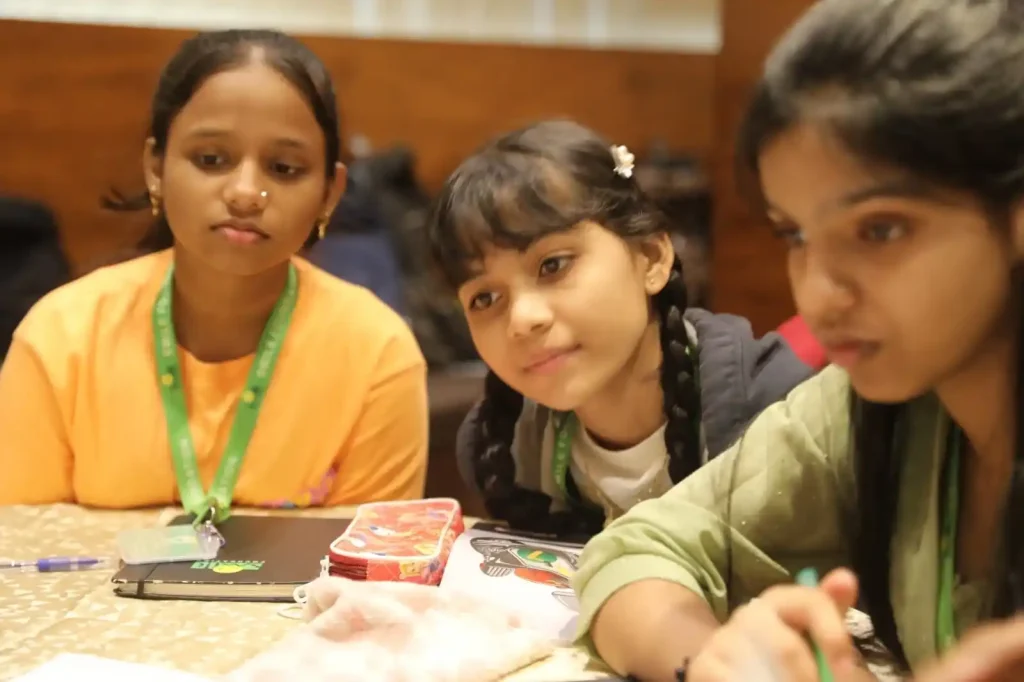
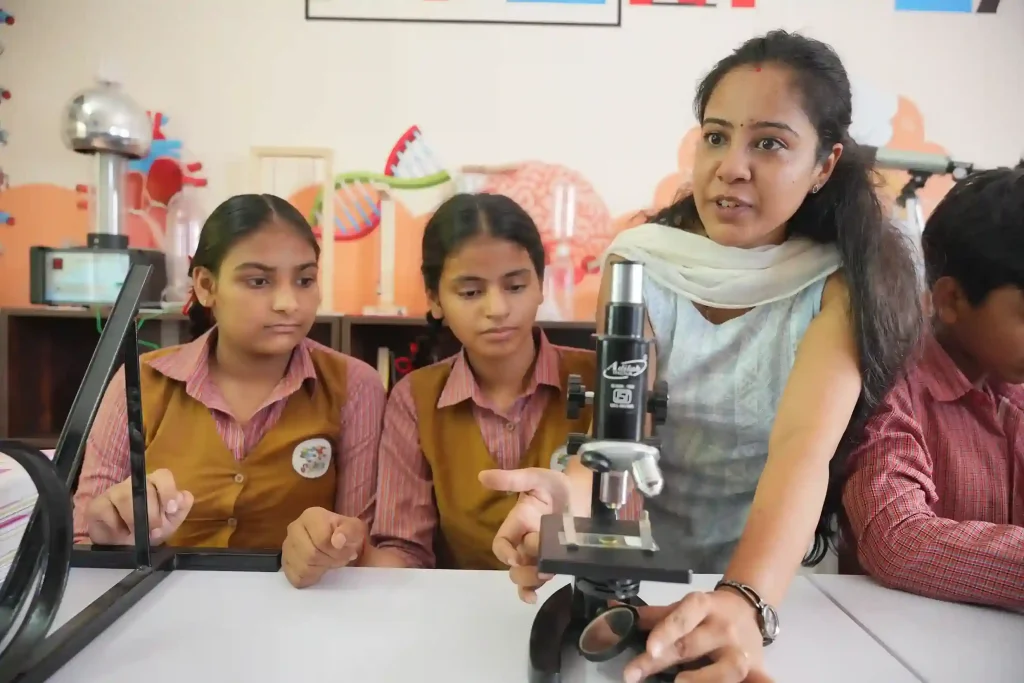
In a Bengaluru neighbourhood, Yashoda lived the life many women in India are expected to. She stayed at home caring for her child while her husband drove a cab. Work outside the home was never framed as hers. It was, in many minds, unnecessary — even improper. But when Covid-19 crashed into her world, when her husband lost his work, the fragile status quo dissolved. With little external support, she joined an entrepreneurship training programme run by Smile Foundation’s Swabhiman initiative, built a business making organic cosmetics and brought other women from her community along.
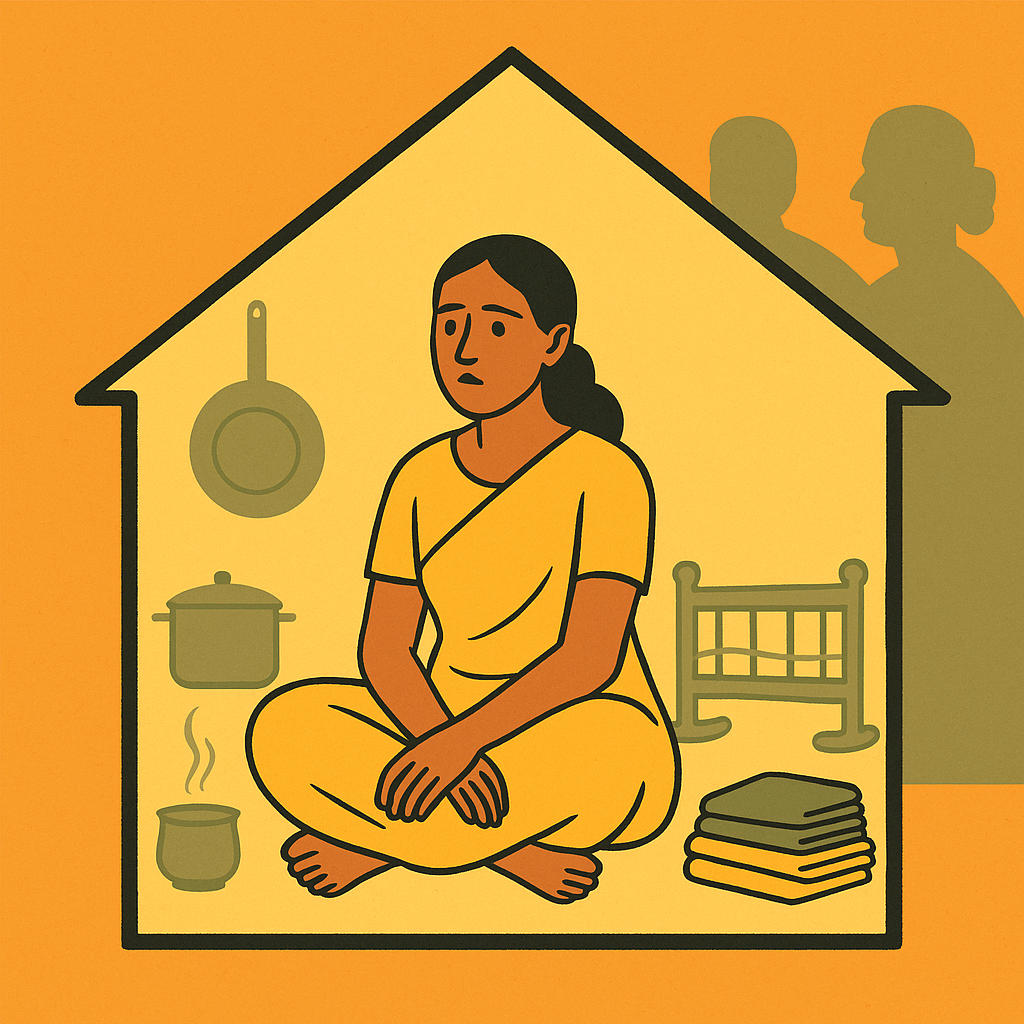
Yashoda’s path from invisibility to agency is not unique but it is rare. It shows how much is possible when targeted support meets a woman ready to break through. But it also throws into sharp relief the powerful cultural norms that so often prevent women from even imagining such a path — let alone walking it. To achieve gender equality in earnings, in work, in dignity, we must understand and dismantle these norms. And we must support, scale and strengthen interventions like Smile Foundation’s, which are proving that change is possible.
The Landscape
India continues to have among the lowest female labour force participation rates (FLFPR) in the world. According to recent government and independent reports:
- Only 37% of women aged 15 years and above participate in the labour force (urban + rural), compared with roughly 75% for men.
- The majority of women who do work are in informal sectors, which means unstable incomes, lack of benefits and little social protection.
- Many women exit the workforce when they marry, have children or when household responsibilities intensify; re-entry is difficult, especially into decent, formal work.
These numbers are not only discouraging — they reveal that economic opportunity in India is deeply gendered, with cultural norms shaping both possibility and constraint.
How Cultural Norms Limit Women’s Economic Participation
Cultural norms influence what is considered appropriate for women and what is not in many overlapping ways. Among them:
- Early socialisation: From early childhood, girls are often taught to value sacrifice, caregiving, modesty. They are discouraged from taking risks or asserting themselves. Boys are more often encouraged to explore, lead, compete. These messages shape aspirations, confidence, choices of subjects in school, and later, work.
- Family expectations & reputation: Marrying early, staying close to home, avoiding unsupervised travel, avoiding jobs with “inappropriate hours” — these are often family decisions. The risk of social censure or “losing face” can keep women from seeking opportunities, even when external supports exist.
- Unpaid care work & the double burden: Women bear a disproportionate share of domestic work: childcare, eldercare, cooking, cleaning. Studies show Indian women spend 5-6 hours a day (in some studies, even more) on unpaid household work, compared with an hour or less for men. This leaves far less time, energy or flexibility to engage in paid work or to invest in training or upskilling.
- Mobility, safety and visibility constraints: Working hours that include early mornings, late evenings, night shifts; workplaces far from home; being in male-dominated spaces — all these can be seen as socially risky for women and families often restrict them. Lack of safe public transport, harassment, infrastructural deficits further compound the issue.
- Invisible discouragement/absence of role models: If you never see women like you in roles outside the home or leading businesses, or speaking confidently in public life, it sends a message that those roles are not for you. Many women internalise this, limiting what they try.
The Cost of Inaction
When women are held back by norms, the costs ripple:
- Economic loss: India loses out on potential GDP growth when half its population is under-utilised. Women’s labour is often less rewarded or undervalued; when participation is low, economic growth is less inclusive and less resilient.
- Inequality persists: Income, access to healthcare, education, decision-making power remain skewed. The status of women in households influences child nutrition, health, school enrolment, especially for girls.
- Vulnerability in crises: Households without diversified income sources are more fragile. When disasters, health crises or economic shocks happen, women with no independent income lose more.
- Intergenerational effects: Norms enforce themselves. Women who never worked or led enterprises cannot serve as models for daughters or nieces, and cycles of dependency, low expectations and constrained opportunity continue.
Smile Foundation & Swabhiman: Turning Cultural Norms Through Action
What is Swabhiman?
- Launched in 2005, Swabhiman is Smile Foundation’s women-empowerment programme that reaches out to marginalised and socially excluded women.
- Its work spans reproductive and child health, nutrition, entrepreneurship development, digital financial literacy and sustainability programmes. It also works on government convergence and systems strengthening.
Scale & Impact (recent years):
- As of the 2023-24 period, more than 190,000 women have been impacted through Swabhiman.
- More than 76,000 women were sensitised on reproductive and child health through door-to-door visits, community mobilisation, street plays, etc.
- About 72,000 women accessed actual health services — camps, telemedicine, etc.
- In FY 2023-24, 68 women-led micro-enterprises were established through Swabhiman.
What interventions are in play under Swabhiman that help shift cultural norms, not just outcomes:
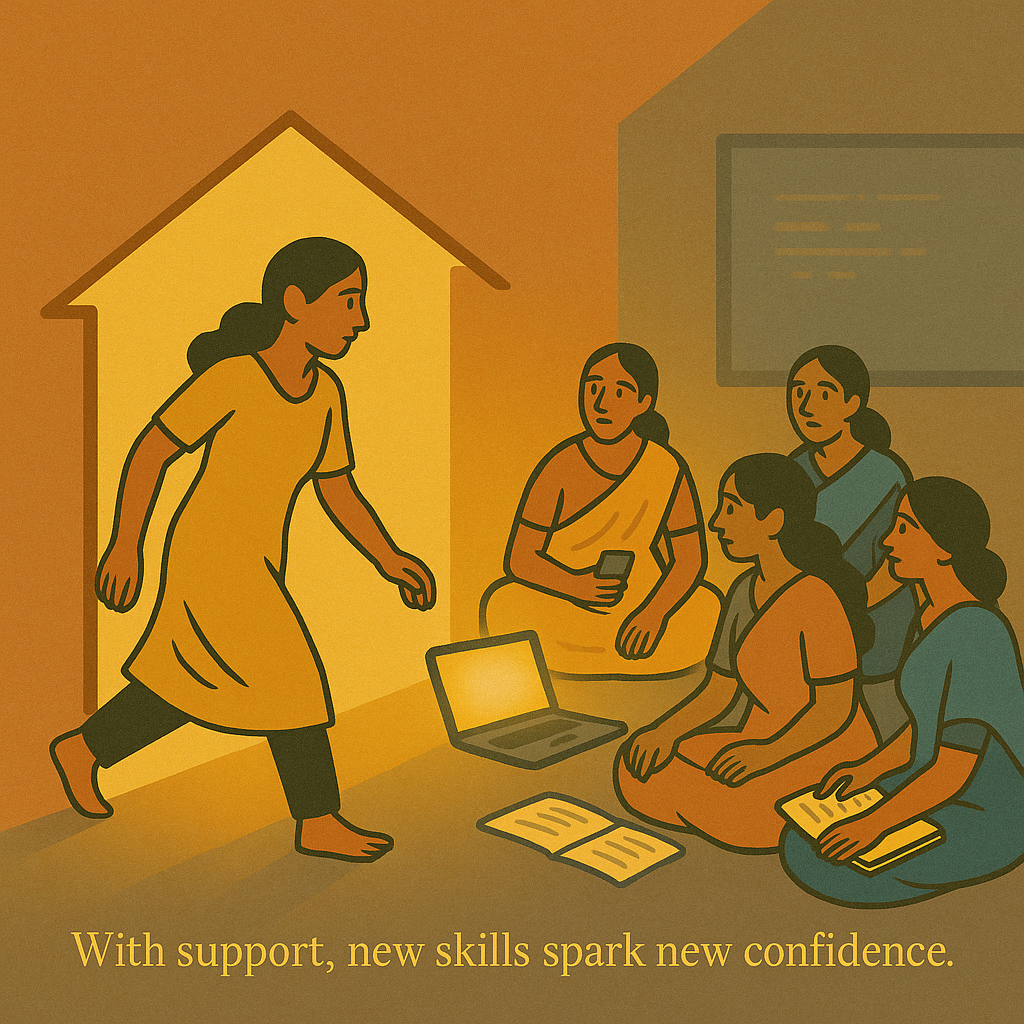
- Entrepreneurship and Skills: Swabhiman provides training in business skills — financial planning, marketing, operations — and helps women to start small-enterprises (tailoring, food carts, handicrafts, etc.).
- Financial Literacy & Digital Skills: These are central to enabling women to manage income, savings, to access loans, to use digital tools for their businesses or for marketing.
- Health & Nutrition as Foundational: Swabhiman treats health not as separate from economic empowerment, but as its base. Without reproductive health, antenatal care, nutrition, women are less able to seize opportunities, especially those demanding sustained effort.
- Community Mobilisation & Norm Change: Swabhiman works not only with women but also engages men and boys, families, community leaders to shift how women are viewed and what they are expected to do. This is key for lasting change.
- Linkage to Markets & Finance: Starting a business is one thing; sustaining it is another. Swabhiman helps women get connected to formal finance, mentorship and market access so they aren’t working in isolation.
How Swabhiman Illustrates Paths Forward Against Cultural Constraints
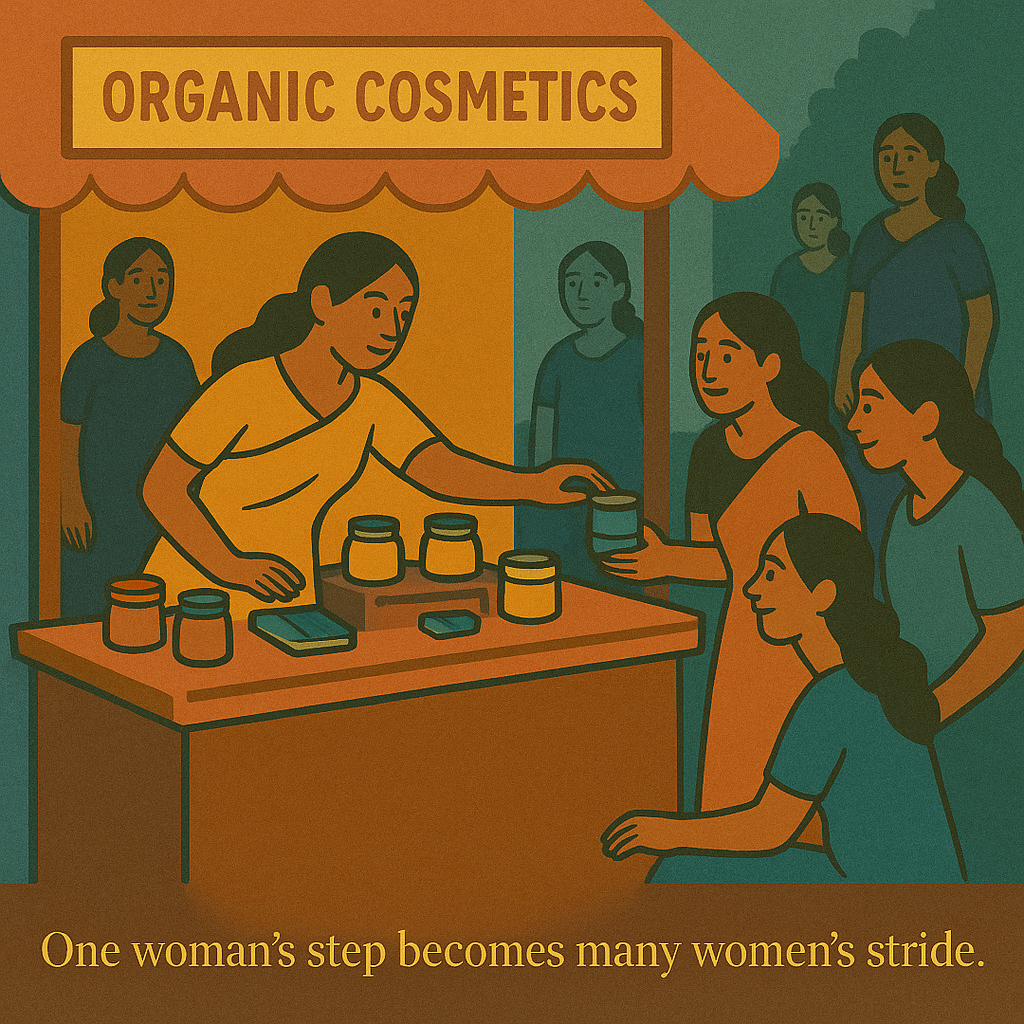
Let’s revisit the major cultural obstacles and see how Swabhiman addresses them and where more work remains.
| Cultural Constraint | How Swabhiman Confronts it | What More Is Needed |
|---|---|---|
| Socialisation & belief that women’s place is home | By providing stories, role models like Yashoda and others; by enabling women to start micro-enterprises that are socially visible; by sensitising communities (men & boys) to accept women’s economic roles. | Expand reach in more conservative or remote areas; sustain media, education system interventions that reshape belief at early age. |
| Unpaid care: lack of time and energy | Swabhiman doesn’t eliminate care burden, but by increasing income potential, improving health, and raising awareness, it helps women make trade-offs that are more favourable. Some training may enable more flexible or home-based work. | Public policies like affordable childcare, elder care; flexible work norms; subsidies or care allowances. Without these, even trained women can struggle to scale their work. |
| Mobility & safety constraints | Swabhiman’s community based approach reduces distance barriers; in many cases, enterprise or training is done locally; engaging men and local leaders helps ease restrictions on mobility. Health interventions may reduce the need for travel for basic health access. | Improvement in infrastructure (safe transport, lighting), legal systems for harassment, safer public spaces; more remote / hybrid models of training and entrepreneurship. |
| Financial exclusion, lack of knowledge | Financial literacy modules; digital skills; helping women access formal finance and market linkages. Swabhiman helps women start businesses. | Expand the scale of credit, reduce bureaucratic barriers, collateral requirements; integrate financial inclusion with social norms work so women can control assets and income. |
| Lack of visibility and role models | Stories of change (like Yashoda, Ishwati etc.) are publicised; Swabhiman supports women-led micro-enterprises whose successes are visible; mentors help. | More media representation; connecting women across states, caste, class; platforms for women to share their journeys; public recognition. |
Policy & Systemic Levers: Building Beyond Pilots
While programmes like Swabhiman are essential, they cannot by themselves overcome every structural obstacle. For sustainable change, broader systemic reforms and policy shifts must accompany them.
- Integrate gender norms change into education from early childhood: Not just “gender sensitivity” as a subject, but building curriculum and school culture that values shared household work, equal participation, leadership by girls — all reinforced in both formal schooling and co-curricular spaces.
- Childcare, eldercare, support for care infrastructure: Government needs to invest heavily in affordable public day-care, after-school care, eldercare services; incentivise private sector to provide these; ensure workplace laws accommodate caregivers.
- Safe mobility and workplace safety: Safe public transport, street lighting, accessible transit routes; enforce harassment and safety laws in workplaces; ensure policies for women working shifts or remotely.
- Financial inclusion and property rights: Strengthening implementation of laws around inheritance, land owned by women; making credit accessible (low collateral, accessible formal procedures); ensuring women have control over accounts and income; promoting savings and insurance.
- Inclusive economic policies: When designing schemes (e.g., for small businesses, MSMEs, start-up grants), ensuring they are accessible to women — tailored application processes, mentorship, non-traditional sectors, recognition of home-based enterprises.
- Norm-shifting public campaigns & community leaders: Engage religious leaders, elders, local influencers; use media to reshape narratives of what women can do; ensure men are part of the conversation.
- Monitoring & evaluation with gender lens: Collect detailed, disaggregated data (by gender, caste, location) not only on participation but on agency: who controls income, whose decisions are respected, who leads. Use this data to inform policy.
From Tradition to Transformation
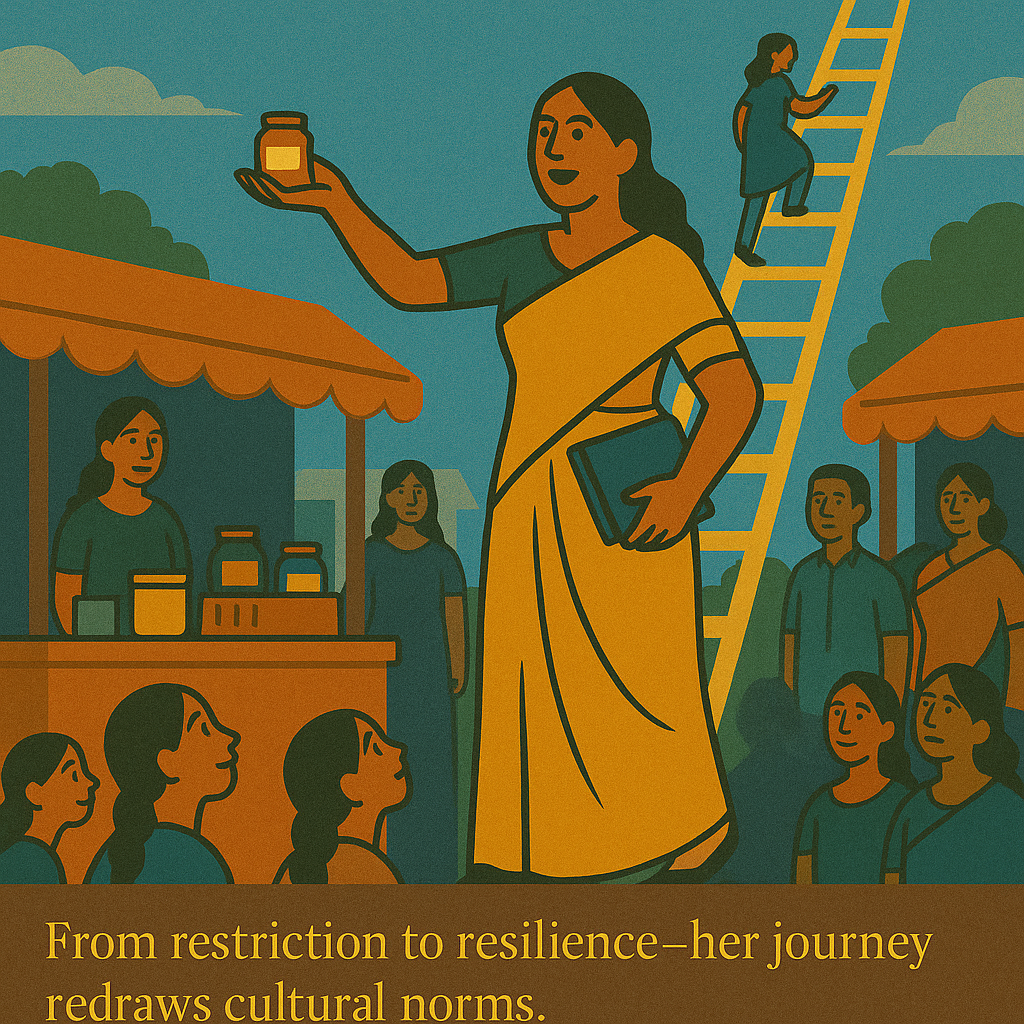
Yashoda’s story illuminates what one woman can do if belief, training and opportunity align. Smile Foundation’s Swabhiman programme shows that a well-designed intervention can touch hundreds of thousands of lives — translating cultural norms into changed expectations, economic opportunities, health improvements and greater agency.
But for India to truly shift, such programmes need to move from the margins to the mainstream. Cultural norms are strong because they are woven into family, religion, economy, daily life. To unravel them requires not only helping women overcome barriers one by one, but altering expectations across generations, across families, across institutions. When programmes like Swabhiman are scaled, when policy supports them, when entire communities see women not merely as caregivers but as breadwinners, leaders, agents of change — then we begin to build a society in which more women like Yashoda don’t need to wait for crisis to make the break, but are supported, encouraged, expected and enabled to step forward every day.
We must insist that women’s economic participation is not a side-issue or charity; it is central to social justice, to economic growth, to the very character of our democracy. Because a nation that holds back half its people holds back its own future. And when those people move forward, we all move forward.