Development conversations in India usually revolve around numbers. Literacy rates, immunisation coverage, GDP growth, CSR spend, dropout percentages. The debate is framed in metrics and targets — vital, but often incomplete. What gets left out is the intangible: trust, dignity, imagination. These are not always measurable in neat columns, yet they are often the very things that determine whether a programme succeeds or falters.
This is where creativity enters the story. Not as a garnish, not as “soft skills,” but as social infrastructure that binds communities, accelerates learning and humanises public health. Over the past two decades, Smile Foundation has quietly embedded creativity in its education, health and livelihood initiatives. The result is interventions that don’t just deliver services, but transform how communities experience them.
In a world grappling with resource constraints, rising inequalities and fraying social ties, creativity may be the most overlooked yet powerful lever we have.
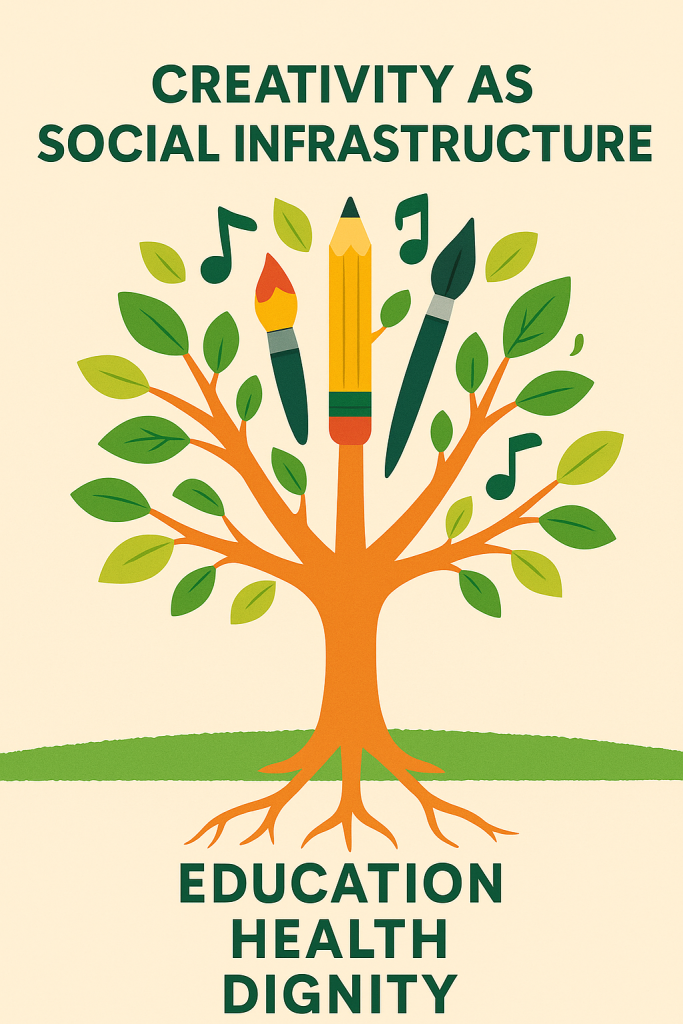
Why creativity belongs in development
Around the world, policymakers are waking up to the role of creativity in social systems. The World Health Organization, after analysing more than 900 studies, concluded that engagement in arts and creative practices improves both physical and mental health outcomes. UNESCO has placed “cultural participation” within the framework of sustainable development. And in the US, the Surgeon General has declared loneliness a public health crisis, with creative community activities emerging as a key antidote.
Why does this matter for India? Because our development challenges are not only about access to schools, hospitals or jobs. They are about ensuring that these structures are trusted, embraced and sustained by communities.
Creativity is the bridge. It turns a vaccination drive into a song that resonates in local dialect. It transforms a nutrition lesson into a cooking demo mothers can replicate at home. It converts rote classrooms into spaces where children sing, draw and imagine futures beyond their immediate constraints.
Without creativity, development risks becoming transactional. With it, development becomes transformational.
Education: When learning turns joyful
India’s education system is haunted by what the World Bank calls “learning poverty”— the inability of children to read a simple sentence by age 10. ASER 2022 revealed that only 20.5% of Grade 3 children in rural India could read a Grade 2 text. The crisis is not only about enrolment; it is about engagement.
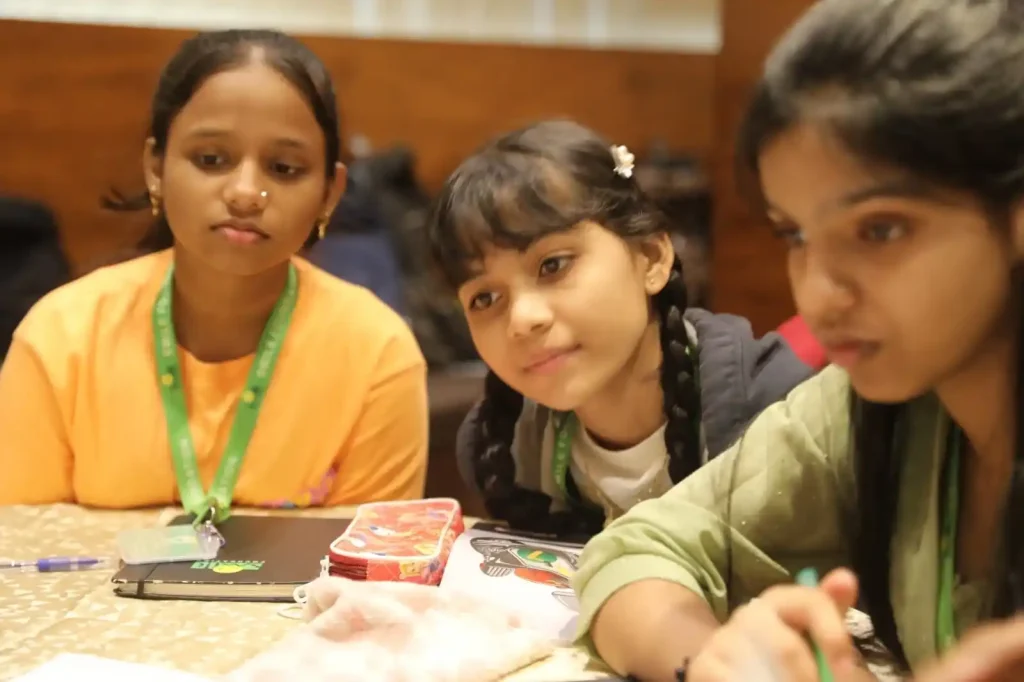
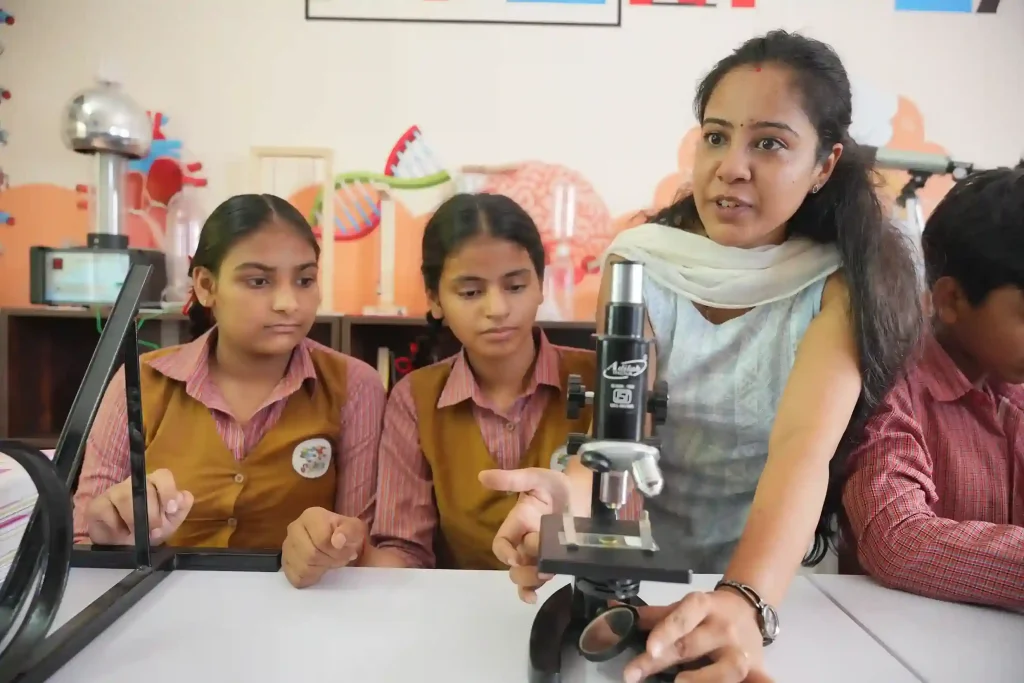
Smile Foundation’s Mission Education programme offers an alternative lens. Here, creativity is not an extracurricular; it is central to pedagogy.
- Storytelling as pedagogy: Mathematics lessons are woven into folk tales. Children solve subtraction through a story about goats crossing a bridge.
- Theatre as confidence: Children too shy to answer questions in class often thrive when given roles in short plays.
- Art as literacy: Drawing and visual storytelling allow children to grasp concepts before they master abstract alphabets.
Research backs this approach. A 2020 UNICEF report on playful learning shows higher retention rates among first-generation learners exposed to creative teaching methods. The OECD’s “Education 2030” framework identifies creativity as a core competency for future-ready citizens.
The lived experience at Smile centres echoes this. Teachers report that attendance spikes on days with music and theatre sessions. Parents notice children bringing songs and stories home, spreading learning beyond classrooms. For children at risk of dropping out, creativity is often the difference between disengagement and discovery.
Health: Stories that heal
Public health in India is filled with gaps: maternal mortality rates, malnutrition, vaccine hesitancy. Government schemes are ambitious, but uptake is uneven, especially in marginalised communities. Why? Because information alone does not change behaviour. Trust does.
Smile Foundation’s Health Cannot Wait initiative demonstrates how creativity builds that trust.
- In Uttar Pradesh, local women staged street plays explaining the benefits of institutional deliveries. Mothers who once resisted hospital births began to reconsider.
- In Rajasthan, puppet shows broke down myths around child nutrition. The laughter of children often convinced parents more effectively than printed leaflets.
- In Delhi’s slums, murals and wall art promoted hygiene and menstrual awareness in ways that text-heavy campaigns never could.
WHO studies show that culturally resonant creative methods produce higher health adoption rates than generic campaigns. During COVID-19, ASHA workers across India used songs and rhymes in local dialects to demystify vaccines — an approach that reduced hesitancy faster than top-down directives.
By embedding creativity into health outreach, Smile ensures that communities internalise the information passed onto them.
Livelihoods: Creativity as enterprise
India’s demographic dividend risks becoming a demographic disaster if youth lack meaningful livelihoods. Traditional skill training — tailoring, plumbing, mechanics—has value, but creativity adds resilience and adaptability.
Smile Foundation’s livelihood programmes integrate creativity into training:
- Digital storytelling: Young people from low-resource backgrounds learn photography and media production, then use these skills for community campaigns and freelance work.
- Craft revival: Women artisans in Odisha adapt traditional embroidery for digital platforms, connecting local heritage to e-commerce markets.
- Entrepreneurial imagination: Youth are encouraged not only to seek jobs but to innovate — launching micro-businesses that blend traditional crafts with modern demand.
Globally, the “orange economy” — the creative economy — already contributes over $2 trillion annually. UNESCO notes its potential for inclusive growth, especially in emerging economies. Smile’s work illustrates how creative skill-building does more than provide income; it nurtures agency, pride and sustainability.
Disasters: Creativity as recovery
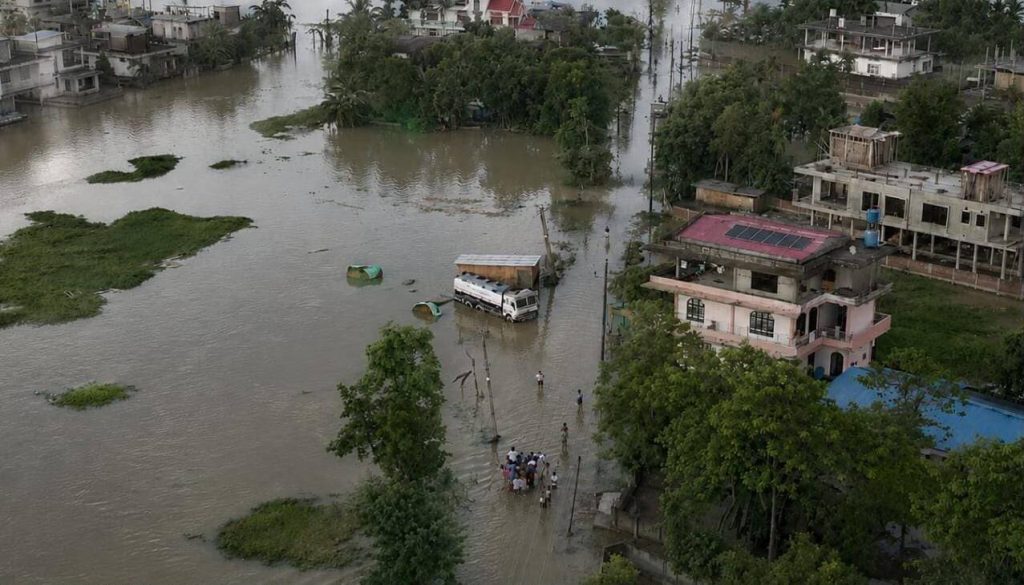
When floods sweep through Assam or earthquakes disrupt Himachal, relief often focuses on food, shelter and medicine. But once basic survival is secured, trauma lingers — especially for children.
Smile Foundation recognises this, integrating creative spaces into relief camps.
- Art corners allow children to draw their fears and hopes. Psychologists note that such expression is vital for trauma processing.
- Story circles give communities a space to narrate their experiences, building resilience through collective memory.
- Music sessions restore a sense of normalcy, turning camps from sites of despair into spaces of hope.
In disasters, creativity is not entertainment. It is therapy, recovery and resilience.
Creativity as dignity
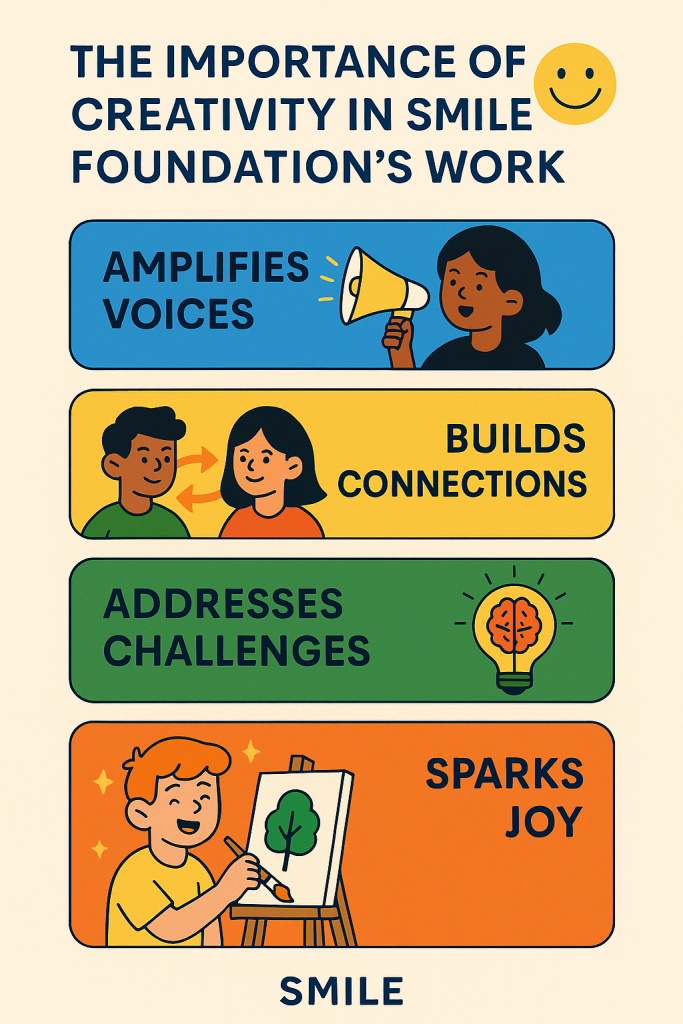
Perhaps the most profound role of creativity is its ability to restore dignity. Development often risks reducing people to data points: enrolments, vaccinations, beneficiaries. Creativity restores personhood.
When a girl paints her dream of becoming a doctor, she is asserting that her identity is larger than her circumstances.
When women act in a play about domestic violence, they declare their agency.
When youth document their communities through photography, they reclaim narrative power.
This dignity is not peripheral but central. True development is not just about distributing services. It is about enabling people to see themselves as creators of their own futures.
Lessons for policymakers and CSR leaders
For policymakers and corporate CSR leaders, the question is: why prioritise creativity in resource-constrained environments?
Because creativity is a multiplier.
- Cost-effective: Puppet shows, songs and murals often cost less than glossy ad campaigns but deliver more impact.
- Scalable: Stories and songs adapt across geographies faster than rigid program templates.
- Sustainable: When communities co-create, initiatives last beyond external funding.
- Equitable: Creative methods respect local culture, ensuring solutions are inclusive rather than imposed.
If India is serious about achieving its Sustainable Development Goals — quality education, good health, gender equity and more — creativity must be treated as essential infrastructure.
Smile Foundation’s creative edge
Over 20 years, Smile has demonstrated how creativity can be systematically embedded:
- She Can Fly harnessed aspirational storytelling to galvanise support for girls’ education.
- Shiksha Na Ruke leveraged digital storytelling during COVID to keep children engaged when schools were closed.
- Nutrition Enhancement Programme turned health education into participatory cooking events.
- Smile on Wheels used posters, songs and interactive games to make mobile clinics more welcoming.
Across programmes, creativity is not a side activity. It is the very reason programmes connect with people.
Global lessons, local action
India is not alone. Across the world, creativity is shaping social outcomes:
- Rwanda’s Bandebereho programme uses role-play to shift gender norms around caregiving.
- Brazil’s community theatre projects reduce domestic violence by opening dialogue.
- Kenya’s art-based sanitation campaigns improved toilet usage in informal settlements.
Smile Foundation is part of this global movement, showing how creativity can anchor India’s development journey in trust, resilience and dignity.
Reimagining Development
The Indian state and its CSR ecosystem invest billions in schools, hospitals and infrastructure. These are vital. But without creativity, they often fail to reach hearts and minds.
Creativity is not ornamental. It is infrastructural. It transforms programmes from transactional to transformational. It shifts narratives from “service delivery” to “human dignity.”
Smile Foundation’s work reminds us that development is not just about roads and policies. It is about stories, songs and spaces where communities imagine better futures together.
If India wants to build a future that is not only prosperous but inclusive, it must recognise creativity as social infrastructure. Because without imagination, there is no sustainable change.