When India’s Prime Minister handed over his social media accounts to five remarkable women achievers – from a chess grandmaster to a farmer-turned-entrepreneur – it was a symbolic celebration of women’s empowerment in the digital ages. Each of these women had harnessed technology for learning, innovation and enterprise, inspiring countless others to imagine new possibilities. But India’s digital revolution has not yet reached the majority of women, especially those in rural and marginalised communities.
According to the latest National Family Health Survey, just over half of urban women have ever used the internet and in rural areas the figure drops to only one in four. This digital divide translates into a gap in education, economic opportunity, healthcare access and voice. Bridging this divide has become essential, and technology – when thoughtfully deployed – is proving to be a powerful equaliser.
Digital inclusion: Bridging gaps in education, work and healthcare
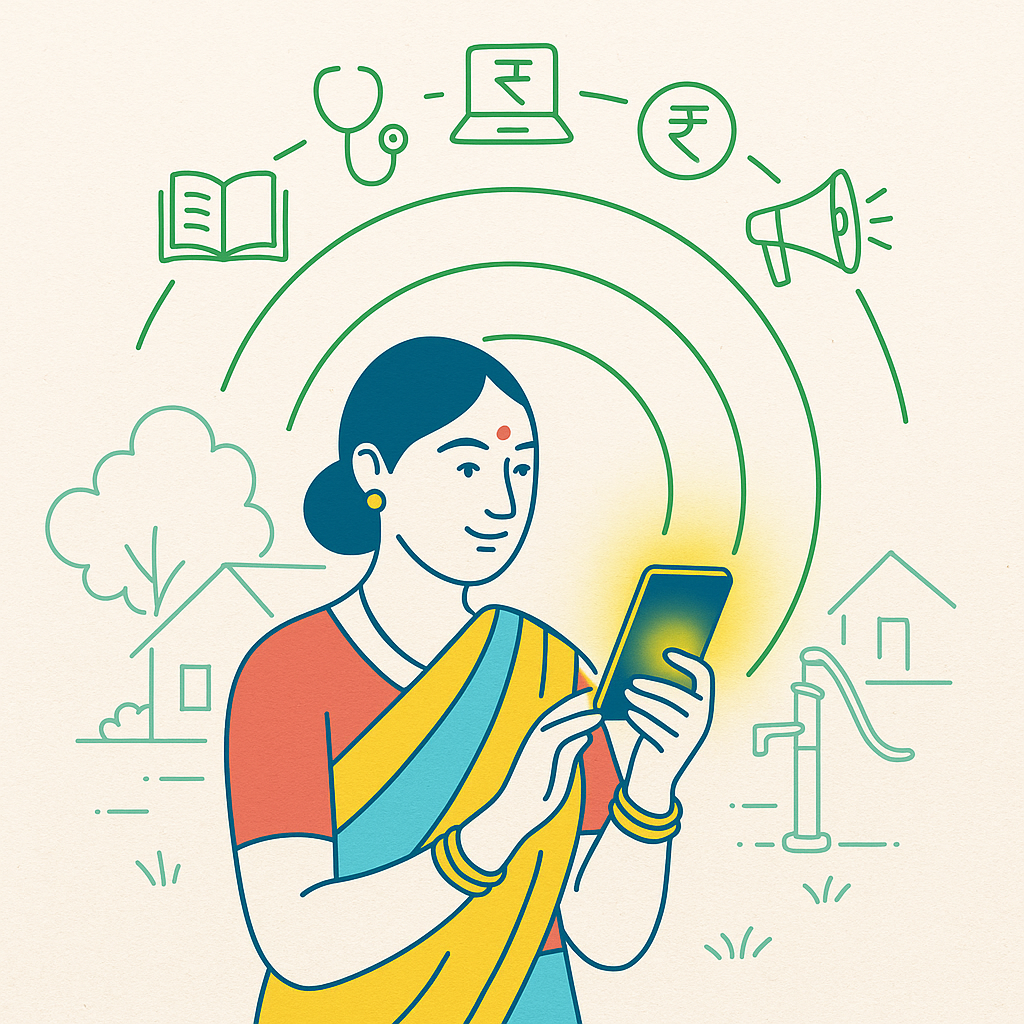
Empowerment begins with access – to information, to services, to opportunity. Today, that access is increasingly digital. Across India and much of the world, mobile phones and the internet have become gateways to learning and livelihood for women who were long constrained by geography, social norms or safety concerns.
In education, a proliferation of government-led digital learning initiatives and private e-learning platforms is bringing knowledge to women and girls who once had to drop out of school or could only dream of a college degree. From mobile apps teaching basic literacy to online coding boot camps, technology is helping women acquire new skills on their own schedule and in their own language.
India’s flagship rural digital literacy program has trained millions of women in basic computer and internet skills, with women accounting for over half of all participants. Partnerships like Google and Tata Trusts’ Internet Saathi initiative alone enabled roughly 30 million rural women to get online over the past decade – women who can now access educational content, government services and job information that was once out of reach.
Access to digital tools also opens doors in the workplace and marketplace. Equipped with a smartphone and some training, a woman in a small village can market her handmade products far beyond her local haat, tapping into e-commerce platforms and social media to reach customers across the country. Indeed, e-commerce and social media have created a new class of women entrepreneurs who operate from their homes yet serve buyers nationwide.
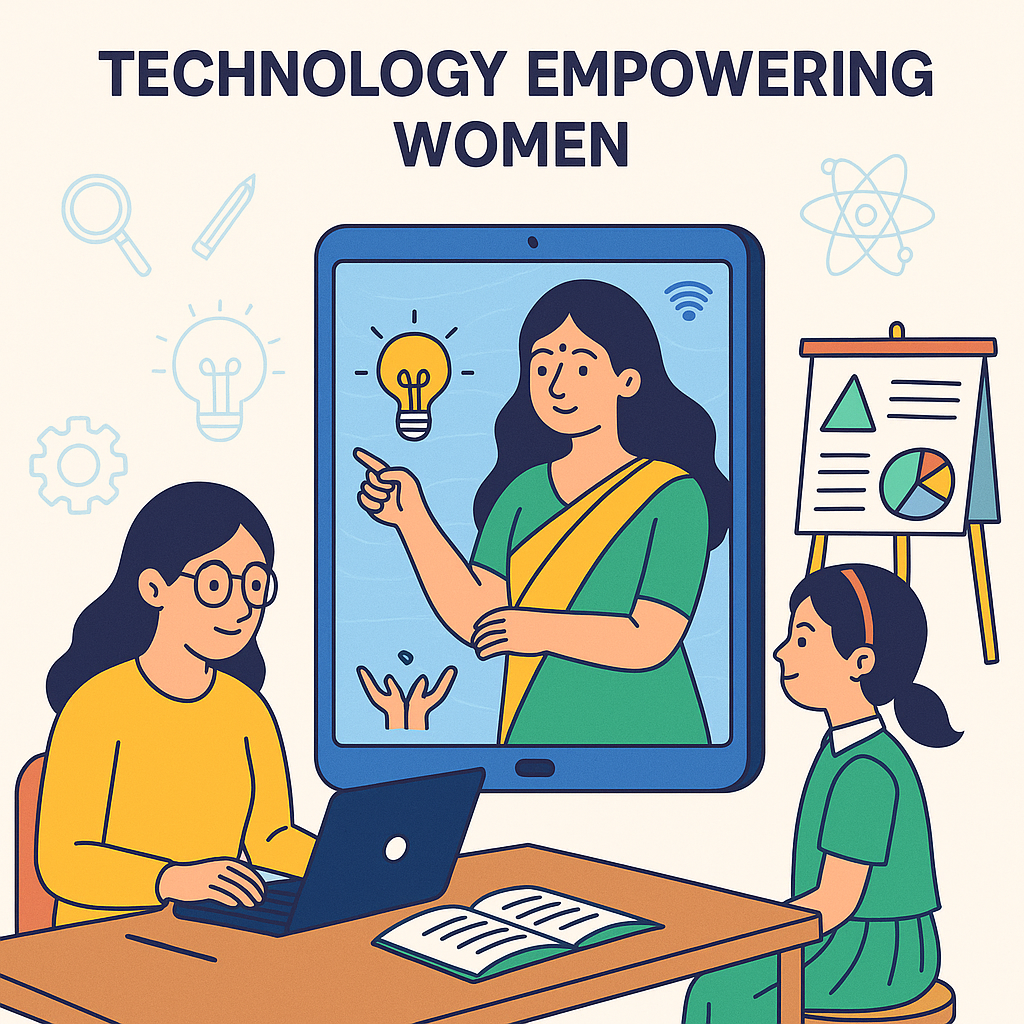
Take the example of India’s social-commerce platform Meesho, which has enabled millions of women in small towns and villages to become online resellers and business owners with zero upfront investment. By leveraging WhatsApp or Facebook, these women turned their social circles into customer networks, selling everything from saris to homemade pickles. The result is extra income and a newfound confidence and financial autonomy. In fact, studies have found that women entrepreneurs who embrace digital payments and online sales tend to grow their revenues faster, as digital tools help them bypass traditional barriers like limited mobility and lack of bank access.
Crucially, technology is helping overcome one of the most stubborn hurdles to women’s economic empowerment which is the lack of financial inclusion. In societies where women often lacked independent bank accounts or credit, fintech innovations have become game-changers. Through mobile banking apps and India’s Jan Dhan Yojana – a national financial inclusion drive – tens of millions of women have opened simple no-frills bank accounts for the first time.
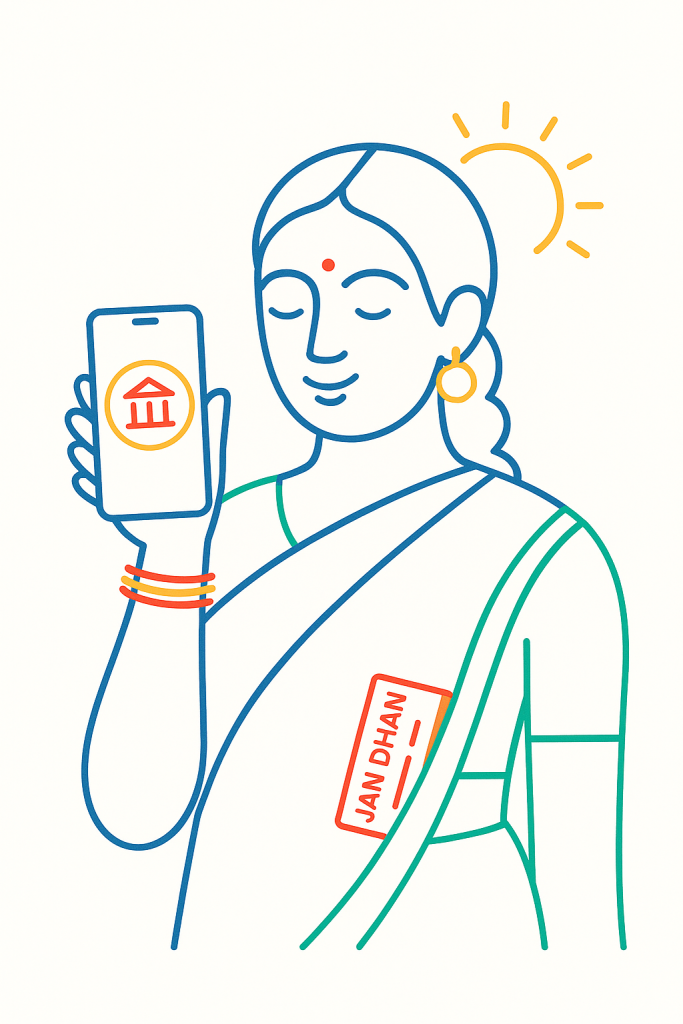
As of early 2025, over 30.3 crore (303 million) women held Jan Dhan accounts, making up about 55.7% of all such accounts. These accounts serve as a crucial on-ramp to economic life: they receive wages or government benefits directly, and they give women a safe place to save money, free from familial control or the risk of theft. The rise of instant digital payment systems like UPI (Unified Payments Interface) further empowers women by giving them a convenient, cashless way to transact and build credit histories.
Direct Benefit Transfer (DBT) programmes are depositing funds straight into women’s bank accounts, bypassing middlemen and reducing “leakage” of welfare money – effectively putting financial decision-making power into women’s hands. Each of these steps – digital literacy, e-commerce, fintech, e-governance – forms a piece of a larger puzzle using technology to dismantle the traditional barriers that kept women out of the formal economy.
Healthcare, too, has seen technology emerge as a lifeline for women, especially in remote areas. Telemedicine platforms and health apps are bringing medical advice and counselling to women’s doorsteps, often literally. During the COVID-19 pandemic, for example, India’s nationwide telemedicine service eSanjeevani scaled up dramatically to connect patients in far-flung villages with doctors in cities via video calls. This has particular benefit for women, who may be less able to travel long distances for care due to household responsibilities or cultural constraints. As of 2023, over 10 crore (100 million) telemedicine consultations had been provided through eSanjeevani and more than 57% of its beneficiaries are women. These virtual consultations make it easier for a new mother to get postpartum care advice or for an adolescent girl to confidentially seek information about reproductive health, without the expense and stigma that might otherwise be involved.
Mobile health apps are also addressing women’s needs – from period trackers and pregnancy guidance in local languages to mental health counselling chats and emergency helplines for domestic abuse. In rural Rajasthan, for instance, women who never had a local gynaecologist are now able to consult obstetric specialists via telemedicine and receive timely guidance on nutrition or high-risk pregnancy warnings. Technology is effectively closing the distance between women and healthcare – bridging not just physical gaps but social ones, by making health information private, personalised and accessible on a simple phone screen.
India’s tech-powered journey toward empowerment
No country illustrates the promise – and complexity – of leveraging technology for women’s empowerment quite like India. Over the past decade, India has embarked on an ambitious effort to digitise governance and social services, with the explicit aim of including those historically left at the margins. This push aligns with the national vision of Viksit Bharat@2047 – a roadmap for a developed, inclusive India by the centennial of independence. A cornerstone of this vision is the belief that “Empowered Women, Empowered India” and that empowerment must begin with inclusive access to rights and services.
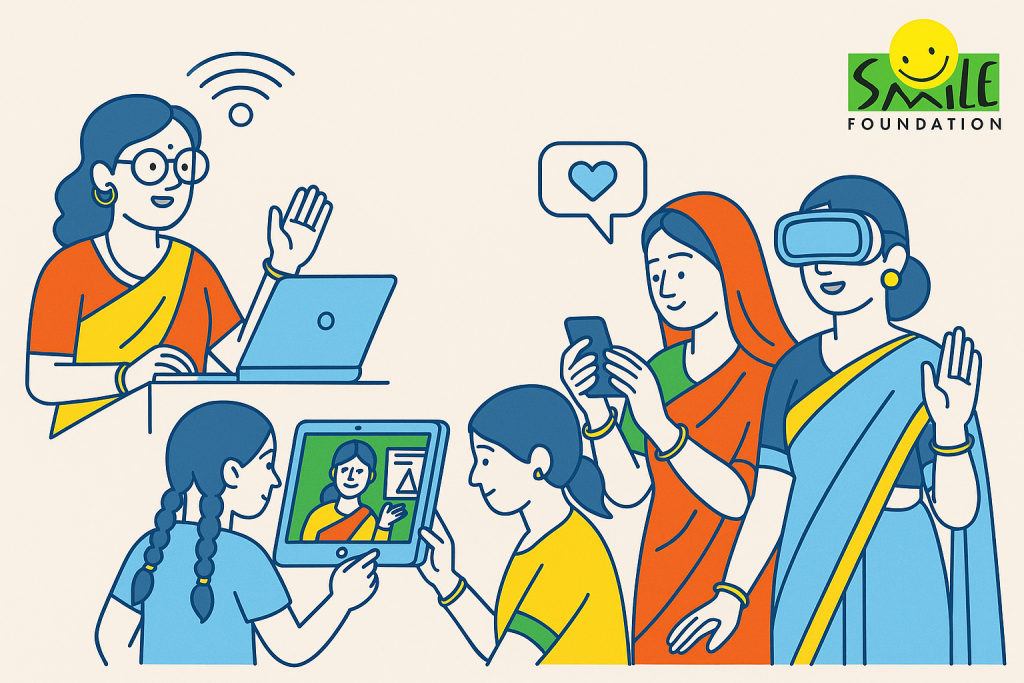
In practice, this has meant deploying technology in innovative ways to ensure women and children benefit fully from government programmes – no matter how remote their village, how low their income or how limited their mobility. The Ministry of Women and Child Development (MoWCD) has been at the forefront of this digital transformation, integrating real-time data systems, mobile platforms and transparency mechanisms into its schemes.
Consider the challenge of malnutrition and early childhood care, which disproportionately affect rural women and children. For decades, India’s vast network of Anganwadi centers – village nutrition and childcare clinics – struggled with antiquated record-keeping and patchy service delivery. In 2021, MoWCD launched the Saksham Anganwadi and Poshan Tracker initiative, dragging this network into the digital age. Today, over 1.4 million Anganwadi centres are linked via the Poshan Tracker smartphone app, enabling Anganwadi workers to log nutrition data, growth measurements, and attendance in real time. More than 10 crore pregnant women, nursing mothers, young children and adolescent girls are registered on this platform, which allows authorities to monitor nutrition delivery nationwide at a glance. Where once there were ledgers that took months to compile (and often concealed gaps or the bad word, corruption), there are now real-time dashboards and geo-tagged progress reports. Supervisors can pinpoint which village hasn’t received its supply of supplementary food this week or which child is faltering on growth indicators and act immediately. The digital tracking has ushered in precision, efficiency and accountability in nutrition services and this hasn’t gone unnoticed – Poshan Tracker was recognised with the Prime Minister’s Award for Excellence in Public Administration in 2025. Technology even helped plug leakages in these programmes: a new facial recognition feature for attendance and ration pickup ensures that ghost beneficiaries are weeded out and only the rightful women and children receive the nutrition support, eliminating middlemen and fake claims. These measures, while tech-heavy, ultimately serve the larger purpose of every mother and every child getting the nourishment they are entitled to and any lapses can be caught early rather than lost in bureaucracy.
Another leap has come in the form of paperless, direct aid for pregnant and lactating women. The Pradhan Mantri Matru Vandana Yojana (PMMVY) – a maternity benefit scheme – historically faced hurdles like slow payments and complex paperwork. By digitising the entire process, those problems are fading. Today, a woman who conceives her first child can register online or via a mobile app with Aadhaar identification, and receive ₹5,000 directly into her bank account to support her nutrition and medical needs during pregnancy. If she has a second child and it’s a girl, some states provide an additional ₹1,000 as an incentive under the Beti Bachao, Beti Padhao initiative. Over ₹19,000 crore in benefits has already been disbursed to more than 4 crore (40 million) women through PMMVY’s digital platform, with doorstep assistance from Anganwadi and ASHA health workers ensuring even women in remote hamlets can enroll. The scheme’s online grievance redressal portal and live dashboards add further transparency – a beneficiary can track her payment status on her phone and officials can quickly spot delays or issues in any district. The upshot is not only quicker assistance to pregnant women, but also a subtle shift in perceptions with women being seen not as passive recipients of welfare but as rights-bearing citizens who can demand and track their entitlements. This model of Direct Benefit Transfer to women’s accounts bolsters women’s say in household spending (since the money is in their name) and it introduces many unbanked women to the formal financial system for the first time. In fact, the success of DBT in schemes like PMMVY has contributed to India’s broader push for women’s financial inclusion, with the majority of Jan Dhan accounts now belonging to women. It is a powerful feedback loop where technology-enabled welfare gives women financial traction, and which in turn empowers them economically and socially.
Beyond health and welfare, technology is also being wielded to protect women’s rights and safety. One notable innovation is the SHe-Box portal – an online platform that provides a single-window mechanism for women across India to report workplace sexual harassment. Under the law (the Prevention of Sexual Harassment Act, 2013), employers must address such complaints, but many women, especially in informal sectors, struggled to navigate the process. SHe-Box has made it as simple as logging on and filling a form; the complaint is then routed to the appropriate authority, and the progress can be tracked online. By bringing a usually hidden injustice into the digital open, this platform has lowered the barriers to reporting abuse and signalled that harassment will no longer be swept under the rug.
Likewise, the Mission Shakti mobile app and dashboard serve as a digital panic button and resource guide for women in distress. A woman facing violence or trafficking can, with a few taps, connect to the nearest One-Stop Crisis Centre and police assistance, rather than physically visiting multiple offices. Nearly every district in India now has an OSC and by linking them digitally, Mission Shakti ensures women can find help immediately and discreetly. These tech tools not only rescue women from danger but also empower them with knowledge – the app, for instance, provides information on legal rights and helplines, reinforcing that women have avenues for justice.
Children, too, benefit from this tech-led governance model, especially girls and orphans who are among the most vulnerable. Under the Juvenile Justice Act, the government launched CARINGS (Child Adoption Resource Information and Guidance System), an online portal that tracks every step of the adoption process. Prospective parents can register, view available children’s profiles (with privacy safeguards) and be vetted through a transparent digital queue, replacing what used to be a murky, delay-ridden system. The portal has brought new transparency and efficiency to child adoption, reducing waiting times and ensuring that adoptive families and children are better matched.
Similarly, Mission Vatsalya is using tech to oversee child welfare institutions and foster care: a centralised dashboard compiles reports from thousands of Child Care Institutions across states, flagging any incident of abuse or violation of child rights in real time. Authorities can thus respond swiftly – for example, if a shelter home reports an incident, national officials see it immediately and can intervene or allocate resources. By knitting together police, legal services and child protection units via one data system, the government has created an accountability chain that is much harder to break. If one asks what difference all these digital interventions make on the ground – the answer lies in outcomes.
Over the past several years, India’s sex ratio at birth has modestly improved from 918 girls per 1000 boys to about 930 per 1000, indicating progress in curbing sex-selective practices and valuing daughters. Maternal mortality has fallen significantly to 97 per 100,000 births, from 130 per 100,000 six years ago. While many factors contribute to these trends (like better health facilities and awareness), officials credit the last-mile targeting and monitoring made possible by technology for accelerating the gains.
At the very least, digitisation has squeezed out some inefficiency and inequality in service delivery, meaning more pregnant women get timely care and more girls survive and thrive. It has also built greater public trust in welfare schemes – when people can see their entitlements credited to their bank or issues resolved on a portal, faith in the system strengthens.
How technology catalyses women’s leadership
One of the most transformative – if less tangible – impacts of technology on women’s empowerment is how it amplifies women’s voices and leadership. Traditional hierarchies often limited who could be a leader: one had to be physically present in meetings, have advanced education or be part of old boys’ networks. Digital platforms are blowing up many of those barriers. Through online education and mentoring networks, women are gaining leadership skills on their own terms. A young woman in a small town can enroll in a virtual leadership workshop or connect with a mentor on LinkedIn, without needing the “right” social connections.
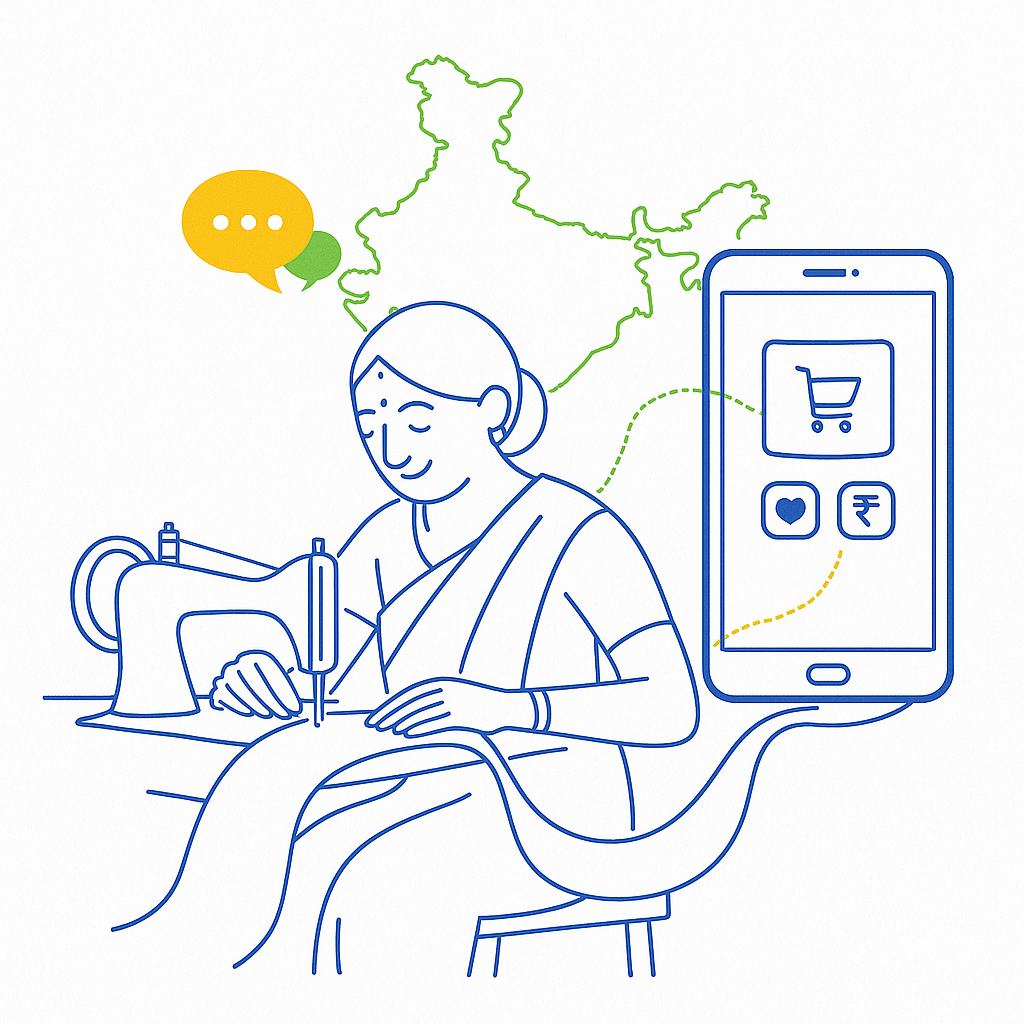
Virtual collaboration tools and remote work, now widely accepted, also enable more women – especially those balancing childcare or eldercare – to take on decision-making roles without being confined to an office from 9 to 5. This flexibility is chipping away at the age-old bias that equated leadership with constant physical availability. Indeed, during the pandemic, many workplaces discovered that productivity and teamwork could survive online; as a result, more women (and men) are advocating to keep these flexible arrangements. For women, this means careers don’t have to pause due to marriage or motherhood – they can continue to lead projects, startups or community initiatives from wherever they are.
Technology has also provided women leaders with new platforms to be heard and taken seriously. In the past, getting a seat at the table – whether in politics, business or academia – was a formidable challenge for women, and even when present, their ideas were often overlooked. Now, consider how social media, blogs and webinars allow women to publish their expertise and build their reputations in a visible way.
Female scientists, entrepreneurs, artists or policy experts can bypass traditional gatekeepers by directly reaching audiences online. A female agronomist in a rural area can start a YouTube channel advising on farming techniques and gain thousands of followers, establishing herself as an authority without needing a male intermediary. Similarly, women in governance can leverage data and transparency tools to strengthen their leadership. In India, many local councils now have women as elected members (thanks to reservations) and some are using apps to track village budgets or WhatsApp groups to coordinate initiatives. These digital tools help them make decisions based on real data and mobilise constituents quickly, thereby enhancing their effectiveness and credibility.
Moreover, the very existence of digital records and analytics in workplaces and government tends to reduce biases – performance can be measured in concrete outcomes (sales figures, response times, etc.) rather than subjective impressions. This shift benefits women, who have historically been judged by stereotypes more than results. In a tech-driven environment, if a woman-led team delivers, the numbers speak louder than any prejudice.
Of course, none of this means the playing field is suddenly even. Online spaces come with their own challenges – harassment and trolling of outspoken women, the need for digital skills that not all have and the risk of new forms of exclusion (like algorithmic bias). But even here, technology is providing counterweights. Women-centric online communities and safety apps are emerging to support those who face abuse or discrimination.
For instance, encrypted reporting apps allow women in an organisation to collectively flag a harasser, making it harder for incidents to be silenced. Campaigns for digital citizenship education are teaching young girls how to navigate the internet safely and assertively. All these efforts contribute to an environment where more women dare to step into leadership roles, knowing they have tools and allies at their disposal.
Empowering through collaborative action
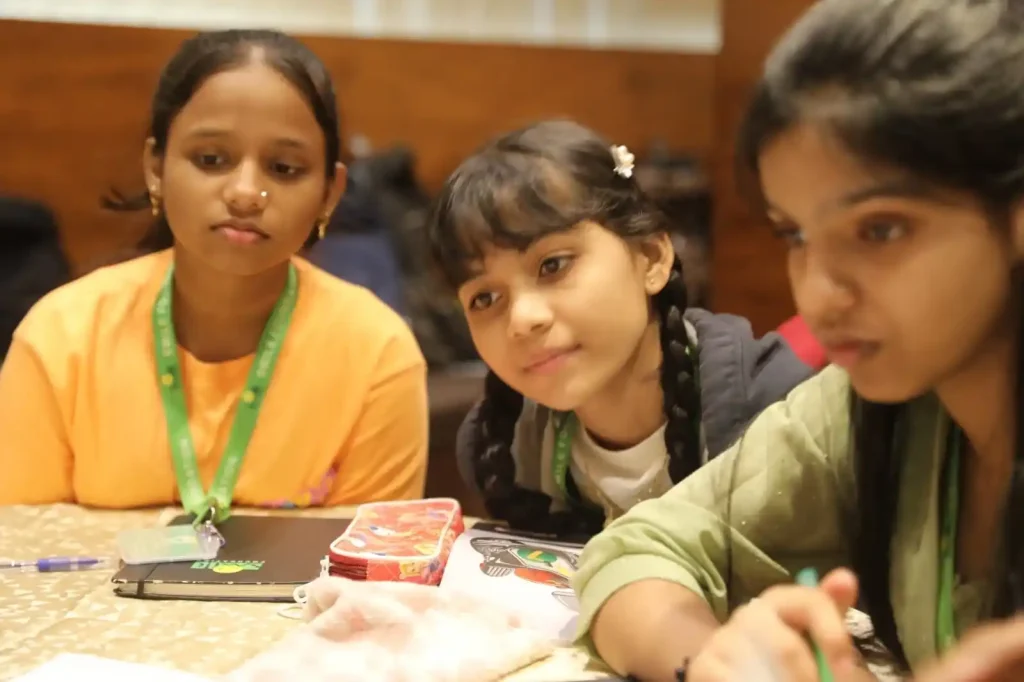
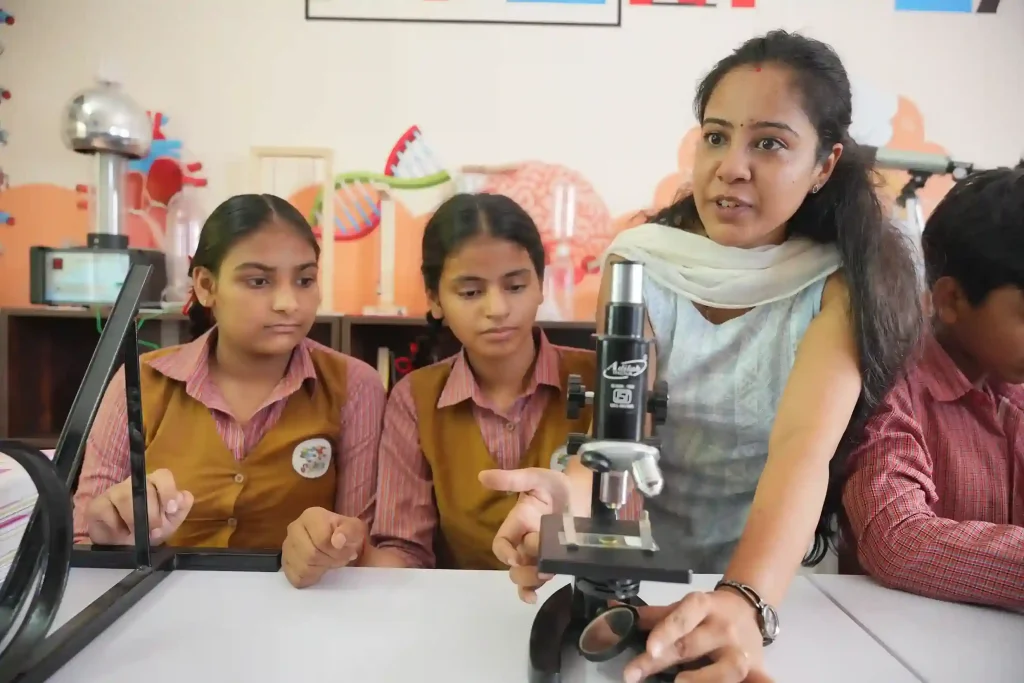
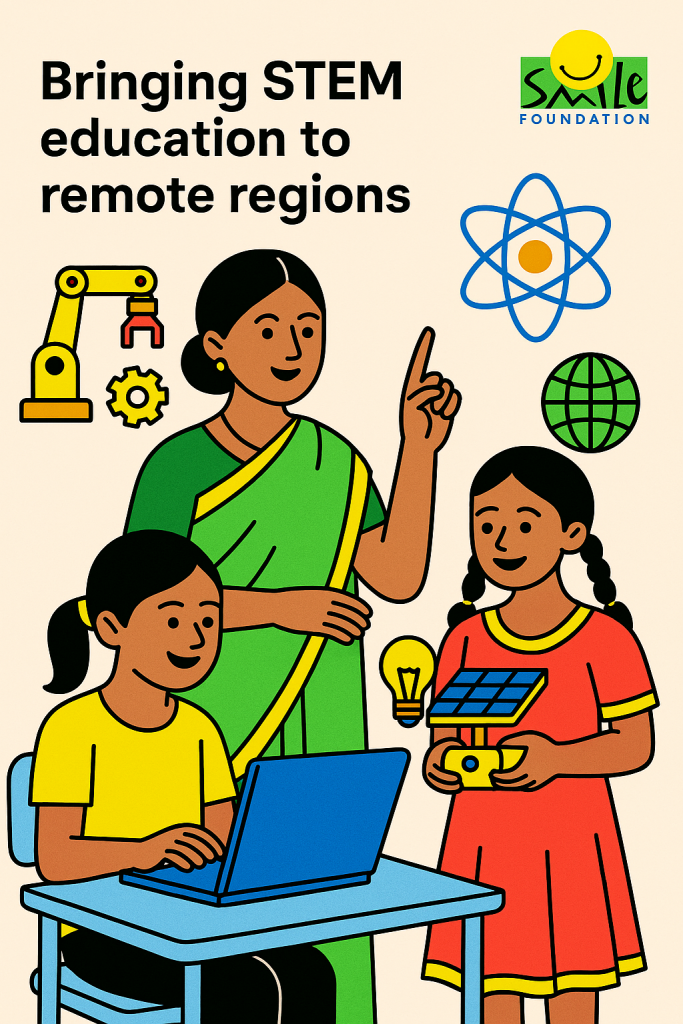
The digital gender gap is a work in progress and the reality remains that a large number of women are still offline or only minimally connected. This is where collaboration between government, private sector and civil society becomes crucial. As an example, consider the role of NGOs like Smile Foundation, which works across India to bring technology and training to those at the last mile. In partnership with government bodies and corporates, Smile Foundation extends the reach of digital empowerment into some of the country’s most underserved regions. A key focus area has been integrating technology into STEM education (Science, Technology, Engineering, Mathematics) for girls and young women, to sow the seeds of future empowerment. Through its STEM for Education initiatives, Smile Foundation has introduced thousands of students from low-income communities to the marvels of robotics, coding and even aerospace modelling – fields they barely knew existed.
In one year-long collaboration with IIT Bombay, over 1,000 students from under-resourced schools were mentored in hands-on projects like 3D printing, building hovercrafts, solar lamp making and basic robotics. Many of these students were girls who, for the first time, got to tinker in a state-of-the-art lab and see themselves as potential engineers or scientists. Not only do these girls learnt technical skills, they also gained the confidence to pursue higher education and careers in STEM, traditionally male-dominated arenas.
By embedding technology in education, NGOs like Smile are preparing the next generation of women to be creators of technology, not just users. We provide teacher training, digital learning modules in local languages and even basic infrastructure like tablets or projectors in rural classrooms. The approach is holistic combining curriculum with curiosity. As one Smile Foundation programme manager put it, exposure leads to aspiration: a girl who has built a simple circuit in 8th grade is far more likely to envision herself as an electrical engineer a few years later.
Importantly, these community-level interventions complement larger government schemes. While the government builds digital highways and platforms, it often takes local trust and tailored training to actually get women to walk those highways. Public-private partnerships and CSR-funded programmes have stepped in to do just that. We organise digital literacy camps for women, set up computer centres in villages or provide micro-loans for women to buy smartphones.
By one estimate, nearly 20 million of the people made digitally literate under the Pradhan Mantri Digital Saksharta Abhiyan were women – over half of all trainees. This was possible because implementation partners went door-to-door to convince families to let their daughters learn computers and because classes were held at times that women could attend.
Likewise, numerous success stories underscore how a nudge from an NGO or a company can turn technology into empowerment. In one Haryana village, a group of women trained by UNDP listed their homemade bangles on Facebook Marketplace, boosting their festive-season earnings by 60%. In Maharashtra, an Internet Saathi trainee went on to launch her own honey business online and now mentors other village women in digital entrepreneurship. These examples show that when women gain digital skills and support, they don’t just improve their own lives but also become catalysts for broader community change, hiring other women, sharing knowledge and breaking stereotypes one by one.
Technology is not a panacea or a standalone solution but an enabler that can accelerate every other aspect of women’s empowerment. The task now is to ensure that digital inclusion efforts leave no woman behind. This means addressing affordability (so that devices and data plans are within reach for poor women), promoting digital literacy in vernacular languages and ensuring online spaces are safe from abuse and misinformation that disproportionately target women. It also means designing technology with women’s needs in mind: for example, fintech products tailored for women with irregular incomes or e-learning content that accounts for women’s dual burdens of work and home. The Indian government’s ongoing programs, from Digital India to Mission Shakti, signal a commitment to this inclusive approach, but they will need continuous feedback and course correction. For instance, if a dashboard shows fewer women using a portal in one region, officials and activists should investigate whether cultural factors are at play and address them through awareness campaigns.
In conclusion, leveraging technology for women’s empowerment is about rewriting social scripts. It’s about a woman in a remote village who can now assert her rights because she knows the government scheme and can apply online; a young graduate who can work for a multinational company from her hometown; a mother who gains respect in her family because money is coming into her bank account; a girl who decides to become a scientist because she fell in love with coding at a workshop. Each of these stories, multiplied millions of times, adds up to a society transformed. India’s journey shows both the immense potential of technology and the importance of thoughtful implementation.
Digital tools have enabled timely interventions in nutrition, education, health and justice, ensuring that development benefits are no longer confined to the privileged urban elite. They have embedded transparency and accountability into public service delivery, making the state more responsive to every woman at the last mile. And perhaps most importantly, they have given women a newfound voice – whether through data, through entrepreneurship or through online networks of solidarity.
For India’s women, once isolated by distances both physical and societal, that bridge is proving to be nothing short of transformational. The task now is to strengthen it, widen it, and ensure that every woman, from the cities to the deepest villages can stride across to claim her rightful future.
Sources: