In the quiet lanes of Girgaum, Mumbai, in 1959, seven women with no formal education and barely any money came together on a rooftop with a simple yet powerful idea: to make papads. With just ₹80, they started this venture from a small kitchen. Operating in a socio-cultural context that largely relegated women to the domestic sphere, these women defied prevailing gender norms by founding what would later become one of India’s most iconic women-led cooperatives. Without access to formal financial support, professional training or external investment, the founders built a decentralised, home-based model that enabled women to generate income without leaving their households. They deliberately rejected hierarchical business structures, adopting instead a cooperative model in which every member was treated as an equal “sister,” sharing both labor and profits. This egalitarian ethos remains a foundational principle of ‘Lijjat Papad’ till date.
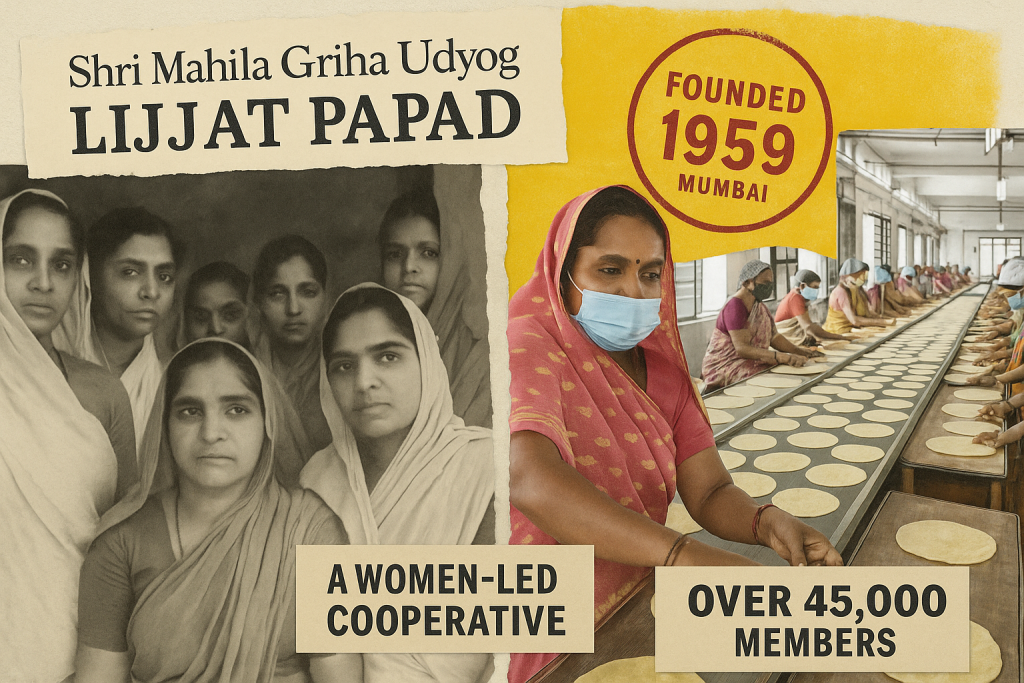
By the 1990s, Lijjat had achieved national recognition and was operating in over 62 locations across India. As of 2023, the organization employs more than 45,000 women and reports an annual turnover exceeding ₹1,600 crore (approximately USD 190 million), all while maintaining a no-outsider ownership policy. More than a commercial success, Lijjat stands as a transformative model of gender-inclusive enterprise, demonstrating that when women are empowered to design economic systems around their lived realities, they do not merely participate in business—they redefine it.
This case study, in fact, offers a valuable lens through which to examine the importance of women-centric business models and how they consistently challenge conventional approaches to enterprise.
Defying conventional systems with women-centric businesses
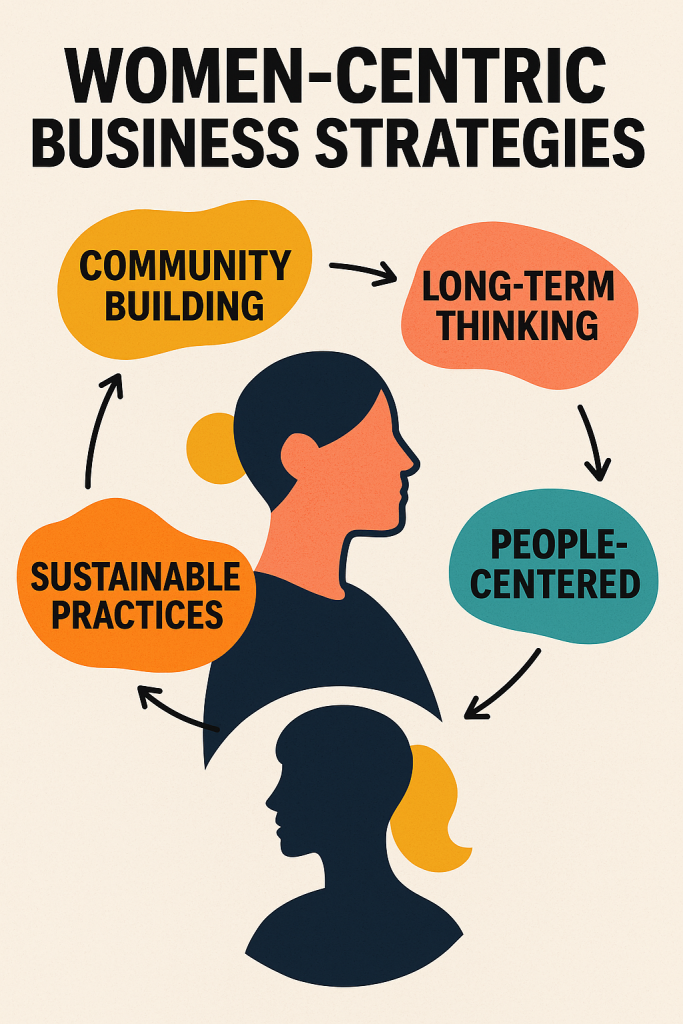
For decades, the prevailing blueprint for business success has been a linear, high-growth, venture-capital-driven model. Silicon Valley’s ethos—move fast, scale faster, exit big—has shaped not only how startups are built but also who gets to build them. This emphasis often sidelines businesses that are rooted in community, sustainability and long-term resilience, thus, as more women, and especially women from marginalised communities, enter entrepreneurship, they signal a quiet revolution. Women-centric business models often look radically different. For starters, such organisations tend to be community-led, care-oriented and often circular by design. And in fact, women-led organisations ‘must’ look different. They are solving a different set of problems and often from a more inclusive, human-centered perspective.
According to a 2025 study by research scholars at Mahatma Gandhi Kashi Vidyapith, published in the Journal of Marketing and Special Research, women entrepreneurs are emerging as powerful agents of change—economically and socially. Their involvement in business introduces new ways of thinking that often emphasise sustainability, inclusiveness and community welfare. Unlike conventional models, their approach tends to be more flexible and rooted in real-world social needs. Importantly, women-led enterprises do more than create jobs or generate revenue—they actively disrupt gender stereotypes and expand what leadership looks like. In doing so, they lay the groundwork for a more equitable entrepreneurial landscape, inspiring the next generation of women to lead on their own terms.
Thus, it is no doubt that women entrepreneurs frequently prioritise stability over hypergrowth, collaboration over competition and long-term impact over short-term profit. This is so because they are building businesses that are not just scalable, but also sustainable.
Advancing community, culture and care
In contrast to the top-down model of leadership celebrated in traditional startup culture, women entrepreneurs often adopt horizontal leadership structures that empower team members and encourage shared ownership. This care-oriented lens doesn’t just humanise business but it makes it more robust in the face of systemic challenges. This shows up in flexible work arrangements, trauma-informed leadership, ethical sourcing and cooperative ownership models.
Let’s take the case of the garment and textile industry, where women make up an estimated 80 per cent of the global workforce, according to the International Labour Organization (ILO). This sector, particularly in Asia and the Pacific, holds immense transformative potential—not just economically, but socially—as it employs millions of women, often from marginalised backgrounds. The ILO notes that women’s leadership in this space is proving to be a catalyst for more sustainable business practices and alternative forms of governance. The report cites the example of Ka-Sha and its approach of producing custom-made products in small quantities. The business is profitable and contributes to environmental and social sustainability goals. In the process, Ka-Sha engages in enabling circular processes and focuses on community development efforts.
While these approaches may not align with traditional investor metrics focused on rapid scale and profit, they offer powerful benefits: reduced waste, stronger local economies and a more equitable distribution of value. These examples underscore the need to recognise and support women-led innovations that prioritise sustainability and community well-being.
Building inclusive, rooted entrepreneurship
In rural India, many women with entrepreneurial spirit remain sidelined—not for lack of drive, but due to deep structural barriers: limited access to finance, low digital literacy, mobility constraints and social norms that confine them to the private sphere. Smile Foundation’s Swabhiman programme operates on the understanding that true empowerment is holistic.
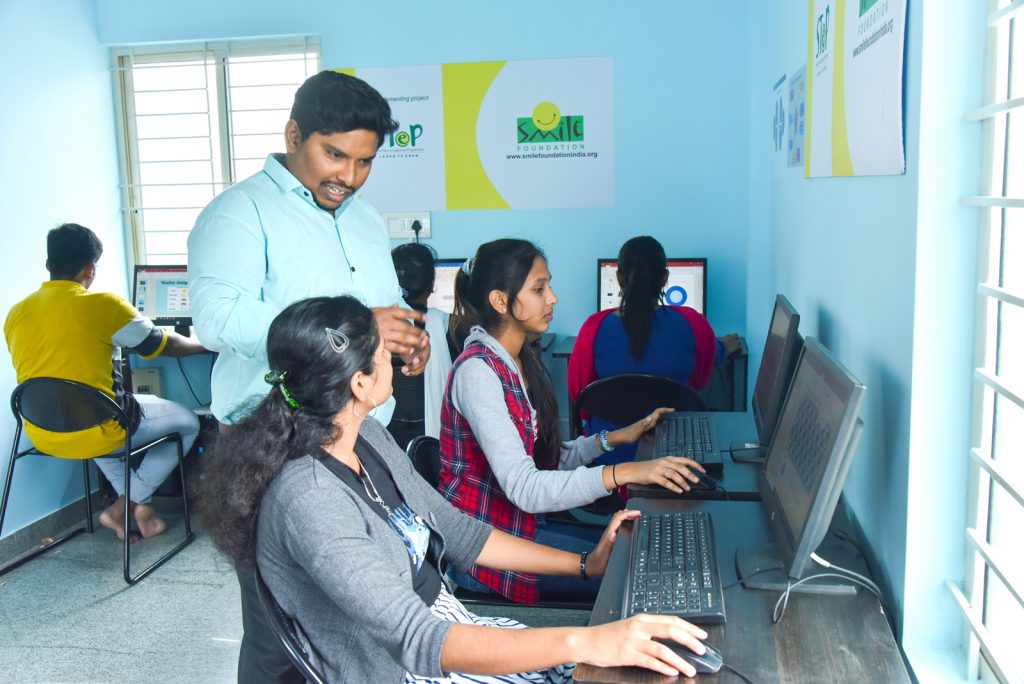
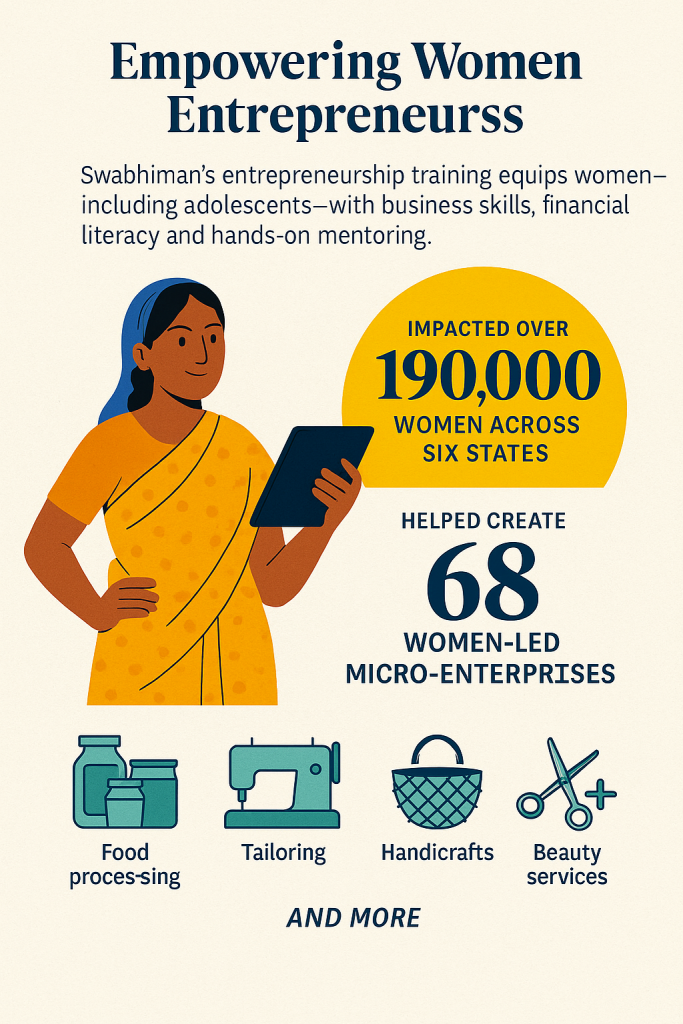
Swabhiman’s entrepreneurship training equips women—including adolescents—with business skills, financial literacy and hands-on mentoring. The holistic curriculum includes digital marketing, linkages to government schemes and confidence-building. In 2023–24, the programme:
- Impacted over 190,000 women across six states
- Helped create 68 women-led micro-enterprises
These businesses span food processing, tailoring, handicrafts, beauty services and more.
India can’t achieve inclusive prosperity without integrating rural women into the growth story. Swabhiman’s results show that small, smart investments—particularly in training, infrastructure and agency—can unlock massive social and economic dividends.