
India’s low unemployment rate often hides the more pressing concern of underemployment. A recent Ministry of Statistics report gave India an “underemployment score” of 62.28, even as official unemployment stood at 6.8%.
Millions of people, especially youth from low-income backgrounds, are working in roles far below their potential. Despite aspirations for a better life, many end up in insecure and low-paying jobs in the informal or gig economy. In fact, over 90% of India’s workforce is informally employed and a large section of this comprises blue-collar gig workers – drivers, delivery agents, construction hands, household service providers, whose numbers are steadily rising.
This surge in gig and platform-based work offers flexibility and scale. But without access to the right skills, most workers remain stuck at the lowest rungs, trapped in roles that neither pay well nor offer upward mobility. As per estimates, by 2030 India will need to fill over 90 million new jobs, the majority of which will require some level of vocational or life-skills training. The current skilling ecosystem, however, leaves a vast number of workers out, especially those from underserved regions and communities.
Blue-collar workers form the backbone of many industries, from logistics and home services to retail, construction, and healthcare. Yet, they are often the least prepared for the demands of a tech-integrated, customer-facing, and efficiency-driven marketplace.
The gig economy, which thrives on real-time digital coordination, requires basic digital literacy, financial awareness, and soft skills, besides technical know-how. A delivery rider today needs to navigate apps, manage digital payments, communicate with customers, and plan earnings without formal training in any of these.
Focusing on this segment is healthy for the Indian economy.. According to Bain’s 2025 report, gig work has the potential to contribute 1.25% to India’s GDP by 2030, driven by efficiency gains across key sectors. But the flip side is a growing skills gap. Many gig workers remain low- or un-skilled, making their incomes unstable. For example, 35% of gig workers are “financially strapped” day-labourers, and only 12% use platforms to build businesses. Bridging this gap between skill and opportunity has the potential to enhance productivity, raise income levels, and bring millions into the mainstream economy, while also building a healthier talent pipeline for industries.
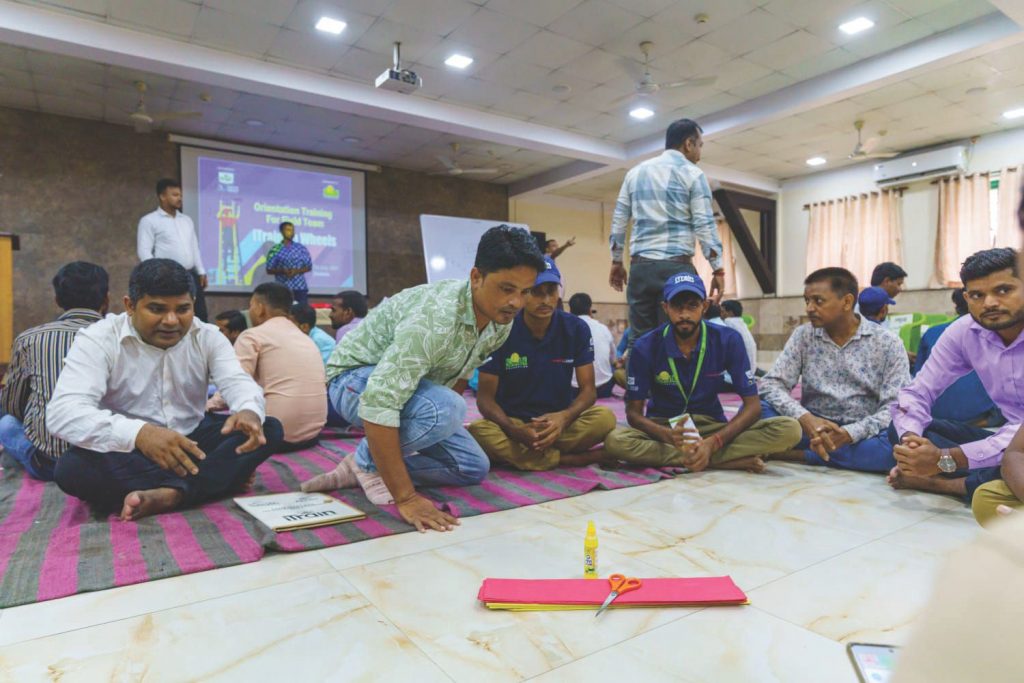
The answer lies in comprehensive upskilling programmes tailored to the unique realities of blue-collar gig workers. These should combine:
Hands-on vocational training
In high-demand trades, delivered close to where workers live and work;
Life skills and workplace behavior
modules to help navigate the customer-centric nature of gig jobs;
Digital and financial literacy
to ensure workers can access services, manage incomes, and benefit from formal financial systems;
Entrepreneurial support
for those who wish to transition from workers to micro-entrepreneurs.
Incorporating sector-specific skilling aligned with actual industry requirements is critical. This ensures that the training translates into tangible livelihood gains.
Investing in the upskilling of India’s blue-collar gig workforce is ultimately an investment in the country’s industrial resilience and inclusive growth. As industries across sectors face talent shortages, especially in entry- and mid-level roles, a skilled, mobile, and future-ready workforce can be a game-changer. The potential is immense but making it a realityit requires collaboration across the board: public policy, grassroots implementation, industry insight, and sustained support from the private sector.
This is not simply about filling jobs. It is about shaping a future where blue-collar workers are skilled, valued, and empowered to contribute meaningfully to India’s progress. When opportunity meets preparation, these workers become active drivers of the nation’s economic growth.
Sarva Shiksha AbhiyanNational Education Policy Beti Bachao, Beti Padhao Digital India
Skill IndiaEnhancing Formal Skilling
National Rural Health Mission Universal Health CoverageNational Digital Health Mission Promotion of Govt. Health Schemes
Anaemia Mukt Bharat Poshan Abhiyan Atmanirbhar Bharat Abhiyan Anganwadi Strengthening