JULY 2025

IN FOCUS 2

Bridging the Higher Education Divide through Holistic Scholarships

India’s higher education system is vast, ambitious, and deeply uneven. While the number of colleges and universities has grown dramatically over the last two decades, access remains sharply unequal. According to the latest AISHE data released by the Ministry of Education, Government of India, a staggering 71.6% of Indian youth do not progress from high school to college.

For millions of young people from low-income, rural or socially disadvantaged backgrounds, the pathway from school to stable employment is riddled with financial, social, and institutional gaps. It is well understood that affordability is a key barrier to higher education in India. However, framing the problem solely as a lack of money is reductive. Even when scholarships are available, they often fail to reach the students who need them the most. Many students from marginalised backgrounds struggle to access scholarships because of lack of awareness, complex eligibility norms, digital access issues, and opaque application processes. Girls face additional barriers like gendered expectations, mobility constraints, and lack of access to safe campuses or hostels.

For many families, sending a daughter to college several towns away is not only financially but socially unfeasible. As Aishwarya, a young engineering student from Bengaluru, puts it, “I had always dreamt of pursuing a career in science. My father is an auto rickshaw driver, and securing admission in an engineering college, that too for a girl from my background was difficult. But just when I thought I had crossed the biggest barrier and started college, things became tougher. The fees, transport, books and even mobile data for online classes started adding up. It became impossible to continue with my studies.”

When financial aid isn’t enough

What often goes unspoken is that many first-generation college students aren’t just lacking money, they’re navigating an alien world. Academic culture, peer competition, career options, and campus life are shaped by norms they’ve never been exposed to. They may have no one to help fill out a resume, prepare for an interview, or understand how to network professionally.

This is where traditional scholarship models fall short. Truly inclusive higher education demands a support system that addresses not just access, but survival and success.emerged, one that acknowledges the multidimensional nature of disadvantage. Smile Foundation’s scholarship programme presents open such model, combining financial aid with life-skills training, English and digital fluency, mentorship, career counselling, and mental health support. The result is not just a student who passes exams, but one who is ready for the workplace.

Building Job-Ready Graduates

India’s unemployment statistics mask an equally pressing issue: employability. According to the India Skills Report 2025 by CII, only about 54.81% of Indian graduates are considered employable by industry standards. Many young people earn degrees but lack the soft skills, digital familiarity, and workplace etiquette needed for formal sector jobs. Scholarship programs need to integrate employability modules into their design by including communication workshops, group discussions, mock interviews, and career bootcamps alongside academic studies.

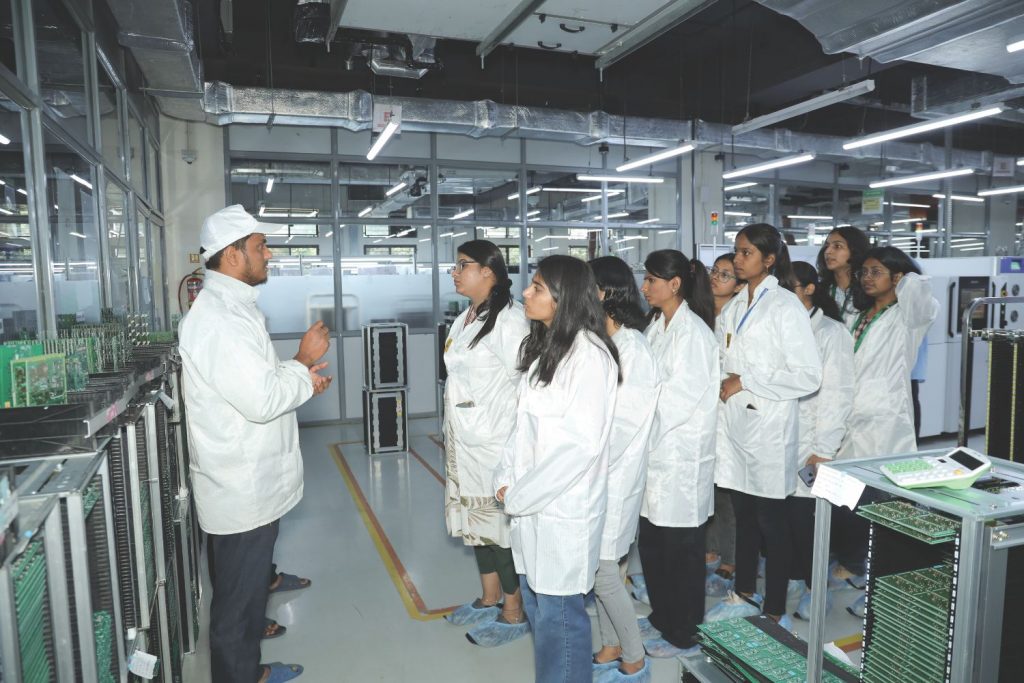
Exposure to real work environments through internships, site visits, and industry projects are equally essential. As the National Education Policy 2020 and various CSR frameworks have emphasized, skilling and employability are not the sole responsibility of the education system. Industry has a vital role to play, in curriculum alignment, in internships and apprenticeships, and in mentorship. Engineering scholars, for instance, can benefit from mentorship by practicing professionals, technical workshops hosted by industry leaders, and real-time projects that simulate workplace challenges.

These partnerships also help students build realistic expectations. They learn what a career path looks like, what skills matter, and what habits distinguish an employee from a job-seeker.

These interventions are not just “add-ons”; they’re transformative. For instance, Vaishnavi, a vocational scholar from Mumbai recounts how her first exposure to an office setting, through a brief internship, changed her self-perception entirely. “Until then, I never thought someone like me could work in a place like that,” she says. “Now I know I can.”

This shift from classroom confidence to career confidence is essential if India is to bridge the gap between education and employment. It also underlines the need for deeper collaboration between educational institutions, scholarship providers, and the private sector. 

A New Definition of Access

At its core, the debate around scholarships and higher education must move beyond numbers. Access is not achieved when a student crosses the college gate. It is realised when she completes her degree, enters the workforce with dignity, and continues to grow.

Stories from the field consistently show that students with wraparound support, those who have mentors, life-skills training, and industry exposure, are more likely to stay in school, complete their degrees, and find jobs that match their potential. This support creates what scholars have called “identity capital” – the confidence, networks, and life-readiness that allow a young person to convert education into opportunity.

Moreover, the ripple effects extend to families and communities. A single scholar who becomes a professional often paves the way for siblings, cousins, and neighbours. In that sense, investing in holistic scholarships is not just an education intervention, it’s a long-term social mobility strategy.

Rethinking the Scholarship Model

The road to inclusive higher education in India will not be paved by fee waivers alone. It will require a concerted effort to understand and respond to the complex ecosystem in which students live and learn. Holistic scholarships, that are thoughtfully designed and strategically implemented, offer a way forward.

By bridging not just the tuition gap but the aspiration and employability gap, they represent a more equitable and enduring approach to higher education reform.

Sign Up For Smilescapes

Get monthly newsletter updates

Supplementing & In Alignment with Government Initiatives

donation for child education in india

EDUCATION

Sarva Shiksha Abhiyan
National Education Policy
Beti Bachao, Beti Padhao
Digital India

donation for child education

lIVELIHOOD

Skill India
Enhancing Formal Skilling


donation for health care

HEALTH

National Rural Health Mission
Universal Health Coverage
National Digital Health Mission
Promotion of Govt. Health Schemes

livelihood skills training programs

WOMEN EMPOWERMENT

Anaemia Mukt Bharat
Poshan Abhiyan
Atmanirbhar Bharat Abhiyan
Anganwadi Strengthening