Every year, on 2nd October, India pauses.
We hang up portraits of Mahatma Gandhi, revisit his words and recall the extraordinary man whose life’s work transformed not just a nation, but the very idea of what freedom, dignity and justice could mean.
But Gandhi Jayanti should not be a day of mere remembrance. It should be a day of renewal—a moment to ask: how far have we carried forward his vision of Swaraj—self-rule not just in governance, but in the moral, social and economic lives of the people?
And in that question lies the relevance of organisations like Smile Foundation, whose work with underserved communities—especially children and women—embodies Gandhi’s philosophy in action.
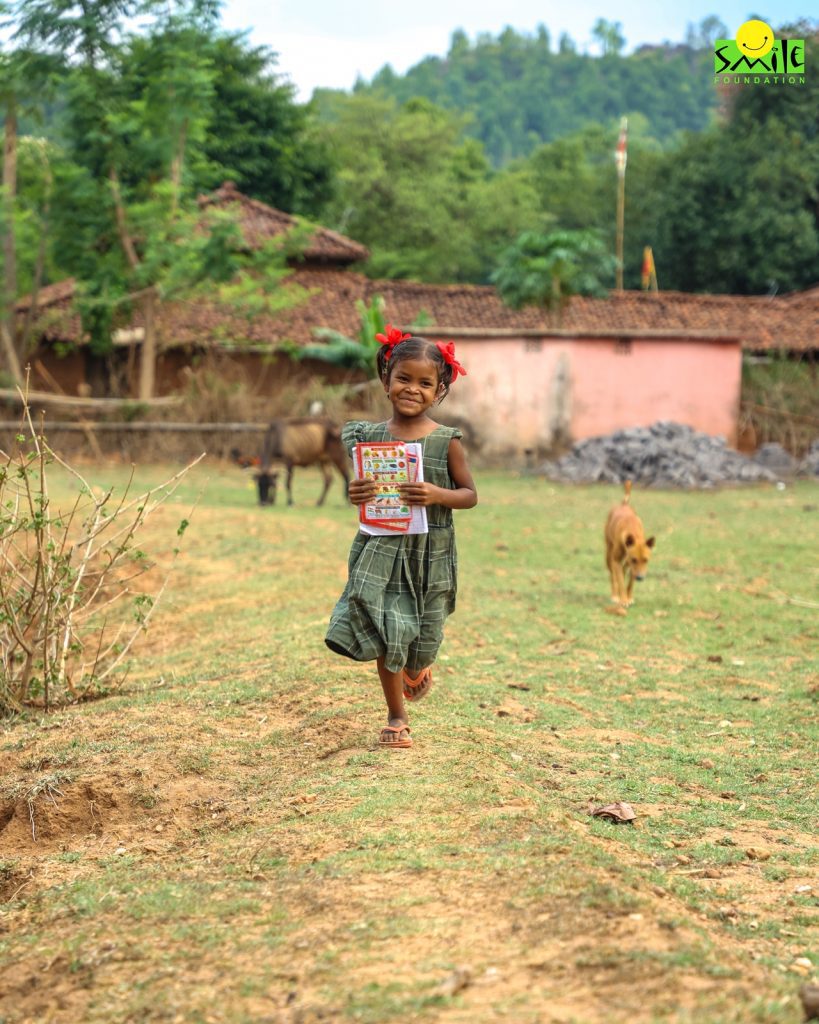
Today, Gandhi’s message doesn’t live in slogans or statues. It lives in the determined footsteps of a girl walking to a digital classroom in rural Jharkhand. It lives in the compassion of a doctor aboard a Smile on Wheels mobile hospital, serving a remote village in Uttar Pradesh. It lives in the confidence of a young man who, after training at a Smile skill centre, secures a job that transforms his family’s future.
This is the Gandhian idea of progress—not the accumulation of wealth or power, but the steady, humane upliftment of every individual.
Education as the truest form of empowerment
When Gandhi spoke about education, he didn’t mean mere literacy. He envisioned Nai Talim—an education that developed the head, the heart and the hand. For him, true learning built self-reliance, character and purpose.
More than a century later, that idea still forms the moral foundation of Smile Foundation’s work in education. Through its Mission Education programme, Smile reaches children from economically disadvantaged communities and helps them not only learn but truly grow—to think, question, create and dream.
Across thousands of classrooms supported by Smile Foundation, Gandhiji’s dream of an education rooted in dignity and equality comes alive. Children learn mathematics and science, yes, but also compassion, cleanliness, cooperation and respect for others—the same values Gandhi placed at the centre of his own moral universe.
What sets this approach apart is its focus on equitable access. Gandhi once said, “If we are to reach real peace in this world, we shall have to begin with the children.” Smile Foundation has taken this to heart, creating learning spaces where no child is left behind because of her background, caste, gender or circumstance.
By blending academic learning with life skills, digital literacy and mentorship, Mission Education nurtures individuals who are not just employable, but ethical citizens—a vision Gandhi would have recognised as the essence of Swaraj.
Health as a moral responsibility
In Gandhi’s worldview, health was inseparable from ethics. He often said, “It is health that is real wealth, not pieces of gold and silver.” For him, cleanliness, nutrition and preventive care were civic duties.
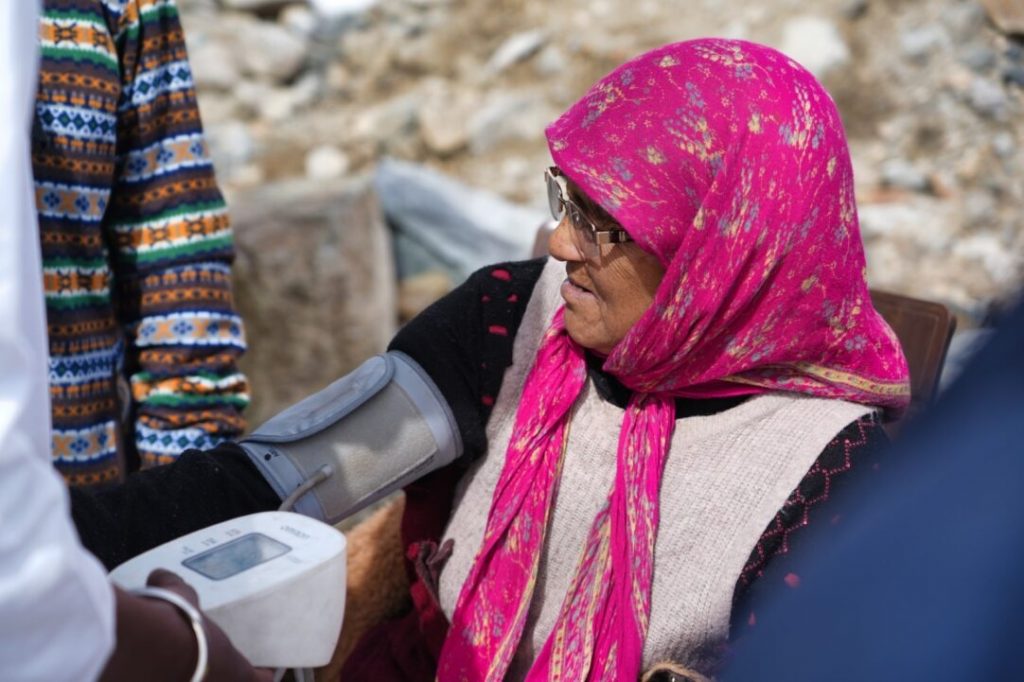
This idea finds its modern expression in Smile Foundation’s Smile on Wheels initiative—a fleet of mobile hospitals that bring quality healthcare to the doorsteps of those who most need them. From urban slums to remote tribal villages, Smile on Wheels embodies the Gandhian belief that access to health is justice.
Instead of expecting patients to travel long distances or incur unaffordable expenses, the healthcare goes to them. It’s a vision Gandhi would have recognised instantly—of decentralisation, local empowerment and compassion in practice.
In many ways, Smile on Wheels represents what Gandhi meant when he spoke of Sarvodaya—the welfare of all. Each medical camp, each vaccination drive, each counselling session for mothers and children adds up to something larger: a healthier, more humane society.
Empowering women: Realising Gandhi’s vision of equality
Gandhi’s feminism was ahead of its time. He believed that women were not symbols of sacrifice but agents of change. “To call woman the weaker sex is a libel,” he once wrote. “It is man’s injustice to woman.”
At Smile Foundation, this conviction finds resonance through programmes like Swabhiman—an initiative that focuses on women’s health, nutrition, safety and financial independence.
In communities where silence and social norms still restrict women’s mobility, Swabhiman builds awareness and confidence through education on reproductive health, self-defence, menstrual hygiene and livelihood training. It helps women stand on their own feet, literally and figuratively—one of Gandhi’s deepest aspirations for the Indian woman.
He believed that true empowerment begins when a woman can make her own choices, manage her own income, and claim her rightful place in society. That spirit runs through every Swabhiman workshop, every health camp, every conversation where a young woman begins to see herself not as a dependent, but as a changemaker.
Livelihoods and dignity of work
Gandhi’s ideal of bread labour—the dignity of earning one’s livelihood through honest work—was central to his philosophy. He despised idleness and dependence, urging every person to contribute meaningfully to society.
Smile Foundation’s STeP (Smile Twin e-Learning Programme) brings this idea to life for a new generation. It prepares youth from underserved backgrounds to participate in India’s fast-changing economy through skill training, personality development and digital literacy.
The focus isn’t just on employment—it’s on dignity. The young people trained through STeP are not passive beneficiaries; they are active participants in India’s growth story. They enter workplaces not only with skills, but with confidence and purpose.
When Gandhi spoke of self-reliance (Atmanirbharta), he didn’t mean isolation from the world; he meant moral and economic independence. STeP is the modern articulation of that same vision—creating a workforce that is skilled, self-sufficient and socially conscious.
Development through community
Gandhi’s idea of development began not in Parliament but in the village. He believed that India’s soul lived in its 700,000 villages—and that progress must be local, participatory and people-led.
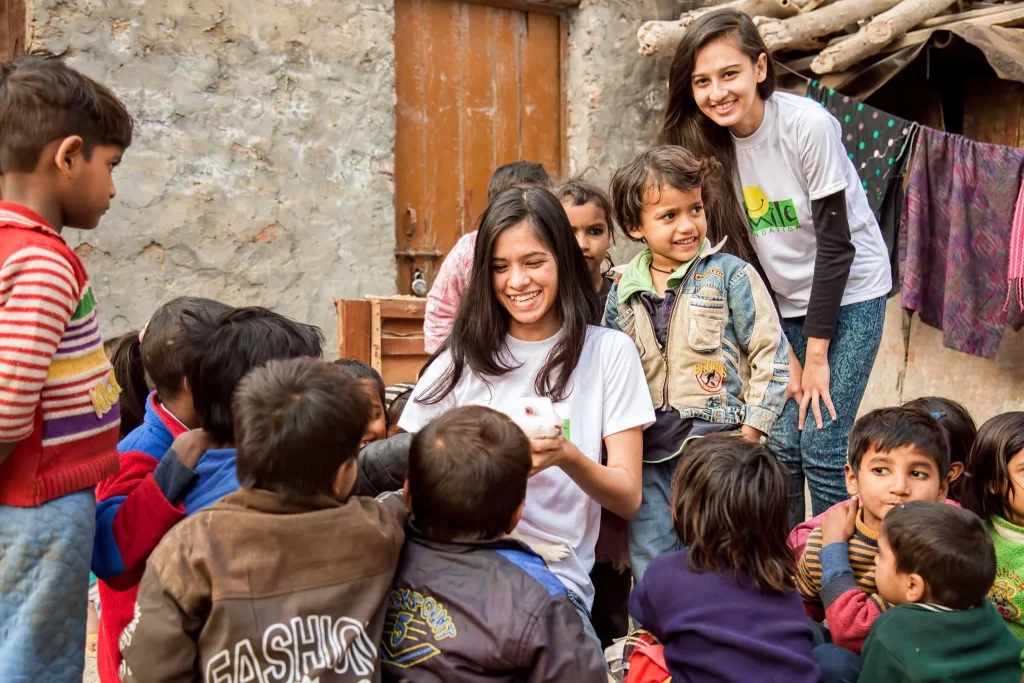
Smile Foundation’s work mirrors this ethos. Every initiative—whether in education, health or livelihood—is designed with community participation at its heart. Local teachers, health workers and volunteers play a vital role, ensuring that programmes are not imposed from above but built from within.
This is how Smile Foundation has sustained impact across 25 states. By nurturing partnerships with communities, corporates and governments alike, it embodies the Gandhian model of trusteeship—where resources, power and responsibility are shared for collective good.
Smile Foundation’s flagship campaign She Can Fly is another powerful example. By enabling adolescent girls to access education, healthcare and skill-building, it empowers the next generation to lead their communities. Gandhi would have seen in these girls the living embodiment of his dream for India—self-confident, compassionate and courageous.
Gandhi’s message in the age of modern India
It is easy to relegate Gandhi to history. To treat him as a saintly figure rather than a social innovator. But the truth is, his ideas have never been more urgent.
In an era defined by inequality, environmental degradation and digital isolation, Gandhi’s principles—simplicity, self-reliance, compassion and service—remain timeless guides.
Smile Foundation, in many ways, is Gandhi’s message made modern. It replaces his spinning wheel with a laptop, his village ashram with a skill centre and his marches with community health drives. Yet the moral thread is the same: real change begins with empathy and empowerment is the highest form of service.
The unfinished dream
As India celebrates Gandhi Jayanti, we are reminded that freedom was never meant to be an endpoint—it was a beginning. Gandhi did not fight for independence alone; he fought for a society built on justice, equality and humanity.
That work remains unfinished.
In a world where millions of children still drop out of school, where women still battle preventable diseases and where youth still struggle to find dignified work, organisations like Smile Foundation continue the Gandhian struggle in a new form.
Each classroom built, each woman empowered, each young person employed is an act of faith in the India Gandhi imagined.
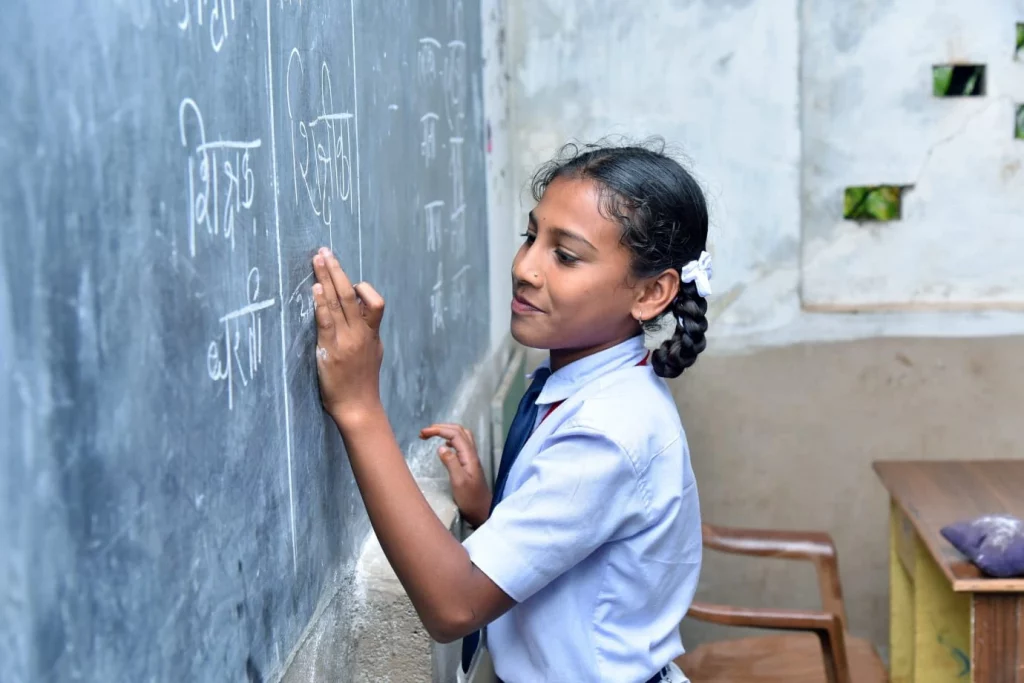
And perhaps, if the Mahatma were to walk among us today, he would not be found in the corridors of power. He might be seen in a Smile Foundation classroom, smiling at a girl solving a maths problem. Or in a mobile hospital parked under a banyan tree, watching a doctor treat a mother and her child.
Because Gandhi’s India was never about grand monuments—it was, and always will be, about ordinary people leading extraordinary change.